Hugo: the story and recipe of the elderflower spritz
A more floral alternative to the spritz, born in the mountains of South Tyrol. Fresh, light, with mint and elderflower.
While the orange spritz was conquering Italy, a gentler alternative was being born up in the mountains of South Tyrol. The Hugo is proof that a great aperitif can come from far away from the big city bars.
Born in South Tyrol, in 2005
The Hugo is a recent and well-documented creation: it was invented by bartender Roland Gruber in 2005, at the San Zeno Bar in Naturns, in the province of Bolzano. Gruber was looking for a fresher, more floral alternative to the Spritz Veneziano, and put it on his list as a house drink.
The name? Chosen almost by chance, one evening, during a brainstorm with friends at the bar. It could have ended up being “Otto”: Hugo was simply the silliest name that came to mind. Who would have guessed it would end up on every menu in Europe.
Lemon balm or elderflower?
Here’s a detail few people know. Gruber’s original recipe called for lemon balm syrup, not elderflower. The creator himself has confirmed this in several interviews. The problem was practical: lemon balm syrup is hard to find, while elderflower syrup is everywhere. So, before long, the elderflower version took over and is now the standard.
The recipe
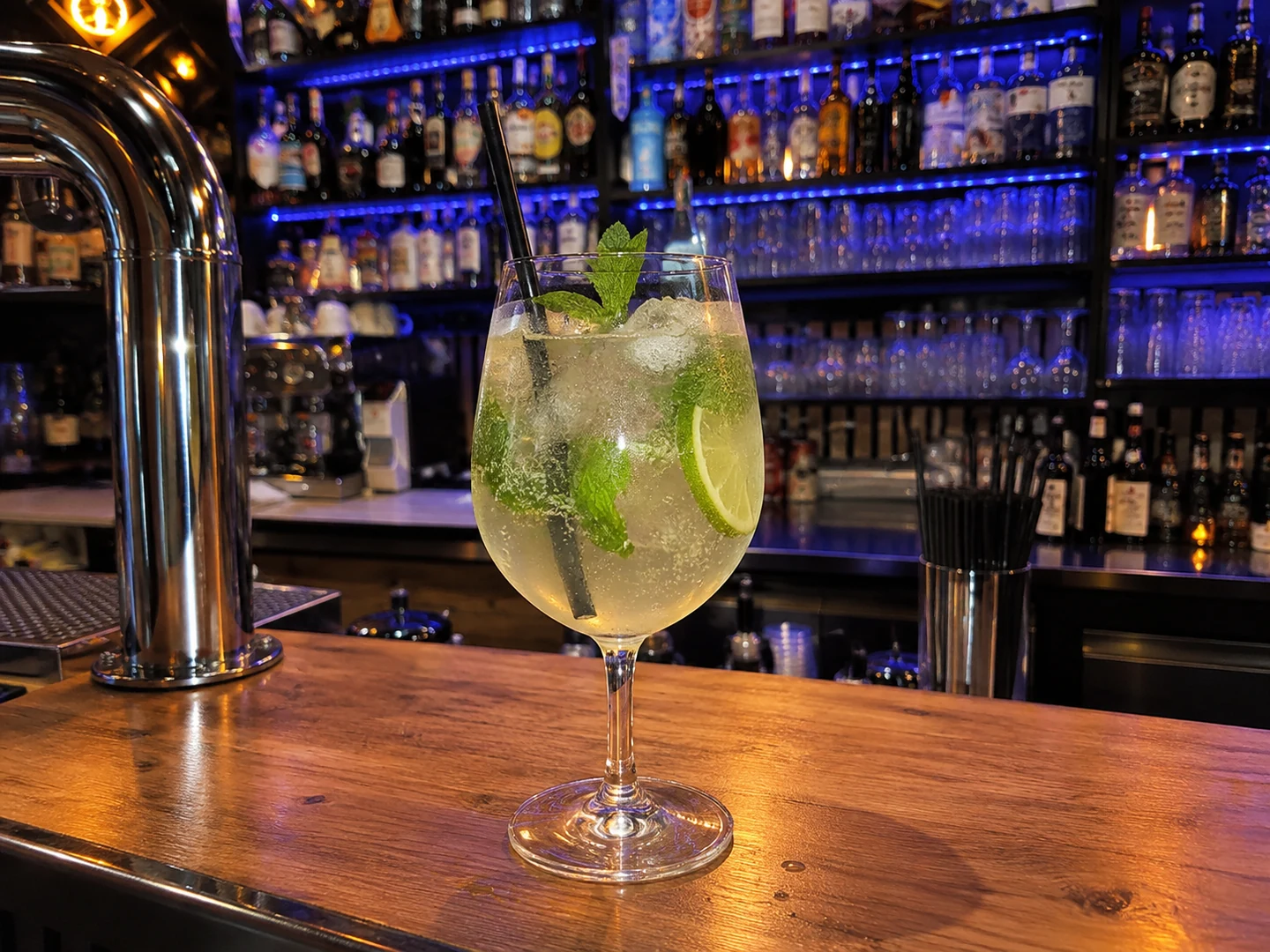
In its best-known version, the Hugo is built straight in the glass:
- 150 ml prosecco
- 20 ml elderflower syrup
- a splash of soda water
- fresh mint leaves
- a slice of lime or lemon
Lightly bruise the mint between your fingers, plenty of ice, and stir gently so the bubbles survive.
The Hugo at Jimmy
In the university area of Bologna, the Hugo is the perfect drink for anyone who wants something fresh but less bitter than a Spritz: the mint makes it thirst-quenching, the elderflower gives it that floral note that wins over even people who usually don’t like bitters. A modern classic, in every sense.
Before you visit Jimmy.
What is a Hugo made of?
Prosecco, elderflower syrup (originally lemon balm syrup), a splash of soda water, fresh mint leaves and a slice of lime or lemon, served in a wine glass over ice.
Who invented the Hugo?
South Tyrolean bartender Roland Gruber, in 2005, at the San Zeno Bar in Naturns, as a fresher, more floral alternative to the spritz.
What's the difference between a Hugo and a Spritz?
A classic spritz uses a bitter (Aperol, Campari, Select) for a bitter-citrus profile. The Hugo leans on elderflower and mint instead: more floral, sweeter and lighter.
Sources and further reading
- Hugo (cocktail) · Wikipedia
- Auf an Hugo — interview with Roland Gruber · BARFUSS
- Hugo Cocktail — with Prosecco or White Wine · Little Vienna