Every day
Spritz Box
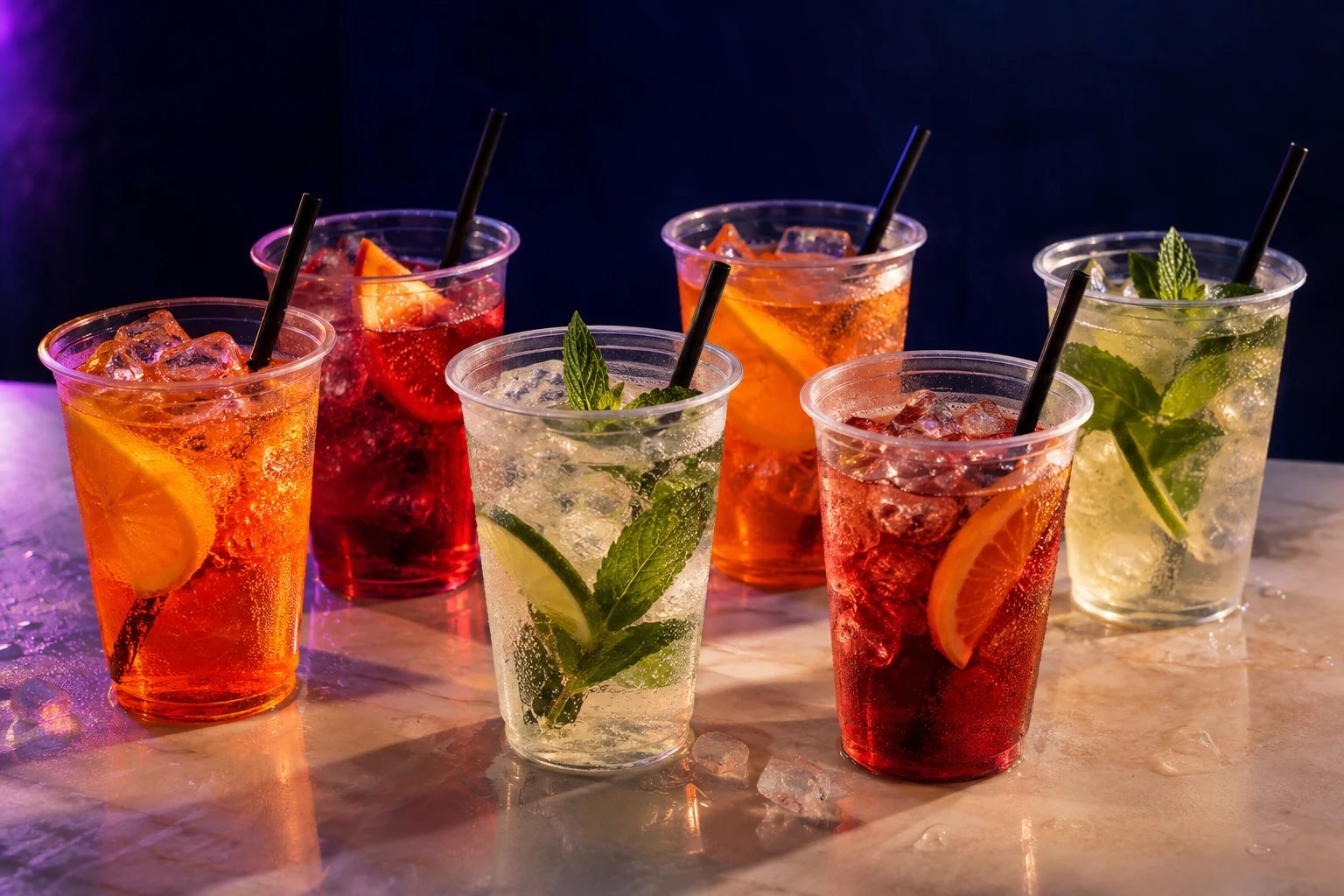
6spritzes of your choice
10 €6 Spritz, choosing between Aperol, Campari and Hugo
Every day, until 8:30 PMPick with your eyes. Find your flavour.
Spritz Box · 6 Spritz · 10 €until 8:30 PM ↗Drink images are representative and may differ from how they are served at the bar.
No choices found. Try removing a filter or ask the bar.
Today’s offersSpritz Box · 10 € · and today’s special+6 Spritz, choosing between Aperol, Campari and Hugo
Every day, until 8:30 PM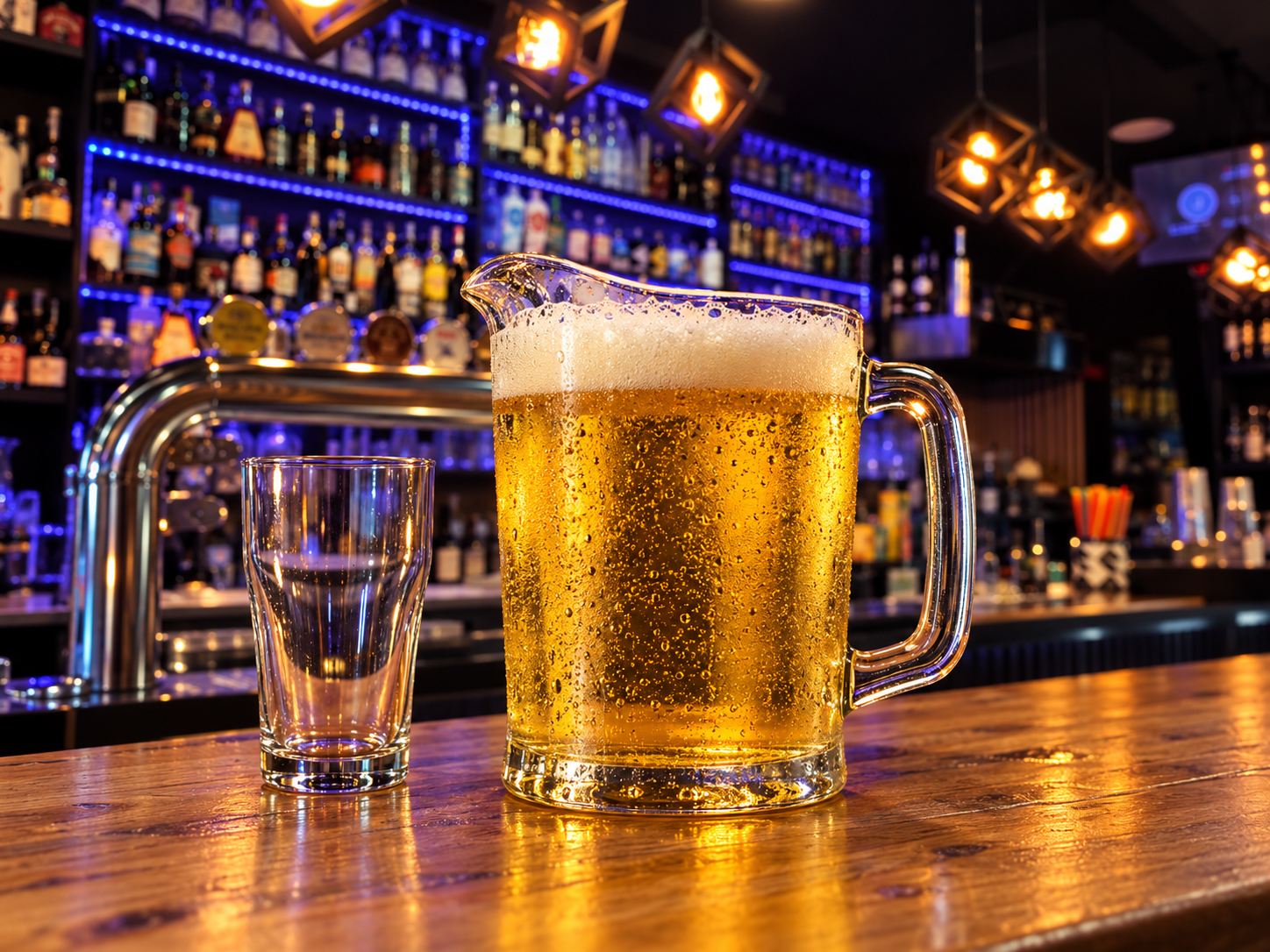
Monday's offer
1 litre
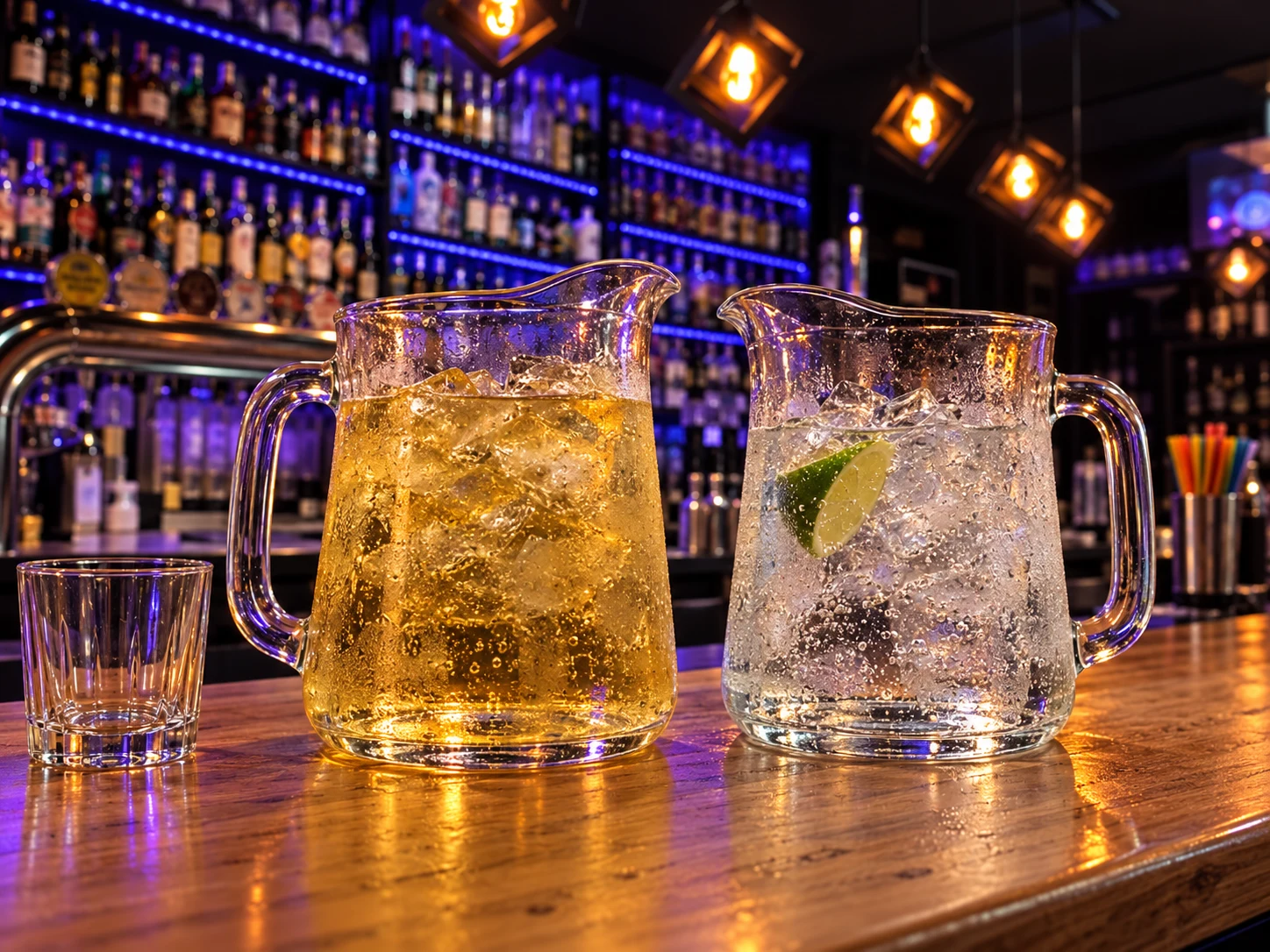
1 litre
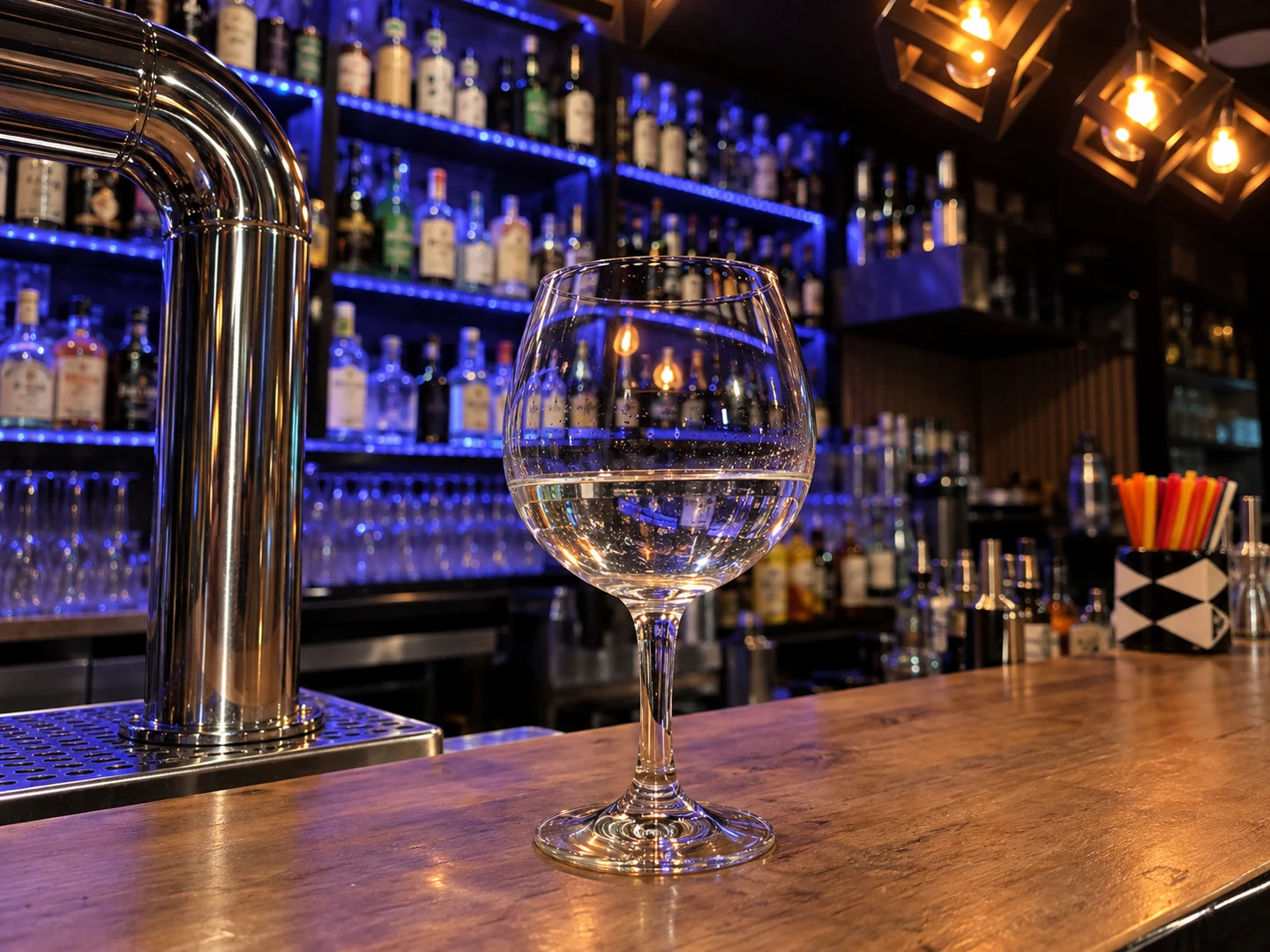
Thursday premium serve
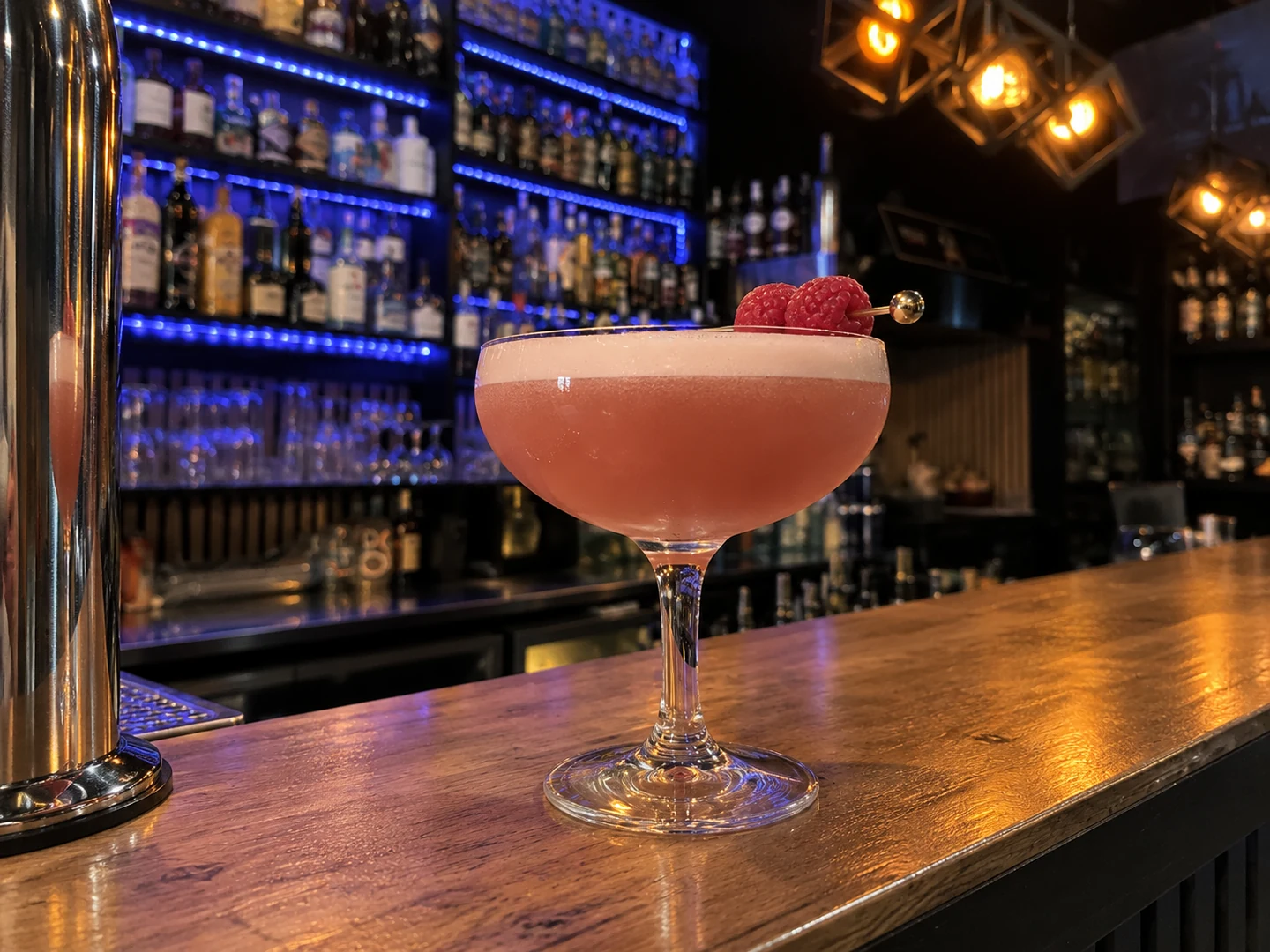
Friday's offer
Sunday's offer
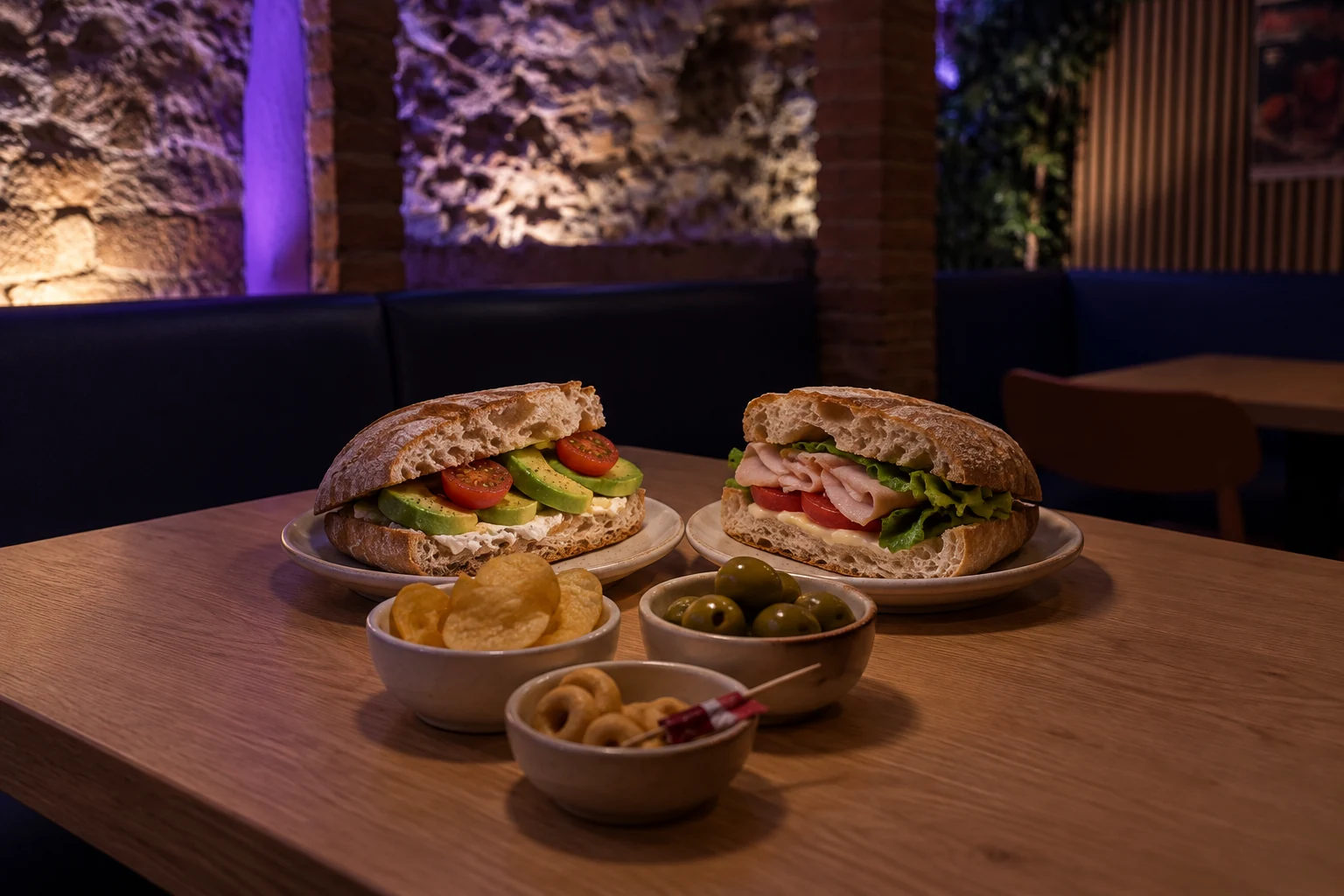
Taralli, crisps and green olives. Little things, just right.
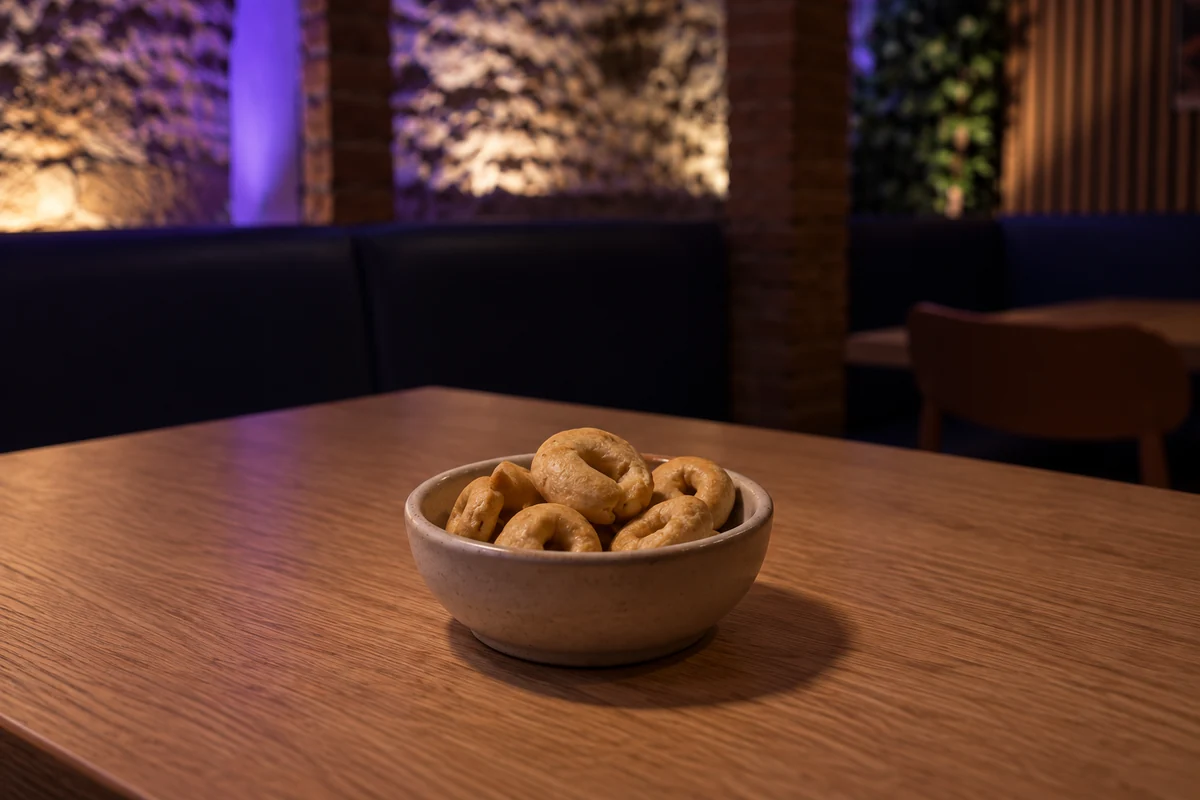
Small, crunchy Italian rings for the centre of the table.
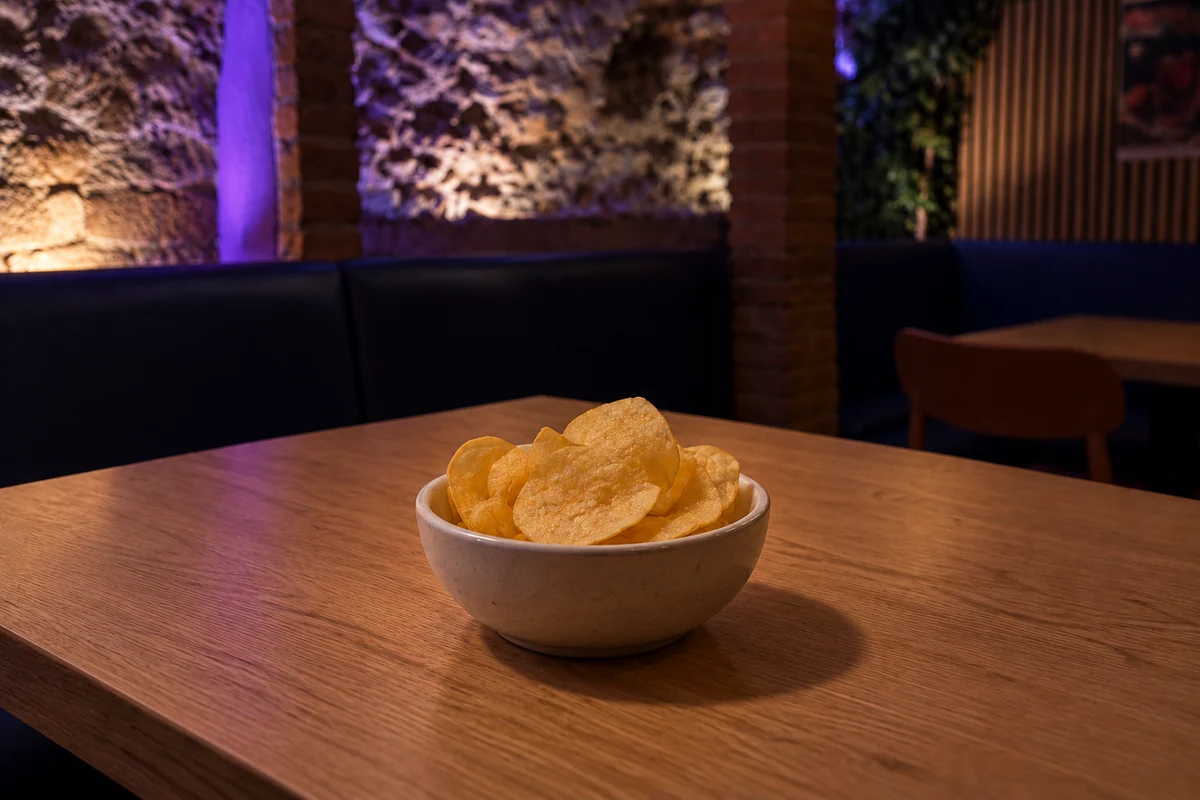
Thin, golden and salted. An aperitivo essential.
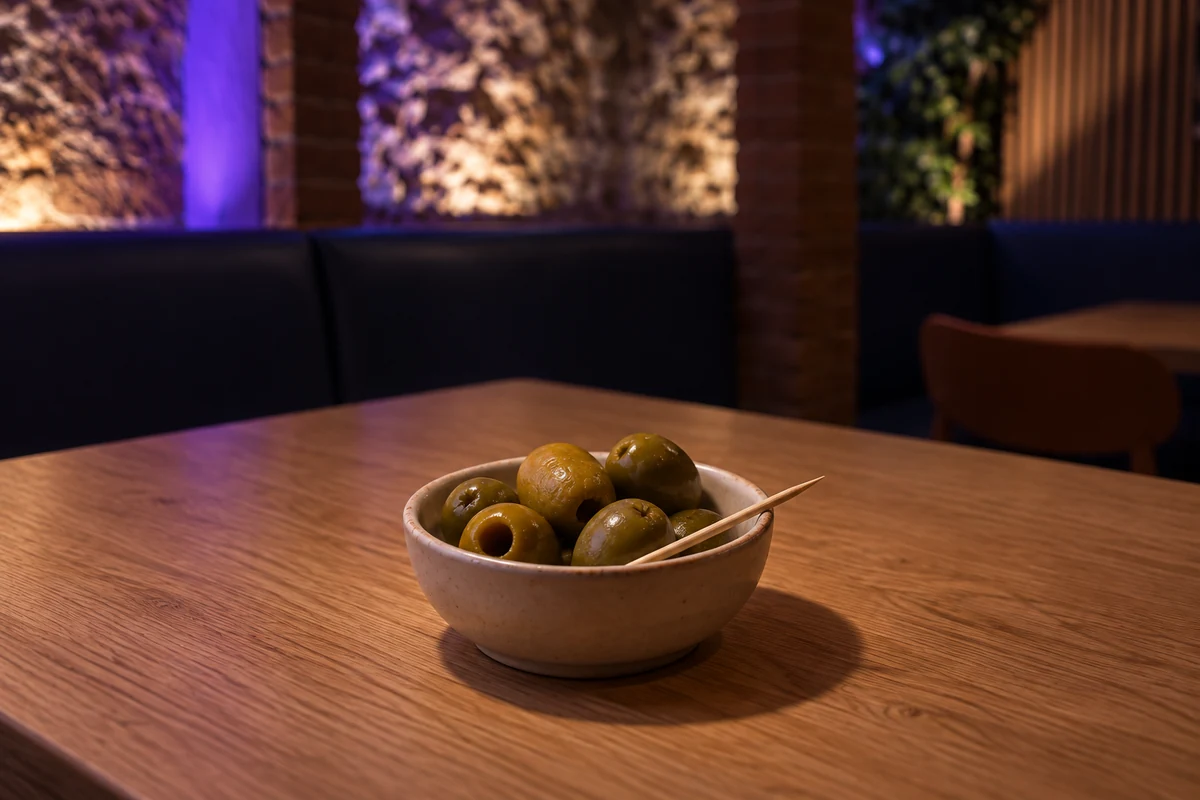
Ask the bar for snack prices and availability. Pairings are suggestions, not drink-inclusive deals.
 10 items
 Bubbles, bitters and plenty of ice. Spritz and aperitivo the Jimmy way on Via Petroni.
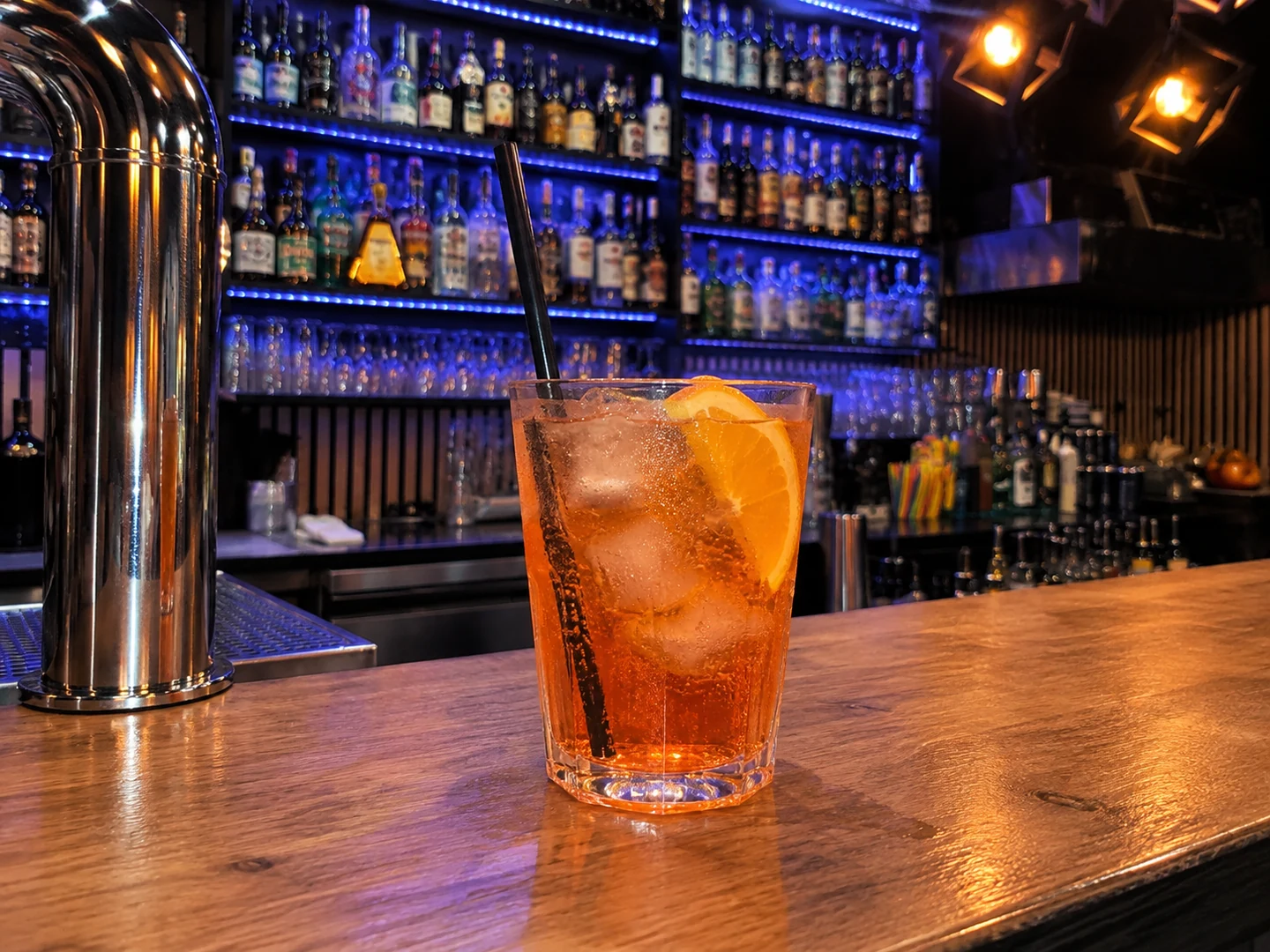
Aperol, prosecco, soda, orange slice.
Bright orange, easy on the alcohol, big on thirst. It kicks off just about every aperitivo here, and it rarely stays a single round.
Nothing to reinvent: Aperol, prosecco, a splash of soda, slice of orange, done. The whole thing lives or dies on the ice. We pack the glass so it stays cold to the last sip instead of going watery on you. The one you order without even looking at the menu, when you just want to take it easy.
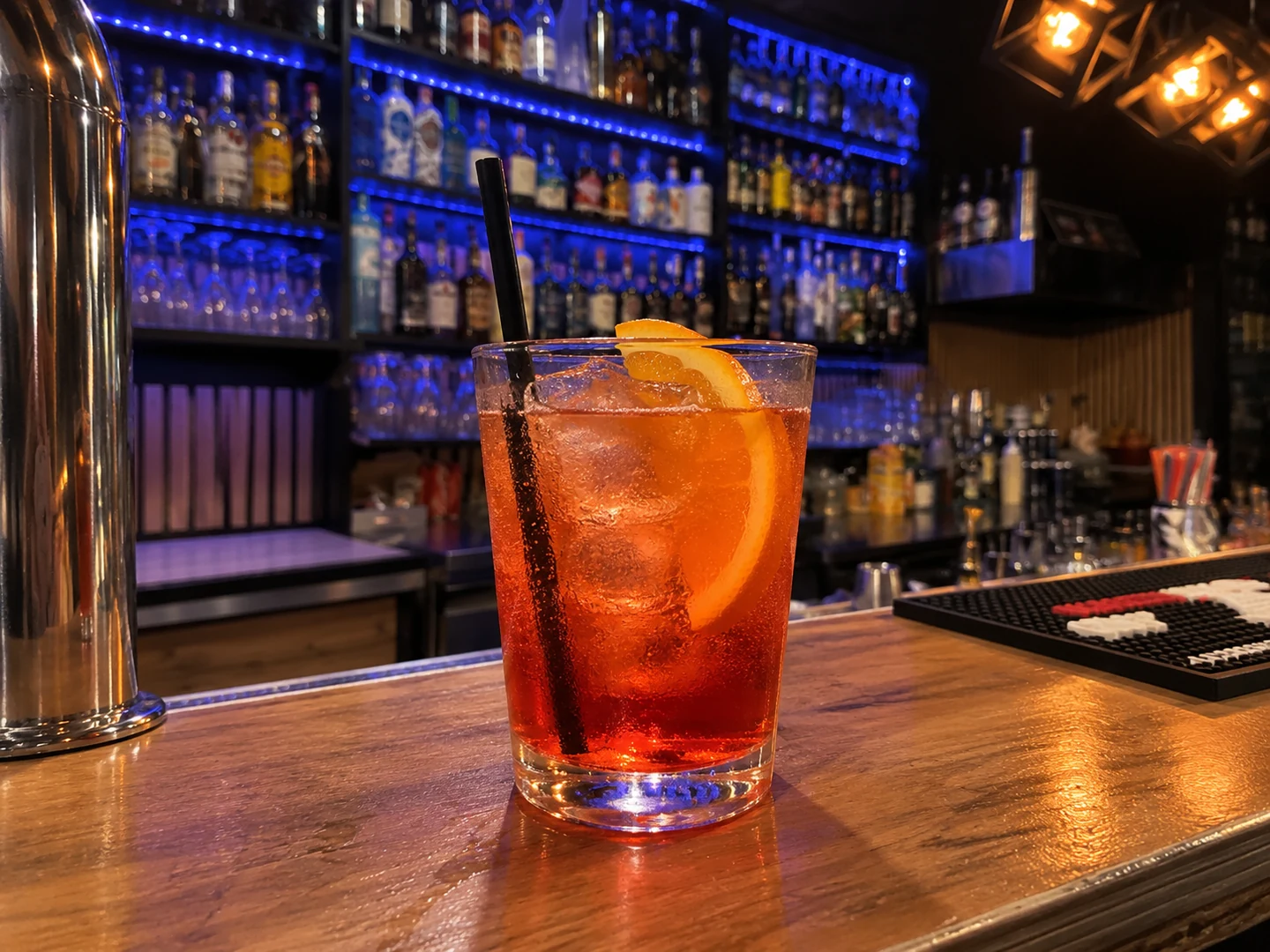
Campari, prosecco, soda, orange slice.
Like the Aperol one, but redder and with more bite. For anyone who wants their spritz with a bit of backbone, not sugar.
Swap Aperol for Campari and the whole thing shifts: more bitterness, deeper colour, a finish that hangs around longer. This is the spritz for people who already know what they like and aren't chasing the sweet version. If Aperol feels too soft to you, this is your glass.
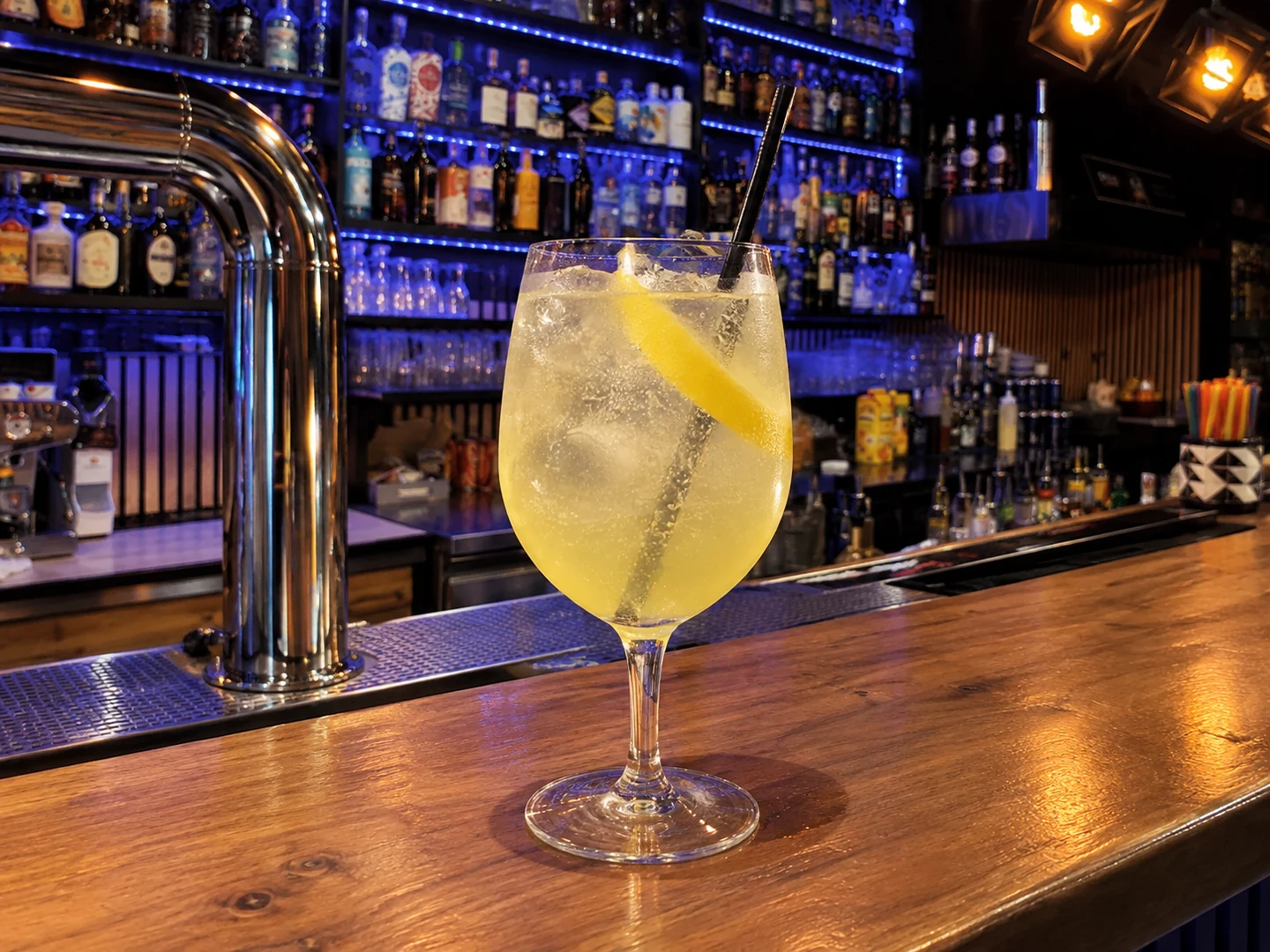
Limoncello, prosecco, soda, lemon zest.
Limoncello and prosecco, with a lemon twist you catch on the very first sip. Sweet, fragrant and dangerously easy to drink.
Limoncello and prosecco pull in the same direction: lemon perfume and bubbles that keep it light. The twist on the rim isn't there for looks, it's the first thing you taste. Great after dinner, or whenever you want something fresh without the bitter edge.
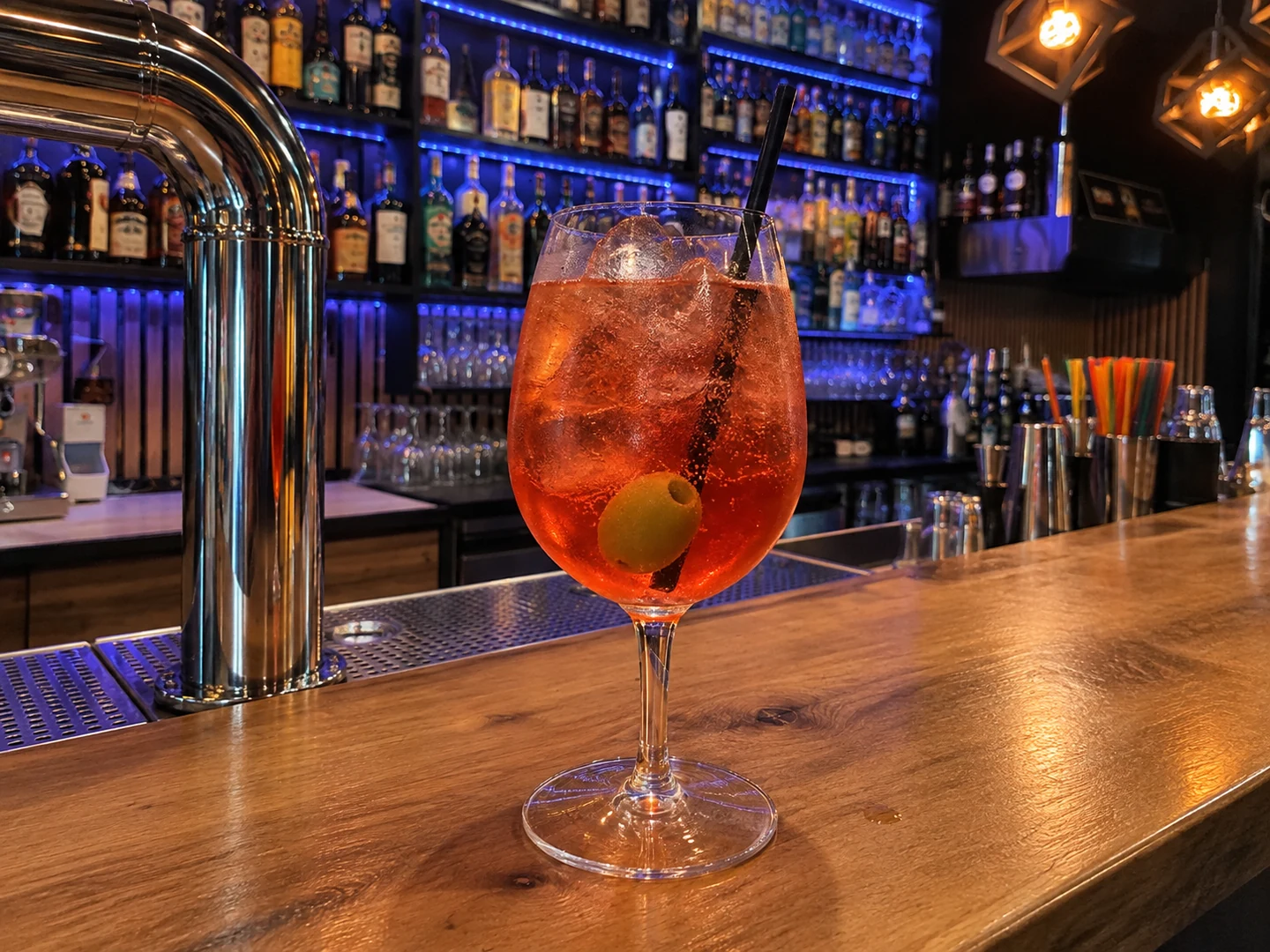
Select, prosecco, soda, green olive.
The proper Venetian spritz: more herbal than the Aperol, finished with an olive instead of orange.
Before Aperol became the default, Venice made its spritz with Select: more herbal, more rooted, less sweet. The olive isn't a gimmick, it balances the bitterness and adds a touch of salt. If you want to know where spritz actually comes from, start here.
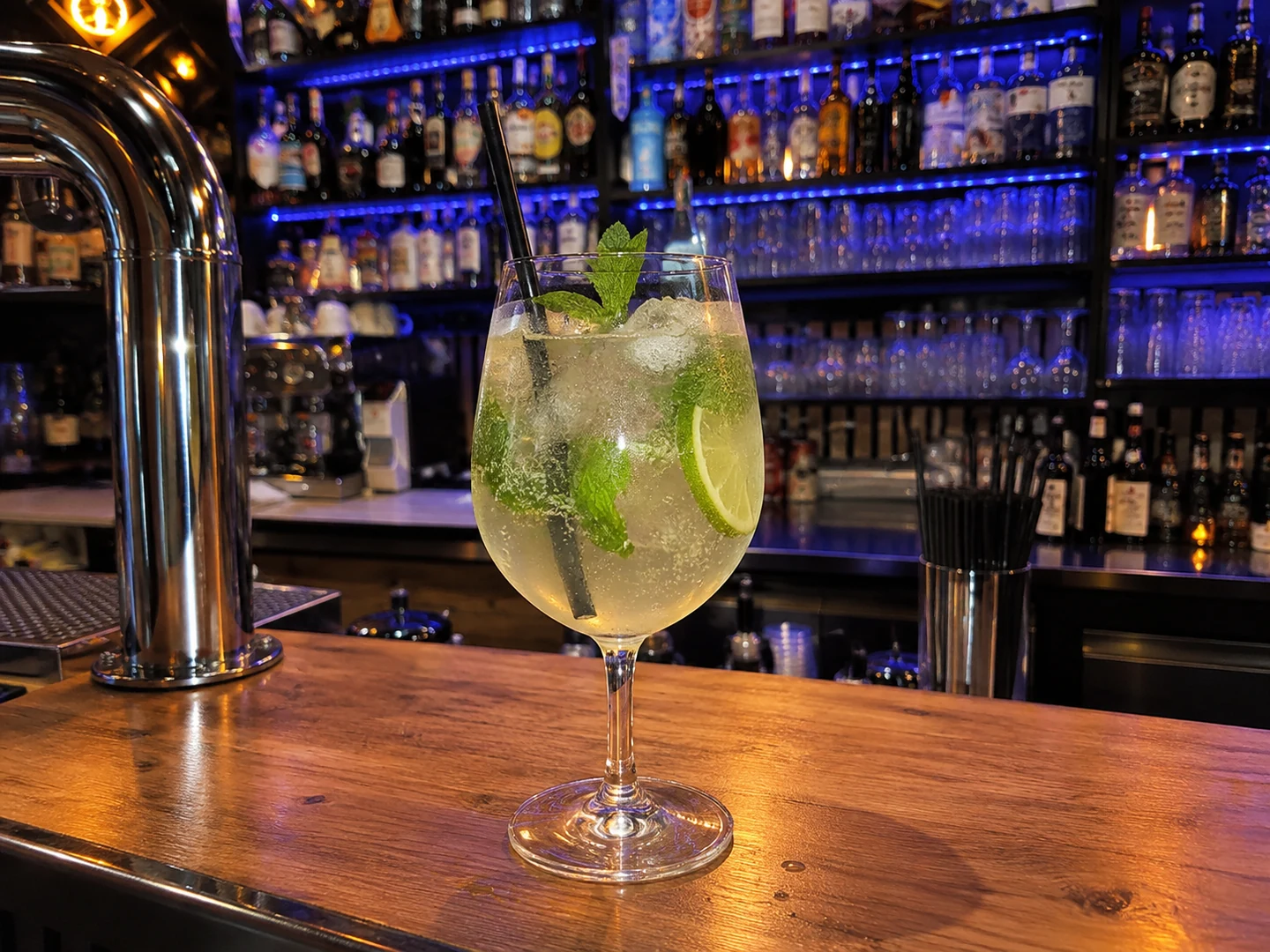
Elderflower syrup, prosecco, soda, lime, mint.
Elderflower, mint and lime instead of the bitter note. Seriously fragrant, and the lightest of the lot.
The Hugo started up in the Dolomites and ended up everywhere. Elderflower and mint turn prosecco into something floral and light, with none of the bitterness. You smell it before it reaches you, it's that fragrant. Perfect when it's hot and Aperol feels like too much.
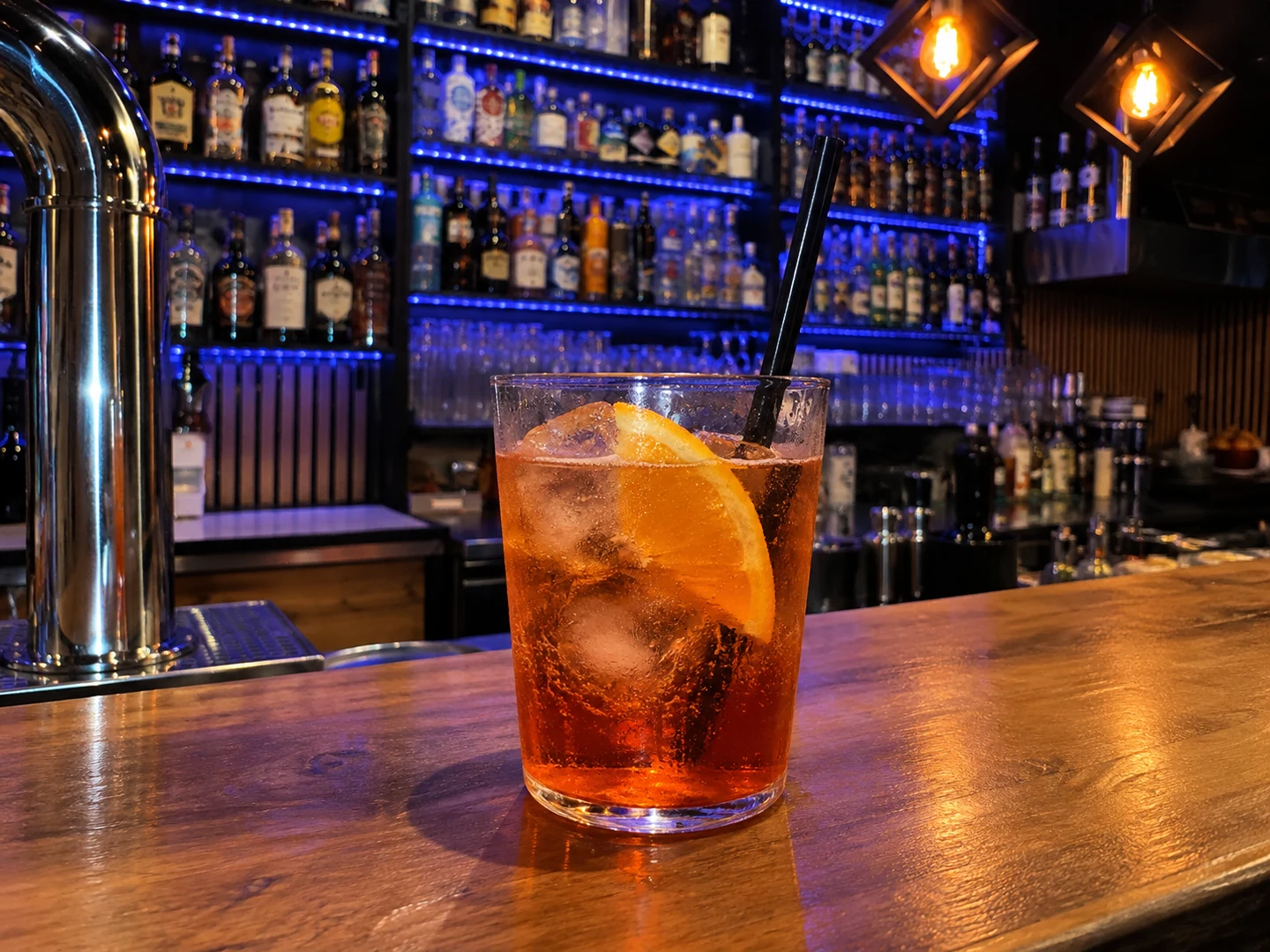
Cynar, prosecco, soda, orange.
Built on Cynar, so it's vegetal, bitter and barely sweet. The spritz for a palate that's already been around.
Cynar is an artichoke amaro, and in a spritz it works better than you'd expect: a vegetal note that cuts almost all of the usual sweetness. Same bubbly ritual, a lot more character. People who try it once tend to stop bothering with the others.
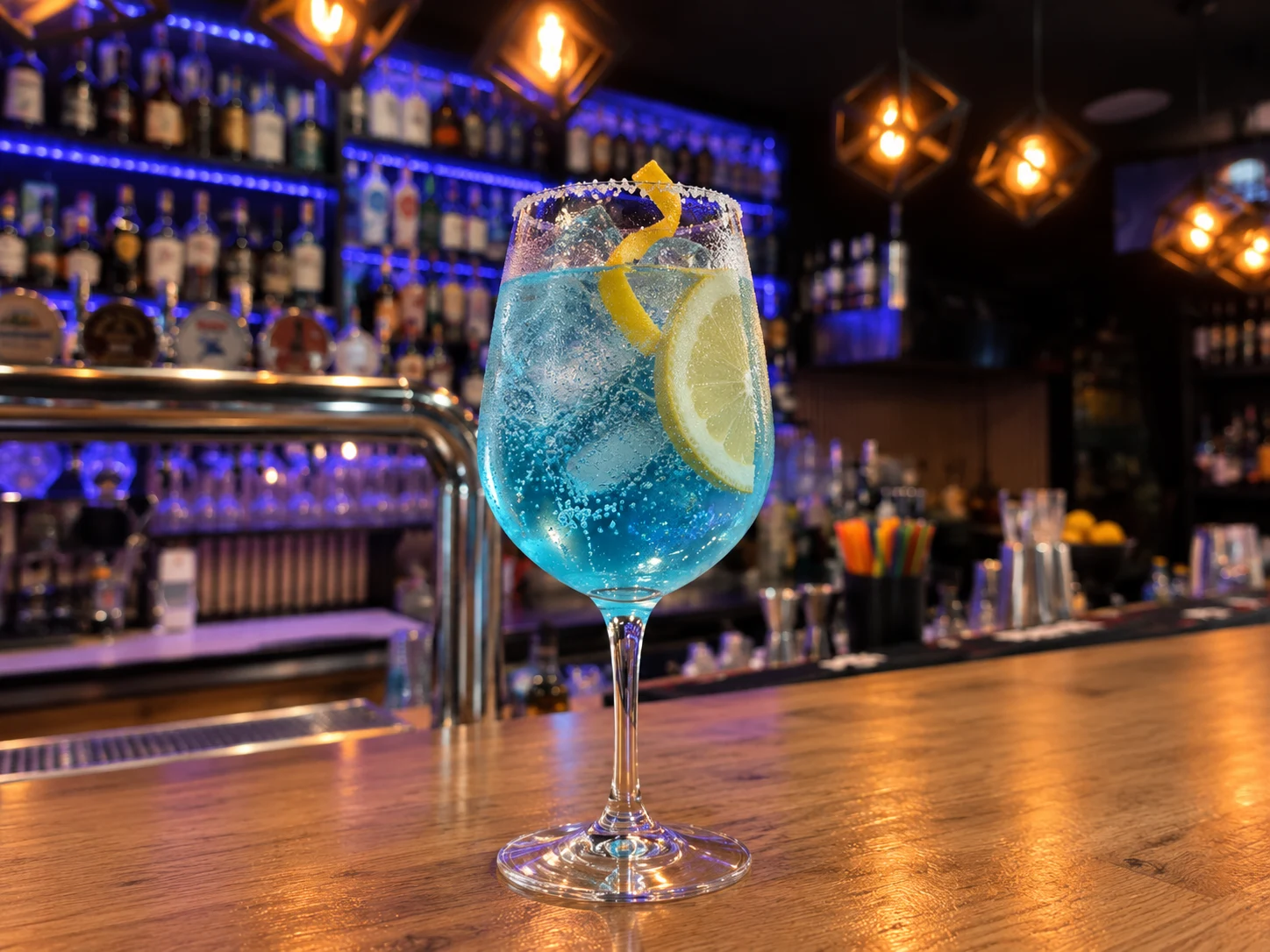
Venturo, brut prosecco, soda, lemon zest, sea-salt rim.
Sicilian lemon, rosemary and a Trapani salt rim. The most Mediterranean spritz we make.
Venturo blends Sicilian lemon, rosemary and blue chamomile, and the result tastes like the coast. The salt on the rim isn't just for show, it brings a saline edge that cuts the sweetness. It's also the best-looking one we pour, which is probably why it's ordered so often.
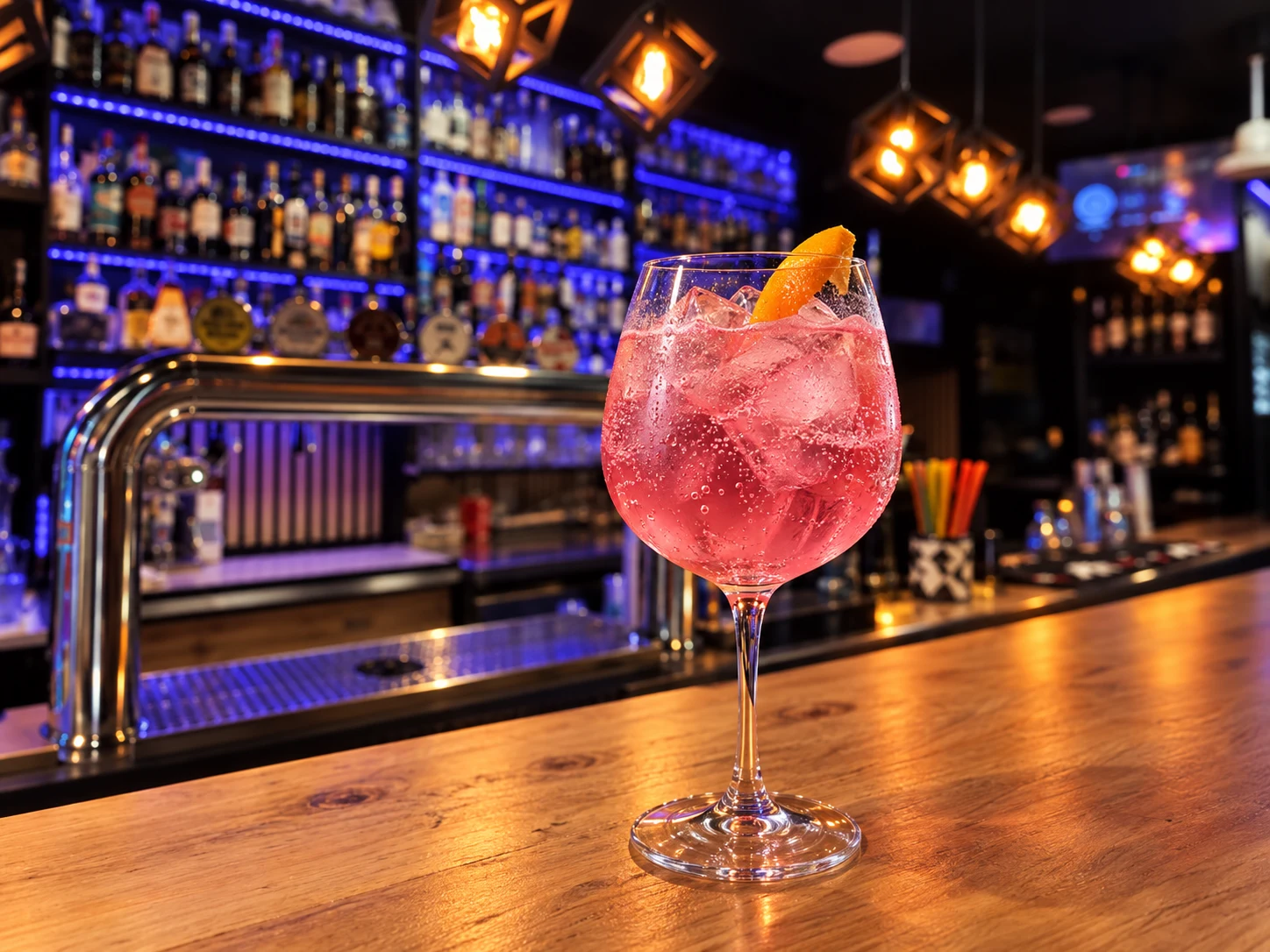
Sarti Rosa liqueur, prosecco, soda, orange peel.
Pink in colour and in scent, with mango, passion fruit and grapefruit. The one you also order a little for the photo.
Sarti Rosa brings mango, passion fruit and grapefruit, with a pink that doesn't go unnoticed. It's soft and fruity, but stays easy to finish. Perfect for a toast, or when the night wants a bit of colour.
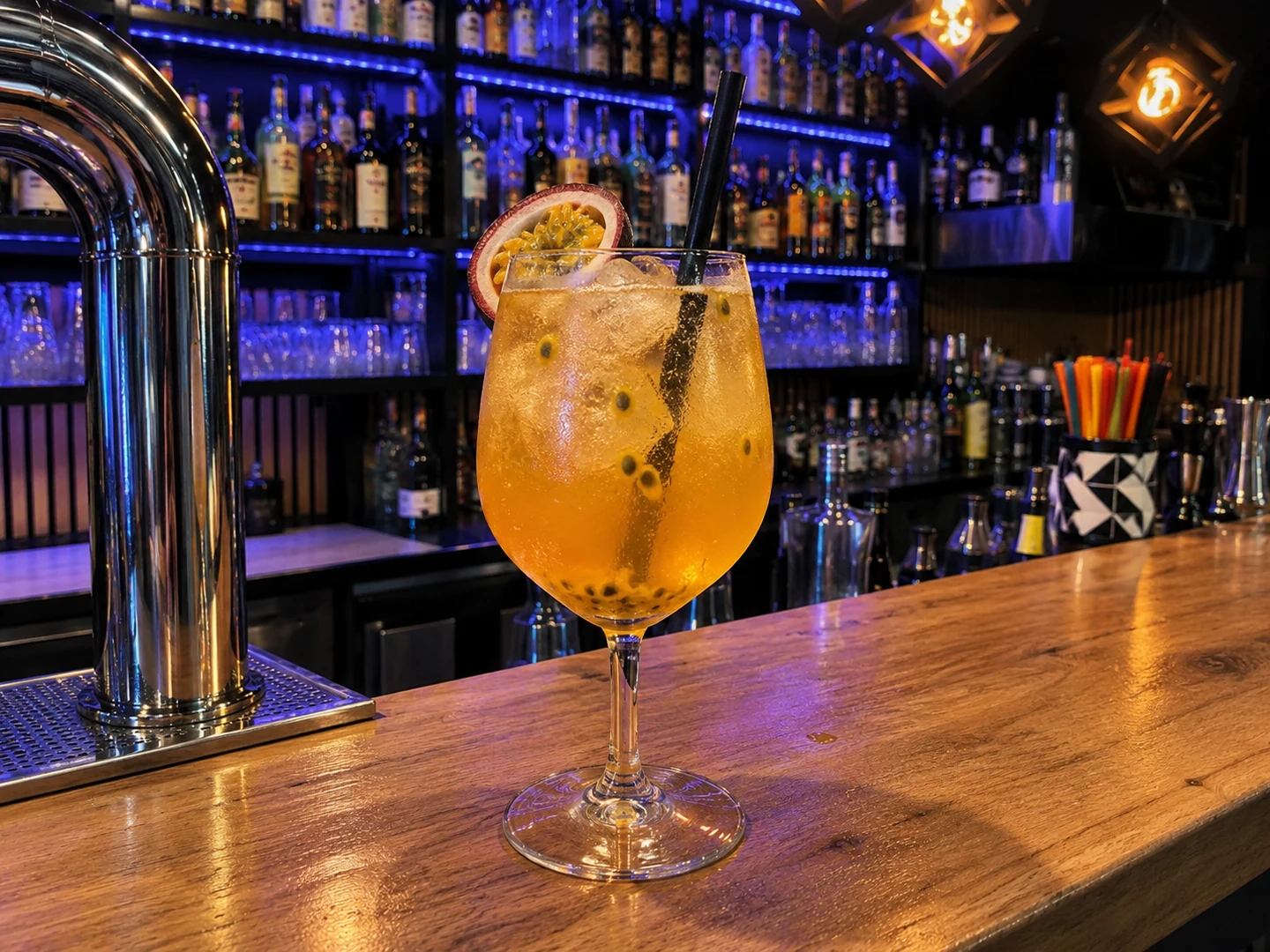
Passion fruit, vanilla, prosecco, soda.
A Pornstar Martini turned into a spritz. Passion fruit and vanilla opened up with prosecco, and it never reaches the table unnoticed.
The classic Pornstar Martini is great, but it's a lot, proper end-of-night stuff. So we lightened it: same passion fruit pulp, same soft vanilla, stretched with prosecco and soda so it holds up as an aperitivo. With groups it's a done deal. One person orders it and two minutes later the whole table wants one.
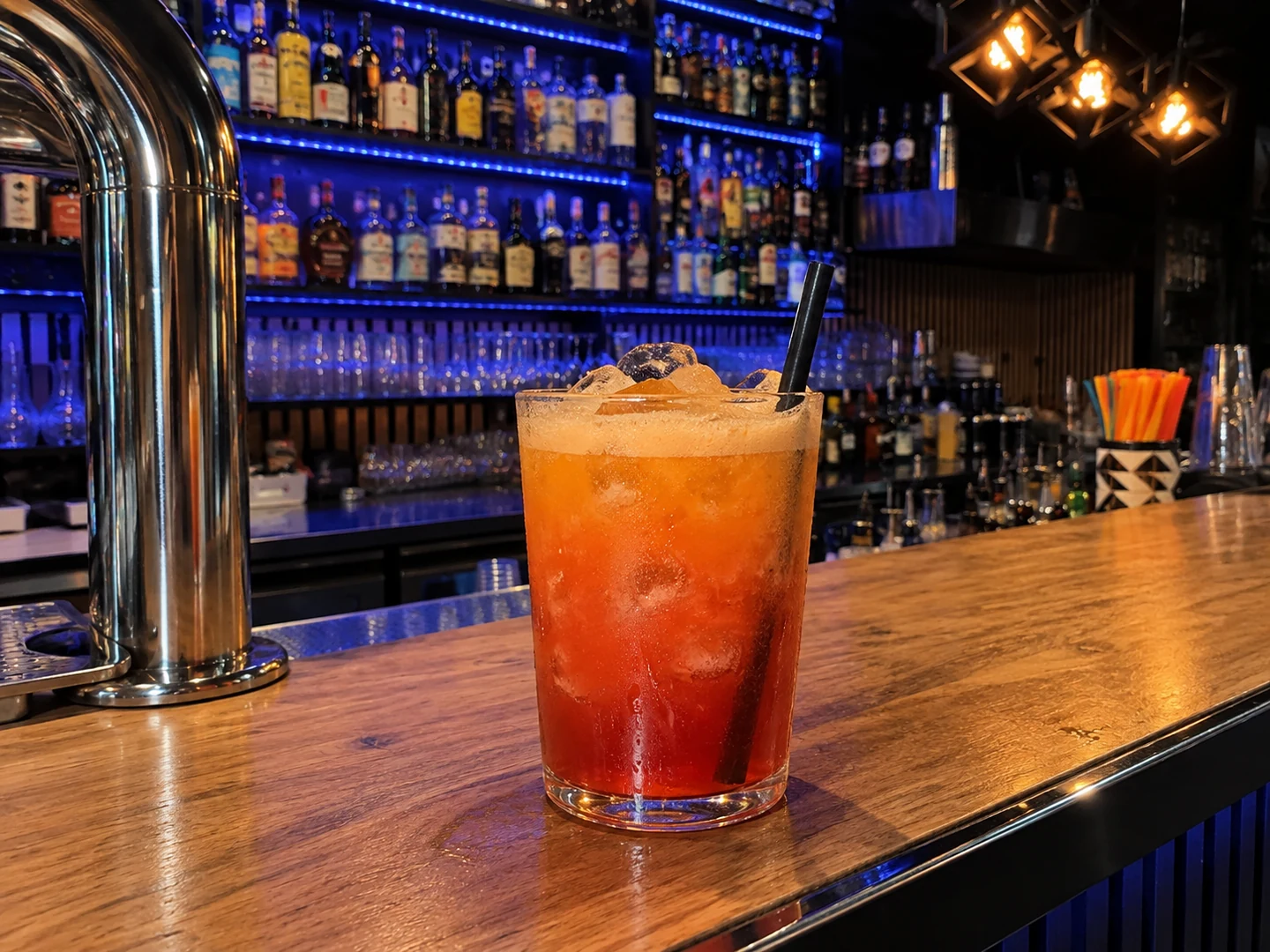
Campari, fluffy fresh-squeezed orange juice.
Just Campari and orange juice, but whipped to a froth. Two ingredients done properly.
The Garibaldi looks basic: Campari and orange. The whole thing is in how you treat the juice, because frothed up it becomes something else entirely compared to a flat squeeze. Bitter and sweet keep each other in check, and you end up drinking something far more considered than the ingredient list suggests.
 32 items
 Negronis, Cuba Libres, Gin & Tonics and the long drinks that never go out of style, built with care at the bar.
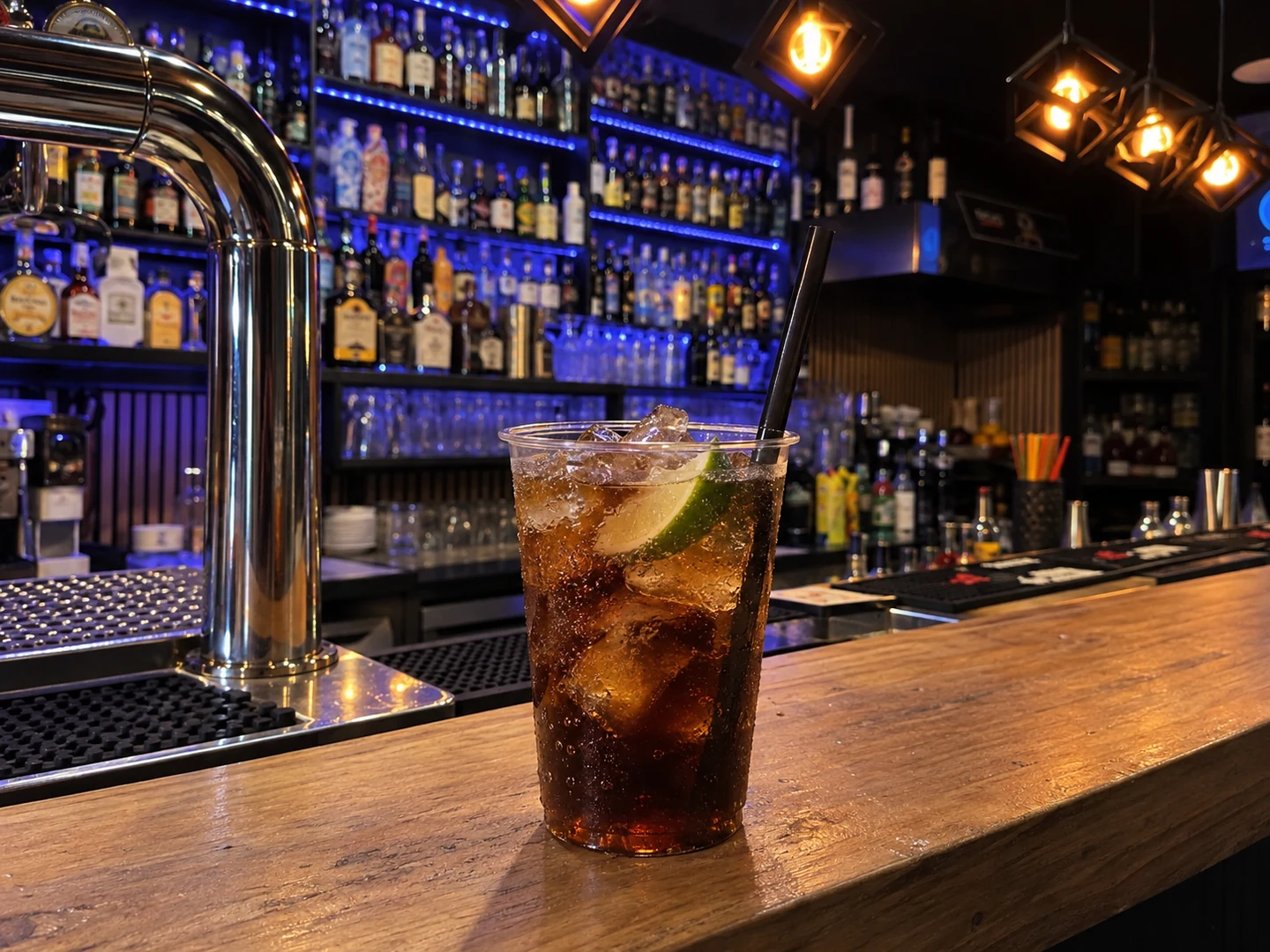
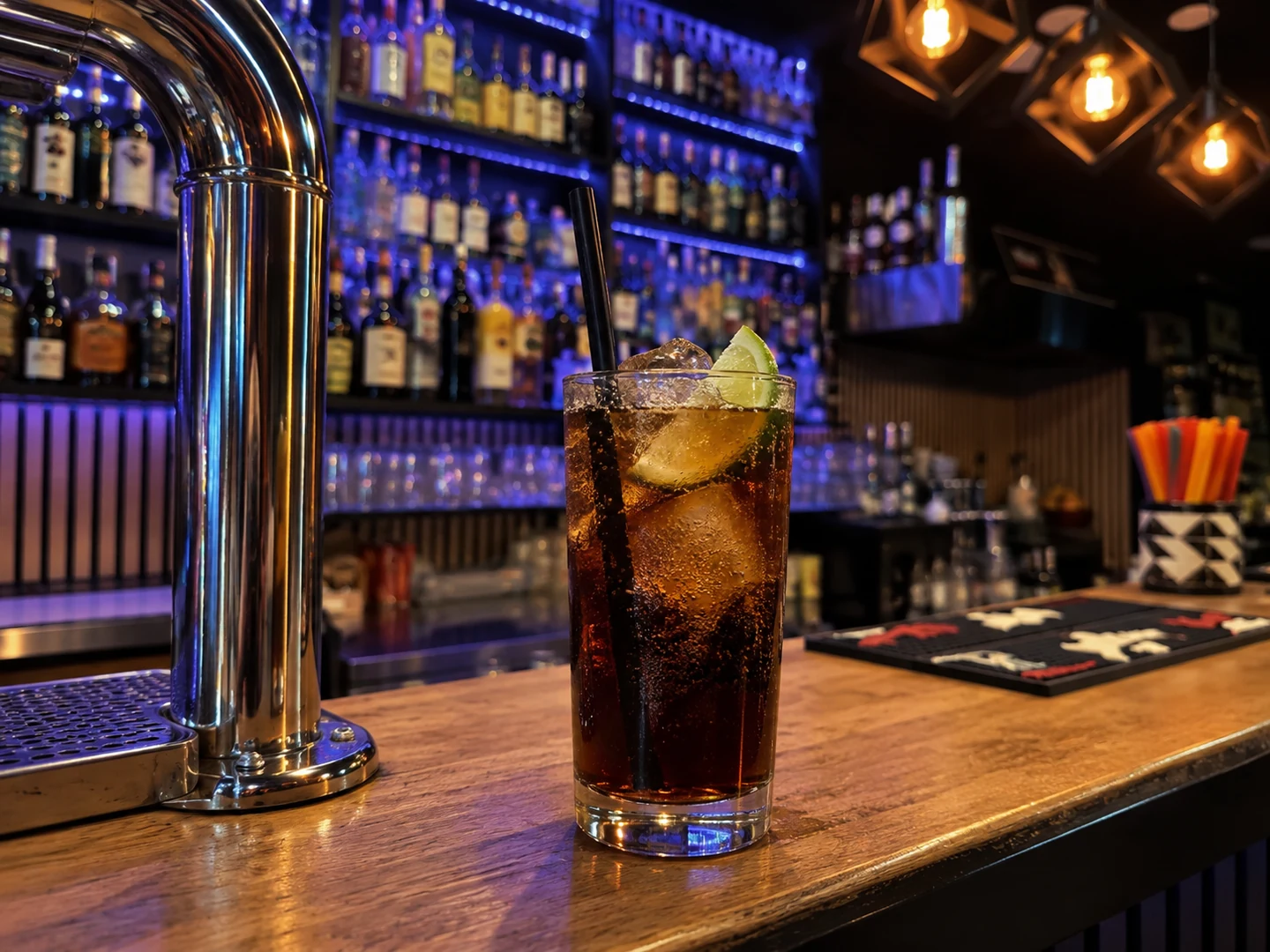
Rum, cola, lime.
Rum, cola and a good squeeze of lime. The long drink that never lets you down, not even at 2am.
The lime matters more than it looks: it cuts the cola's sweetness and brings the rum forward, otherwise you've just got a soft drink. It came out of Cuba in the late 1800s and it's still the group order by default, cold and uncomplicated. Get it by the pitcher when the table starts filling up.
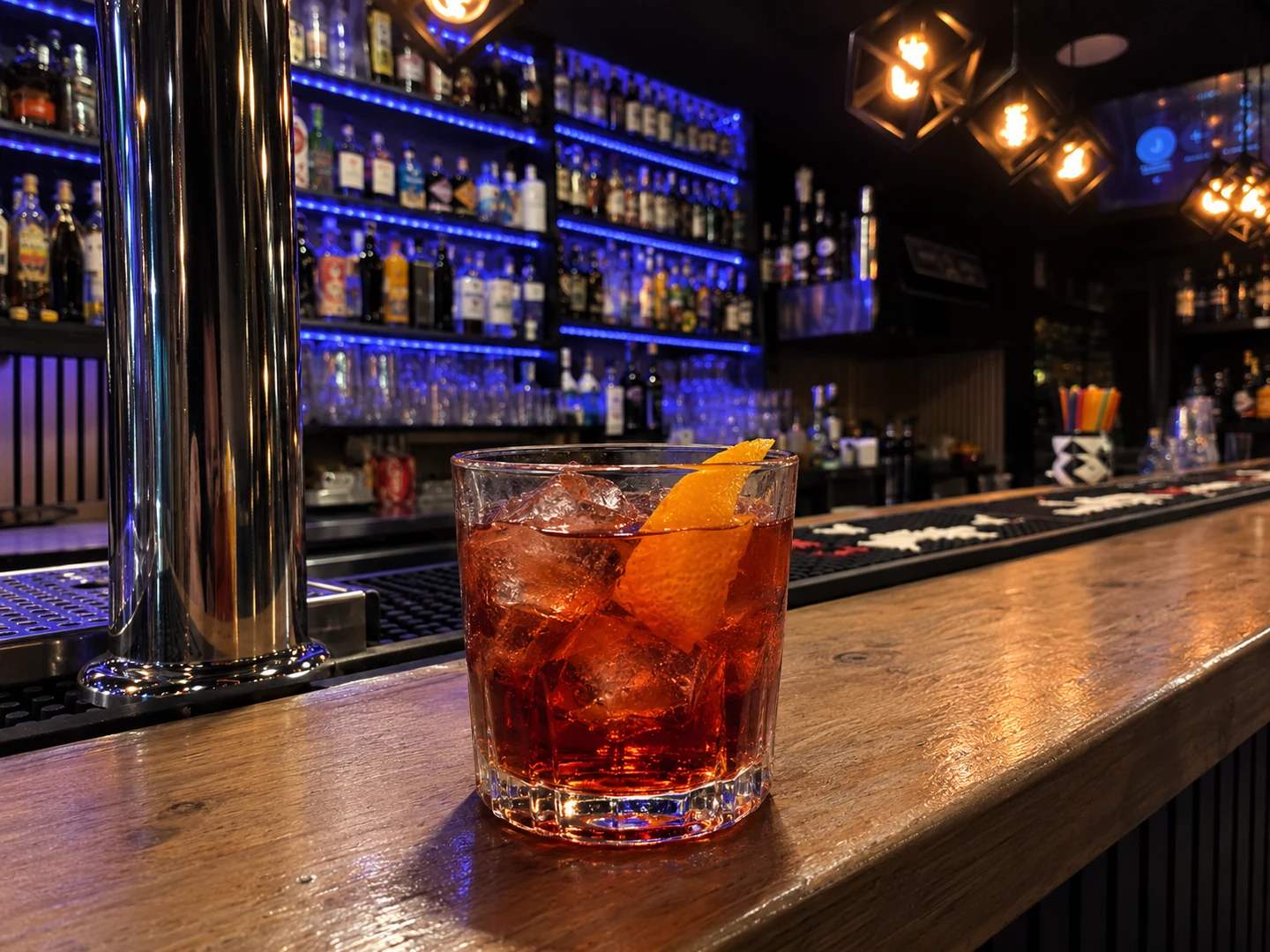
Gin, Campari, red vermouth, orange peel.
Equal parts gin, Campari and vermouth. Bitter enough to put you off the first time, then you're hooked for good.
Count Camillo Negroni, Florence, somewhere around 1919: he asked his barman to stiffen his Americano with gin instead of soda. Nobody's really improved on it since. We stir it down ice-cold and twist an orange peel over the glass so it hits your nose first. First Negroni? Take it slow. This one clicks on the second.
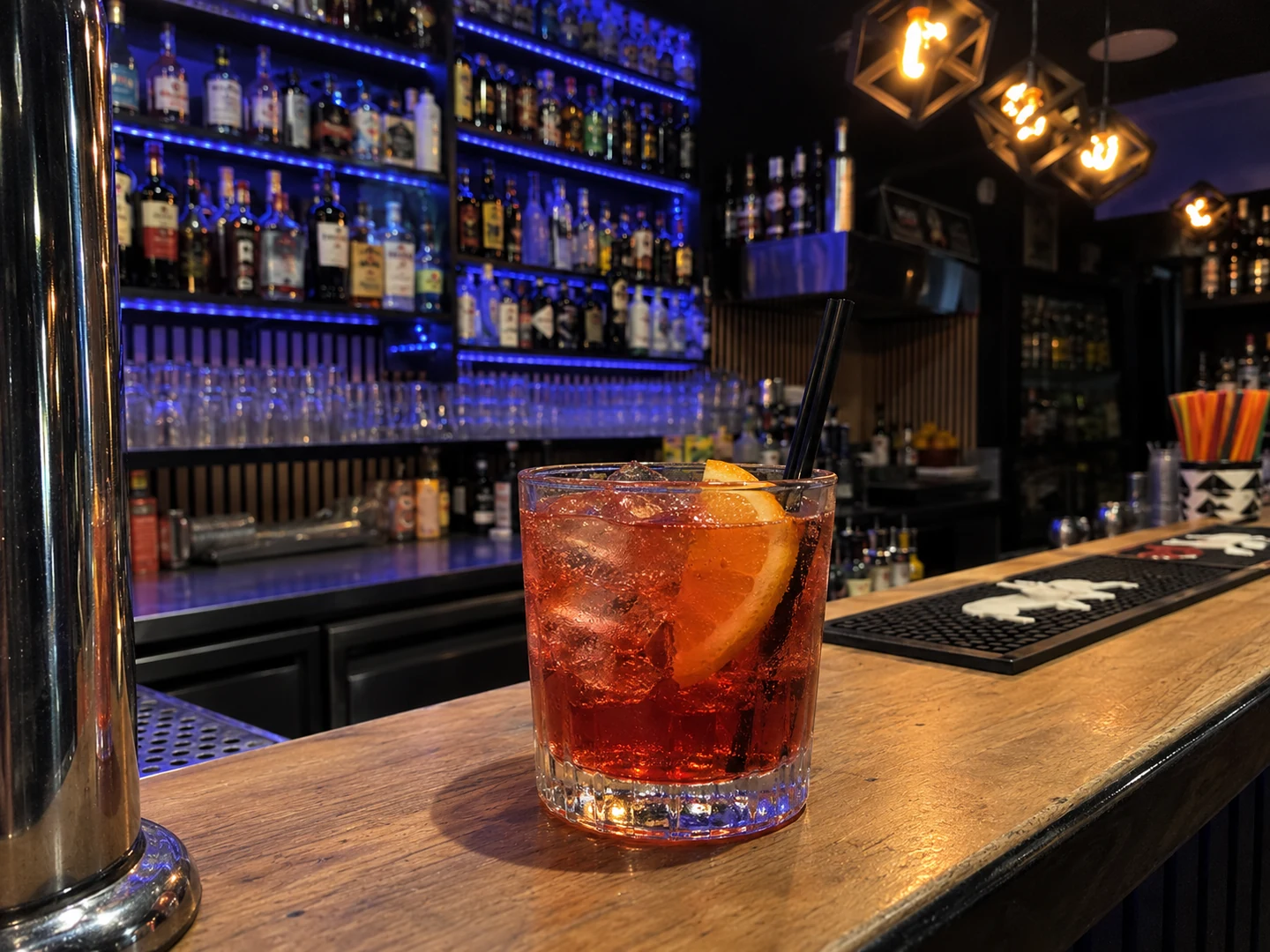
Campari, red vermouth, soda, orange.
Campari and vermouth lengthened with soda. The light aperitivo that opens the night without weighing you down.
It came decades before the Negroni: same Campari and red vermouth, but soda instead of gin and plenty of ice. Easier going, lower in alcohol, the same good bitterness. The one to order when the sun drops and the night still needs to get going.
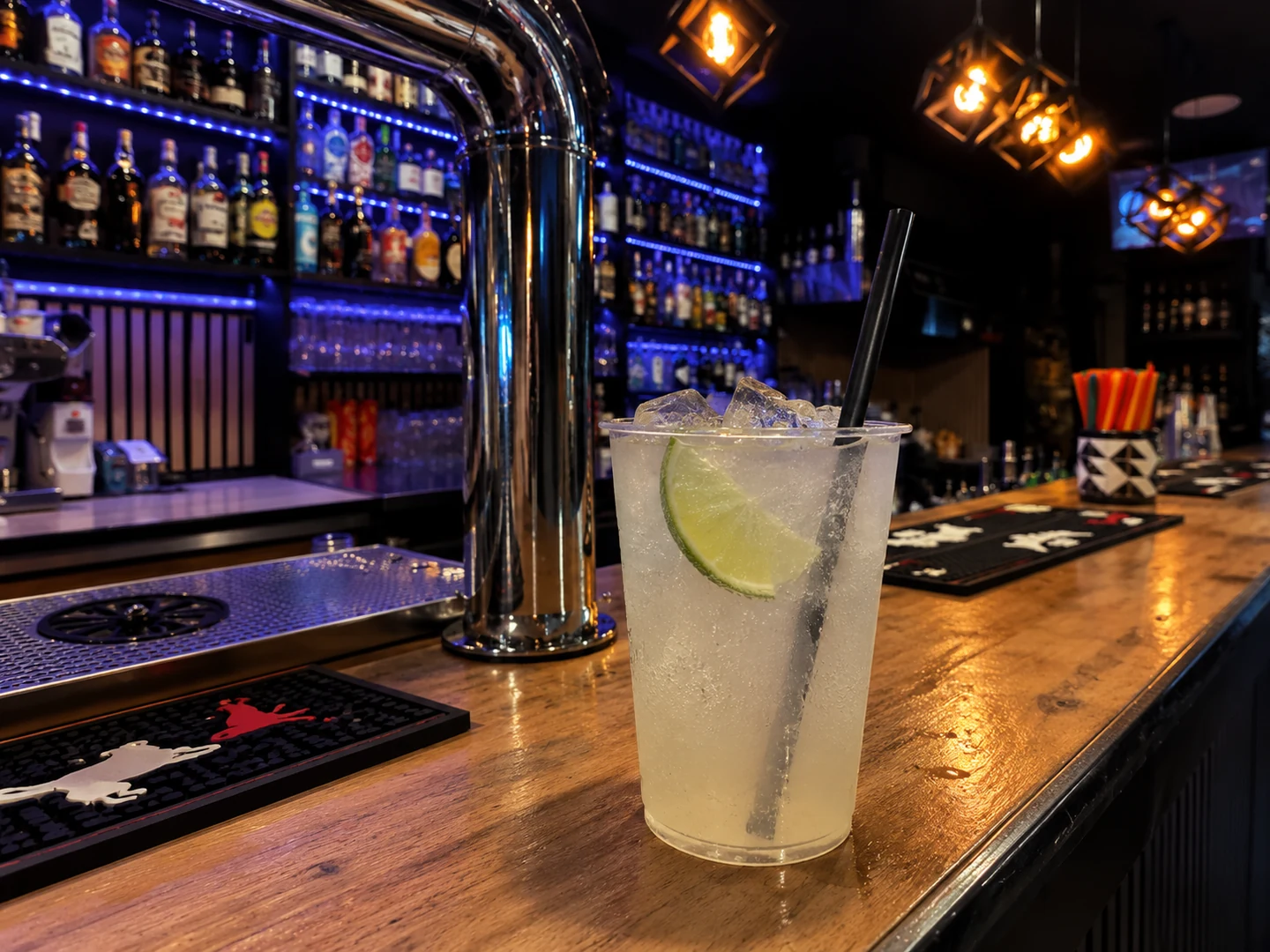
Gin, lemon soda, fresh lime.
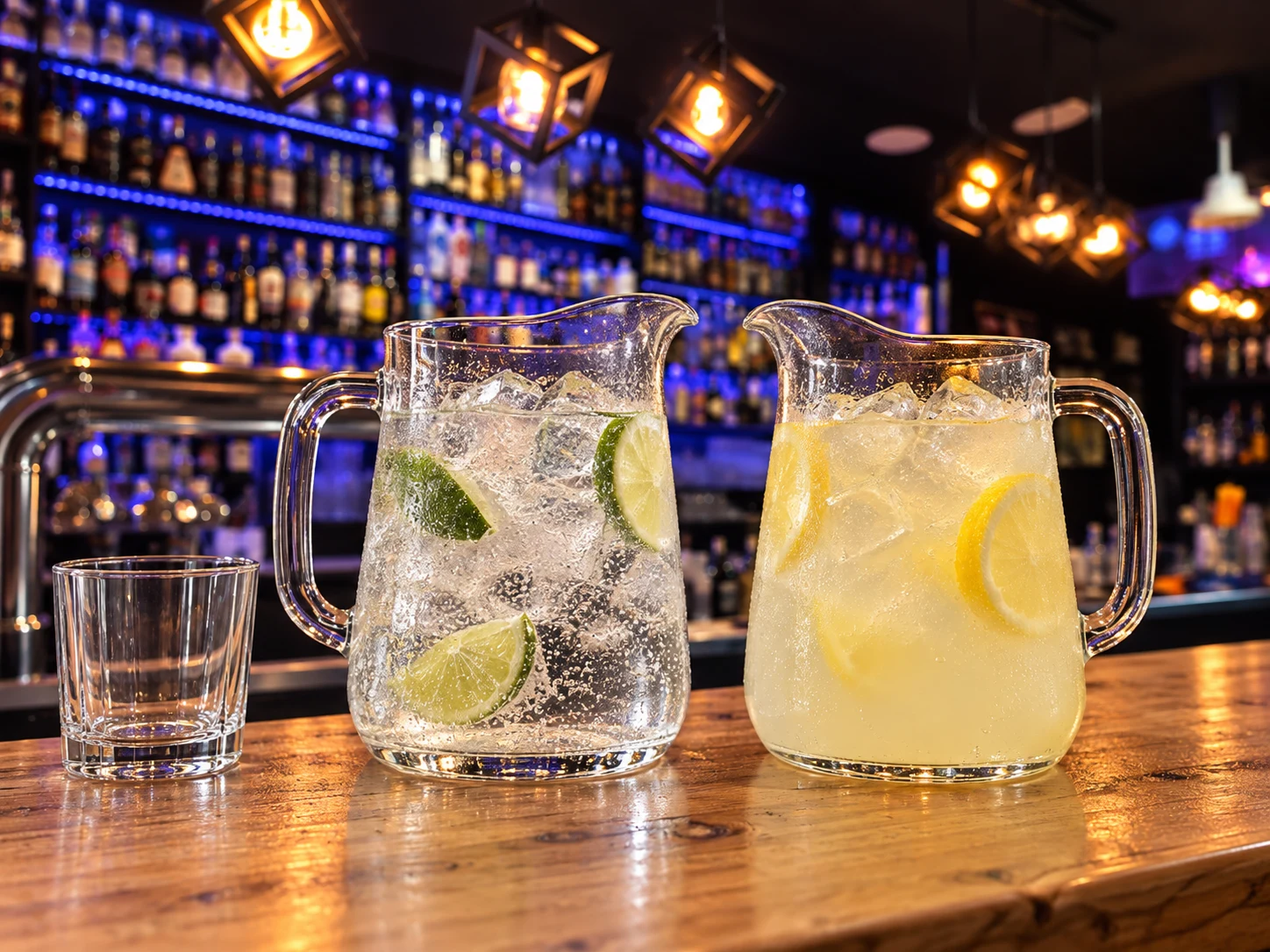
Dry gin and lemon soda. Thirst-quenching, straight to the point, built for sharing a pitcher.
Nothing fancy: you pick the gin, lemon soda cuts through, fresh lime closes it. Light but with some structure, it goes down easy when it's hot or when you want something clean without dropping the gin. By the pitcher it's a table favourite.
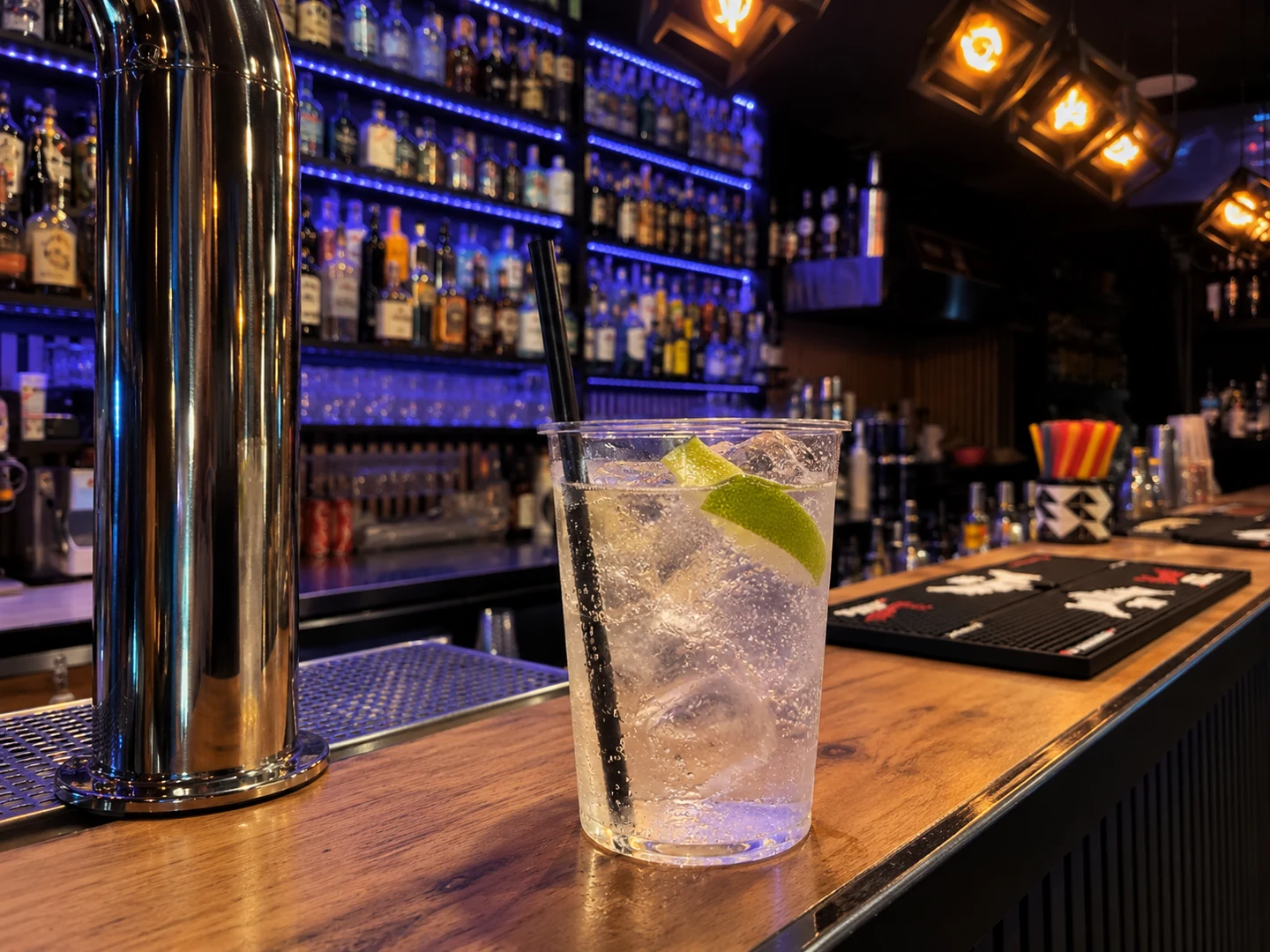
Gin of your choice, premium tonic, lime peel.
Pick your gin off our wall, let good tonic do the rest. Botanical, fizzy, properly made.
Not all gin and tonics are the same, and the gin and the tonic are where it's decided. We build yours on the gin you like, with premium tonic and a lime peel twisted over the top to open the aromatics. Fresh and dry, it holds up from aperitivo to last call.
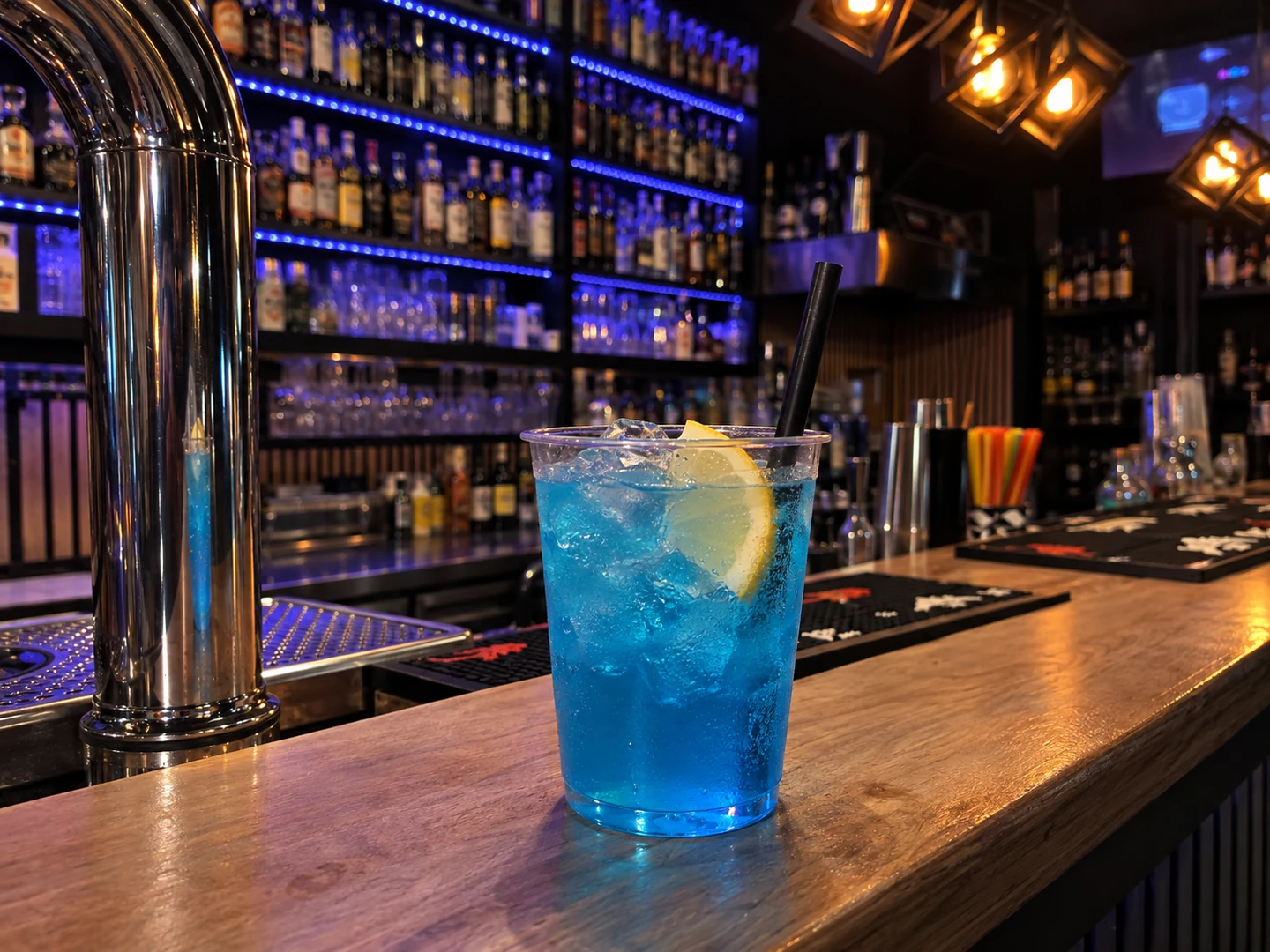
Gin, blue curaçao, triple sec, lemon.
Electric blue with the sweetness kept in check. The Italian classic that catches the eye at the bar.
Straight out of the seventies: gin, blue curaçao, triple sec and lemon, shaken and served cold. The colour is pure postcard, but underneath there's a sweet-bitter balance that actually works. It's for anyone who wants a bit of show without going full tropical.
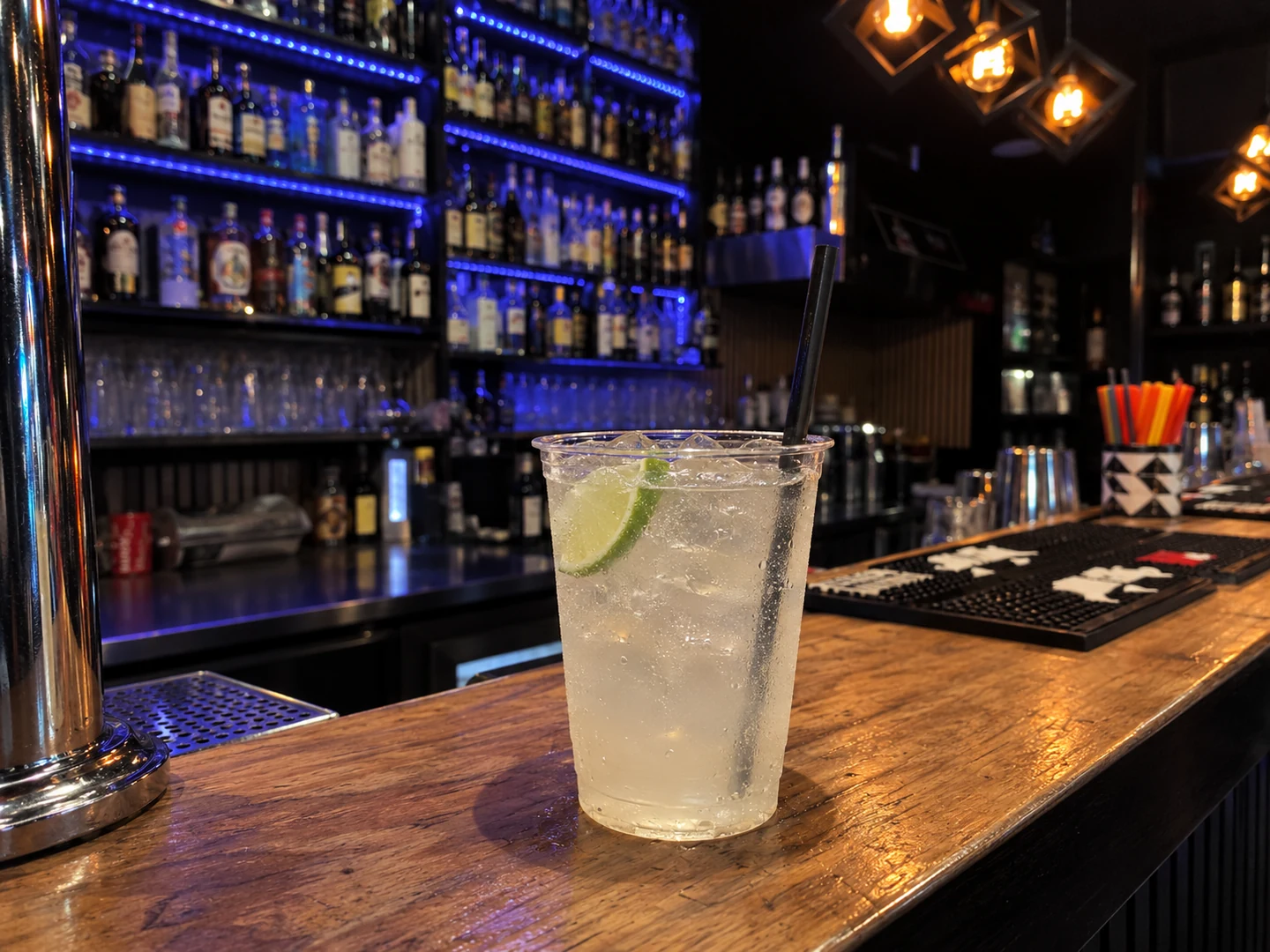
Vodka, lemon soda, fresh lime.
Clean vodka, sharp lemon. The long drink everyone knows and nobody says no to.
Straightforward and refreshing: neutral vodka, fizzy lemon soda, lime to finish. No botanicals, no complications, just something cold that goes down easy. The student long drink by definition, and here that's exactly what it is: simple, generous, by the pitcher if you want.
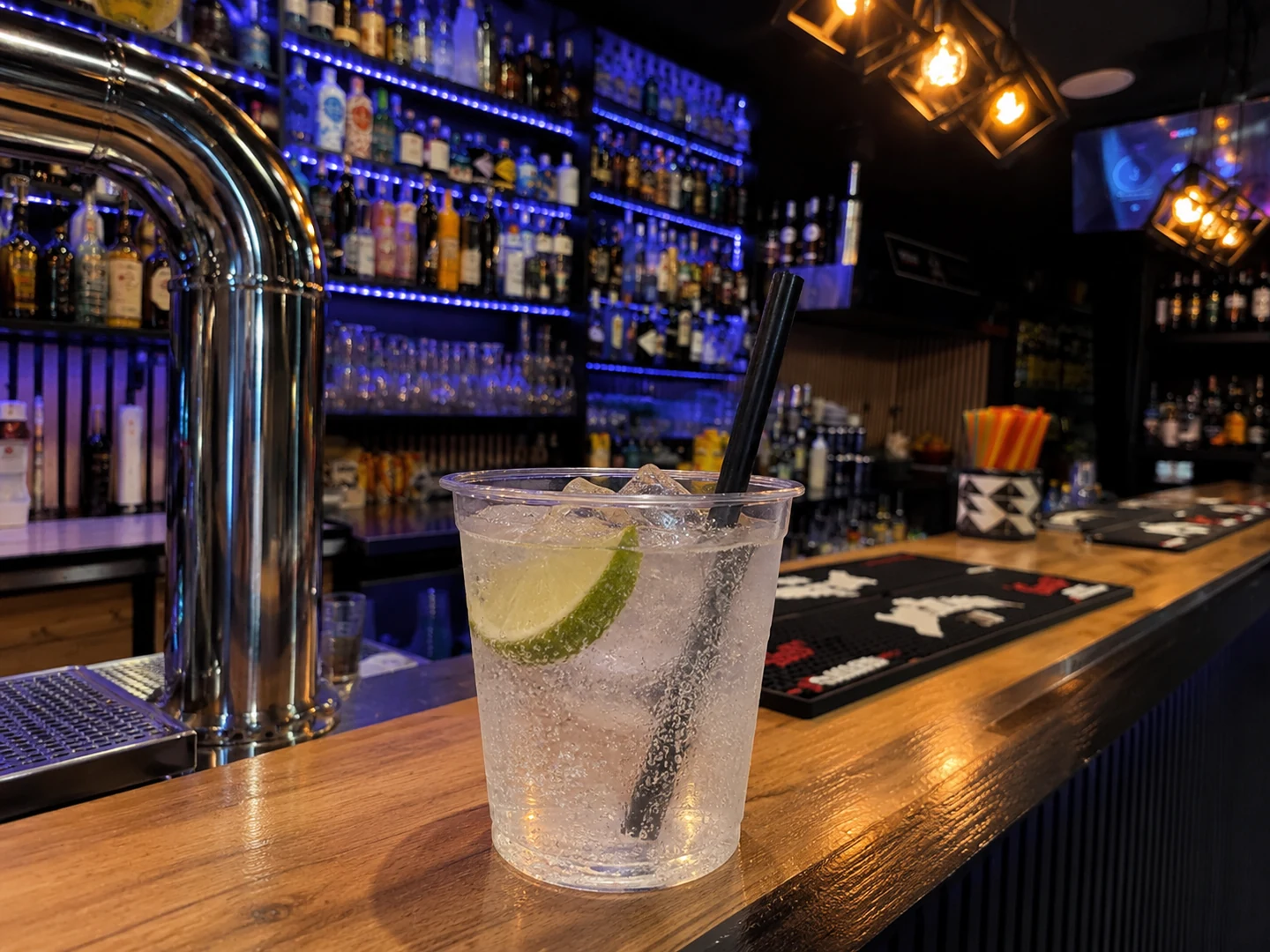
Vodka, tonic, lime.
Drier than gin, cleaner than the lemon one. Vodka and tonic, nothing extra.
For when you want structure without the botanicals of a gin and tonic: cold vodka, bitter tonic, lime to cut through. Tall glass, lots of ice. Less aromatic than a G&T and more direct, it's the right call when you're after something dry and clean.
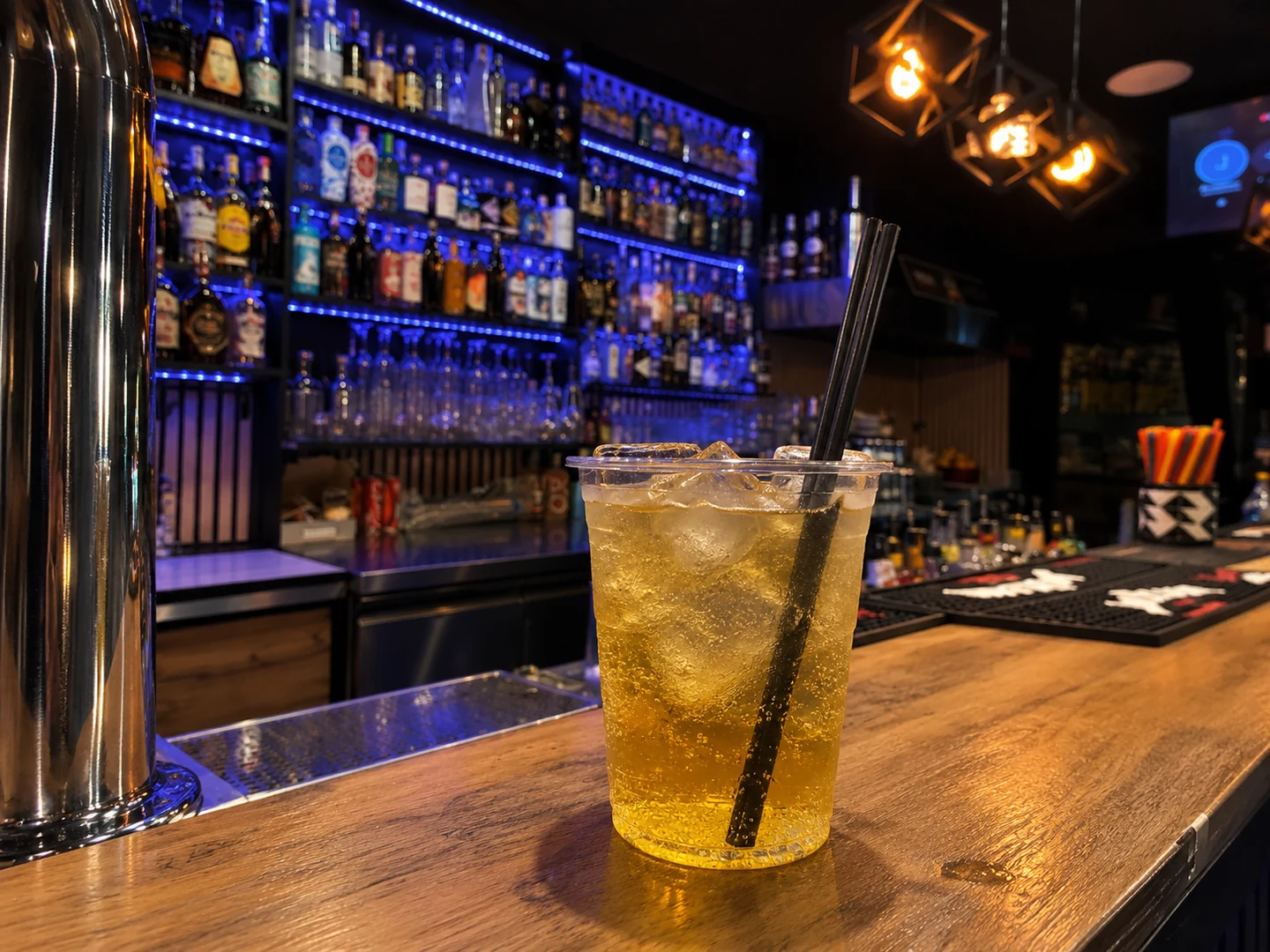
Vodka, Red Bull.
Vodka and Red Bull. Fuel for the night, plain and simple.
Two ingredients and an instant effect: clean vodka and fizzy energy drink, served cold and quick. Not a sipping drink, it's the one you order when the night needs to shift gear. We pour it fast, the way it's meant to be.
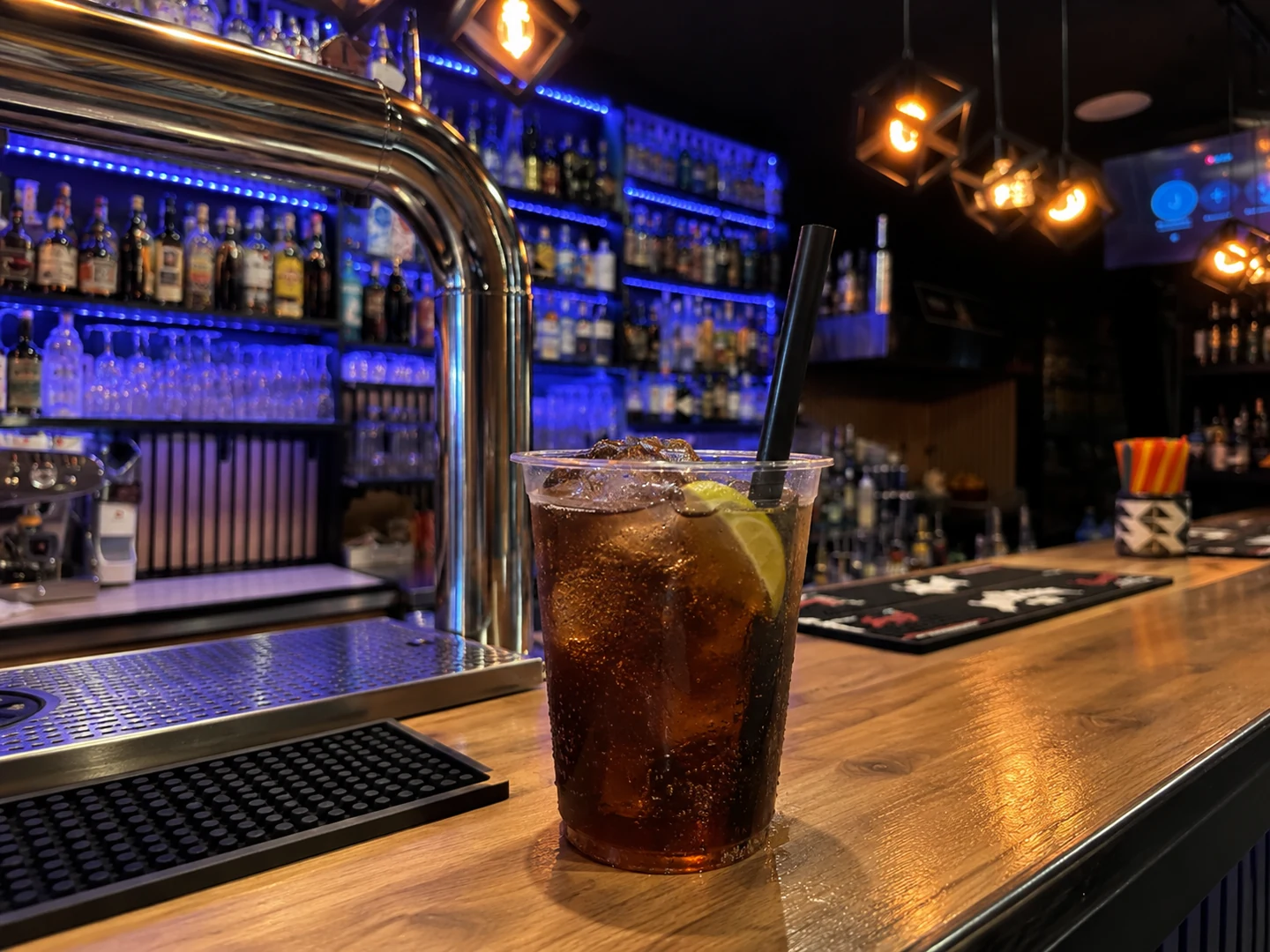
Rum, cola.
Rum and cola, full stop. Two ingredients, no debate, always a safe bet.
It's the Cuba Libre stripped back: white or dark rum, cold cola, ice. No lime, just cola sweetness and rum warmth meeting in the middle. By the pitcher it's the group drink by default, especially early in the night.
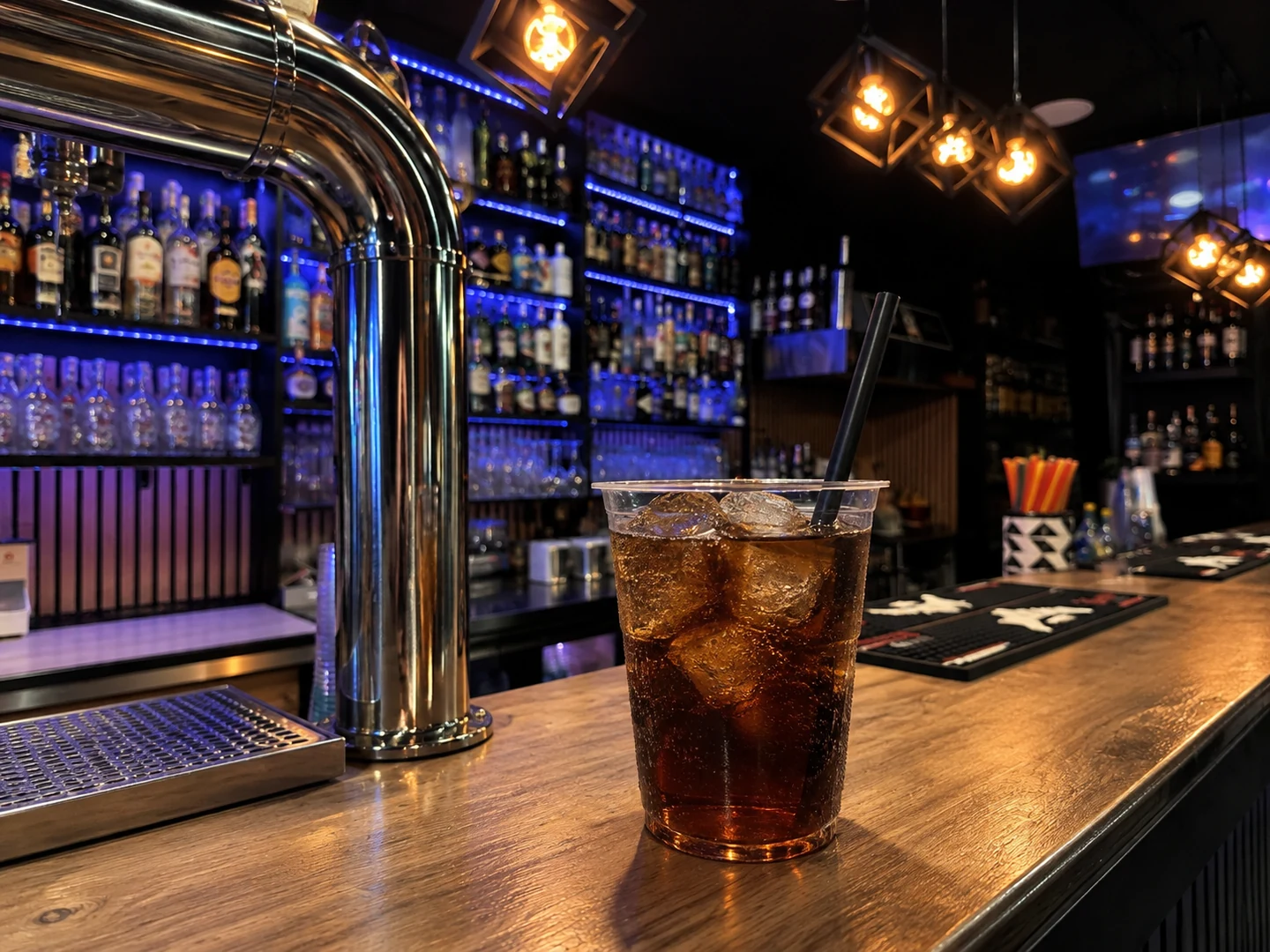
Whiskey, cola.
Whiskey and dark cola. Warmth, sweetness and a bit of character: the classic that always holds.
Bourbon or a blend meeting cold cola: the wood smoke softens and the cola sweetness wraps around it. A sturdy long drink for anyone who wants structure without taking their whiskey neat. By the pitcher it's the right partner for a long night.
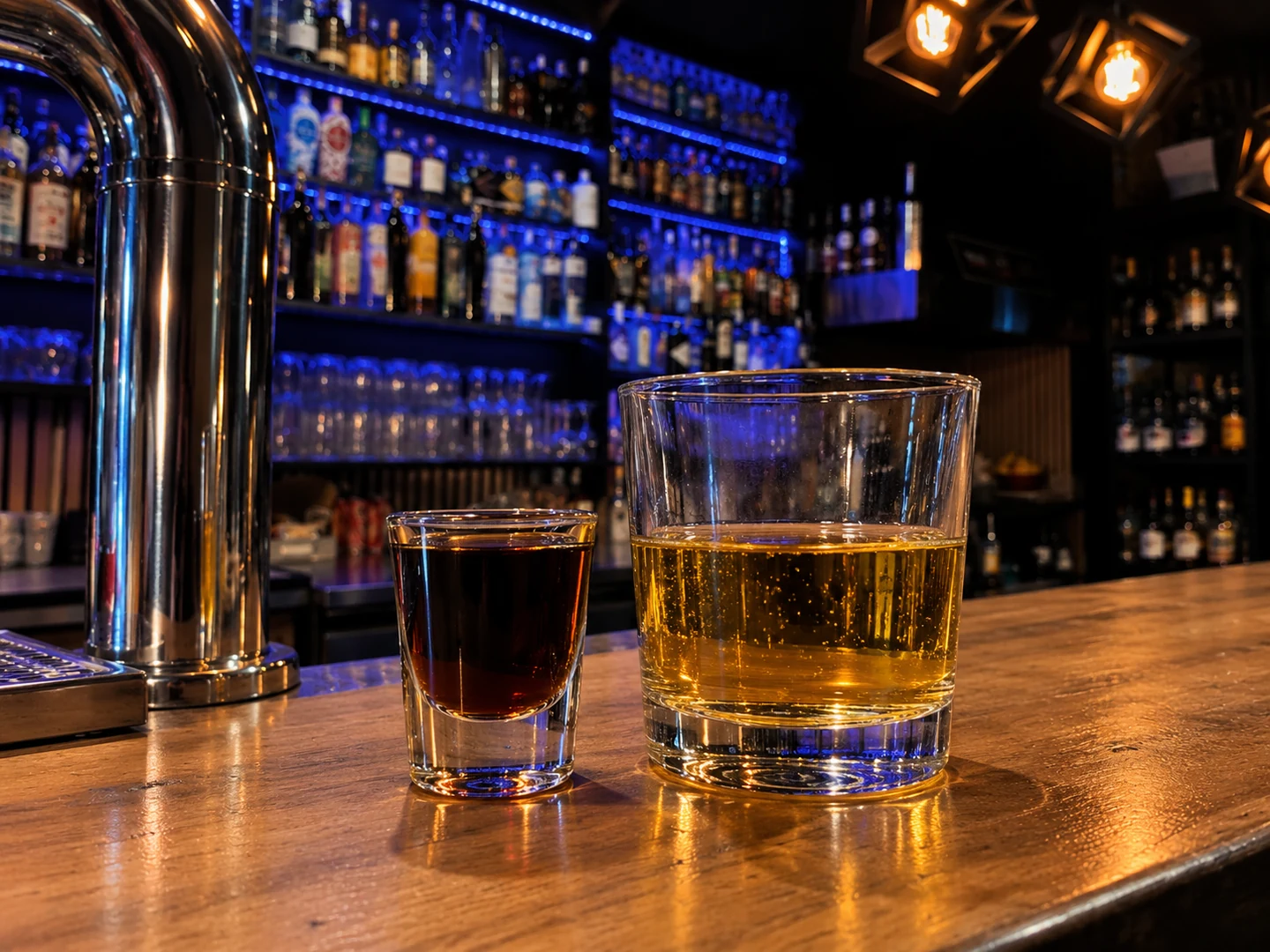
Jägermeister, Red Bull.
A shot of Jäger dropped into the Red Bull. Dark herbs, energy and a guaranteed group cheer.
The bomb shot by definition: herbal, spiced Jägermeister, fizzy Red Bull, instant effect. You don't sip it, you knock it back in one, usually with company. The bar ritual for when the night goes from chatting to lift-off.
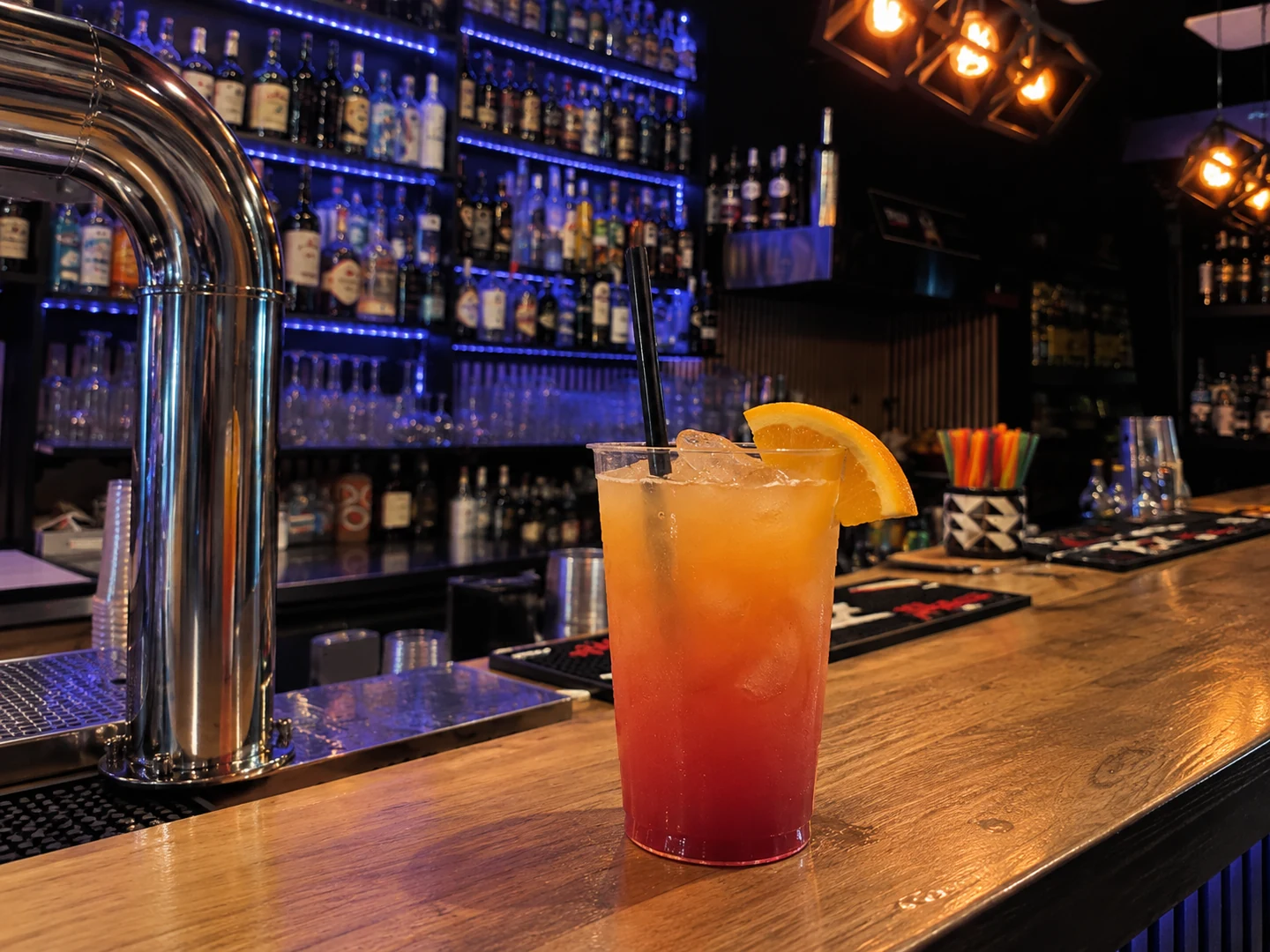
Vodka, peach schnapps, cranberry juice, orange juice.
Peach, cranberry and orange. Sunset colours and a sweet hit that never gets old.
Out of 1980s Florida: vodka, peach schnapps, cranberry and orange, shaken and served cold. Fruity, colourful, immediate, it tastes like a holiday miles from any beach. For anyone who wants the sweetness but doesn't want to go soft on the alcohol.
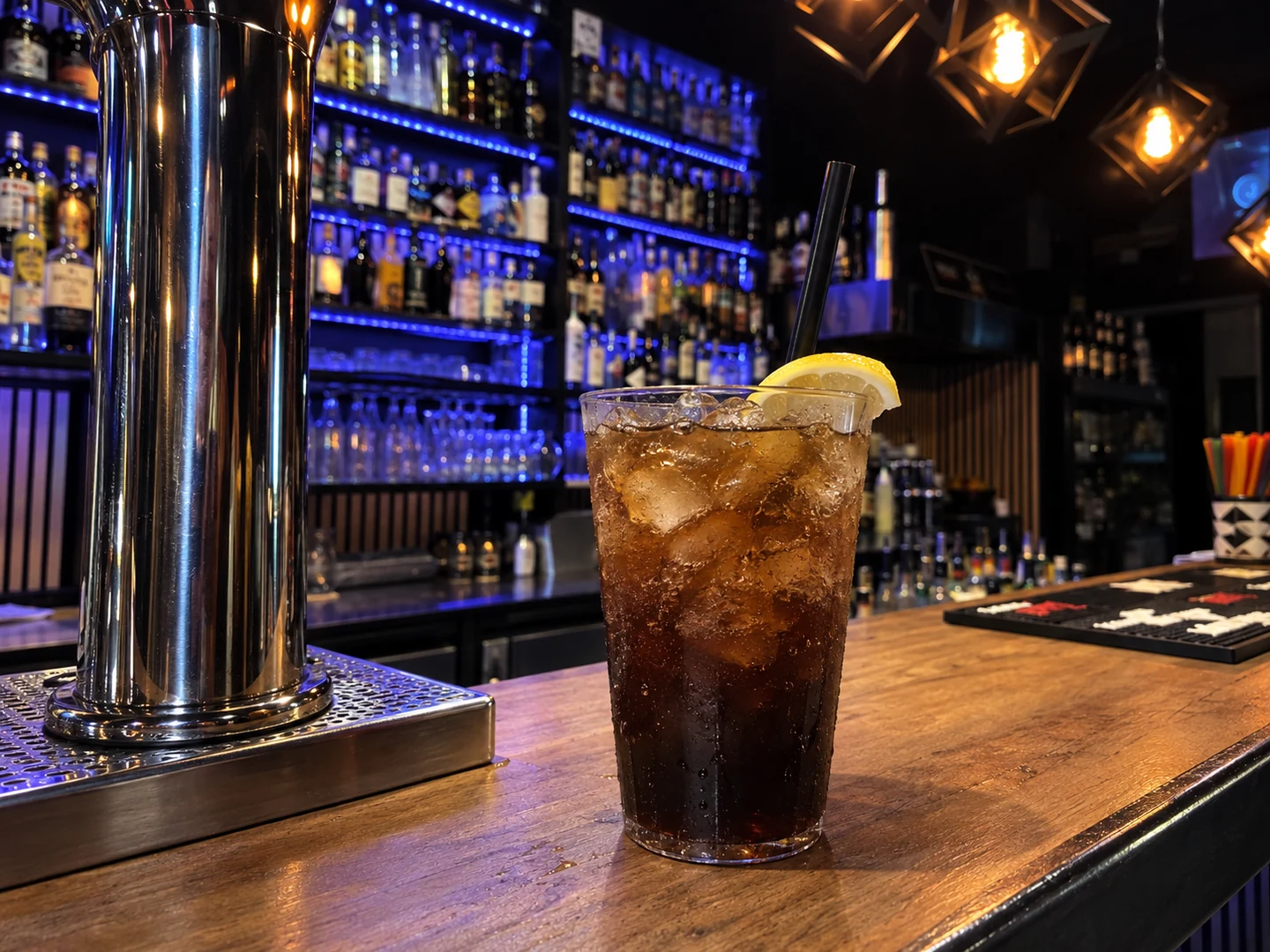
Vodka, gin, rum, tequila, triple sec, lemon, cola.
Five spirits and dark cola. Looks innocent, isn't: the long drink that knows exactly what it wants.
Vodka, gin, rum, tequila and triple sec shaken with lemon, then cola to lengthen it and fool the eye. Born in the seventies, it's the sneakiest drink on the list: sweet on the tongue, serious in the glass. Best to know what you're ordering.
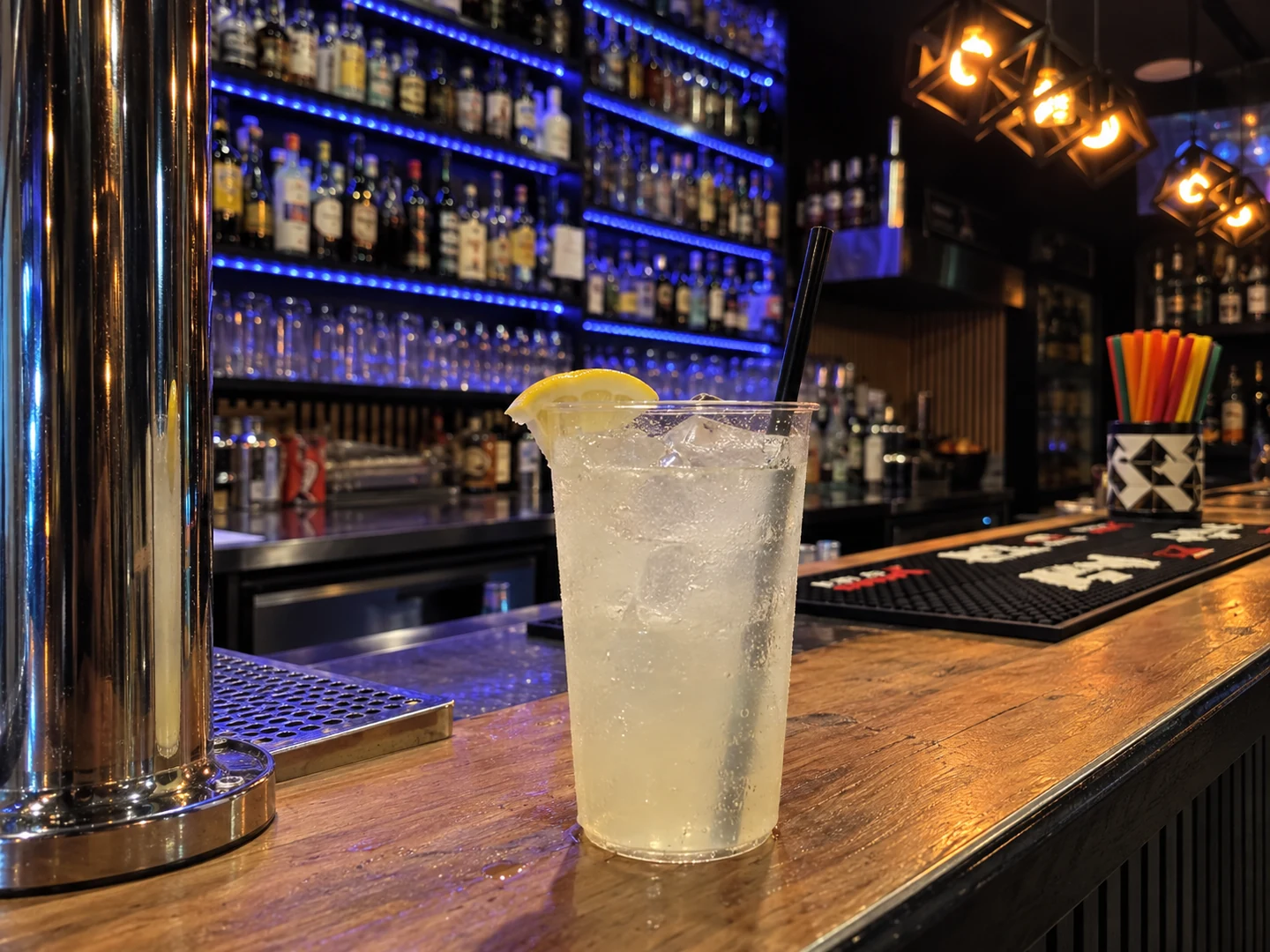
Vodka, gin, white rum, white tequila, lemon soda.
Four clear spirits and lemon soda. Honest, potent, made for the pitcher.
Vodka, gin, white rum and white tequila, lengthened with lemon soda: clear, sharp, no beating around the bush. The group long drink for anyone after strength without the complications. By the pitcher it's one of the classics we get asked for most.
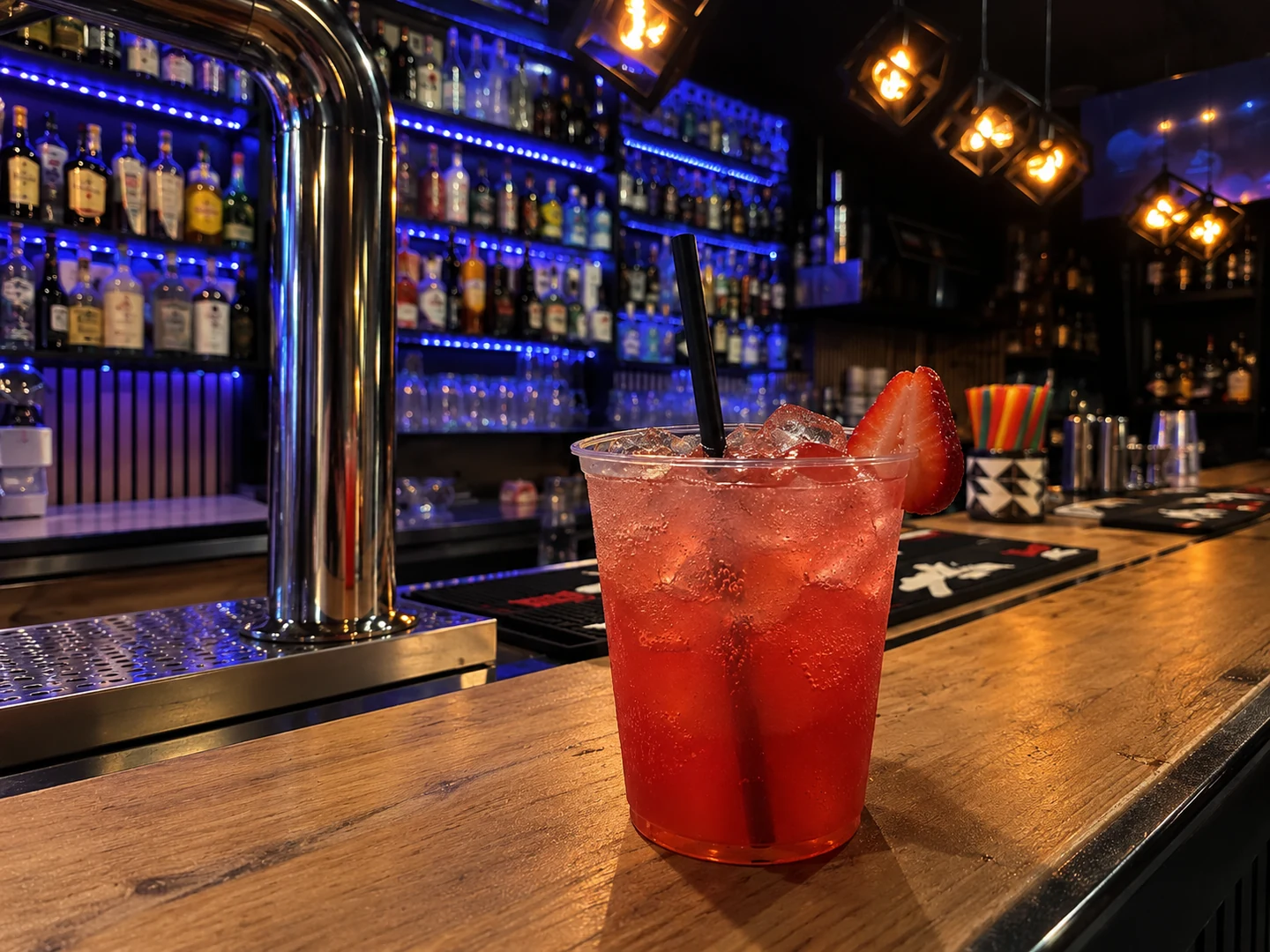
Vodka, gin, white rum, white tequila, strawberry, lemon soda.
The Quattro Bianchi with fresh strawberry. Vivid red, real sweetness, the same punch as ever.
Same Quattro Bianchi base, with fresh strawberry bringing colour and a summer scent. Sweeter and fruitier, but the alcoholic backbone is all still there: the strawberry softens it without hiding the four spirits. By the pitcher it's the pick when the group wants something gentler.
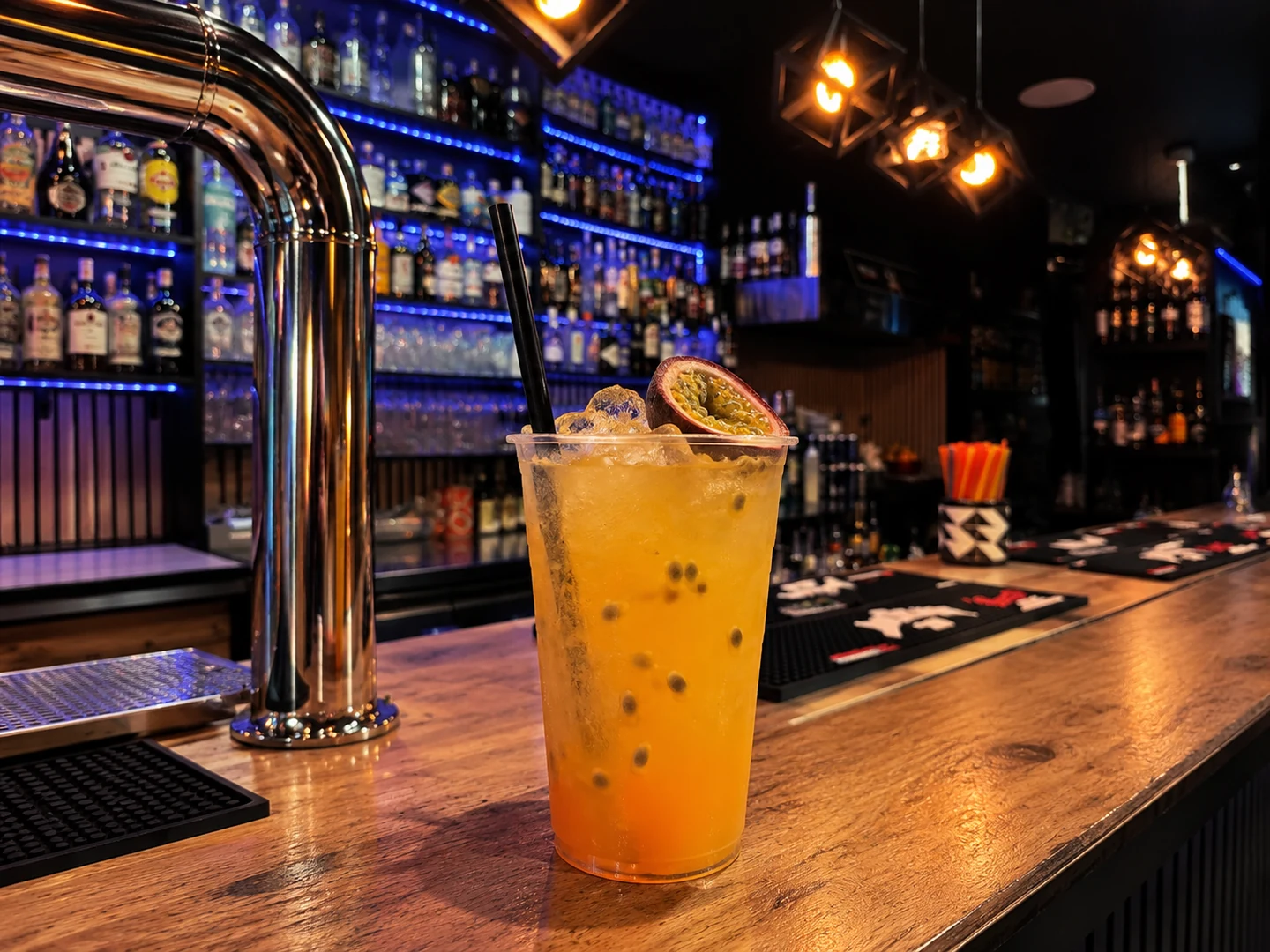
Vodka, gin, white rum, white tequila, passion fruit, lemon soda.
Passion fruit over the four clear spirits. Vivid orange, tropical and seriously potent: summer in a pitcher.
Thick, slightly tart passion fruit over vodka, gin, rum and tequila: orange glass, exotic scent, the same charge as always. It's the tropical Quattro Bianchi, the one for when Bologna heats up and you want something fruity that still has shoulders.
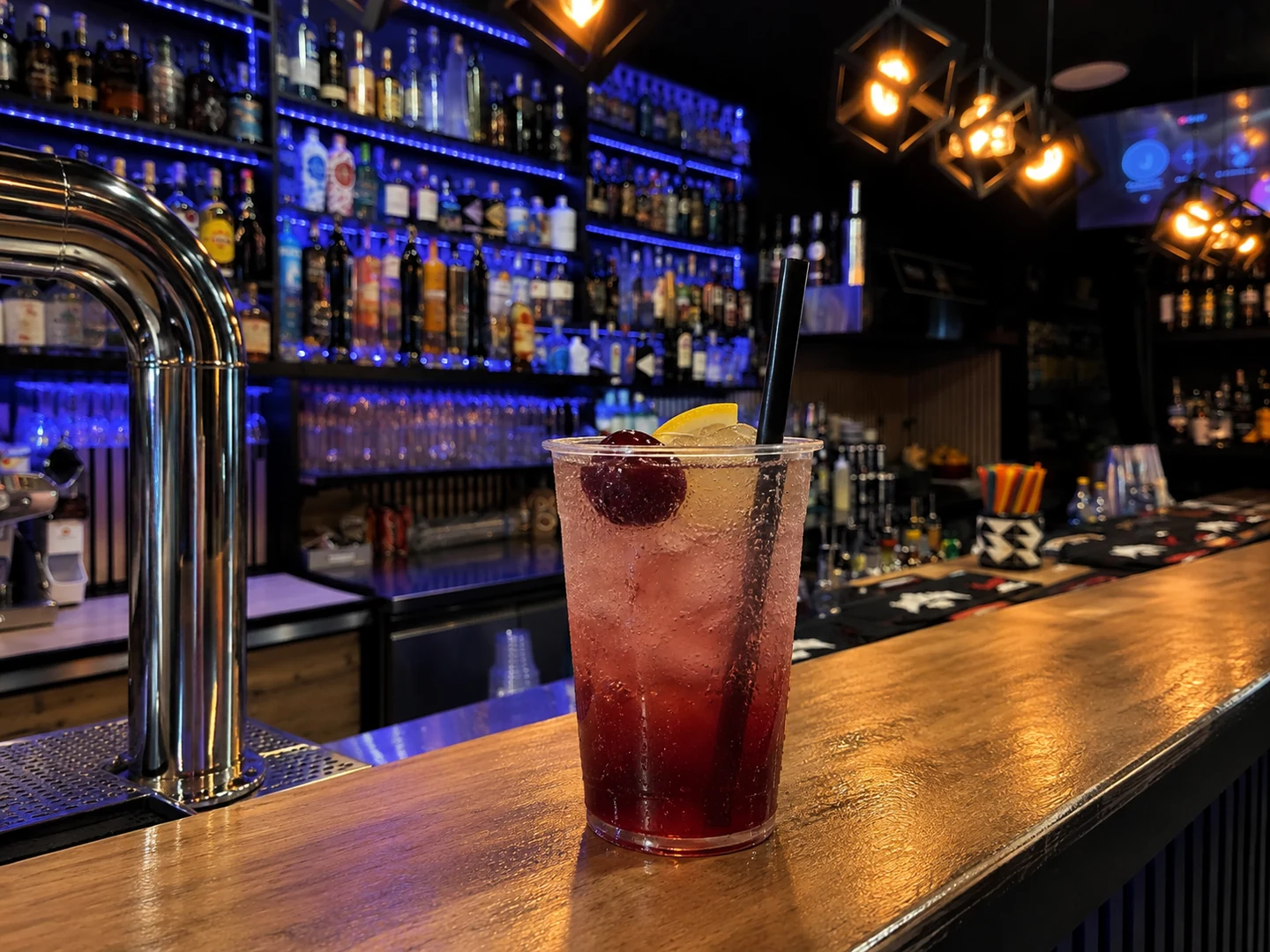
Vodka, gin, white rum, white tequila, sour cherry, lemon soda.
Dark sour cherry over the four clear spirits. Tart cherry, deep sweetness, long finish.
The sour cherry cuts the sweetness and adds acidity: dark red, big fruit, the same potent base. It's the most Italian Quattro Bianchi, with sour cherry balancing the spirits. By the pitcher it works when the group wants something richer and less tropical.
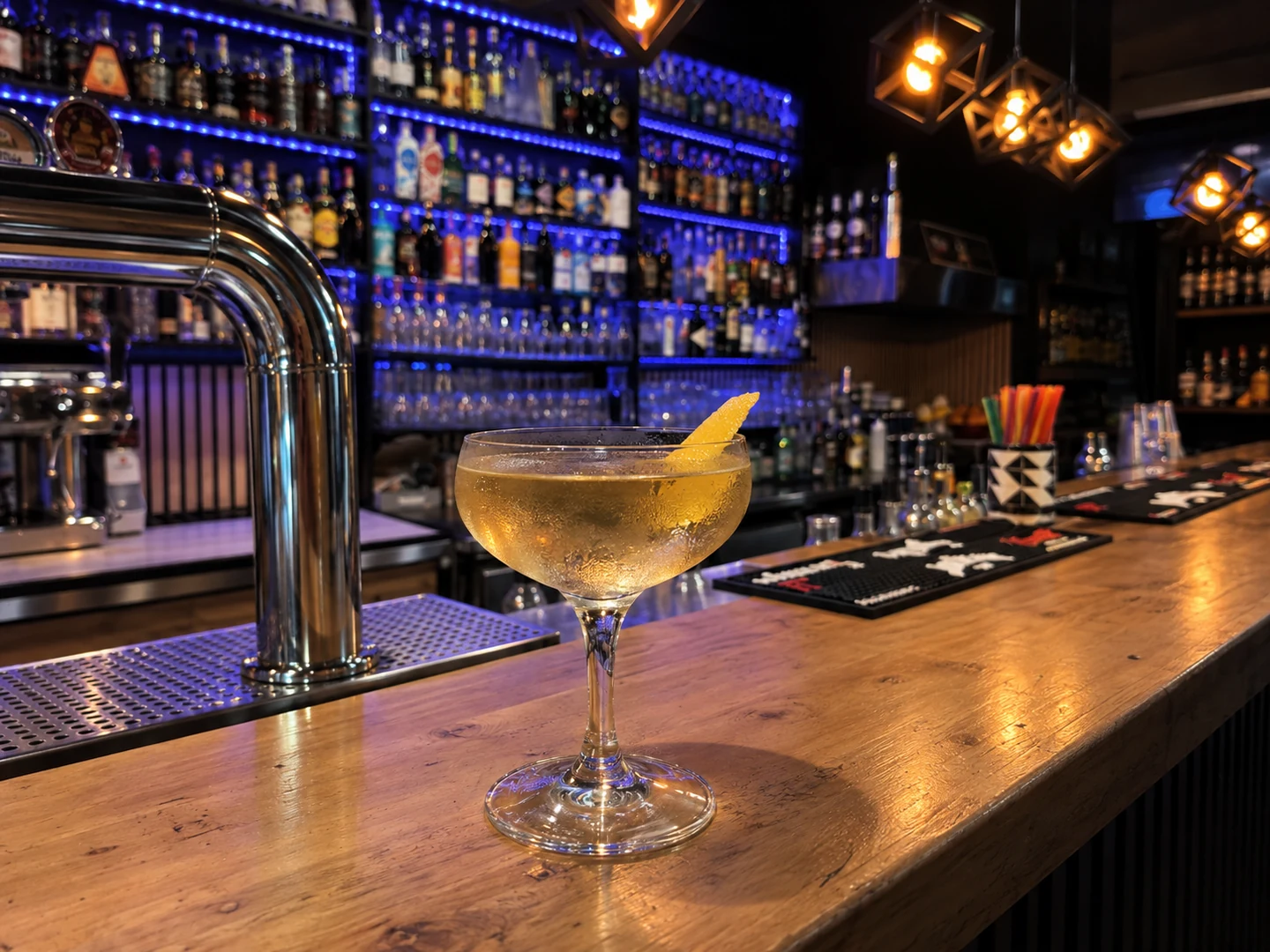
Fino sherry, dry vermouth, orange bitters, angostura.
Sherry and dry vermouth. A dry, savoury aperitif, elegant with no hard spirit at all.
A pre-Prohibition classic: fino sherry, dry vermouth, a few dashes of orange bitters and angostura, stirred and served cold. Low in alcohol and high on character, with that slightly oxidative note aperitif geeks love. A good alternative when you don't fancy gin or vodka.
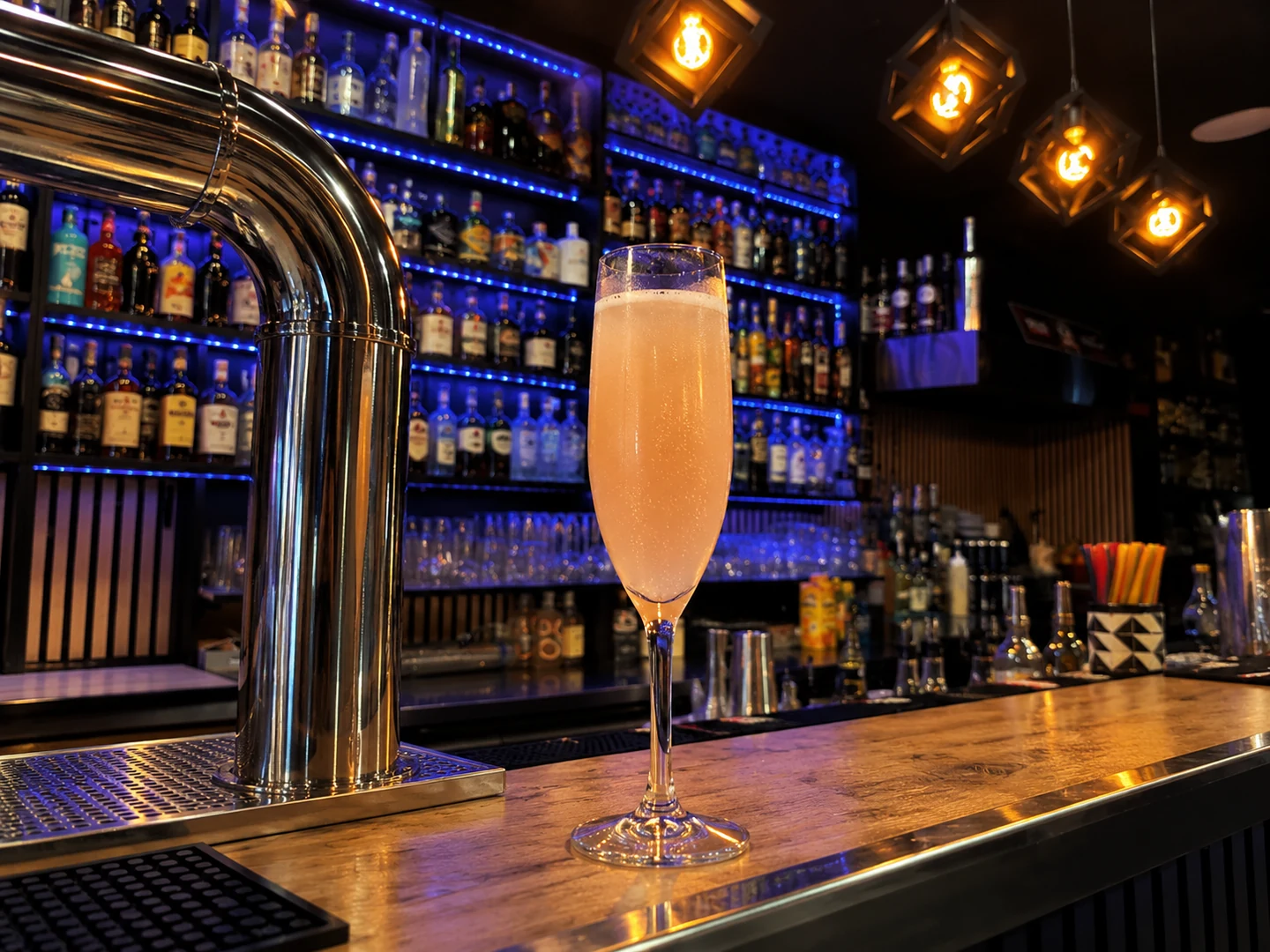
White peach purée, prosecco.
White peach and prosecco. Venetian, delicate, with bubbles that smell like summer.
Harry's Bar in Venice came up with it in the 1940s: white peach purée and prosecco, never shaken but gently stirred so the bubbles survive. Pale peach colour, soft and fruity. Great at brunch, over aperitivo, or whenever you want something light and a little refined.
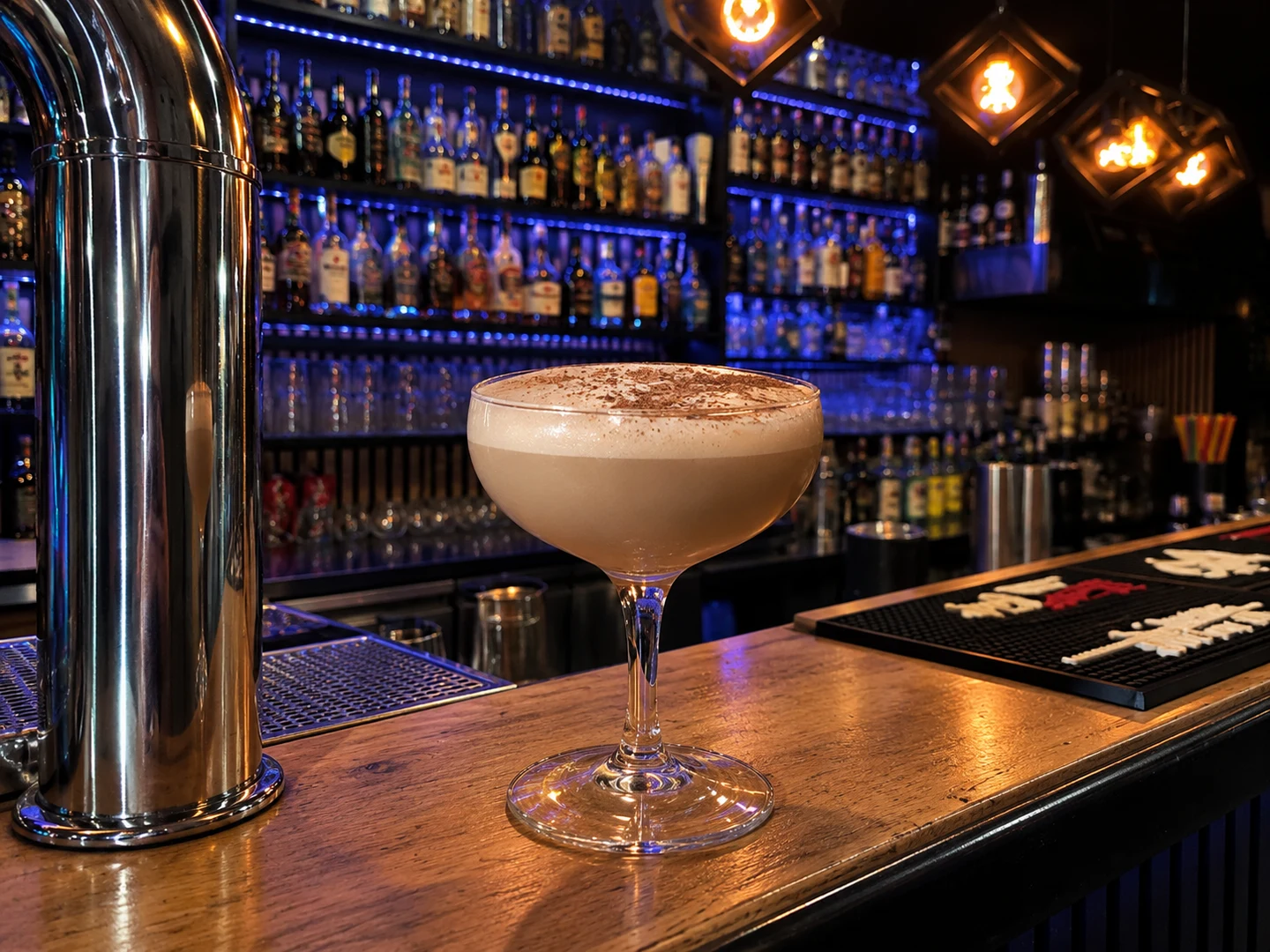
Brandy, crème de cacao, fresh cream, nutmeg.
Brandy, cacao and silky cream. Dessert in a glass, warm and velvety.
A dessert cocktail from the 1920s: brandy, crème de cacao and cream shaken with ice, served in a coupe with a grating of nutmeg. Creamy, sweet, only just alcoholic. The end-of-night choice when you want something soft instead of the usual dry bitter.
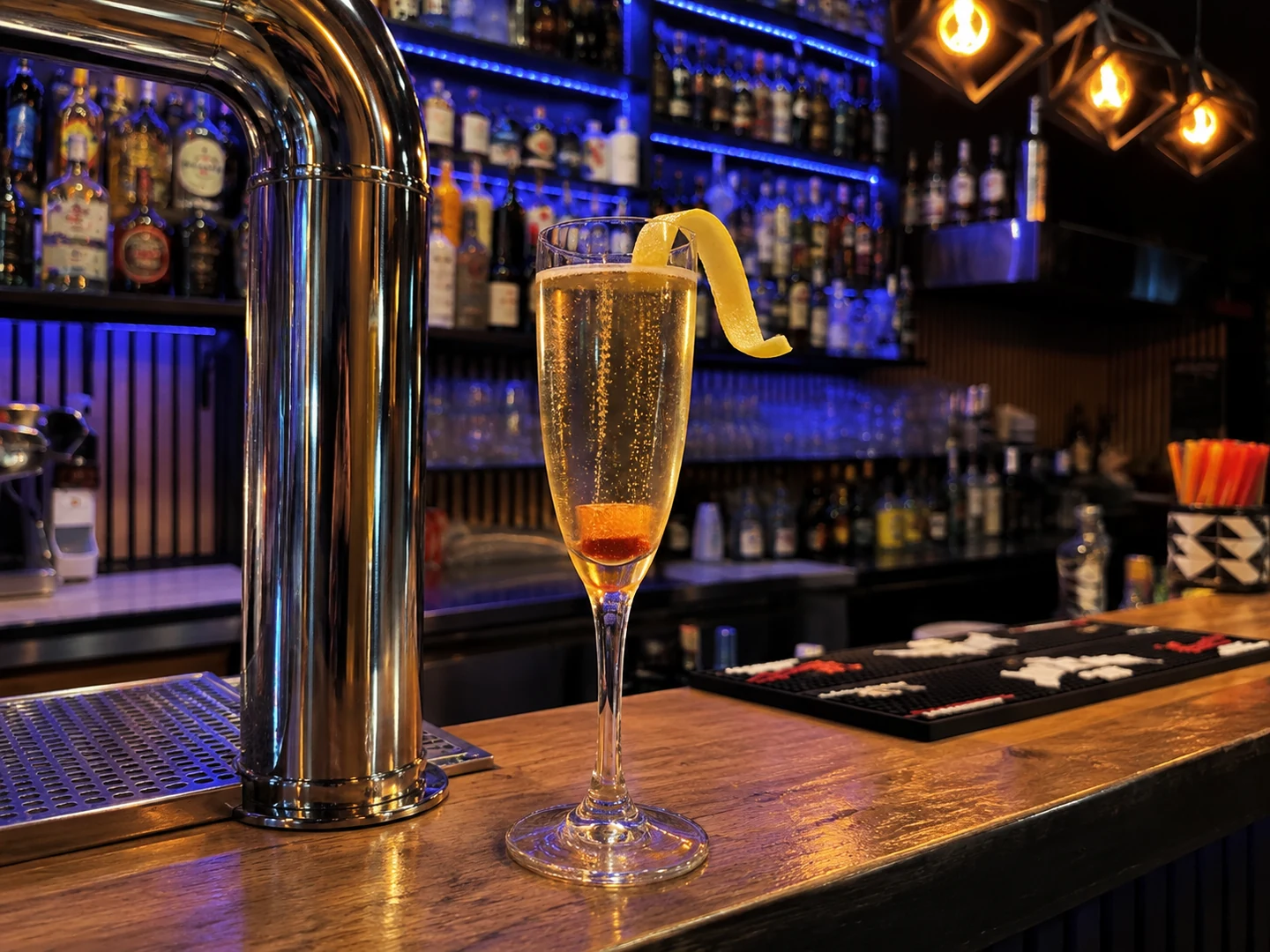
Sugar cube, angostura, champagne or prosecco, lemon peel.
Sugar cube, angostura and bubbles. An old ritual, elegant and timeless.
One of the oldest recipes there is: a sugar cube soaked in angostura, champagne or prosecco poured over, a lemon peel squeezed on top. The bubbles slowly dissolve the sugar, the bitters perfume the glass. A coupe drink for when you want a bit of ceremony, for a toast or to finish in style.
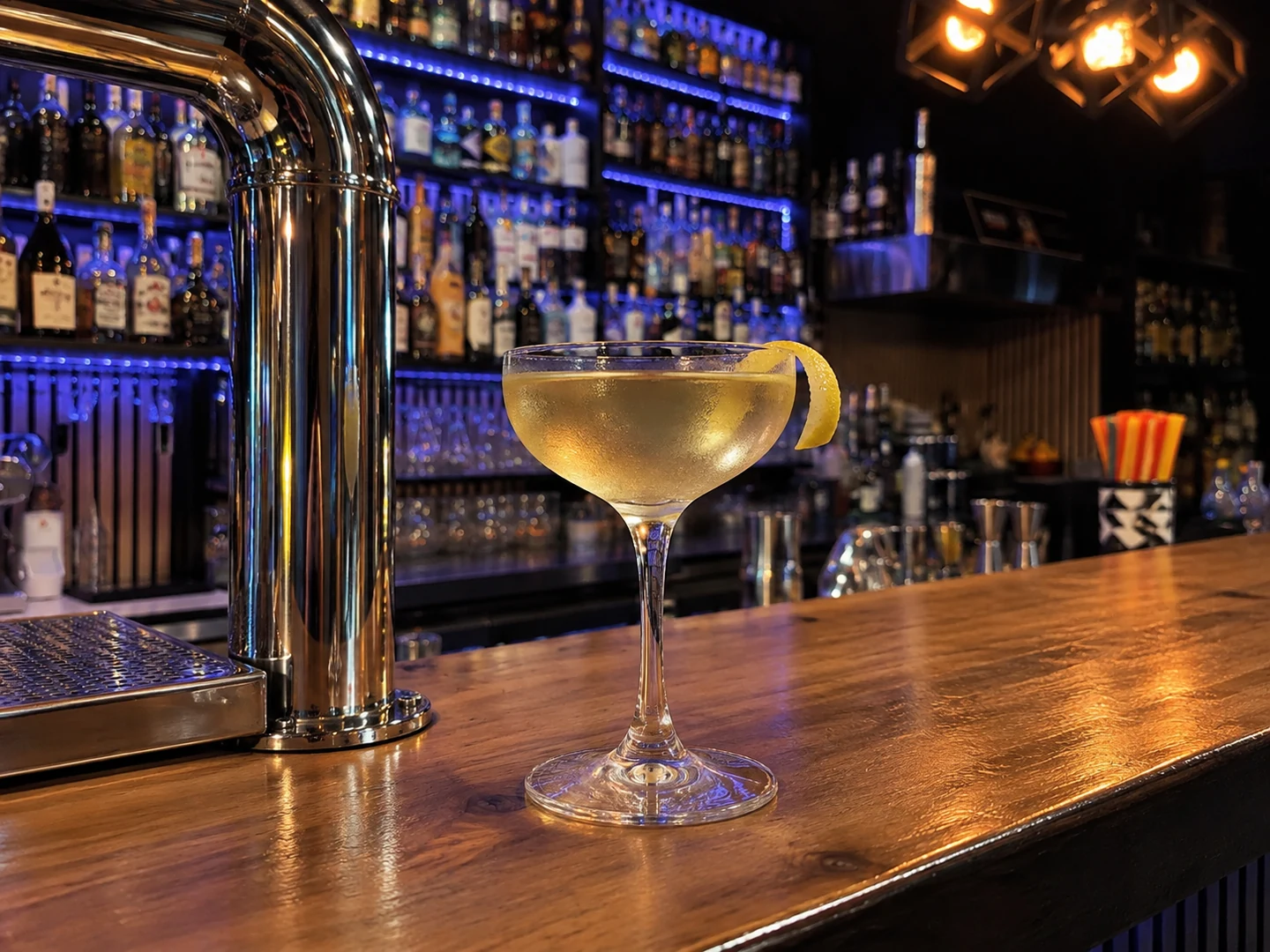
Dry vermouth, Bénédictine, absinthe.
Dry vermouth, Bénédictine and a thread of absinthe. A fragrant, dry aperitif with a surprise in it.
A nearly forgotten pre-Prohibition cocktail: dry vermouth, sweet-herbal Bénédictine and a single drop of absinthe for character. Stirred and served cold, fragrant and faintly aniseed, low in alcohol. For when you've done the Negroni and the Americano and want something more obscure.
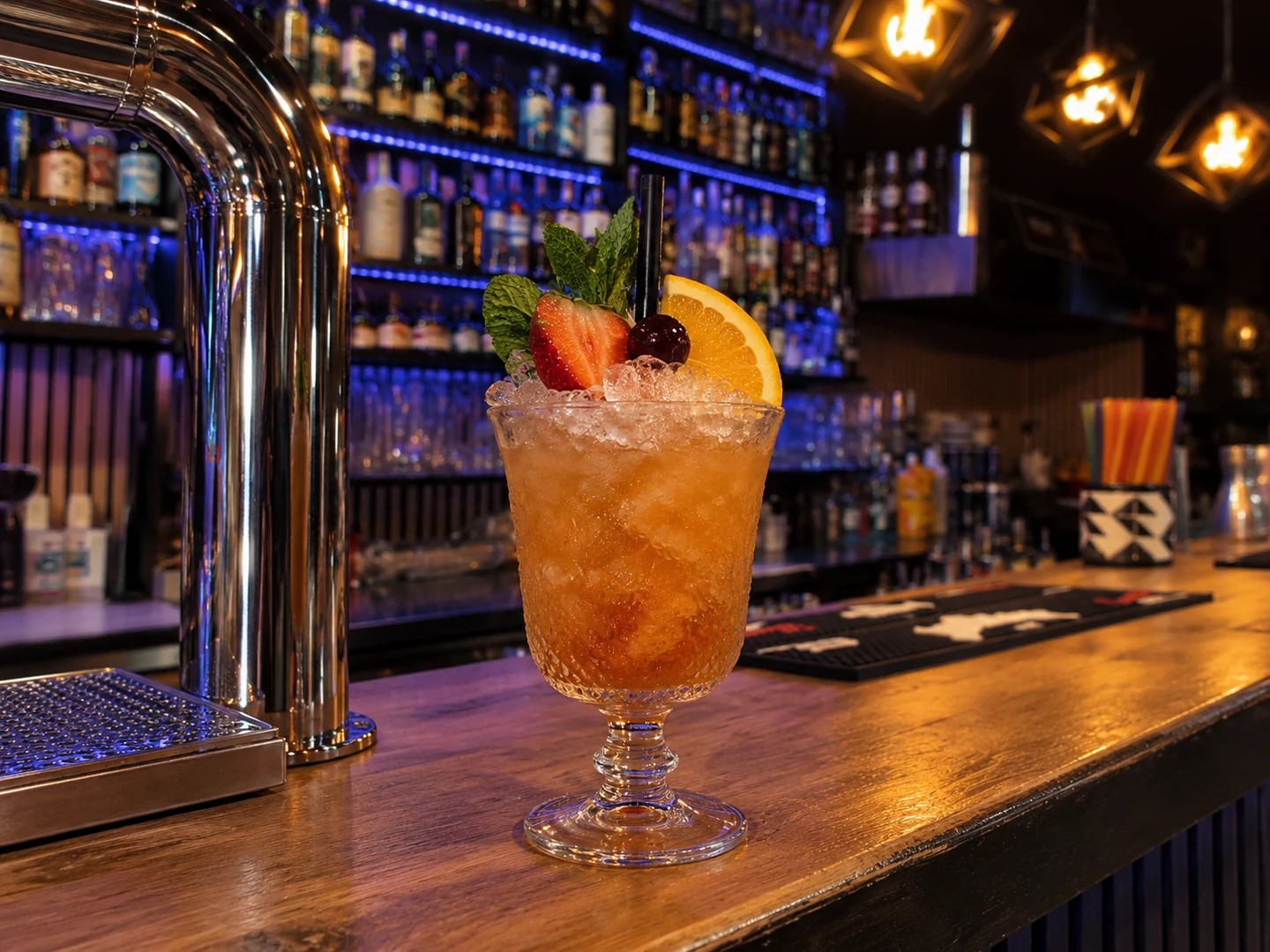
Sherry, citrus, sugar, fresh fruit, crushed ice.
Sherry over crushed ice with fresh fruit and citrus. Fresh, old-school, perfect from mid-afternoon on.
One of the earliest American cocktails on record: sherry, sugar, citrus and crushed ice, with some fresh fruit on top. Fresh, light, easy to drink, built for heat and slow hours. We pour it for anyone who wants something other than the usual long drink, with a bit of history in it.
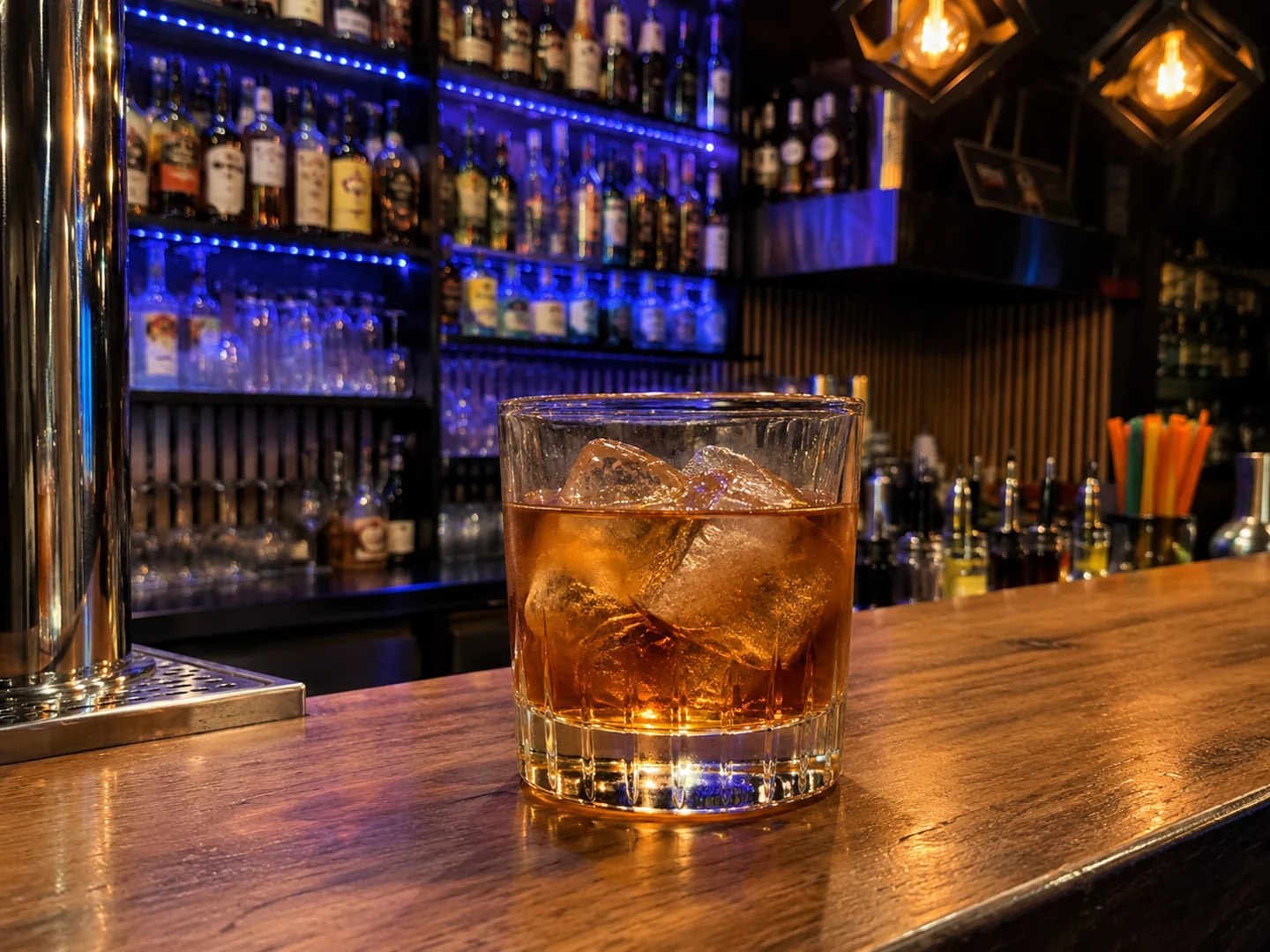
Cognac, amaretto.
Warm cognac and sweet amaretto. Two ingredients on the rocks, nothing more to add.
Cognac and amaretto, stirred and served over ice: brandy warmth, almond sweetness, a soft finish. It came out of the seventies and takes its name from the film. Short and decisive, made to sip slowly, after dinner or when you want something sweet without the cream.
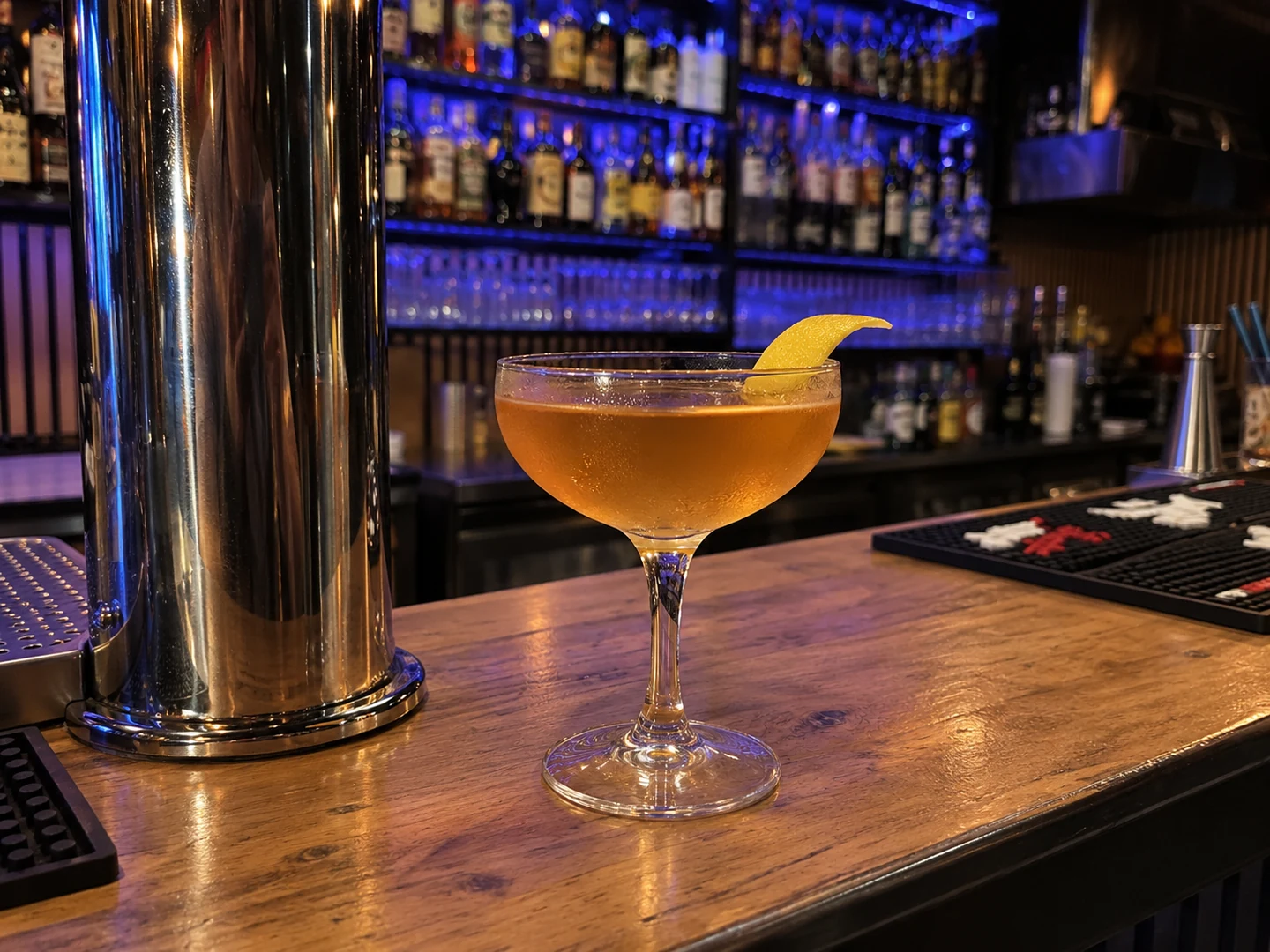
Cognac, orgeat, angostura, lemon peel.
Cognac and almond orgeat. A 19th-century classic, short, aromatic and rarely seen.
The recipe is from 1862, by Jerry Thomas: cognac, orgeat syrup, angostura and lemon peel, stirred cold. He made it in honour of the first Japanese envoy to the United States. Short, aromatic, barely sweet, it's for anyone who loves historic drinks and wants to go past the usual Negroni.
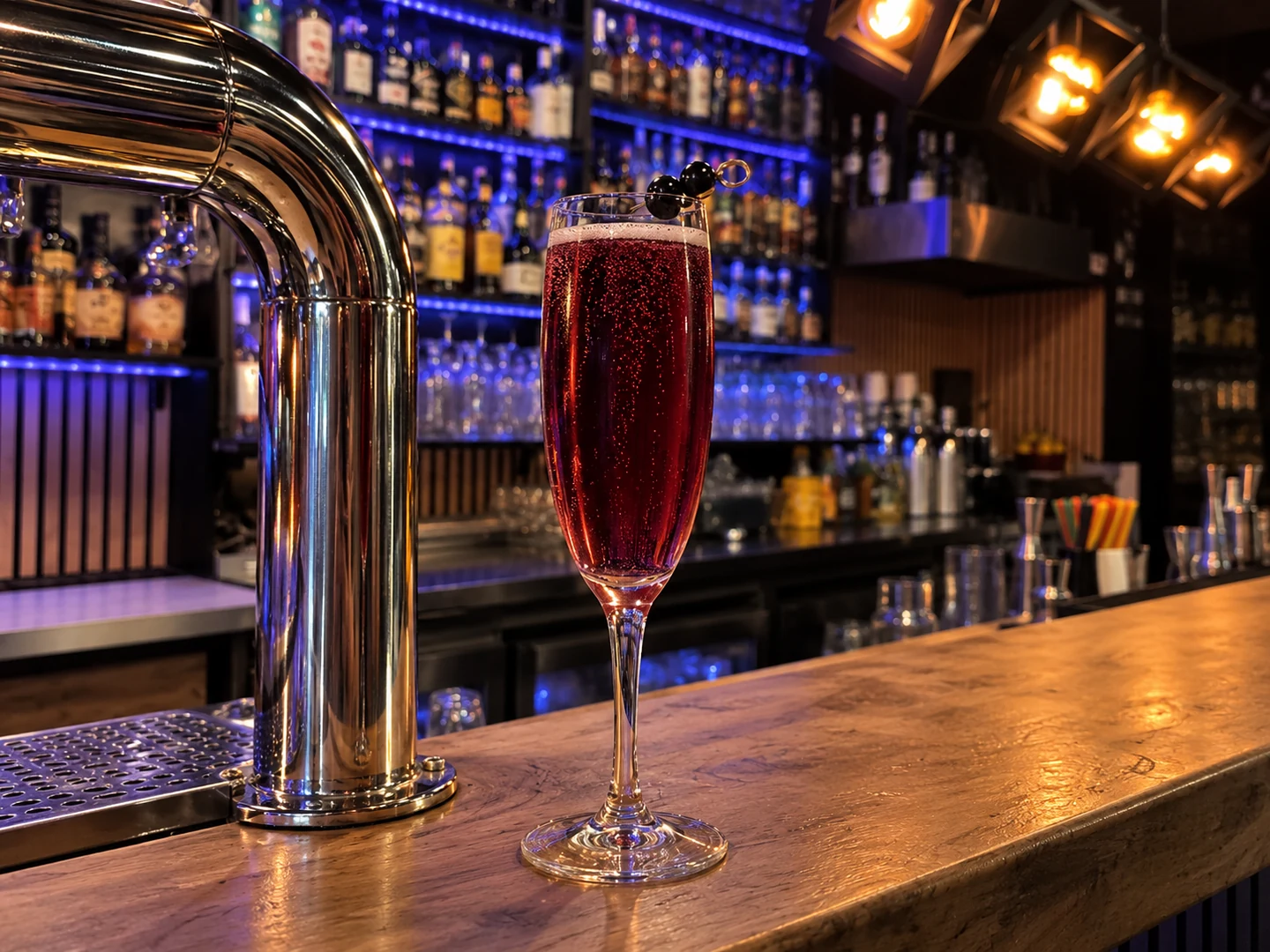
Crème de cassis, champagne or prosecco.
Crème de cassis and bubbles. Dark, French, instant: the toast that always lands.
It's the royal version of the Kir: blackcurrant crème de cassis at the bottom of the flute, then champagne or prosecco. Deep purple, the bubbles lifting the fruit, sweet and lively. Perfect for a toast, an elegant aperitivo, or when you want something light with a bit of colour.
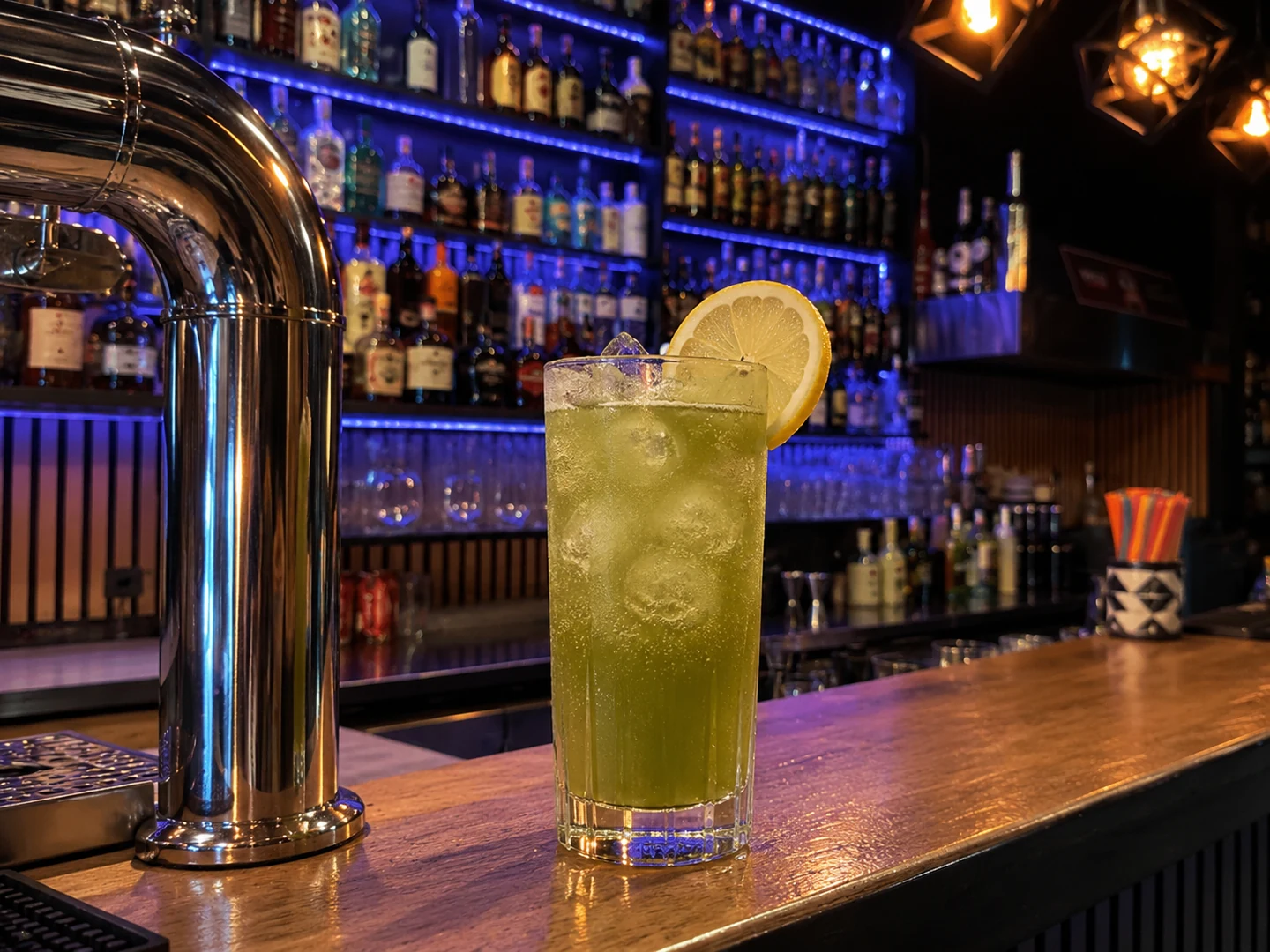
Japanese whisky, matcha, soda, lemon.
Japanese whisky and matcha in a highball. Green, tannic, fizzy: a house signature.
It's our signature highball: Japanese whisky, sifted matcha, soda and lemon, in a tall glass full of ice. Deep green, the tea tannins talking to the whisky's oak and the bubbles keeping it light. Minimal and modern, for anyone after something other than the usual long drink.
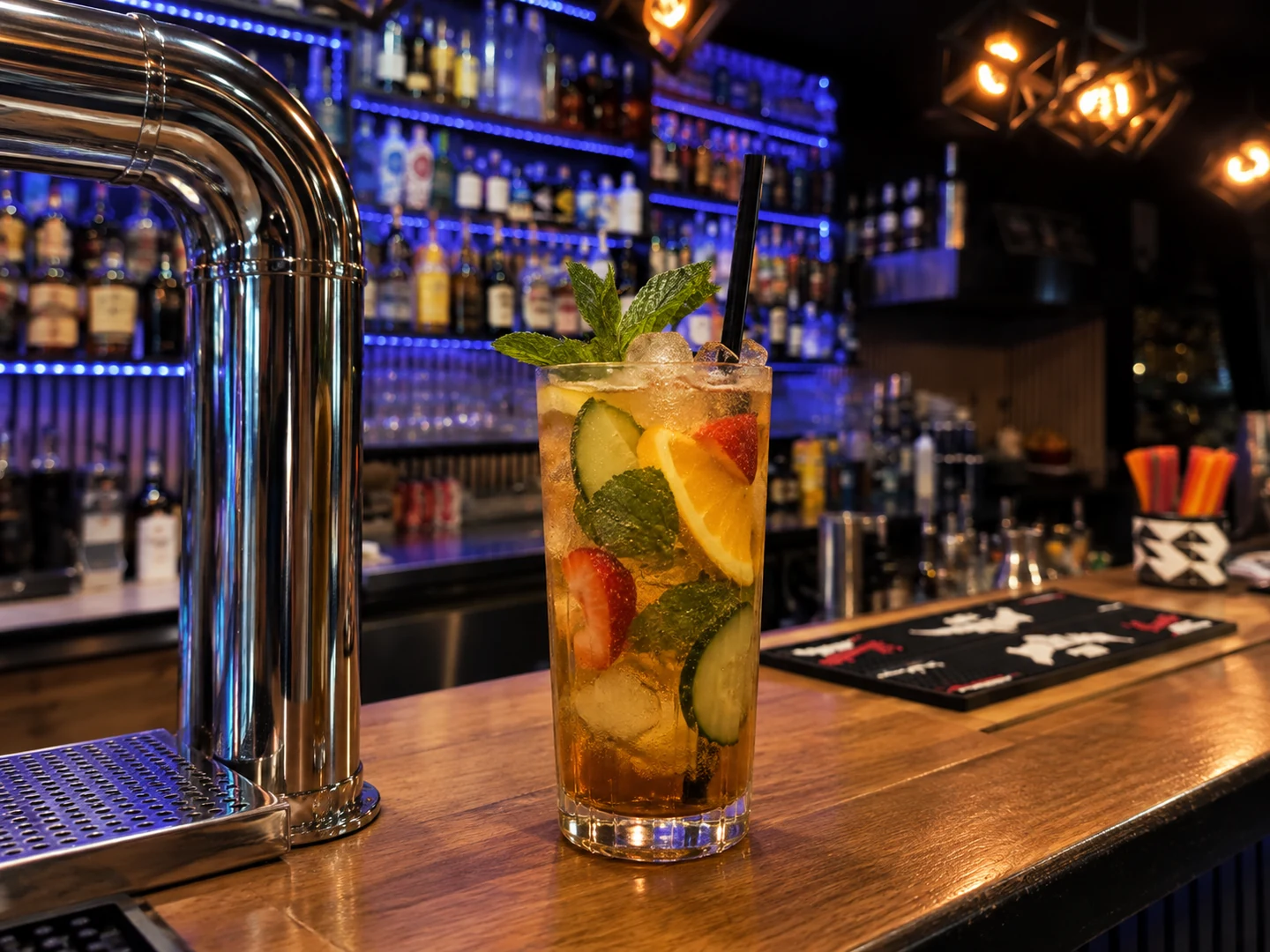
Pimm's No. 1, ginger ale or lemonade, cucumber, fruit, mint.
Pimm's, cucumber and fruit. An English long drink, fresh and sociable, made for the pitcher.
The quintessential English summer drink: Pimm's No. 1, ginger ale or lemonade, cucumber, fruit and mint in a tall glass. Light, herbal, refreshing, built to be shared. By the pitcher it's perfect for groups who want something fresh without too much alcohol.
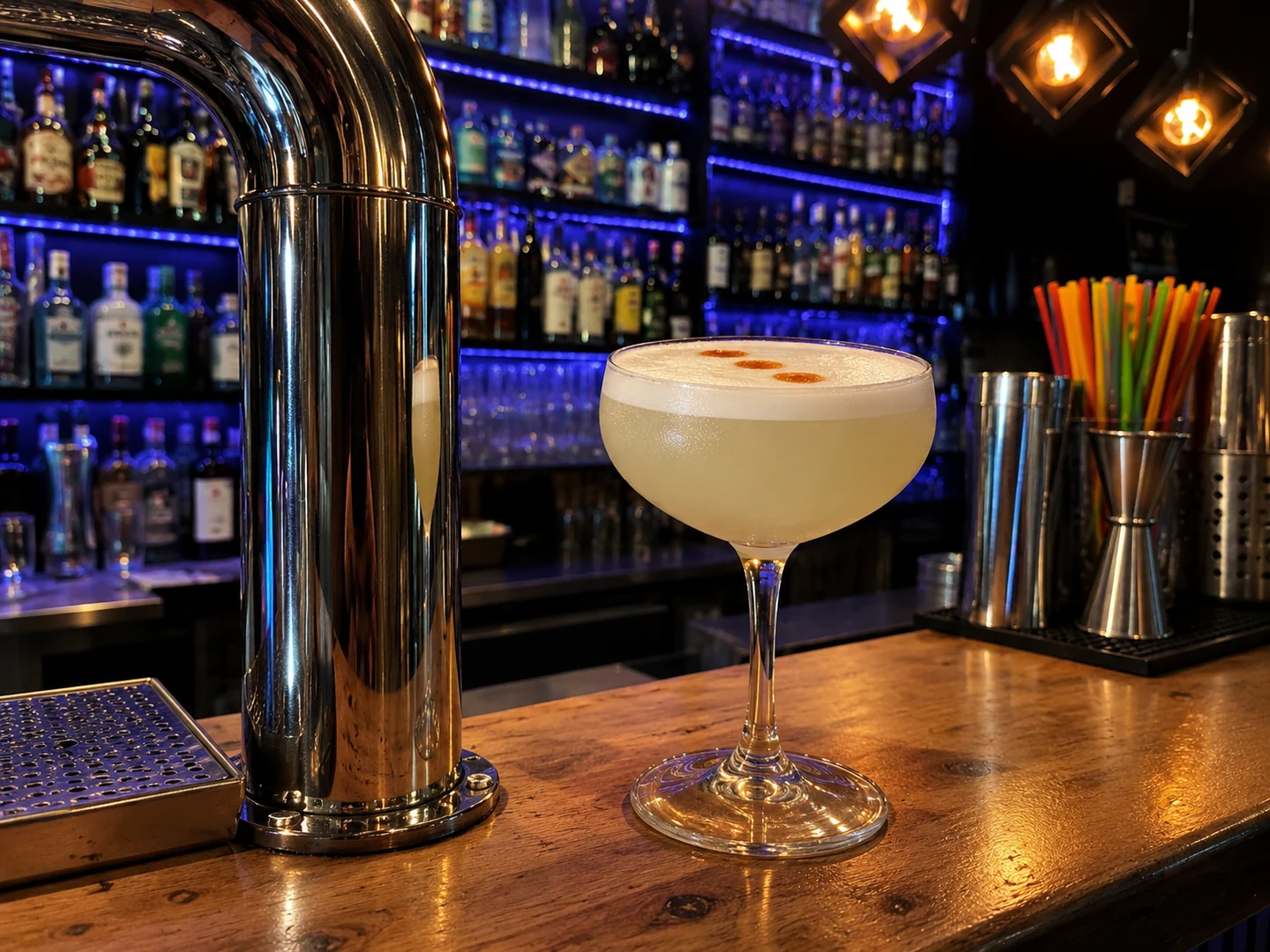
Pisco, lime, sugar, egg white, angostura.
Pisco, lime and a tight white foam. The South American sour, creamy, with bitters on top.
It's the national drink of Peru and Chile: pisco, lime, sugar and egg white, shaken first without ice to build the foam and then with it, a few drops of angostura on top. Tart, creamy, balanced. The double shake is what counts: the foam has to be dense and the lime has to bite.
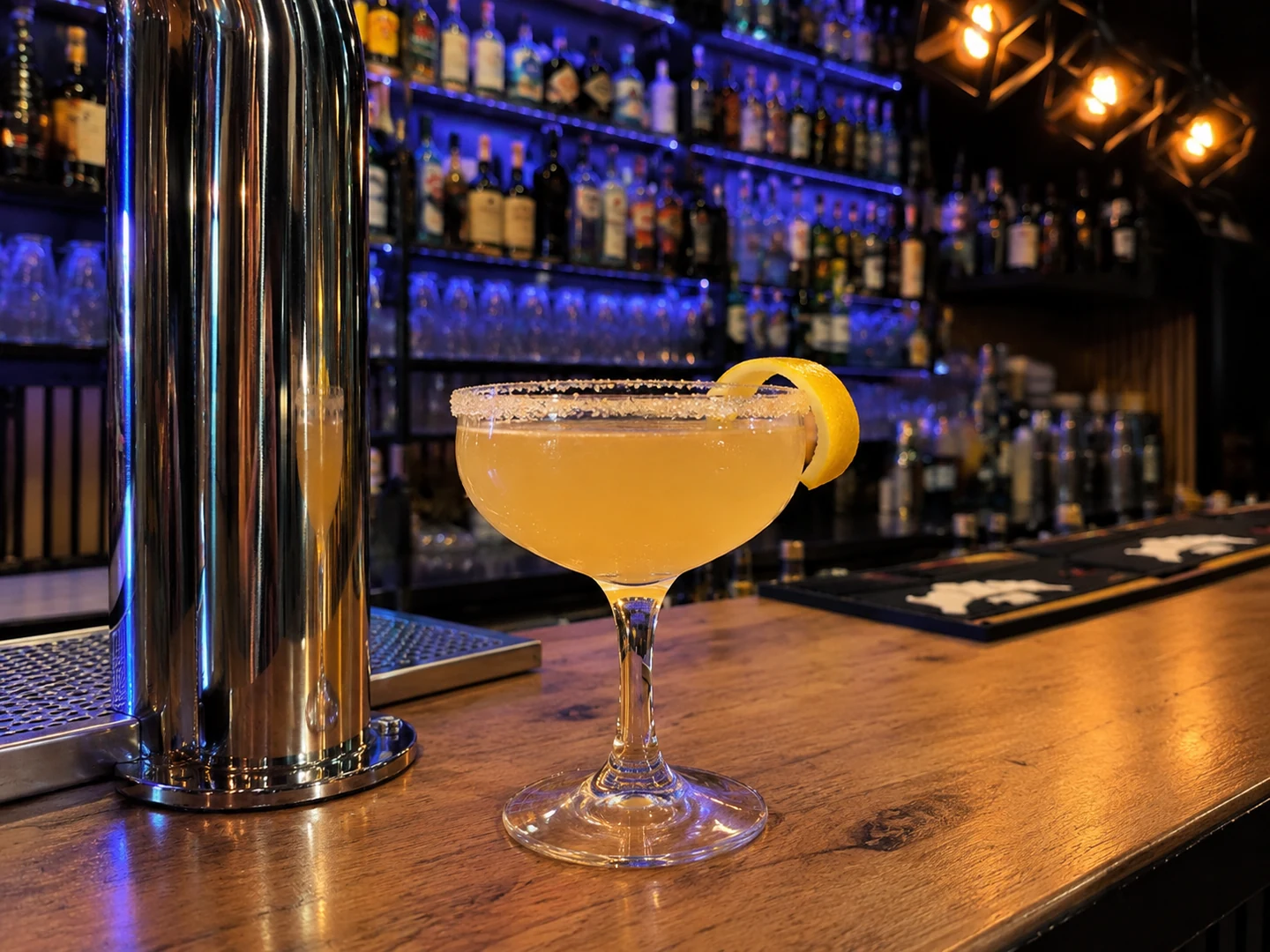
Cognac, triple sec, lemon, optional sugar rim.
Cognac, triple sec and lemon. A classic sour, warm and citrusy, with a sugar rim if you want one.
A 1920s Parisian sour: cognac, triple sec and lemon shaken cold, served in a coupe with an optional sugar rim. Brandy warmth, triple sec sweetness, lemon acidity, all in balance. For sour lovers who want something with more structure than a gin one.
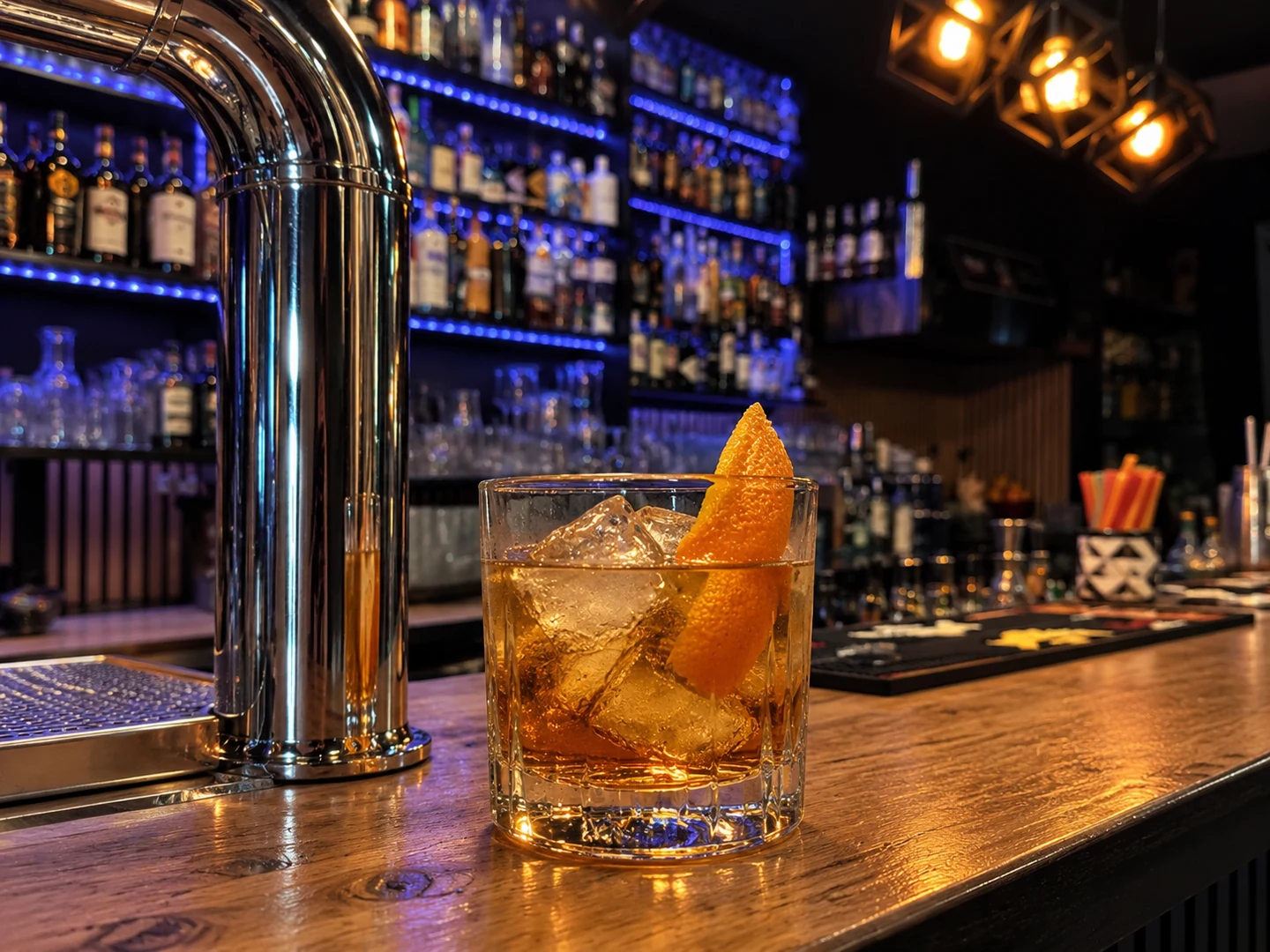
Southern Comfort, ice, orange peel.
Southern Comfort on the rocks. Spiced peach, soft: the sweet end of the night.
Minimal serve: Southern Comfort poured over ice, an orange peel to perfume it. It's a peach-and-spice whiskey liqueur, sweet and soft, nothing complicated. Perfect for ending the night without a fancy cocktail, when you just want something warm and easy.
 30 items
 From the Martini to house twists: gin, citrus and botanicals from our premium wall.
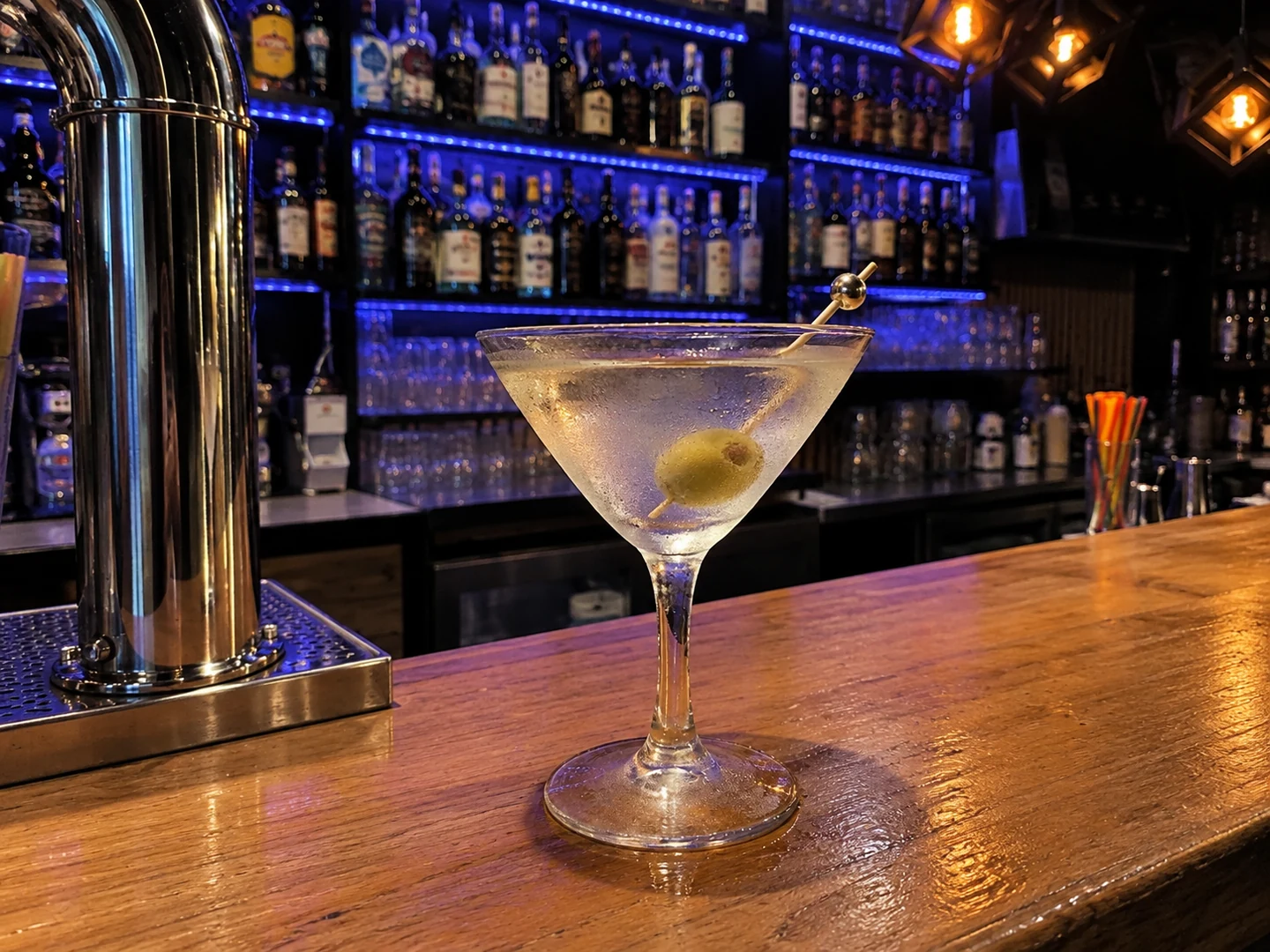
Gin, dry vermouth, olive or lemon twist.
Stirred and ice-cold, no frills. Gin and vermouth, full stop.
The Dry Martini took its shape in early-1900s New York, as bartenders tipped the gin-to-vermouth balance further and further toward dry. We stir it until the glass frosts over. The olive or lemon twist isn't garnish, it's how you sign the order.
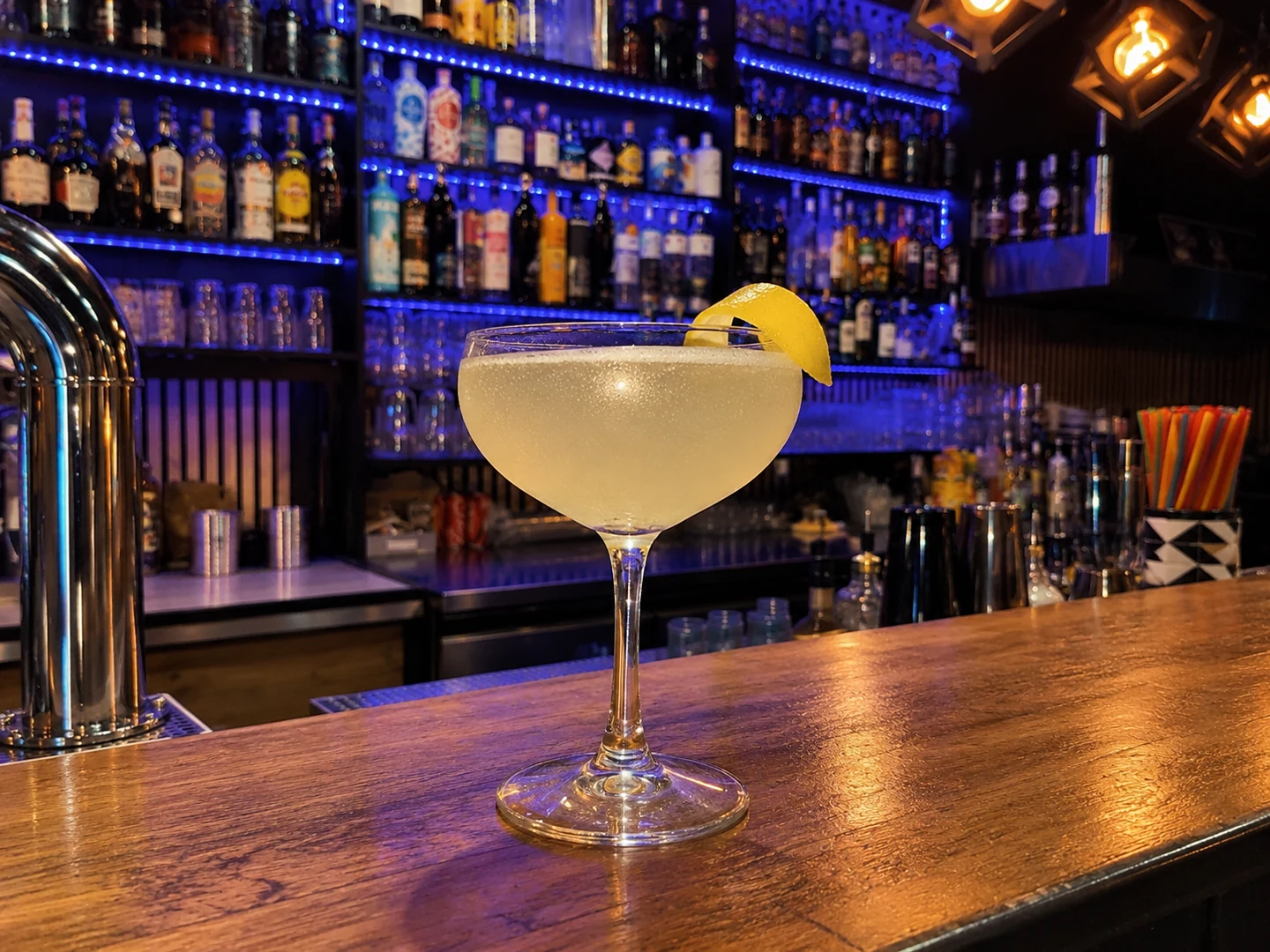
Gin, lemon juice, sugar syrup, champagne / prosecco.
Gin, lemon and bubbles. A Tom Collins that got dressed up.
The name comes from the French 75mm field gun of the First World War: powerful and precise. In Paris they poured it at Harry's Bar as a wartime toast. The bubbles cut through the citrus without burying it, and it lifts the mood straight away.
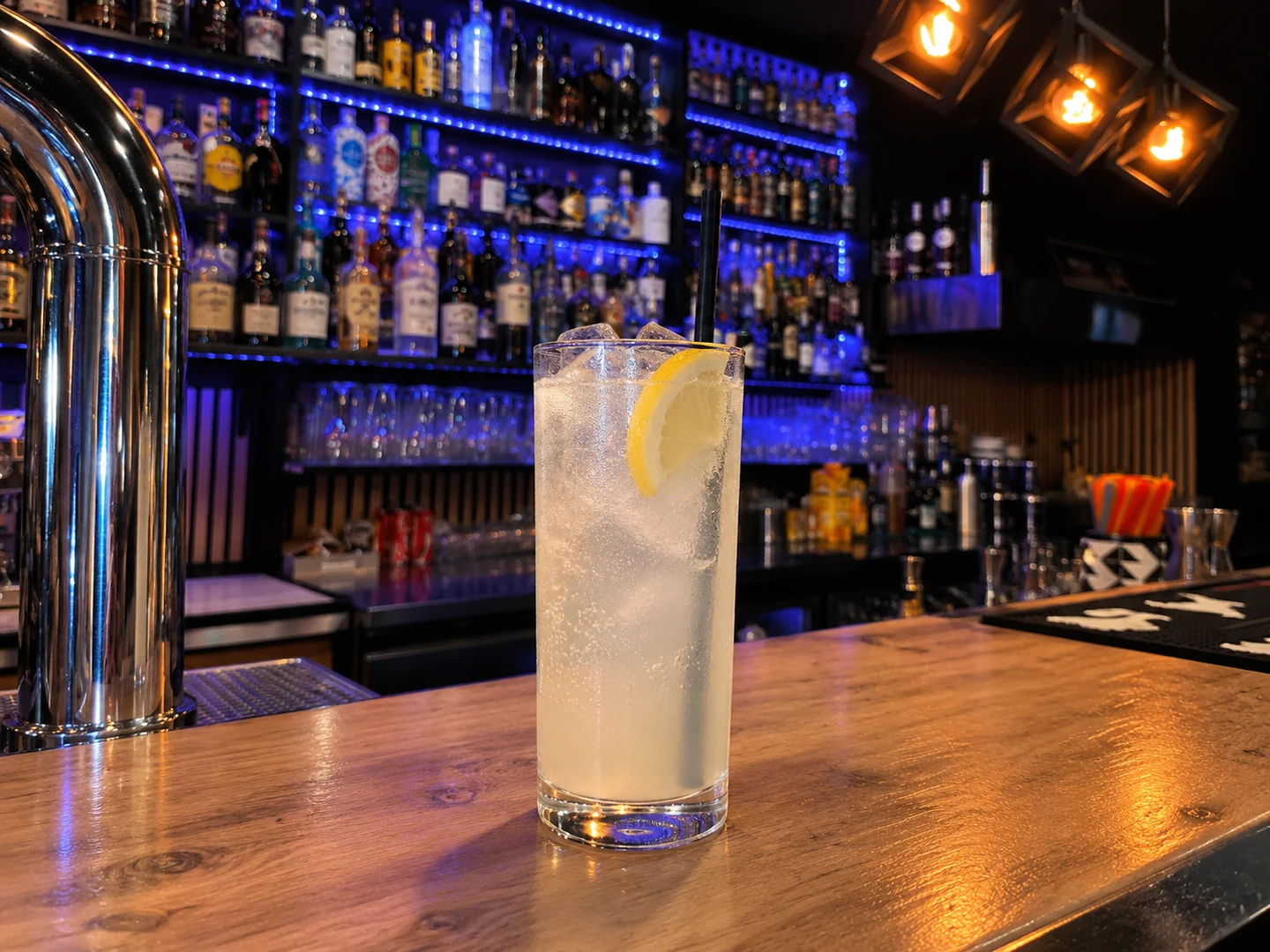
Gin, lemon juice, sugar, soda.
Tall and fizzy long drink. The gin you drink without thinking twice.
Before the cocktail there was the Tom Collins hoax: in 1874 a New York paper invented a man named Collins who badmouthed everyone in town. People walked into bars asking for him, and bartenders answered with this drink. The 19th century's first viral prank.
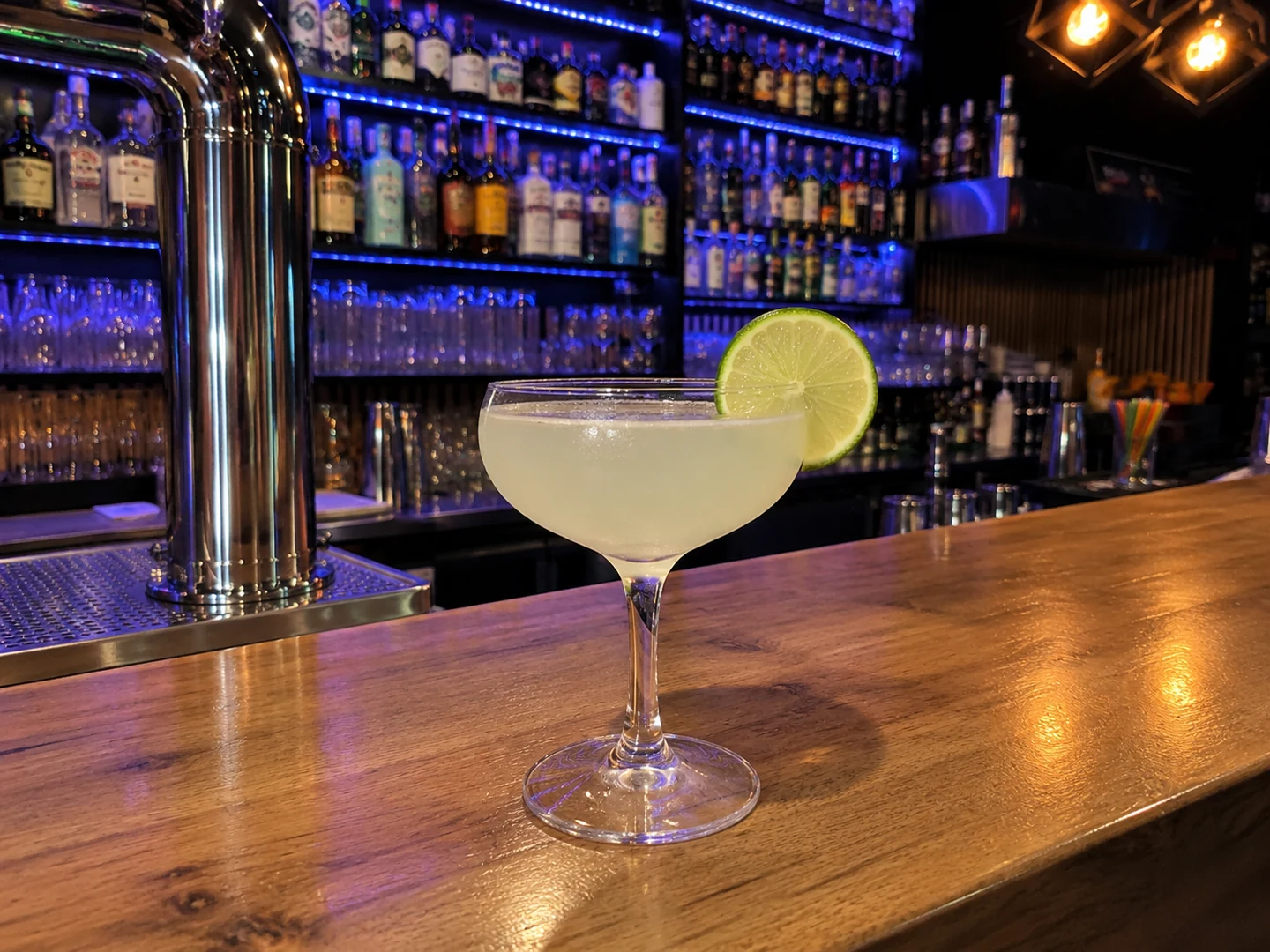
Gin, lime cordial, fresh lime.
Gin and lime, nothing else. Two ingredients looking each other in the eye.
The Gimlet was born on British ships: lime cordial kept scurvy away and gin made the medicine easier to take. Raymond Chandler made it immortal in The Big Sleep. Here it stays dry and direct, no detours.
Gin, raspberry syrup, lemon, egg white.
Velvety pink and silky foam. Pre-Prohibition elegance in a short glass.
The Clover Club was a private circle of journalists, lawyers and writers in Philadelphia, going back to the late 1800s. The cocktail was like them: refined, a touch sweet, never dull. The egg white isn't a flourish, it's the texture that makes it stick.
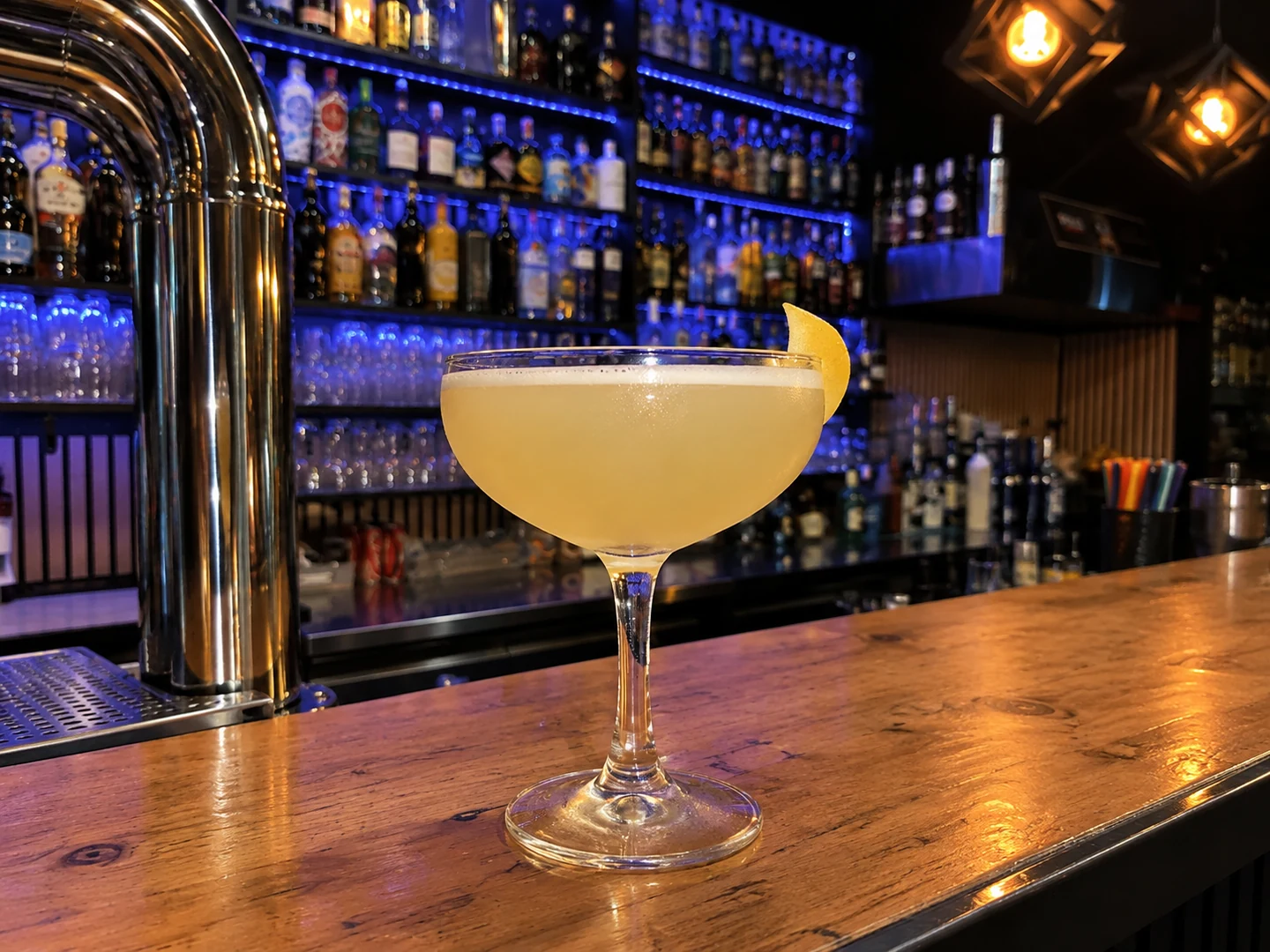
Gin, honey, lemon.
Raw honey, sharp lemon, botanical gin. Prohibition made pretty.
During Prohibition, honey was there to mask rough bathtub gin, and the trick worked so well it turned into a classic. 'Bee's knees' was American slang for 'the very best'. We use honey that still smells like the hive.
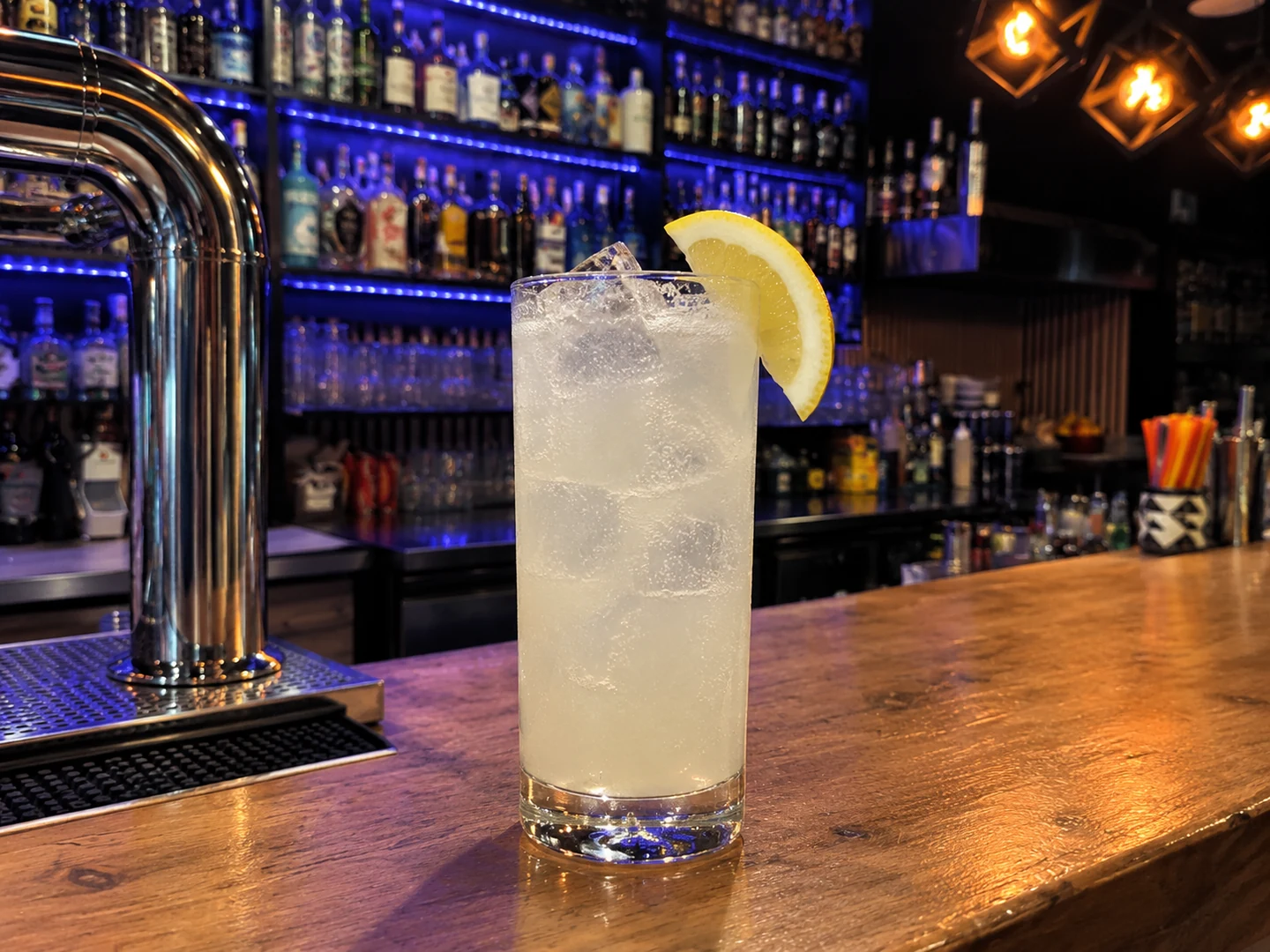
Gin, lemon, sugar, soda.
Dry, straightforward fizz. The long drink that never lets you down.
The Gin Fizz took off in 1800s New Orleans, where bars served them back to back with shakers never stopping. It's the Ramos's sober cousin: same family, far less patience required. Perfect when you want gin and bubbles without the ritual.
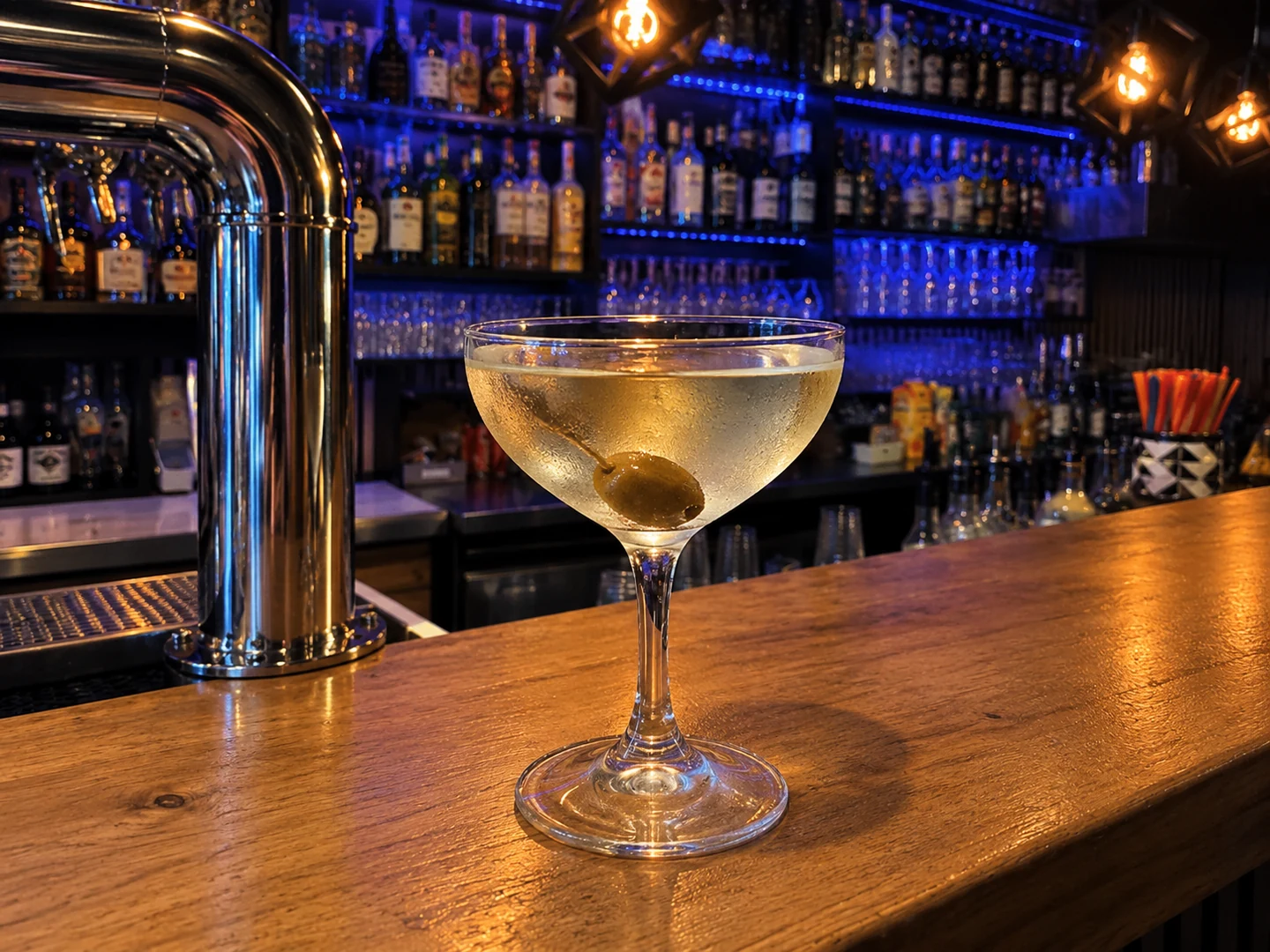
Olive-oil fat-washed gin, dry vermouth, taggiasca olive.
A Mediterranean Martini, with gin washed in extra-virgin olive oil. Silky body, saline finish.
Fat-washing infuses olive oil into the gin cold: no grease on top, just aroma and a velvety texture. A Ligurian taggiasca olive closes it with a salty bite no lemon twist can match. It's our Martini for anyone who wants to wander off the usual path.
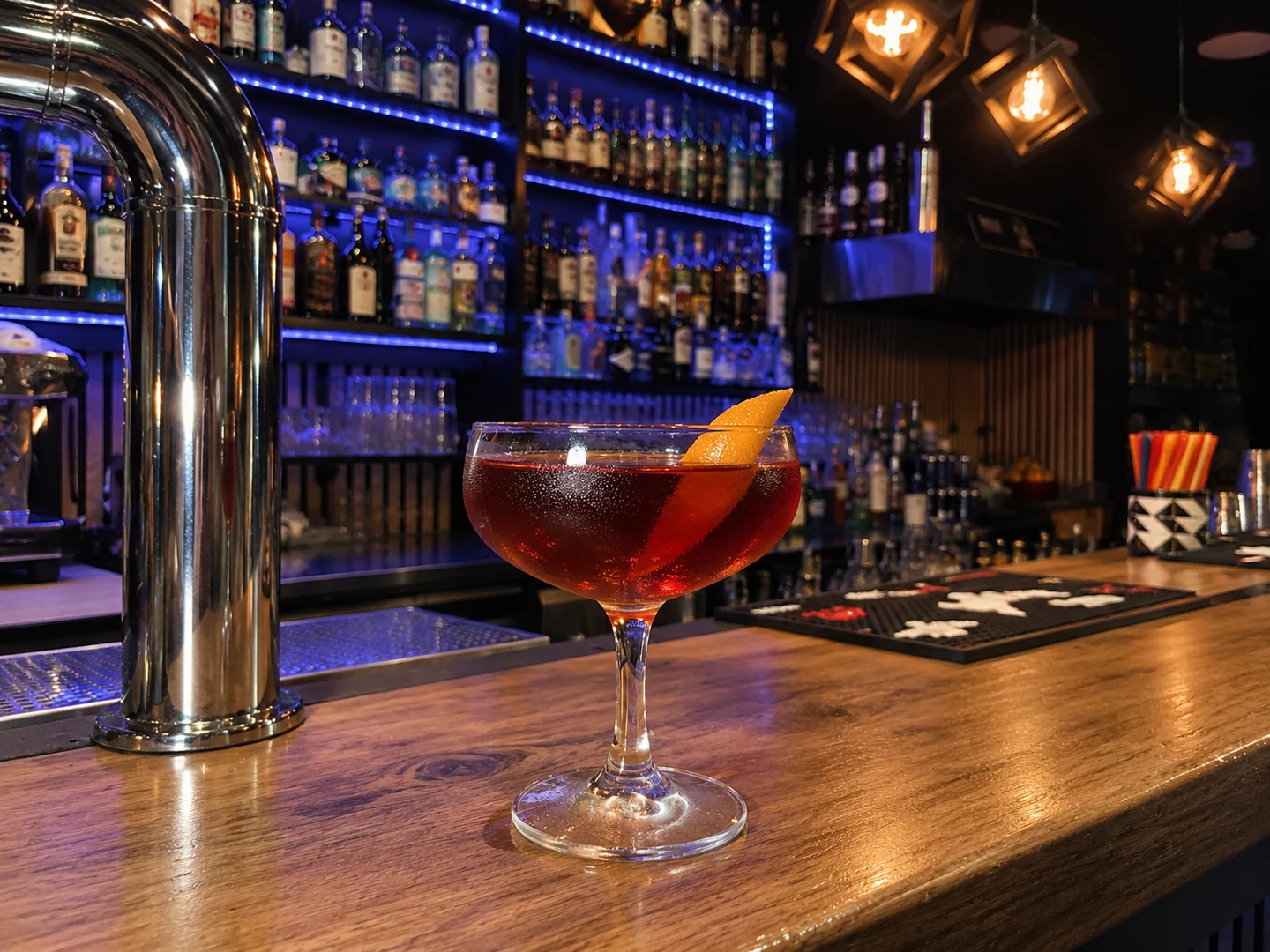
Gin, Campari, red vermouth, cold brew coffee.
The Negroni after midnight: bitter, vermouth and cold-brew coffee.
The classic Negroni was born in Florence in 1919, when Count Camillo Negroni asked to stiffen his Americano with gin. Here cold brew adds roasted depth without the burnt bitterness of espresso. It's the Negroni for people who stay out late.
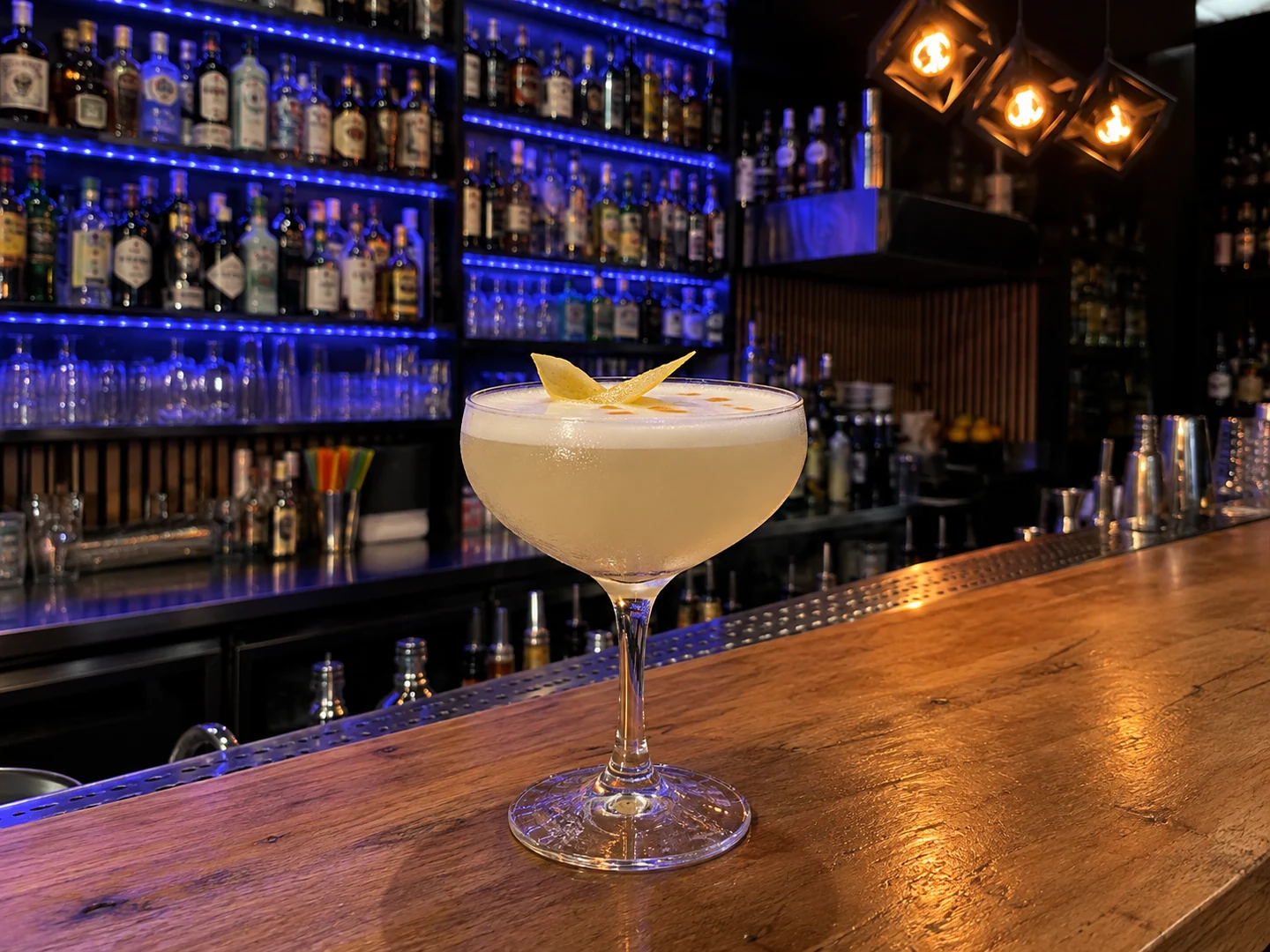
Gin, orgeat, lemon, angostura.
A gin sour with almond. Fresh on the palate, deeper than it looks.
The name nods to the American Army & Navy clubs, where officers drank gin sours with a twist. Orgeat, that almond syrup, comes over from the tiki world and softens the lemon's edge. A few dashes of angostura make it almost a dry dessert.
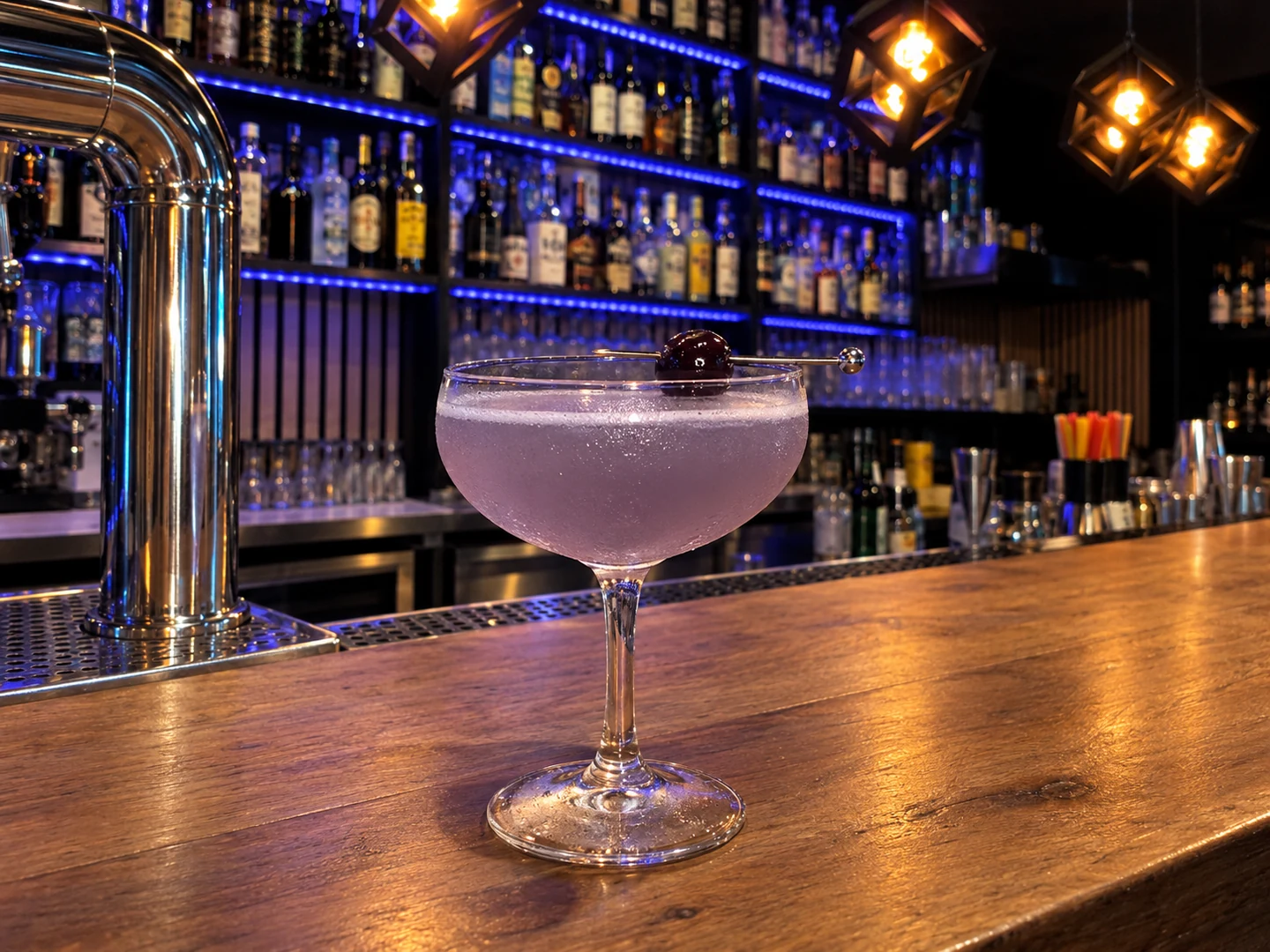
Gin, maraschino, crème de violette, lemon.
Pale violet, dry cherry, citrus. A sour that smells like another era.
Hugo Ensslin published it in 1916 in the Hotel Wallick recipe book, at the height of aviation fever. Crème de violette had nearly disappeared, until modern bartenders brought it back behind the bar. That dusk-sky colour doesn't lie.
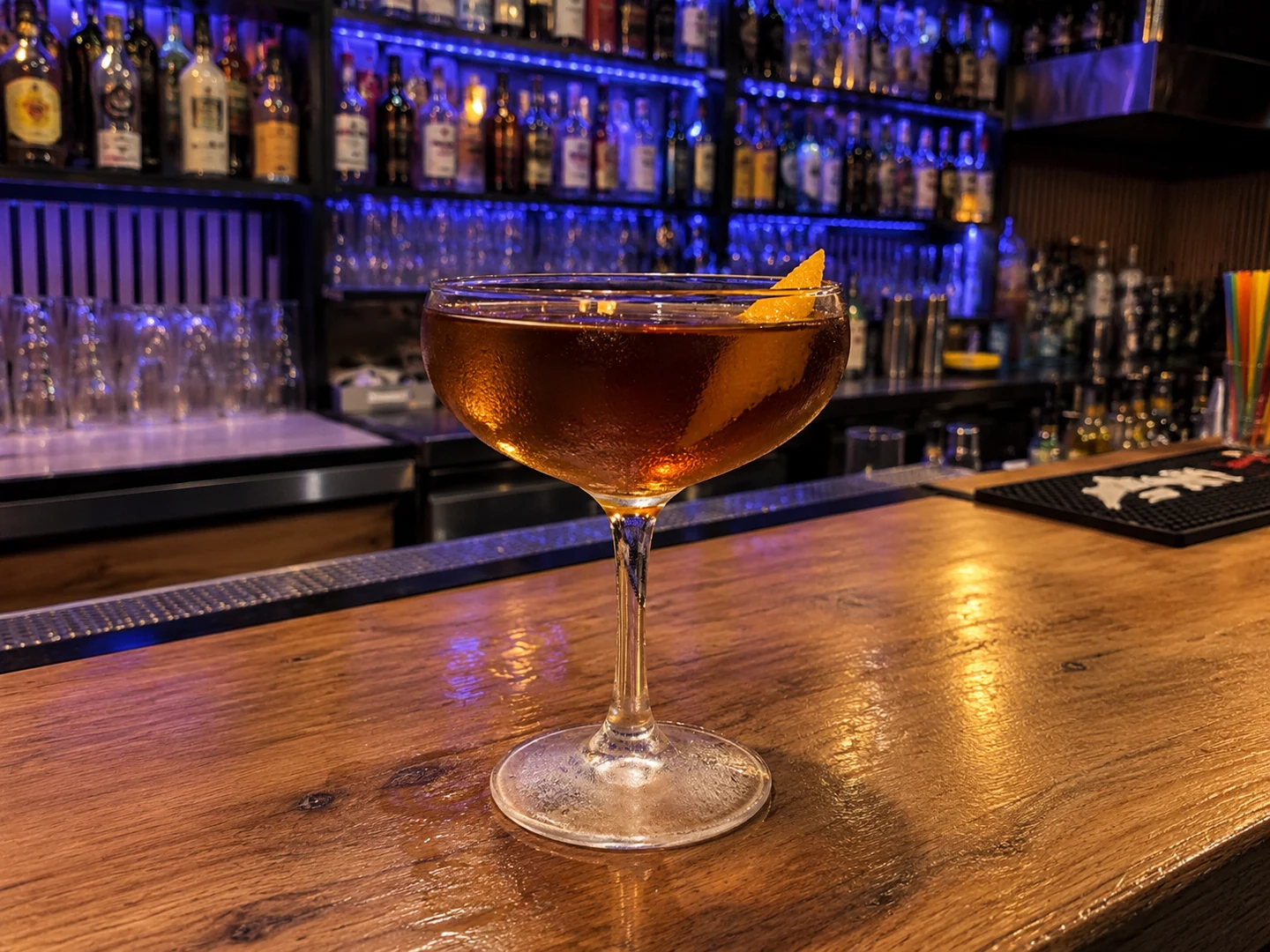
Gin, red vermouth, Green Chartreuse, orange bitters.
Gin, red vermouth and Green Chartreuse, in equal parts. Three jewels in one glass.
Harry Johnson called it 'bijou', jewel, for the three precious ingredients shining in the glass. It's a relative of the Negroni, but more herbal and less Campari-bitter. Green Chartreuse carries 130 monastery herbs inside, and here you taste every one.
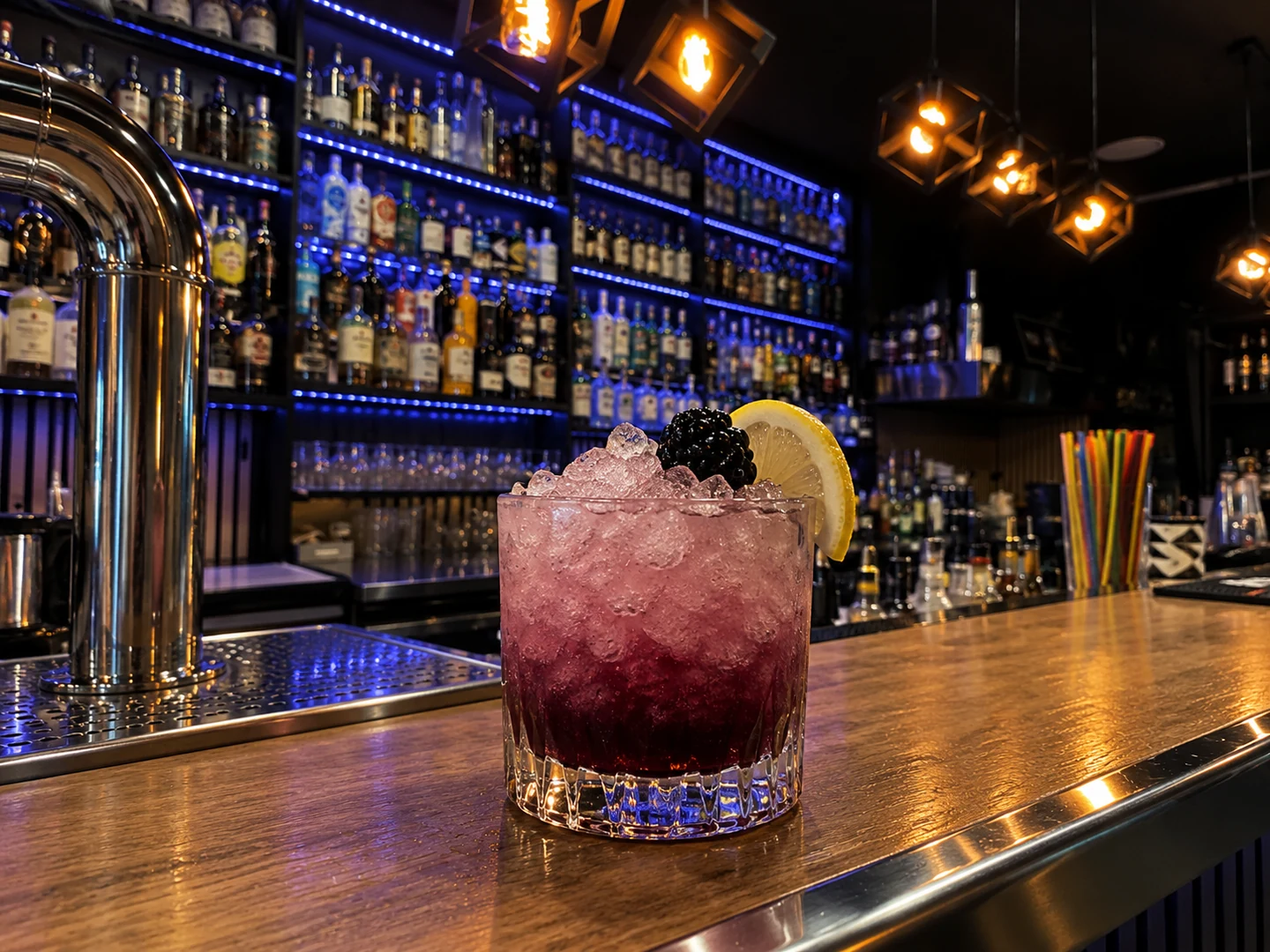
Gin, lemon, sugar, crème de mûre.
A gin sour with blackberry bleeding into the ice. English summer in a glass.
Dick Bradsell created it in 1980s London, inspired by the Sussex blackberry brambles where he picked fruit as a kid. The crème de mûre gets poured over crushed ice and spirals down: the show is included in the price.
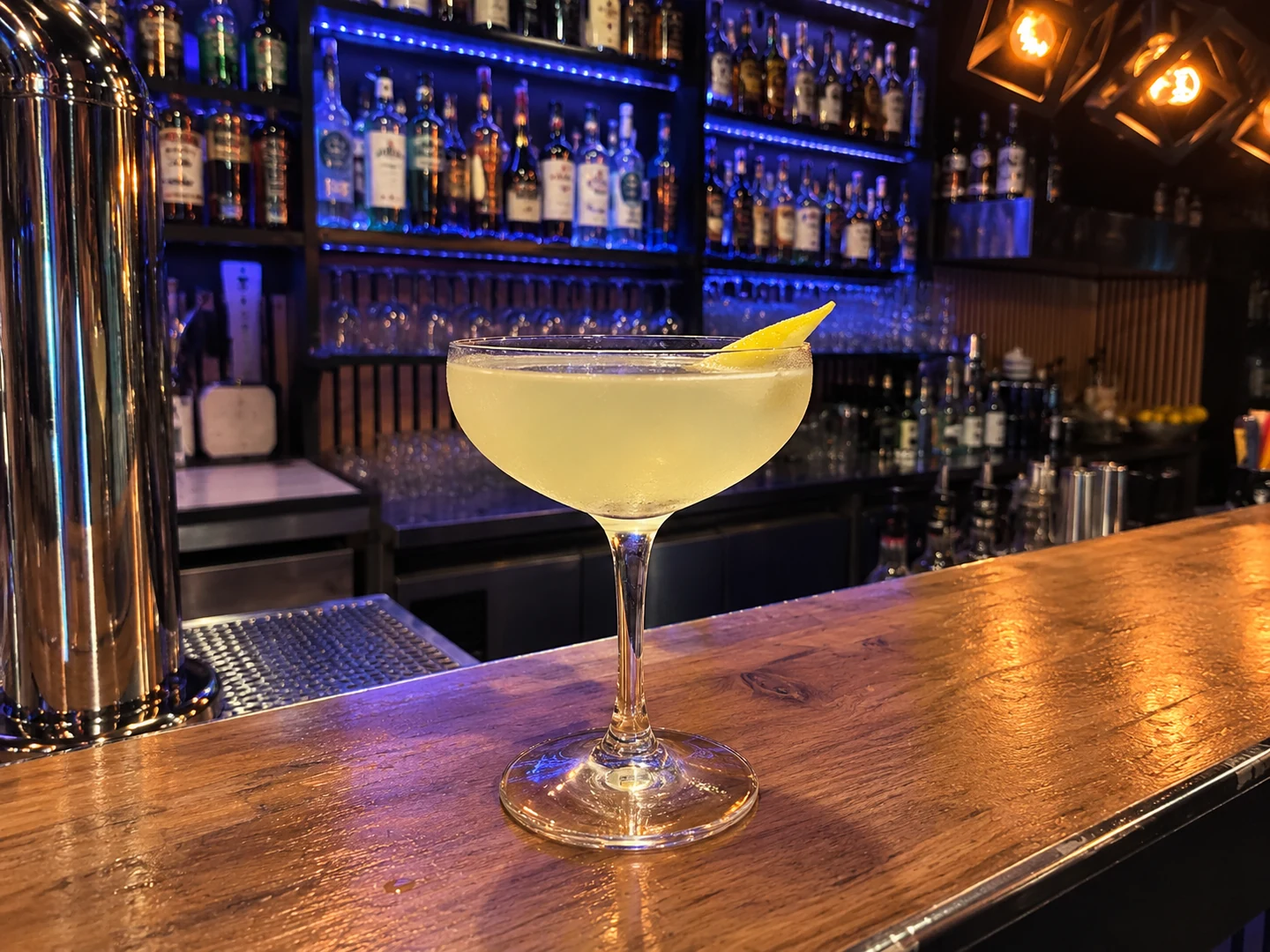
Gin, Cointreau, Lillet Blanc, lemon, absinthe rinse.
Four equal parts and a whisper of absinthe. The elegant wake-up call, by definition.
Harry Craddock put it in the 1930 Savoy Cocktail Book with a warning: four in a row and the corpse goes back to being a corpse. The absinthe rinse perfumes the glass without taking over. Sip it slowly, or don't.
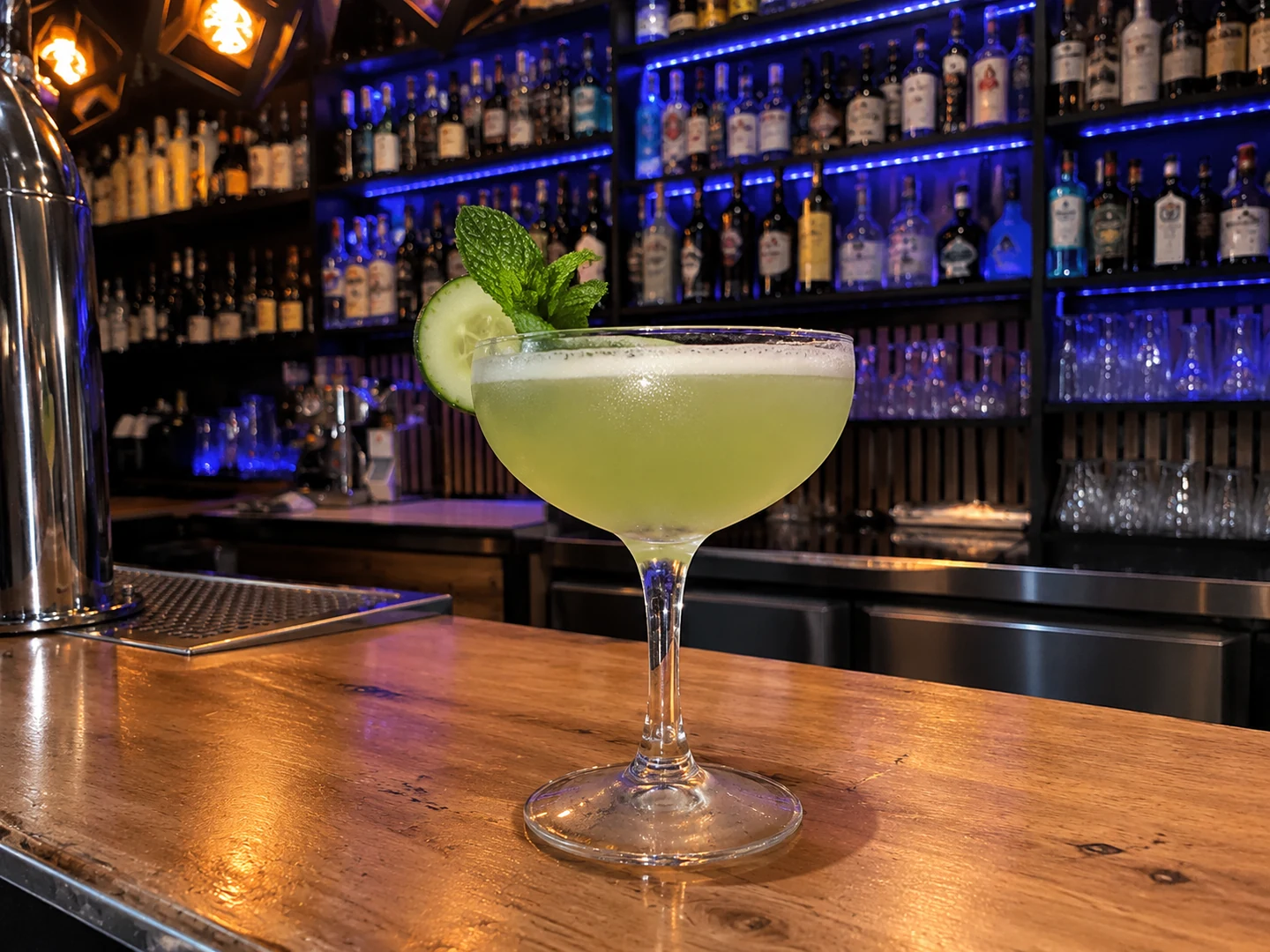
Gin, cucumber, mint, lime, sugar.
A Southside with cucumber. Green, fresh, quiet.
The Southside was the Chicago gangsters' Prohibition drink: mint and lime to cover up rough gin. The Eastside adds cucumber and takes its name from Manhattan's East Side. It's the gin sour for people who can't stand the rum in a Mojito.
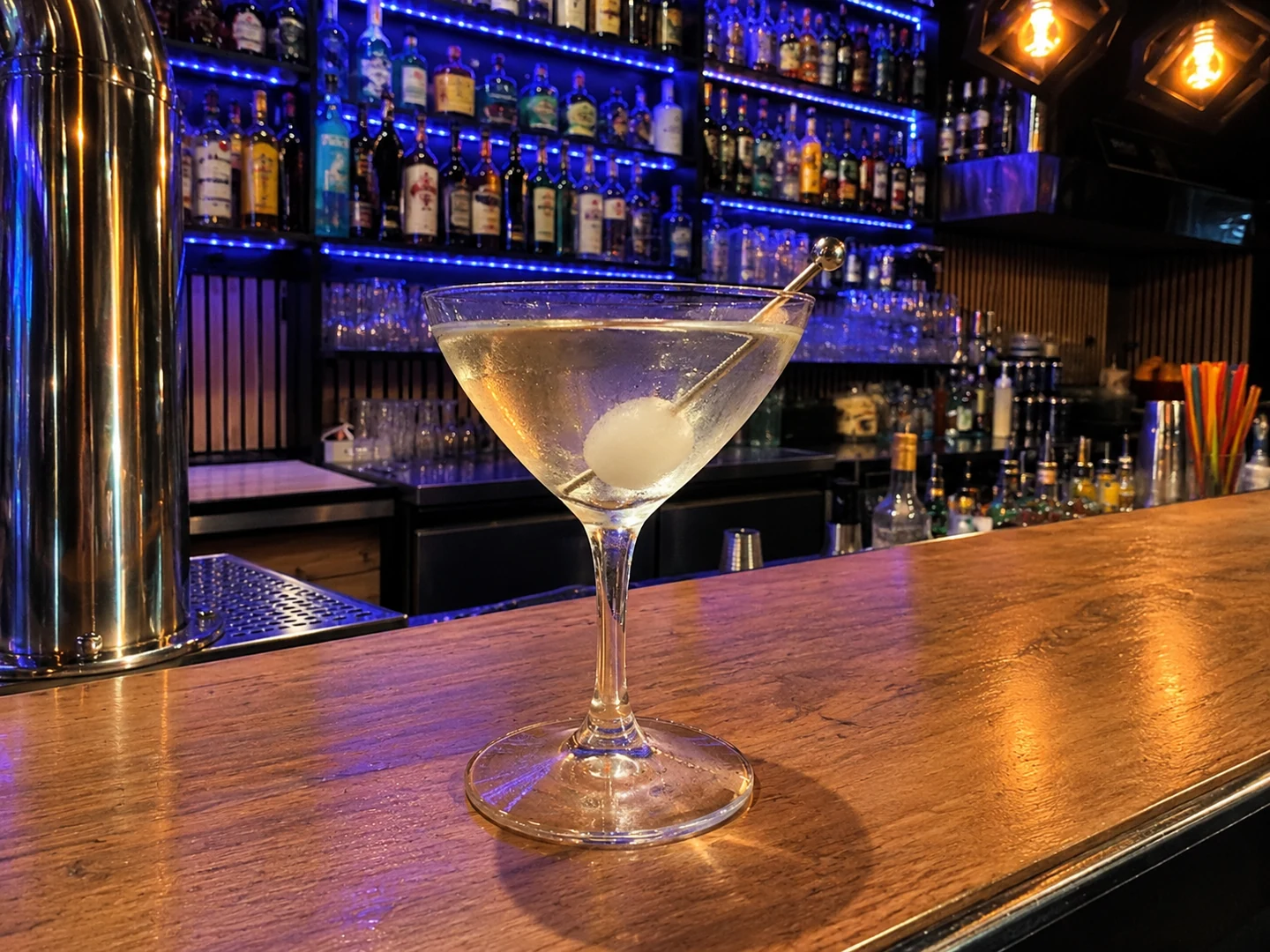
Gin, dry vermouth, cocktail onion.
A Martini with a cocktail onion. Saline, sharp, no compromise.
Legend says the diplomat Gibson asked for olive oil instead of a twist, and the bartender, out of oil, dropped in a cocktail onion. Another version credits a cartoonist who hated olives in his Martini. Either way the result is drier and more grown-up.
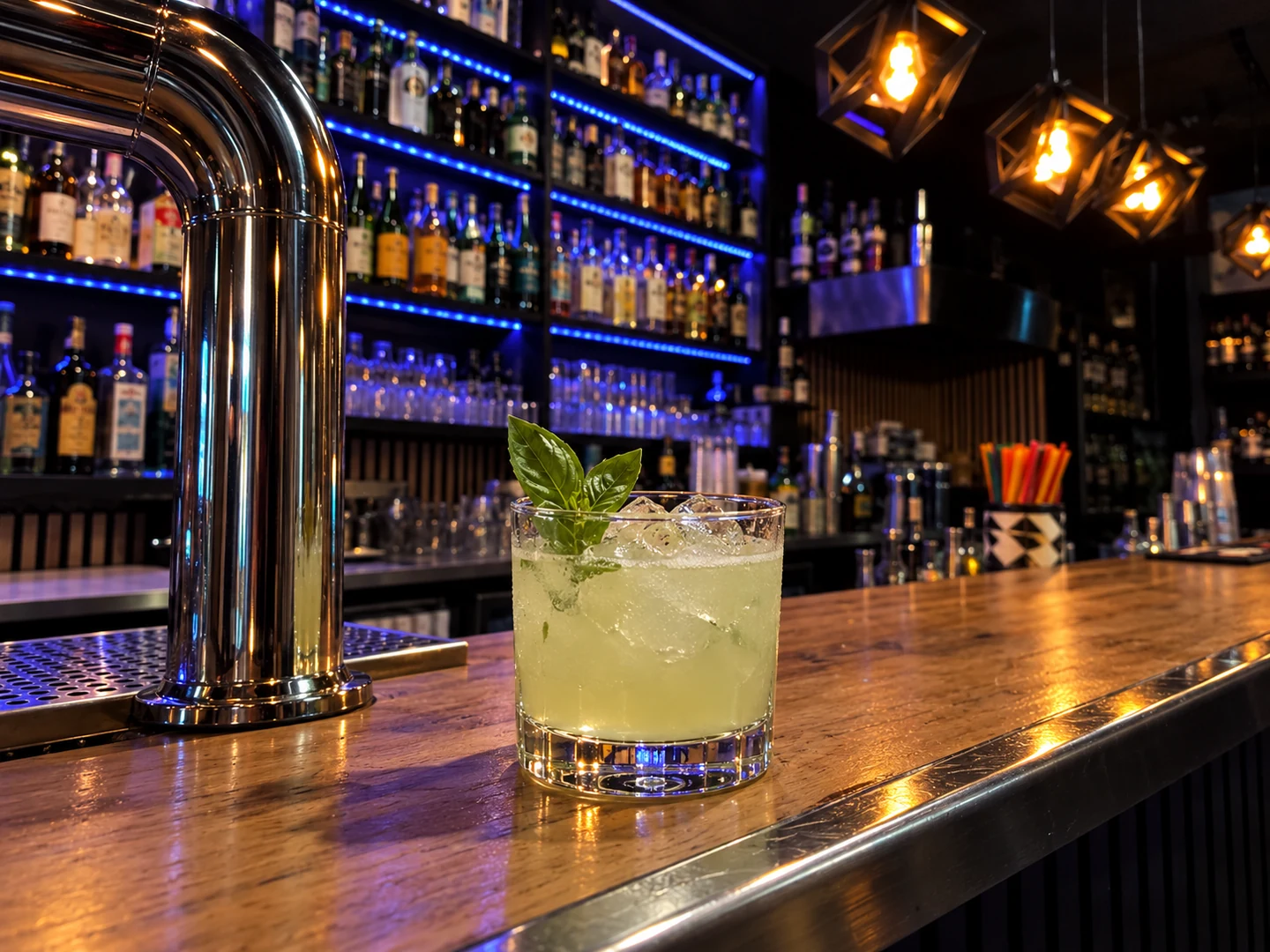
Gin, fresh basil, lemon, sugar.
Hand-smashed basil and citrusy gin. The green that perfumes the whole bar.
Jörg Meyer invented it at Le Lion in Hamburg in 2008 and won Diageo's World Class. The secret is smashing the basil hard, not gently stirring it. Here you smell it before you even taste it.
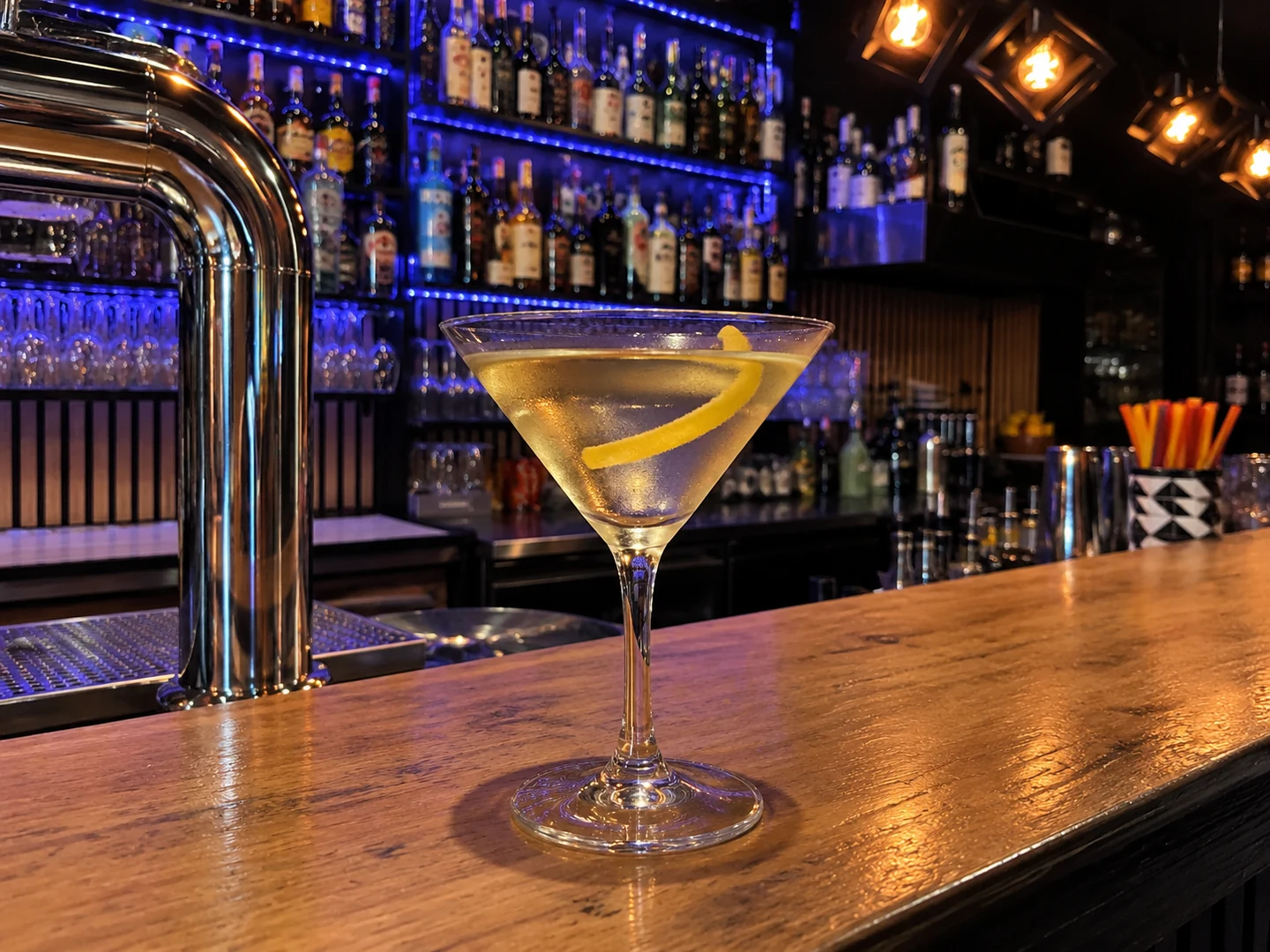
Premium gin, dry vermouth, orange bitters, lemon twist.
A golden Dry Martini with premium gin. Crystal-clear, bone-dry, made to sip.
The right ratio in a dry Martini is an endless bartender argument. Here we use a premium gin and orange bitters, which give it that golden shimmer in the glass. Not just any Martini: the one you order when you know exactly what you want.
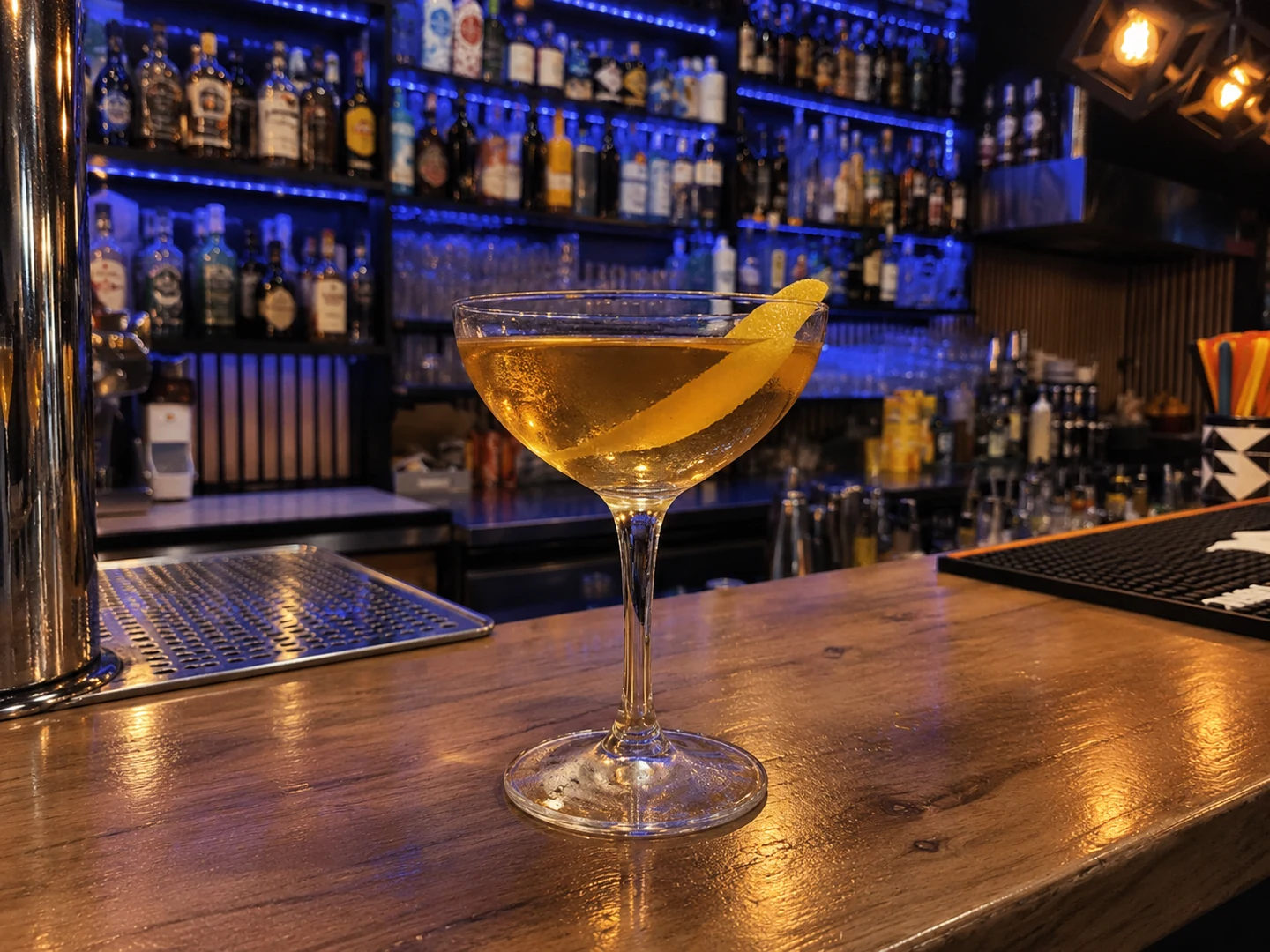
Gin, dry vermouth, golden liqueur, aromatic bitters.
A night-time Martini with golden reflections. Darker, deeper.
Golden Night came from the idea of a Martini that shifts with the room's light: same rigour as the Dry, but a golden liqueur and aromatic bitters to deepen it. For when the night's already rolling and aperitivo isn't enough anymore.
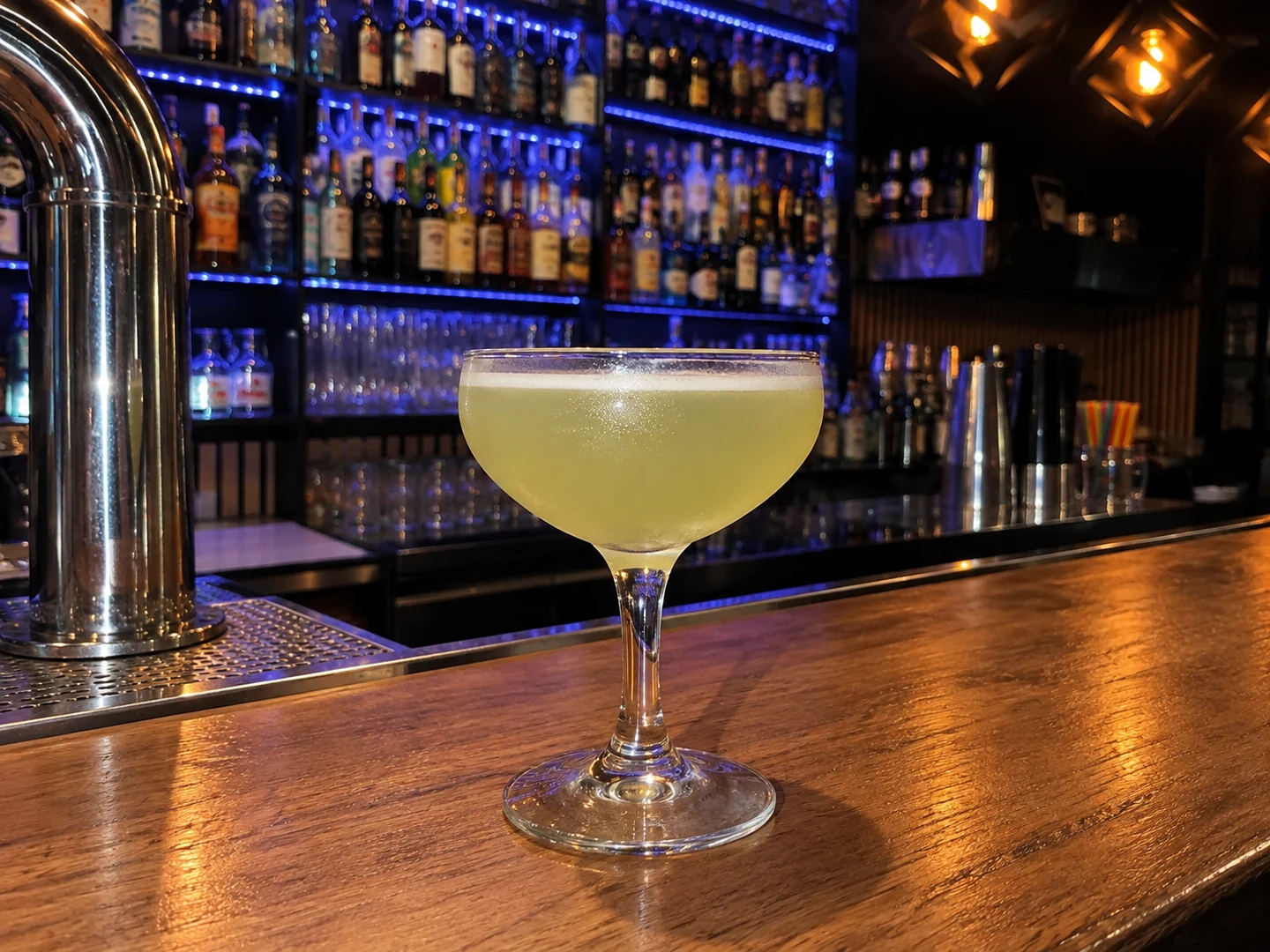
Gin, Green Chartreuse, maraschino, lime.
Equal parts green, sour and spiced. Small glass, huge voice.
Frank Fogarty, a deaf-mute vaudeville actor, brought it to the Detroit Athletic Club in the 1920s. Then it vanished for decades, until Murray Stenson dug it back up in Seattle in 2004. Four equal parts and a balance that's anything but easy. Try it once and you'll keep ordering it.
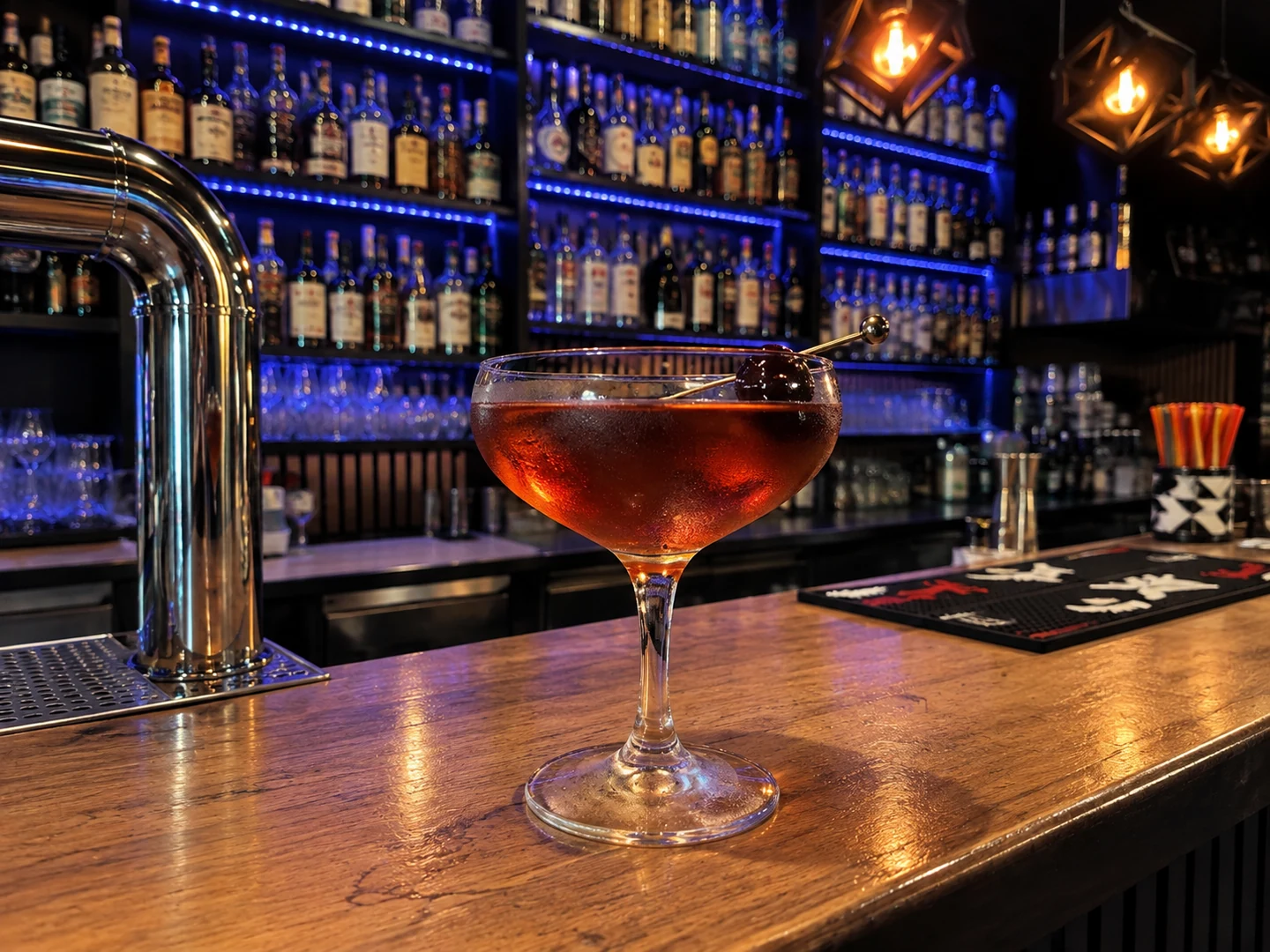
Old Tom gin, red vermouth, maraschino, bitters.
The bridge between Manhattan and Martini. Sweet, herbal, with a lot of history in it.
Several historians call it the Martini's direct ancestor: same gin, but sweet vermouth instead of dry, plus maraschino and bitters. The key is Old Tom gin, softer than London Dry. Have it stirred and you'll taste where everything else came from.
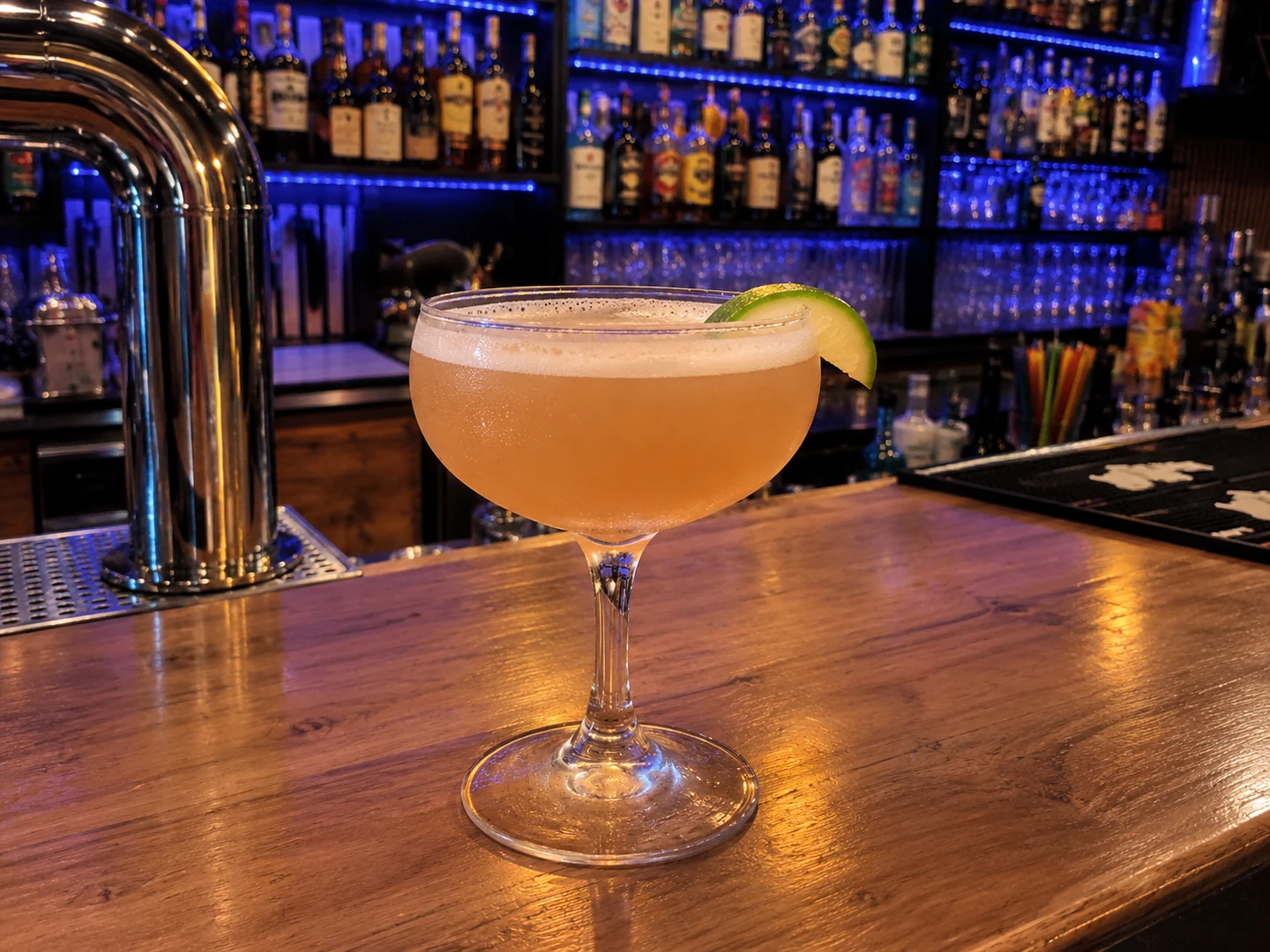
Gin, orange curaçao, lime, angostura, orange bitters.
A dry colonial sour, built on citrus, bitters and gin.
The Pegu Club was the British officers' private club in Rangoon, Burma, and the cocktail took its name and colonial character from it. Orange curaçao and a double dose of bitters make it more complex than your average gin sour. Harry Craddock enshrined it at the Savoy.
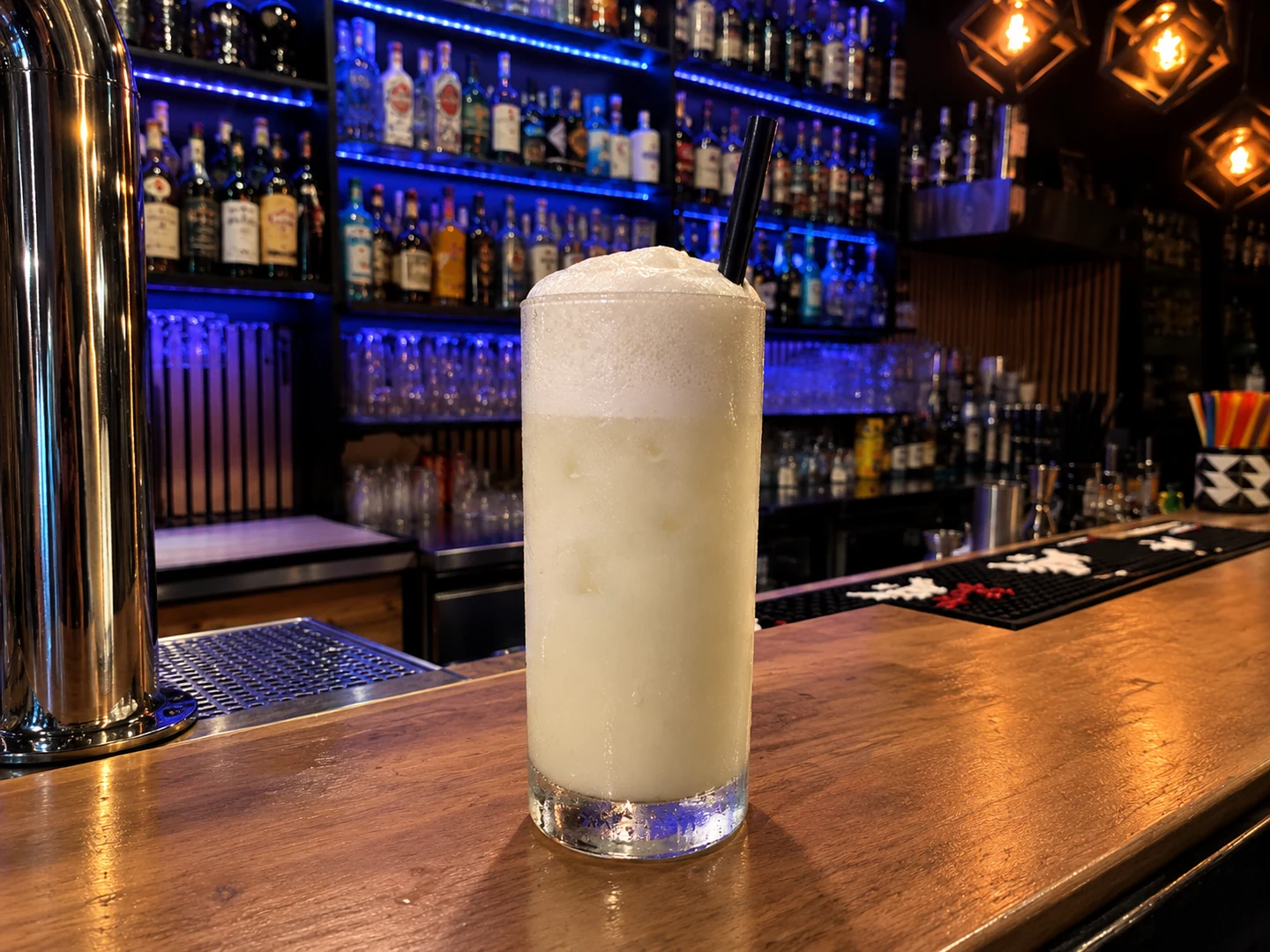
Gin, lemon, lime, cream, egg white, orange blossom water, soda.
The creamy New Orleans fizz. Tall foam, citrus and orange-blossom perfume.
Henry C. Ramos created it in 1888, and his bar would run twenty shakers at once just for this one drink. The original recipe calls for twelve minutes of shaking: we honour the tradition without making you wait an hour. Worth every second.
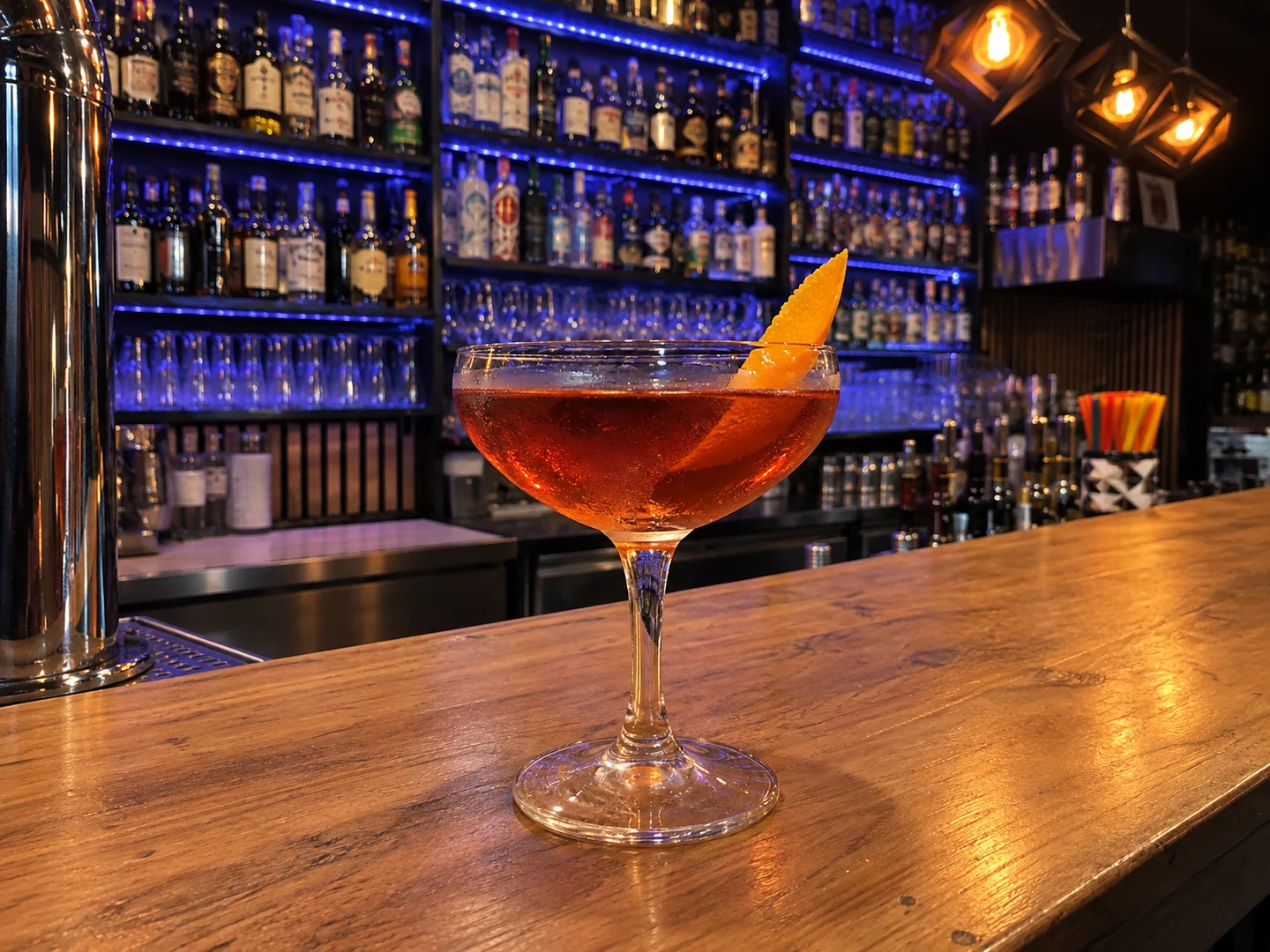
Gin, dry vermouth, red vermouth, orange curaçao, orange, bitters.
Orange and vermouth, in double measure. Elegant, complex, with a name that gives you chills.
Two versions exist, 'Straight' and 'Curled', depending on the orange curaçao you use. The name nods to the devil's orange whiskers in folk tradition. Harry Craddock noted it at the Savoy as a cocktail to know, not to order at random.
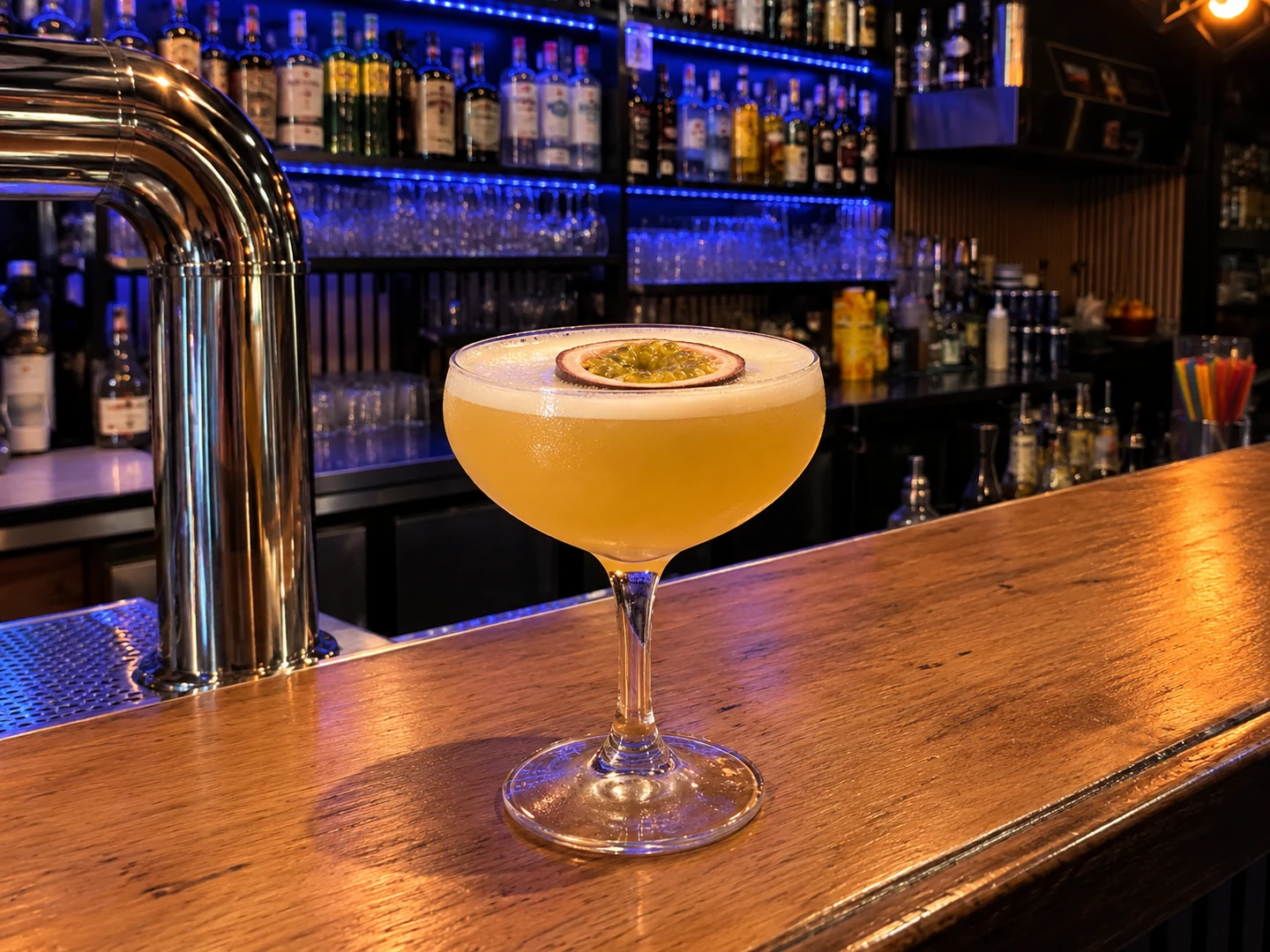
Gin, passion fruit, falernum, orgeat, lemon.
A gin tiki: passion fruit, falernum and almond. A completely different orbit.
J. 'Popo' Galsini invented it in the 1960s for a California tiki contest, and won with a gin drink in a world ruled by rum. The Saturn name nods to the ring of fruit around the glass. Falernum and orgeat bring Caribbean spice into the gin world.
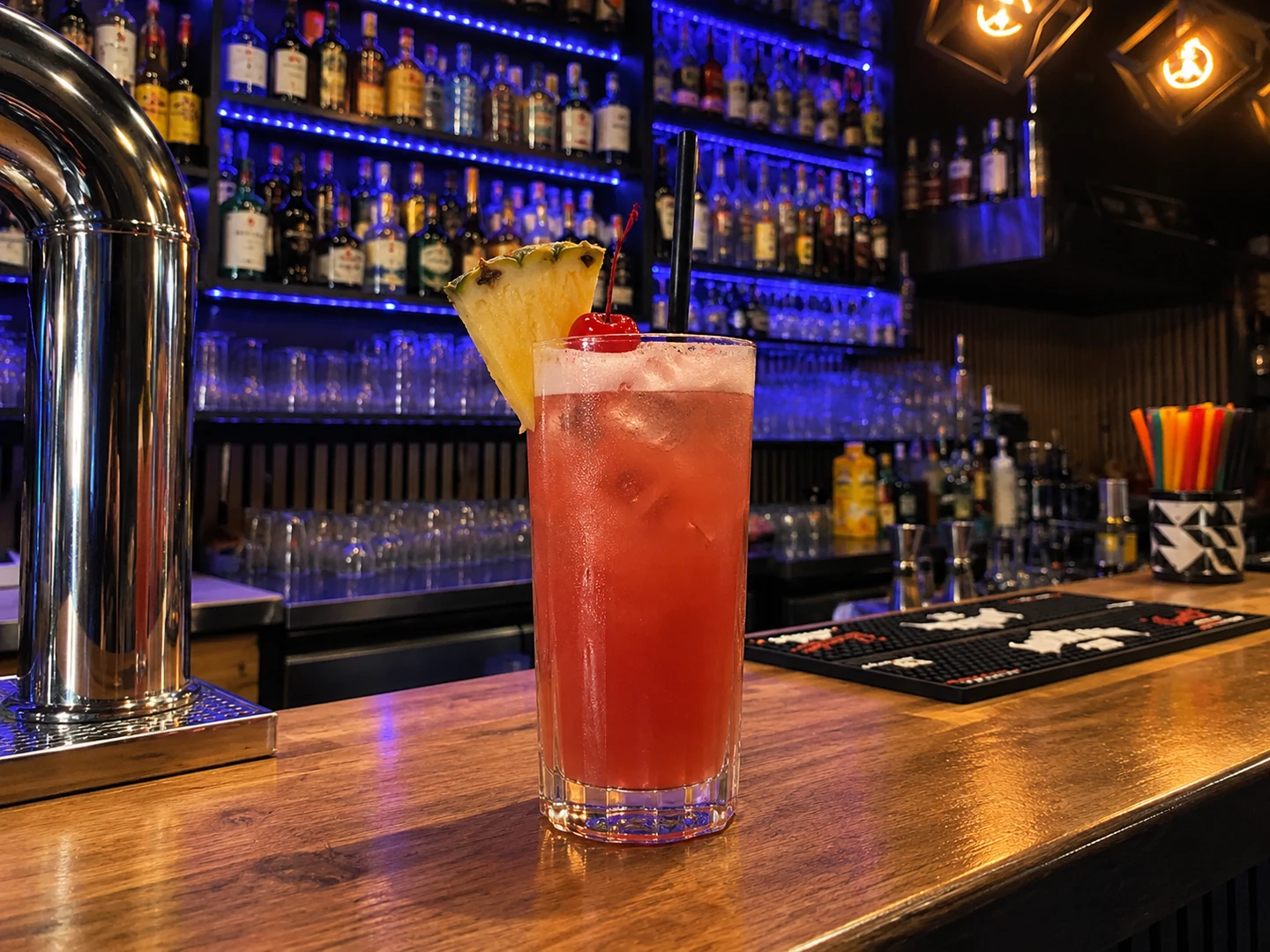
Gin, cherry brandy, Cointreau, Bénédictine, pineapple, lime, grenadine.
The Raffles long drink: red, tropical, spiced. A whole world in one glass.
Ngiam Tong Boon created it between 1910 and 1915 at Singapore's Raffles Hotel, so women could drink something that looked like fruit juice. Cherry, pineapple, Bénédictine: every ingredient tells a piece of Empire. Purists still argue over the original recipe today.
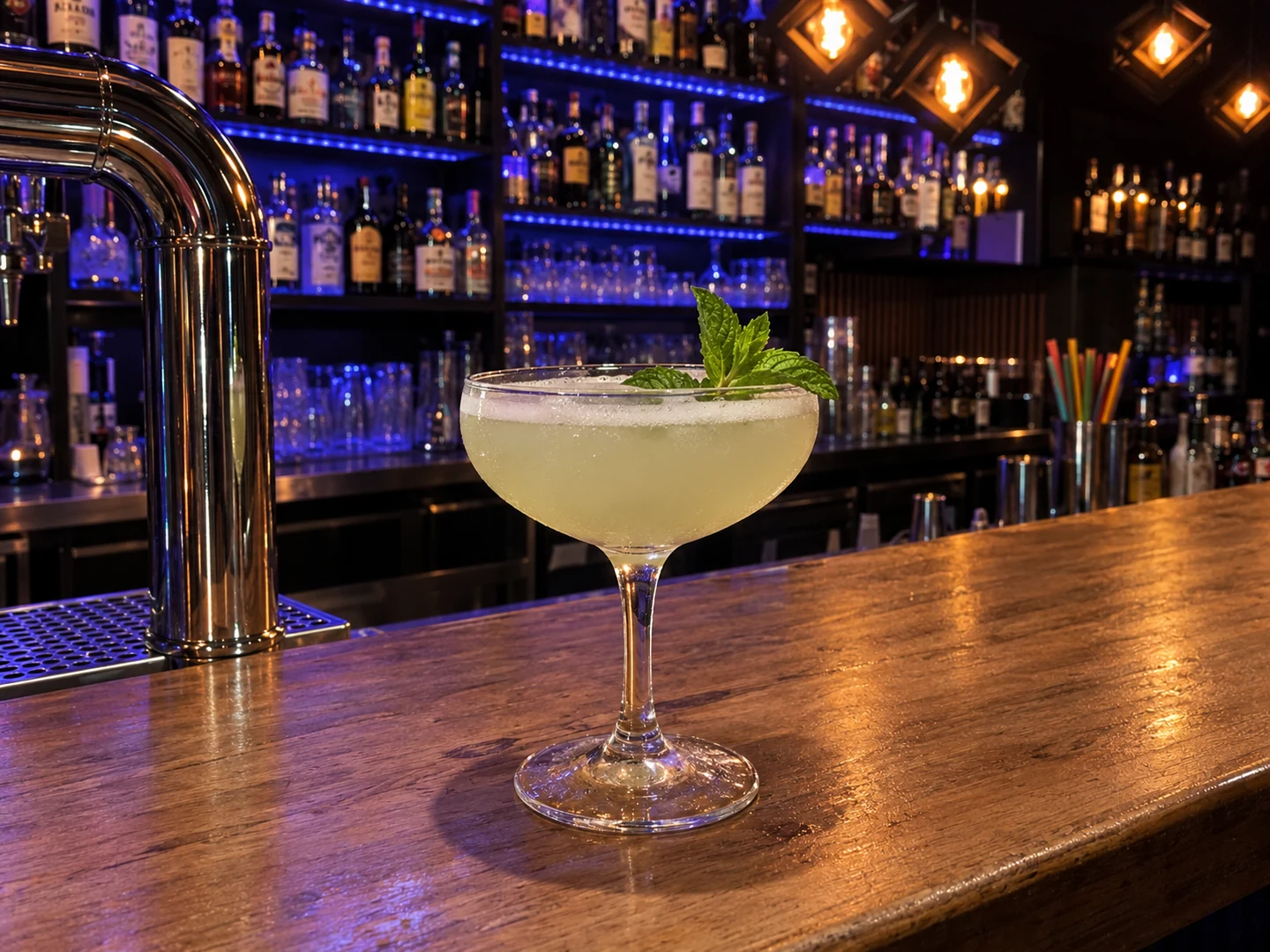
Gin, mint, lime, sugar.
A Mojito without the rum. Drier, more elegant, with mint that never tires.
Chicago's South Side was Al Capone territory during Prohibition, and the drink was born there to make bootleg gin drinkable. Mint and lime took care of the rest. Here it's the fresh long drink for anyone who wants gin without the soda.
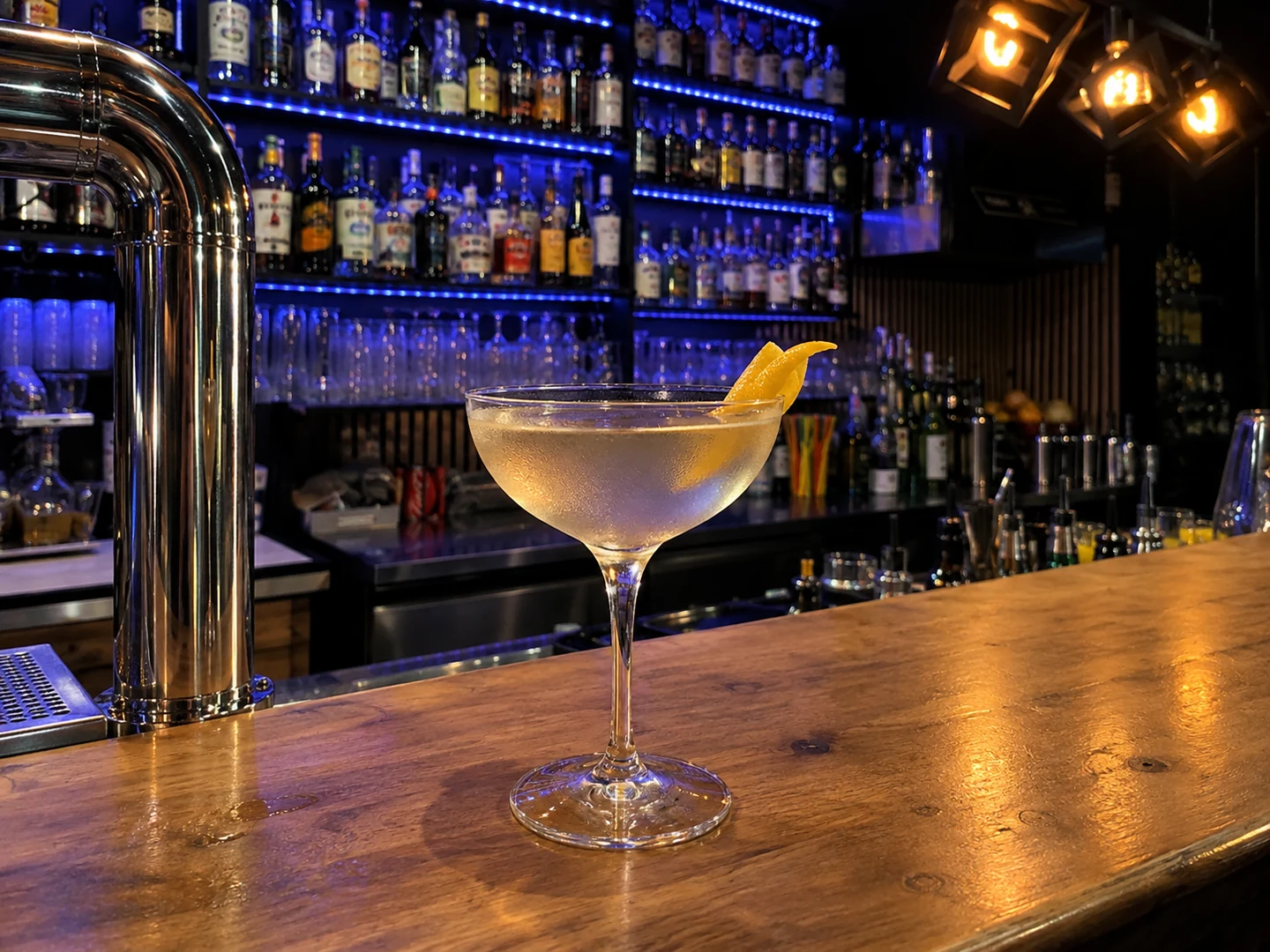
Gin, dry vermouth, maraschino, absinthe, orange bitters.
A Martini in black tie: maraschino, absinthe, bitters.
New York's Tuxedo Club was the temple of gin cocktails in the late 1800s, and the drink took its name and formal elegance from it. Maraschino and absinthe make it more perfumed than a classic Martini. Ordering it means you know what you're drinking.
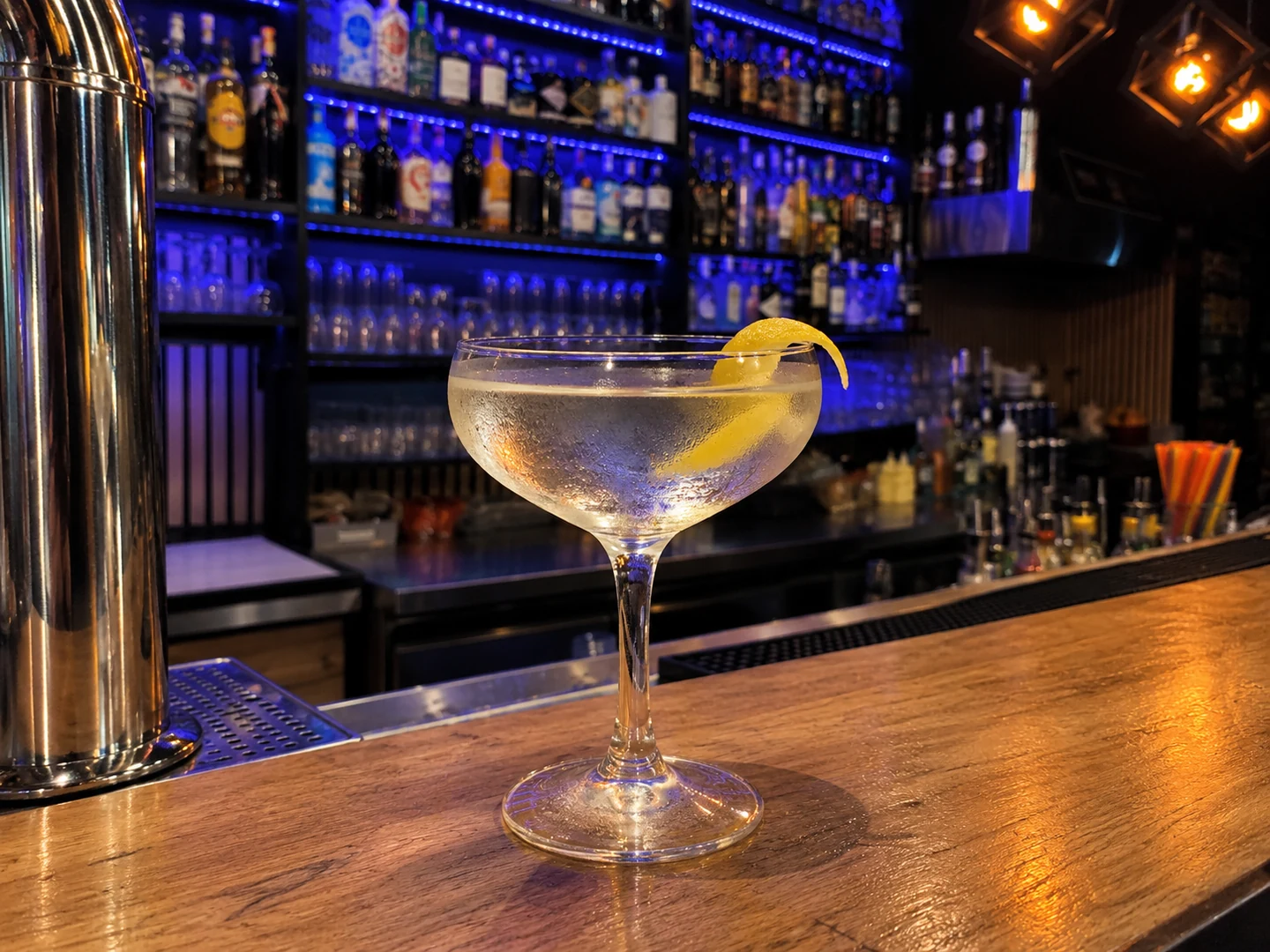
Gin, vodka, Lillet Blanc, lemon twist.
Bond, but done right: gin, vodka and Lillet. Ice-cold and lethal.
Ian Fleming invented it for James Bond in Casino Royale, in 1953: the famous 'shaken, not stirred' starts right here, though purists prefer it stirred. Lillet Blanc has taken the place of the original Kina Lillet, long discontinued. We serve it the way Fleming would have wanted, powerful and uncompromising.
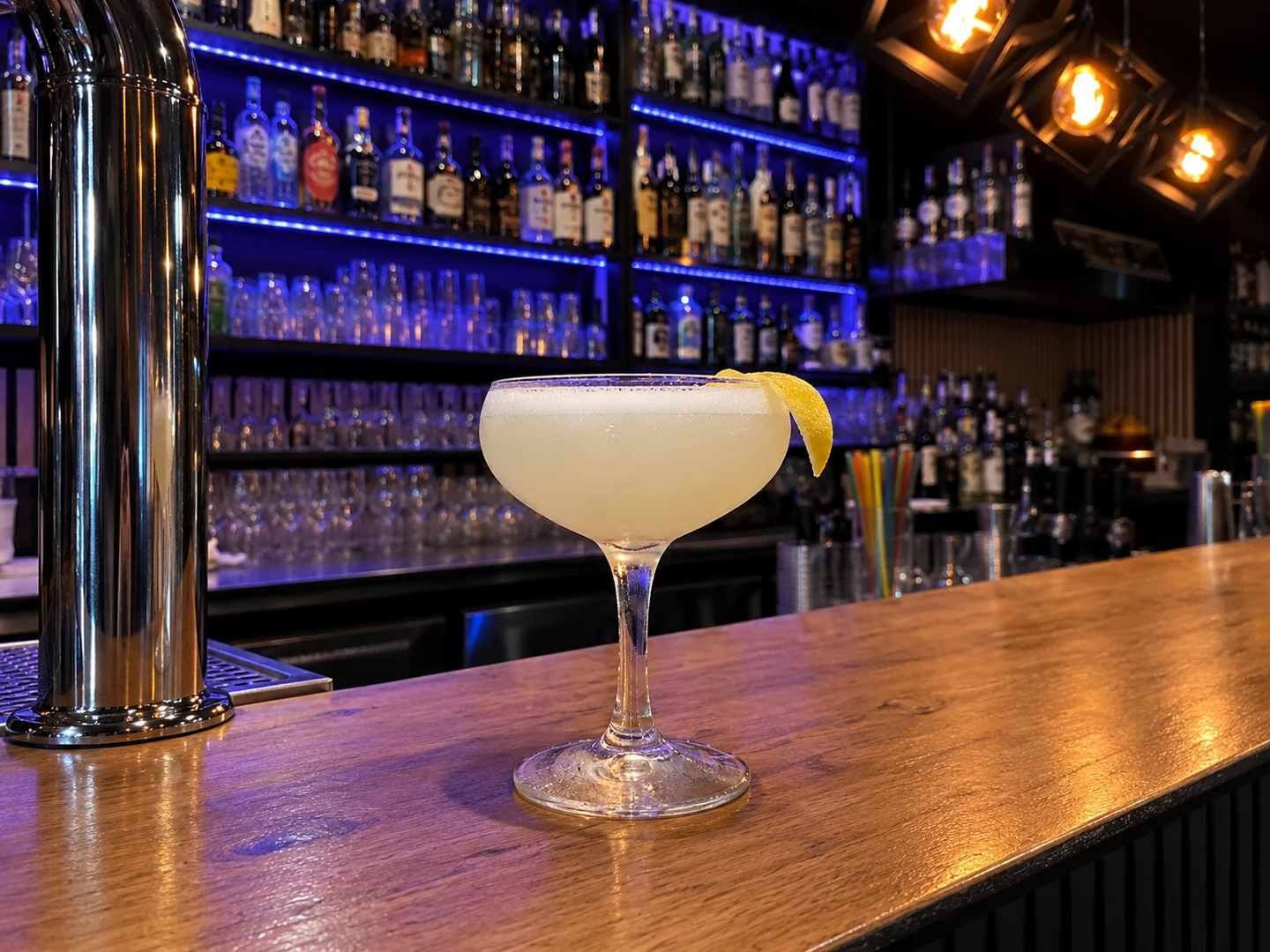
Gin, triple sec, lemon, optional egg white.
A bright white sour. It looks simple, and it really isn't.
Harry MacElhone first made it with cognac at London's Ciro's Club, then rebuilt it with gin at Harry's Bar in Paris, and the gin version is the one that stuck. The egg white is optional: with foam it's a silky sour, without it's sharper and more direct. It works either way.
 19 items
 Crystal vodka, clean classics and formulas that always work, from sours to long drinks.
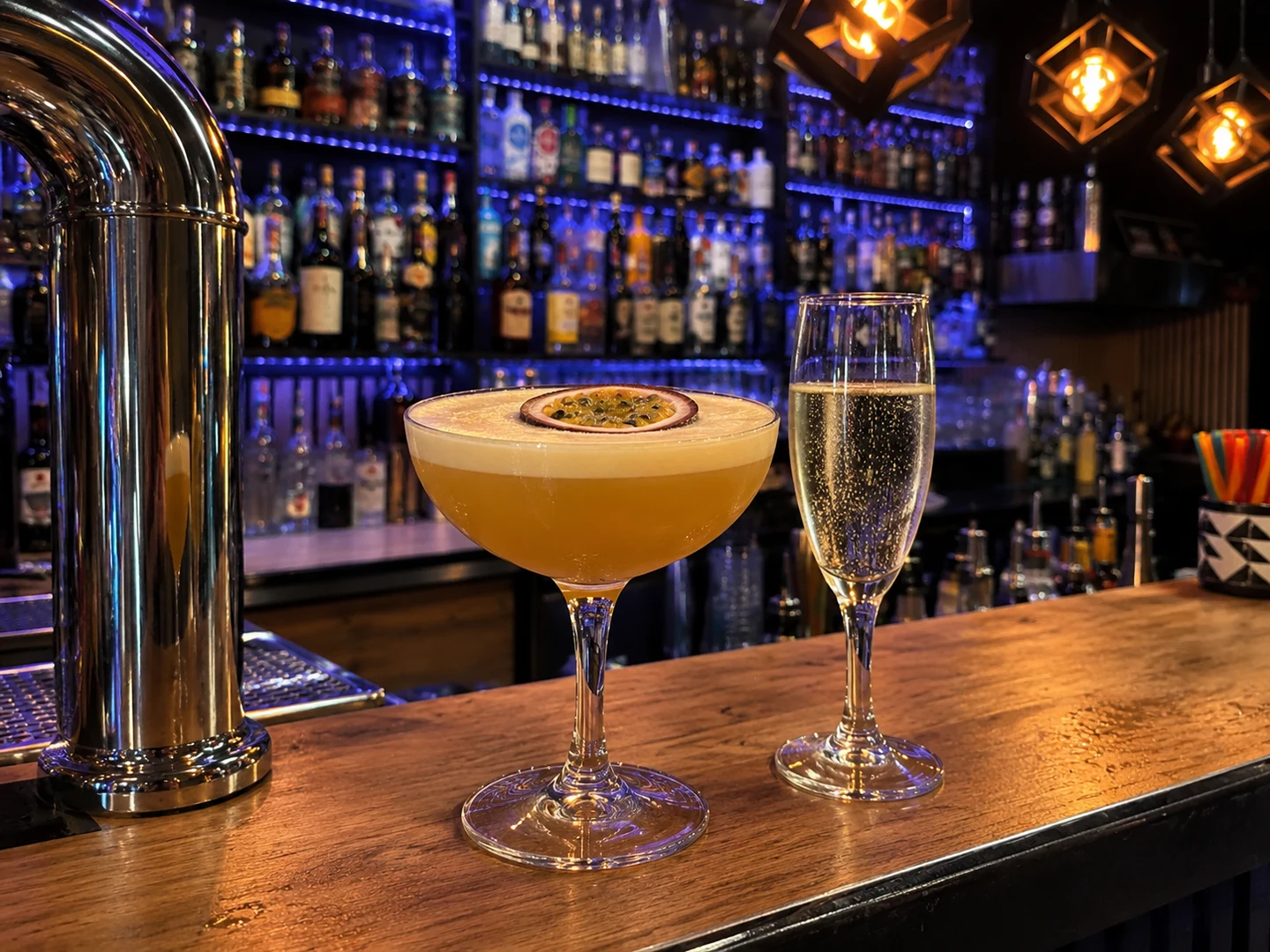
Vanilla vodka, passion fruit, lime, prosecco on the side.
Passion fruit, vanilla and a dense foam, prosecco shot on the side. The drink everyone photographs before they taste it.
Created in London by Douglas Ankrah in the early 2000s, it became one of the most-ordered cocktails on earth. The ritual is precise: a sip of the drink, a sip of prosecco, repeat. At Jimmy we build it with vanilla vodka and fresh passion fruit, tall foam and an ice-cold flute.
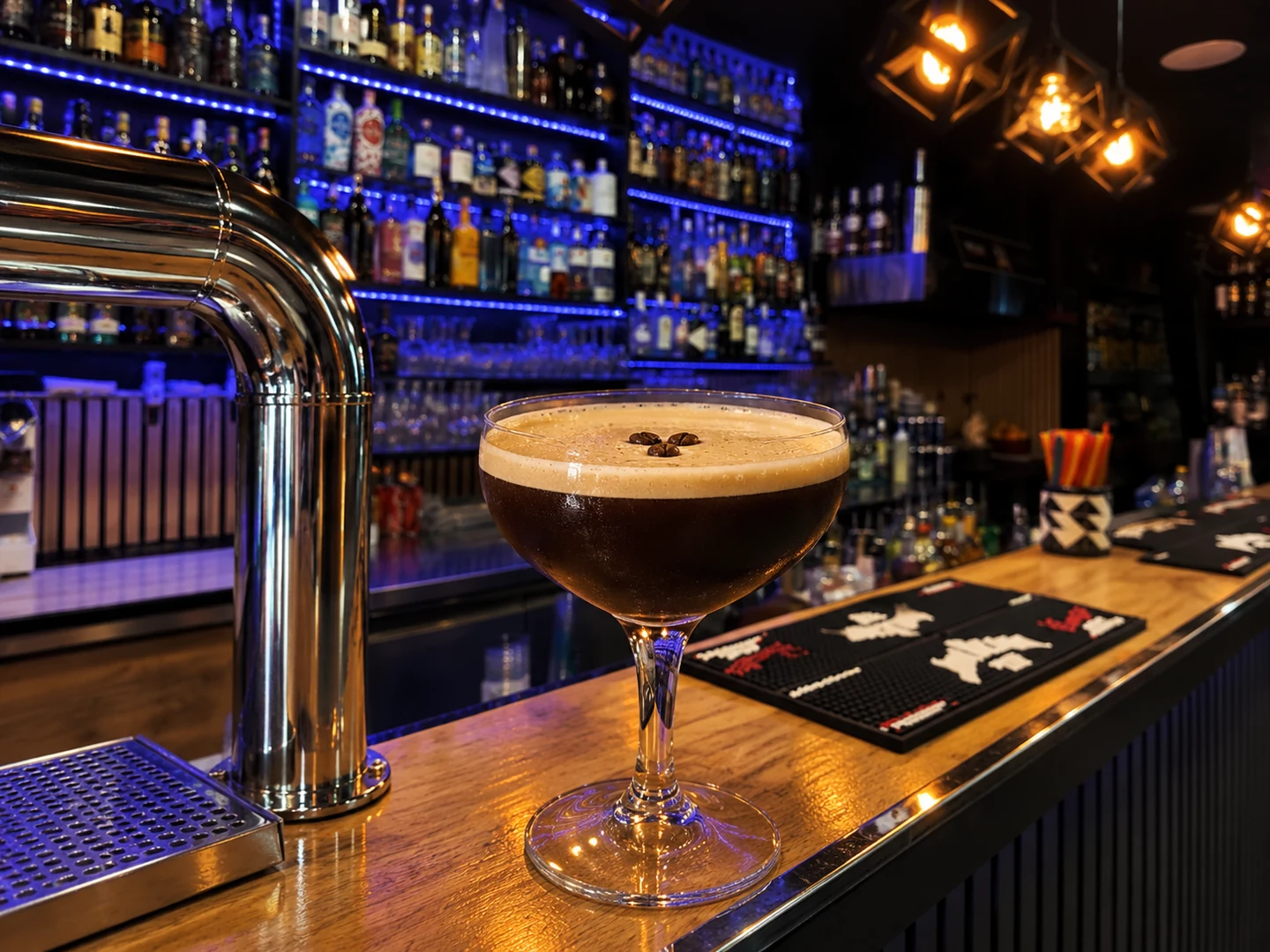
Vodka, fresh espresso, coffee liqueur, sugar.
Freshly pulled espresso, vodka and coffee liqueur shaken to a cream-coloured crown. An elegant wake-up before the night begins.
Legend says that in 1980s London a model asked Dick Bradsell for something to wake her up, then knock her out. This is what he made. The secret is fresh espresso, shaken hard over ice for the foam. At Jimmy we use coffee pulled to order, never syrup — which is why the crema holds to the last sip.
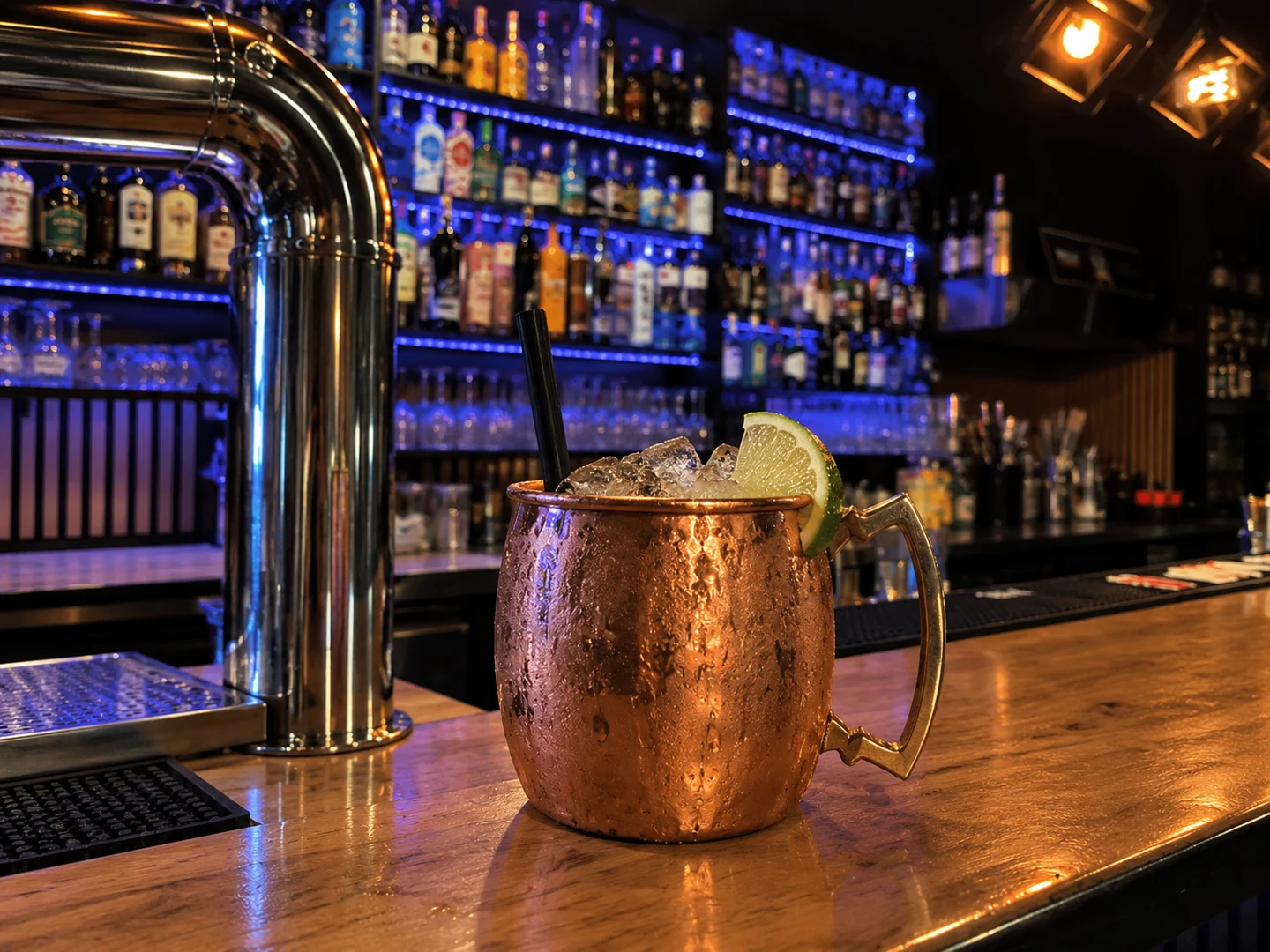
Vodka, ginger beer, lime, copper mug.
Vodka, sharp ginger beer and lime in a frosted copper mug. A bite of freshness you feel before the first sip.
Born in 1940s New York to clear unsold vodka and ginger beer, it owes half its charm to the copper mug: it holds the cold and lifts the ginger. At Jimmy we always serve it in copper, with lime squeezed to order.
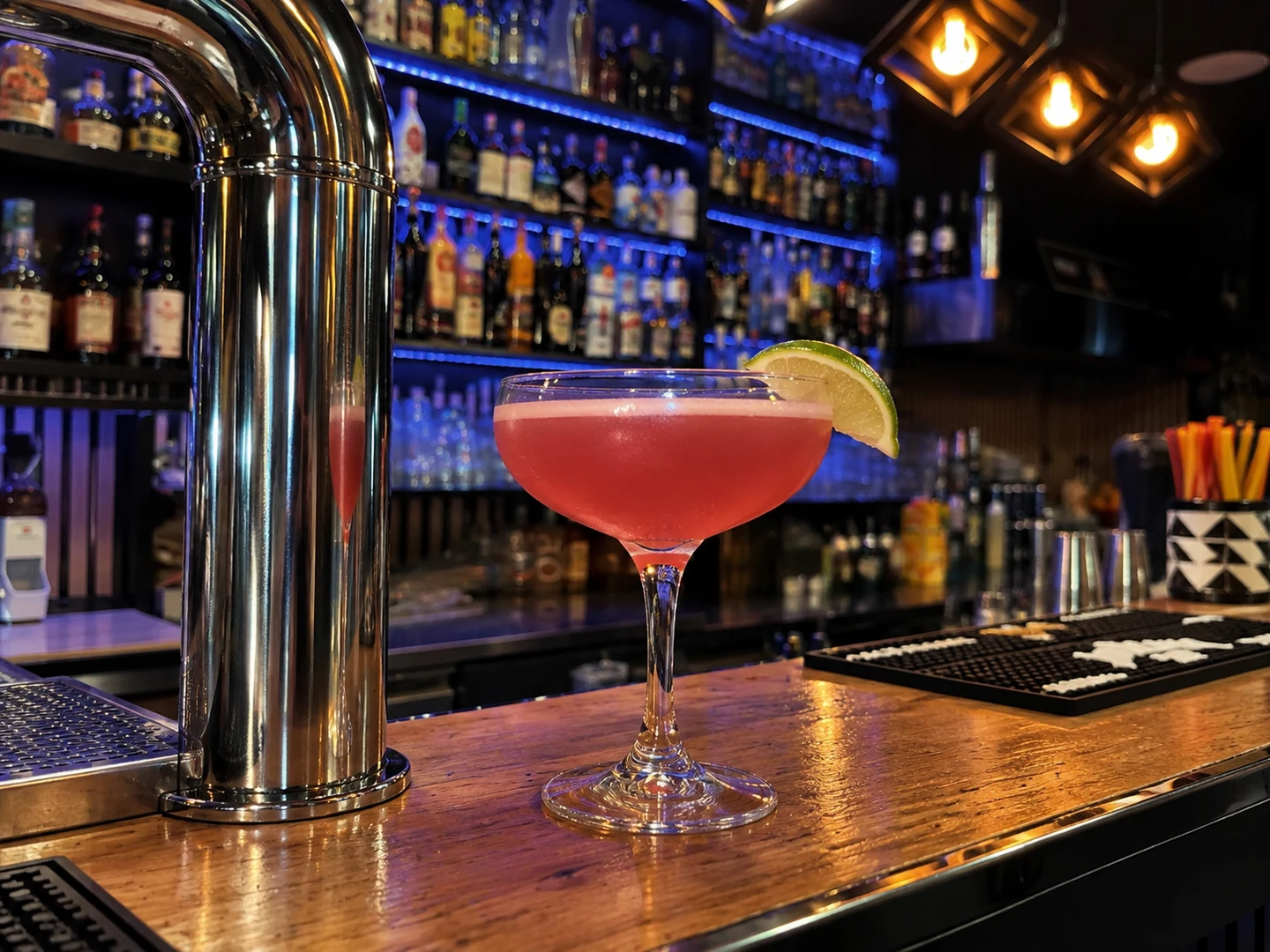
Citrus vodka, triple sec, cranberry juice, lime.
Citrus vodka, cranberry and triple sec in a frozen coupe. Bright pink, tart, dressed in nineties glamour.
Made famous by a certain New York series, the Cosmopolitan is far more serious than its reputation: the balance of cranberry, citrus and triple sec is surgical. The pink comes from cranberry, not syrup. At Jimmy we serve it in a frozen coupe, finished with a flamed orange peel.
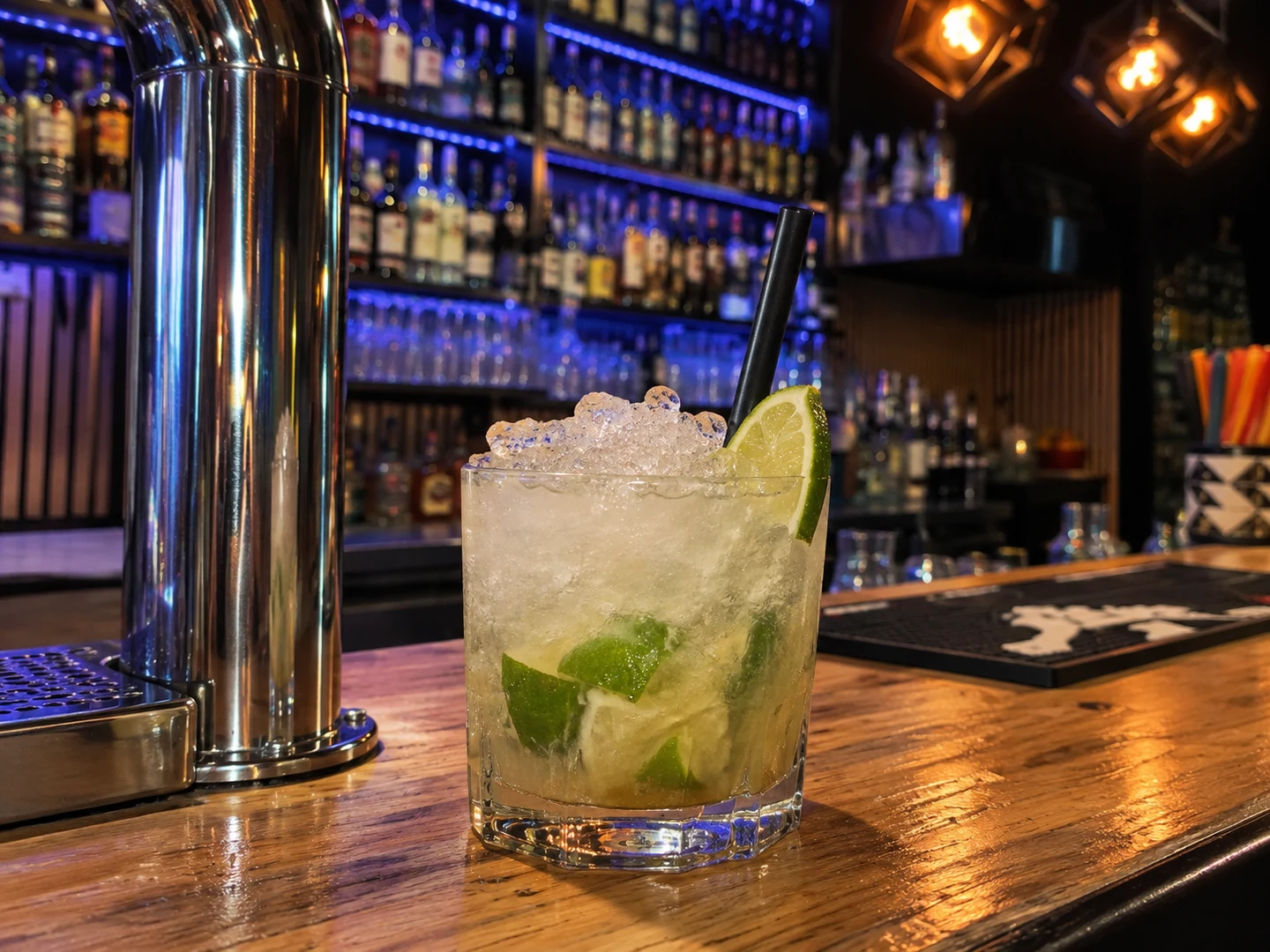
Vodka, lime, brown sugar, crushed ice.
Muddled lime, brown sugar and vodka over crushed ice. The Caipirinha's cleaner cousin, all citrus and no fuss.
The Caipiroska is the Caipirinha with a different soul: drop the cachaça, bring in vodka. The result is cleaner and more vertical, letting lime and sugar do the talking. Muddled by hand, packed with crushed ice, drunk short and cold.
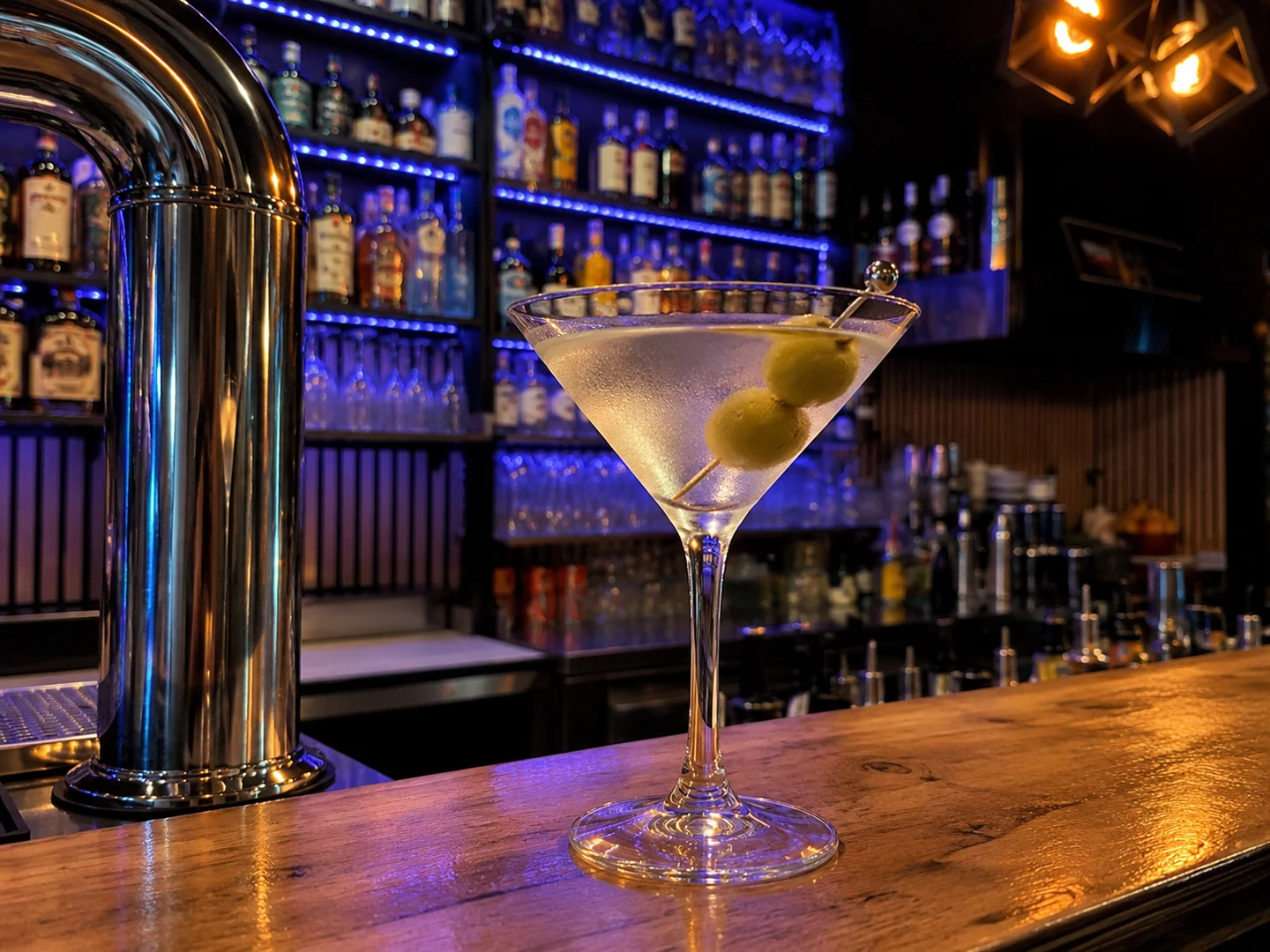
Vodka, dry vermouth, olive or lemon twist.
Crystal vodka and a whisper of dry vermouth, ice-cold. Clean as a scissor cut, dry as a decision.
'Shaken, not stirred' made it an icon, but the truth is it lives or dies on cold and clarity. Quality vodka, near-invisible vermouth, a frozen glass. Olive or lemon twist: at Jimmy we ask before we build it.
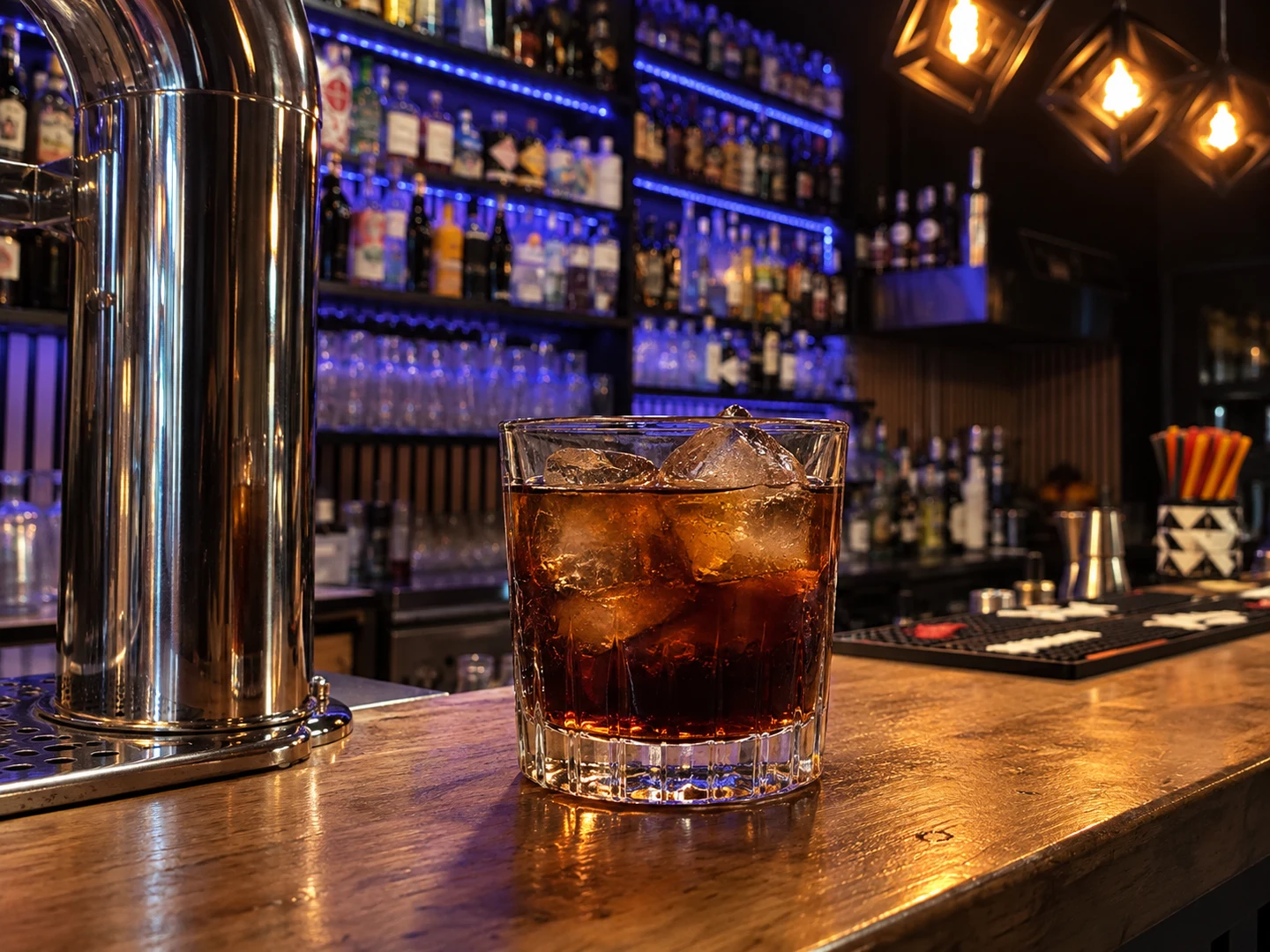
Vodka, coffee liqueur.
Vodka and coffee liqueur over ice. Two ingredients, night-dark, a caffeine jolt that keeps your eyes open.
Born in postwar Brussels and named for an American diplomat, it's simplicity that works: vodka and coffee liqueur, ice, nothing else. Add cream and it becomes a White Russian. At Jimmy we serve it on the rocks, dark and direct.
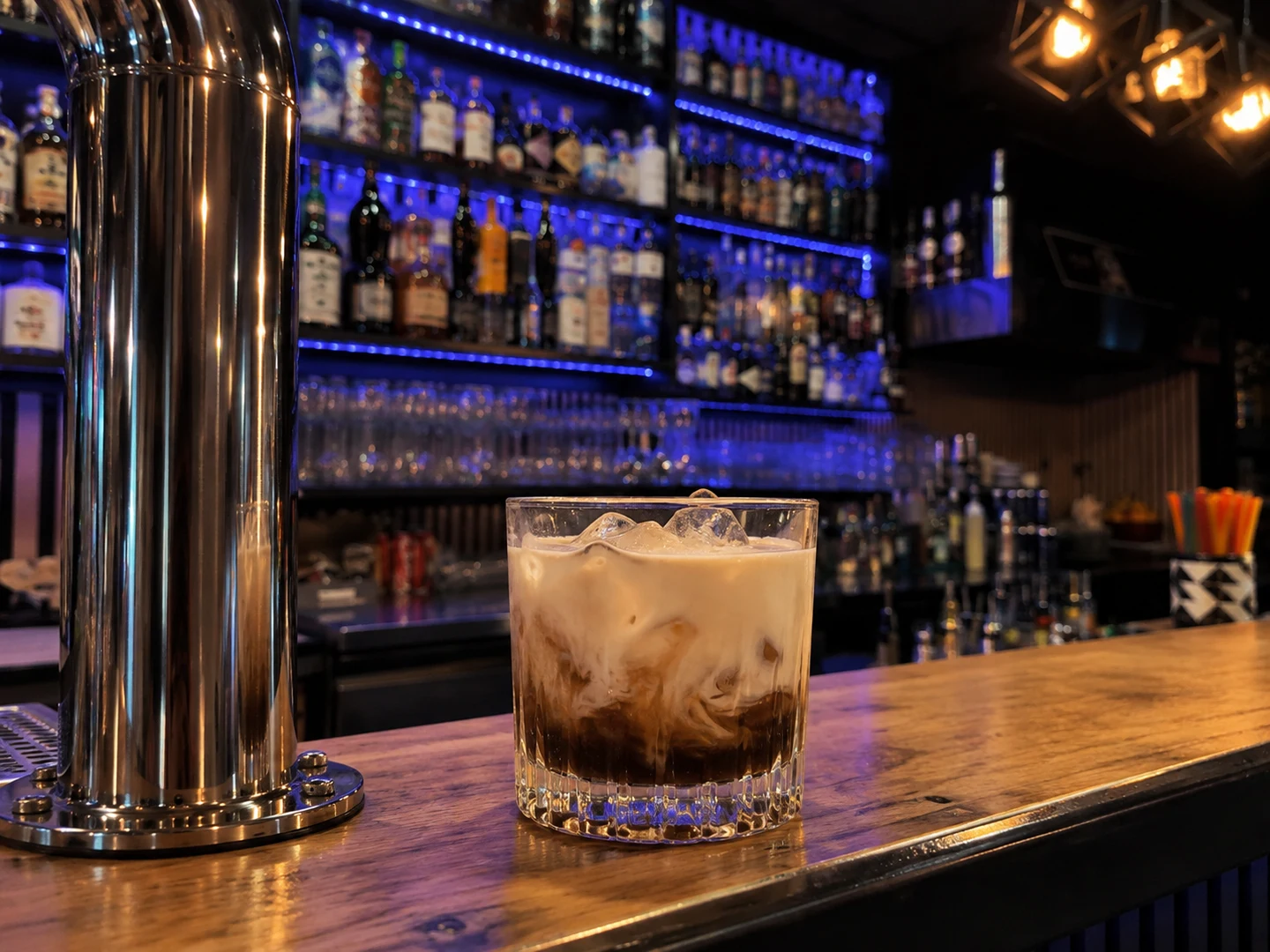
Vodka, coffee liqueur, fresh cream.
Vodka, coffee liqueur and fresh cream. Velvety, sweet, hazelnut-coloured. The drink you sip slowly, late.
Made immortal by a certain bathrobe-wearing Dude, it's a Black Russian softened with cream: dessert and cocktail at once. The cream is poured slowly, so it floats a moment before it melts. At Jimmy we keep it creamy, never cloying.
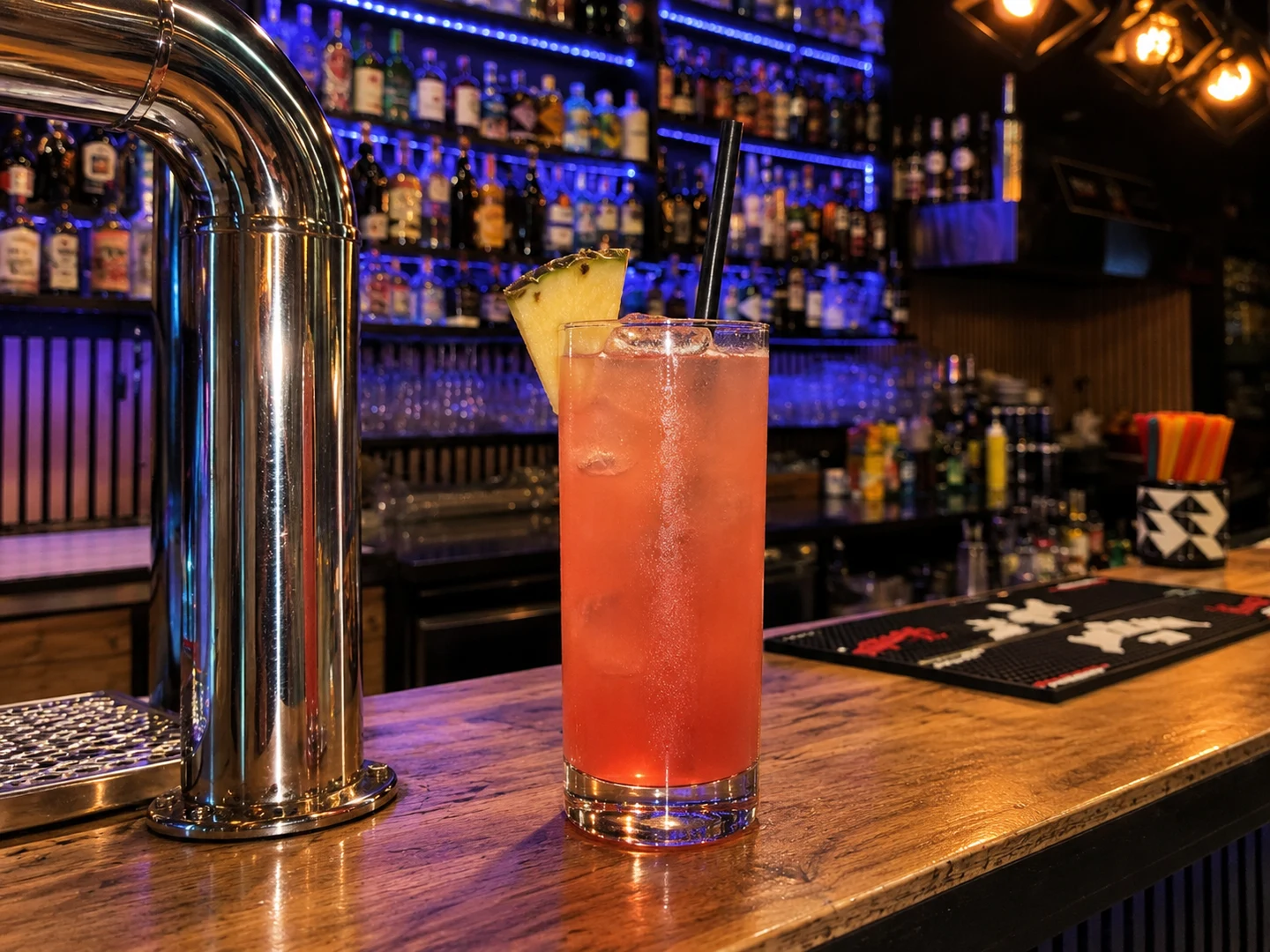
Vodka, pineapple juice, cranberry juice.
Vodka, pineapple and cranberry. Pink, tropical, effortless. A beach in the middle of the university quarter.
The Bay Breeze is the long drink that asks nothing of you: sweet pineapple, tart cranberry, neutral vodka bridging the two. It holds up even in winter, when you want sunshine without overthinking. One of the most-ordered drinks for big tables at Jimmy.
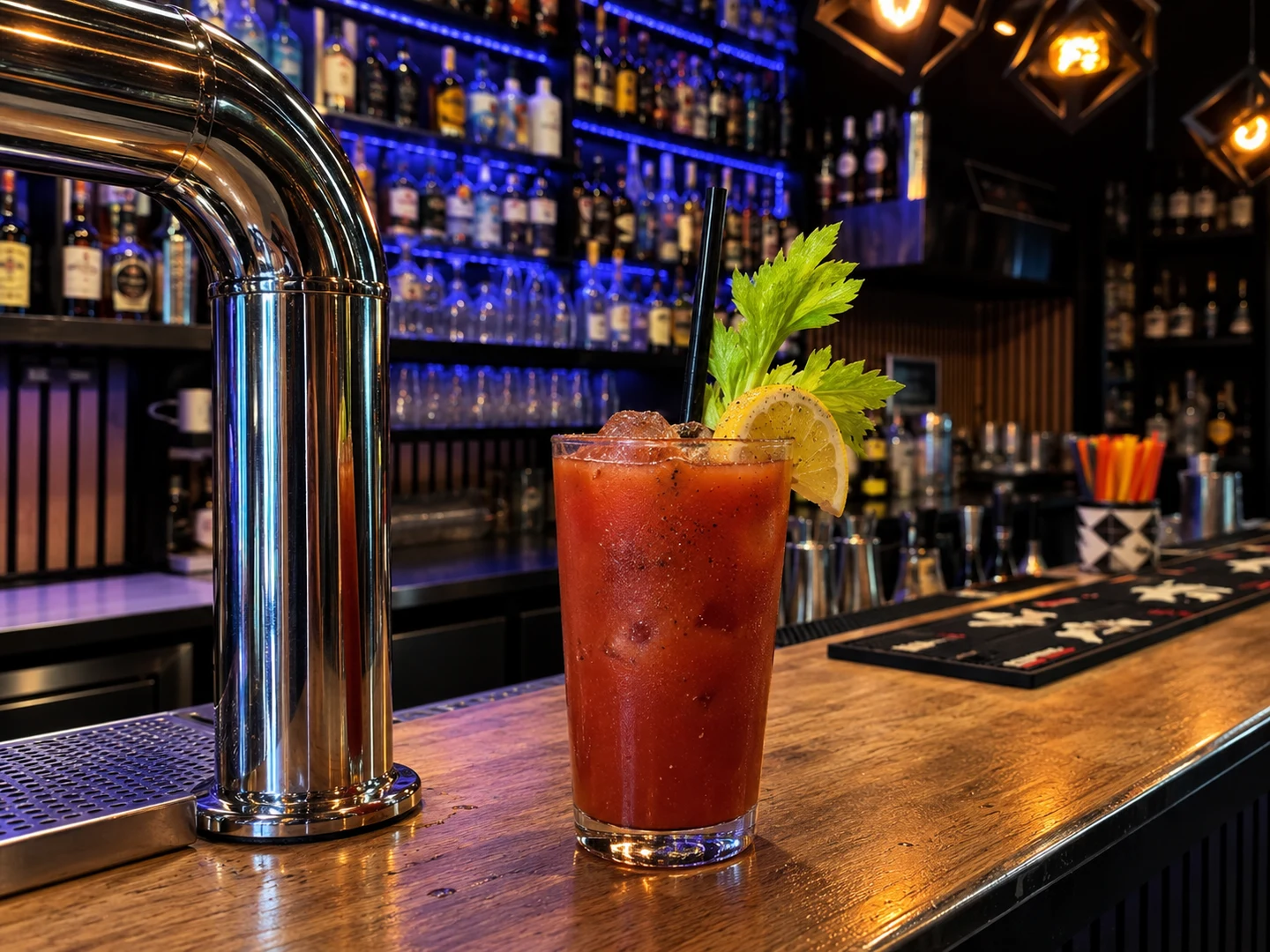
Vodka, tomato juice, lemon, Worcestershire, Tabasco, salt, pepper.
Vodka, tomato, lemon and a spice hit. Savoury, spicy, almost edible. The most 'cooked' cocktail at the bar.
Born in 1920s Paris and perfected in New York, it's the one cocktail that flirts with food: Worcestershire, Tabasco, salt, pepper and tomato acidity. Everyone wants it their own way — at Jimmy we dial the heat to what you can handle.
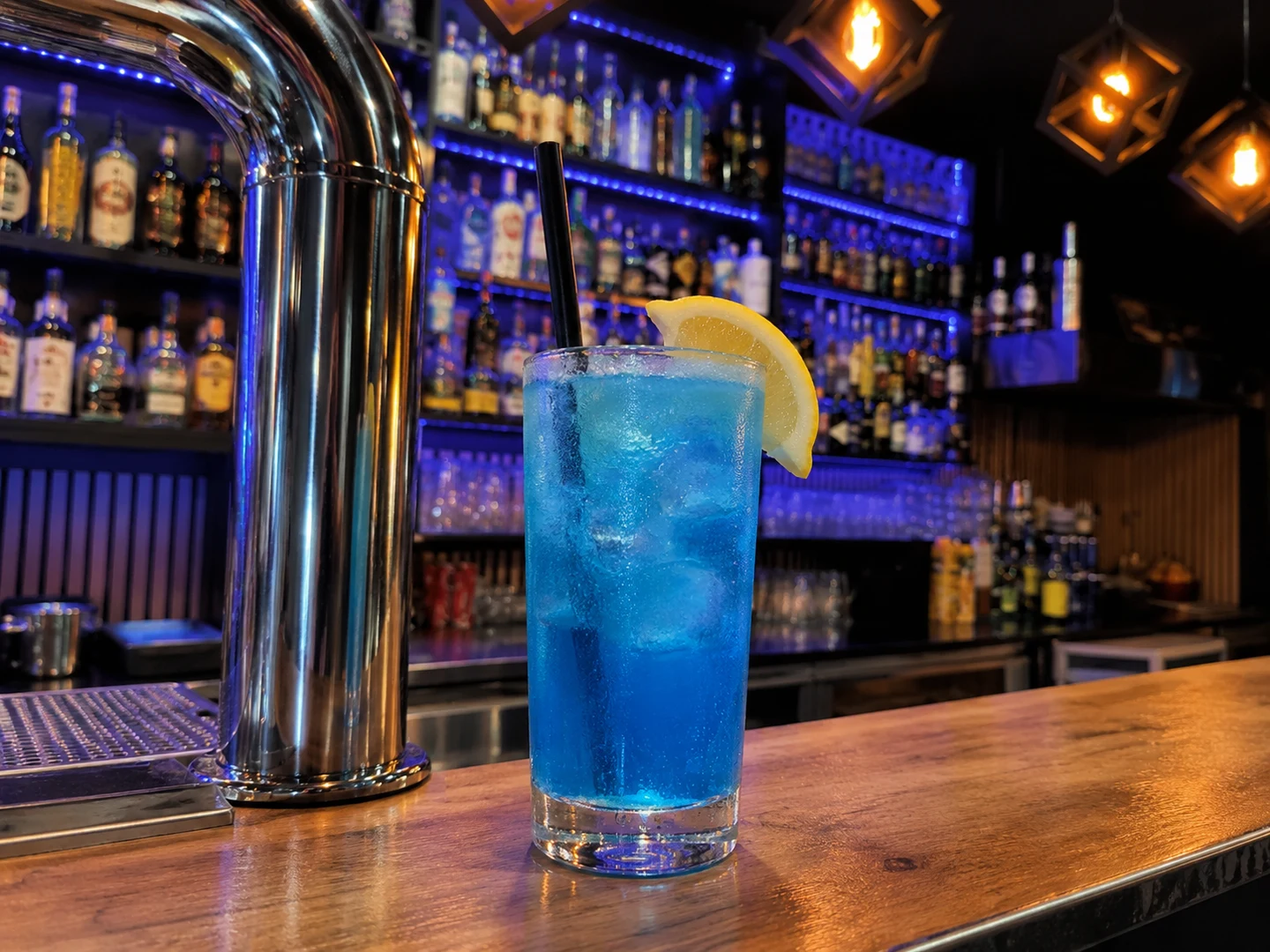
Vodka, blue curaçao, lemon soda.
Vodka, blue curaçao and lemon soda. Electric blue, citrusy, theatrical. For anyone who orders with their eyes too.
Invented in 1960s Paris, it owes everything to the curaçao's blue — which is really orange in disguise. Under the colour sits a citrusy, thirst-quenching long drink. At Jimmy it comes out a blue you can spot across the room.
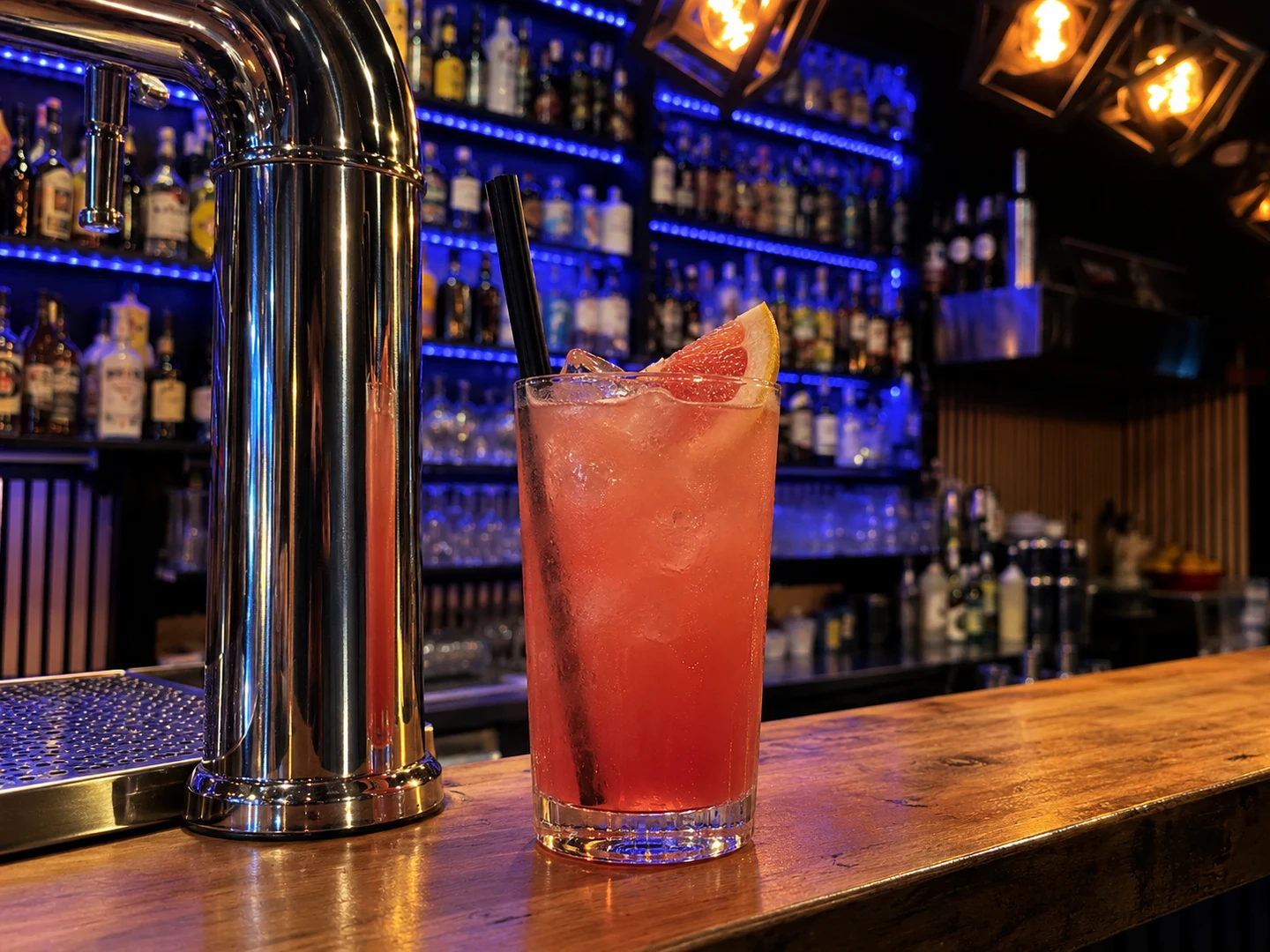
Vodka, grapefruit juice, cranberry juice.
Vodka, grapefruit and cranberry. Slightly bitter, clean, crisp. The breeze that cuts through warm nights.
The drier cousin of the Bay Breeze, it leans on grapefruit's bitterness instead of pineapple's sweetness. The long drink for anyone who finds tropical cocktails too sweet. Vodka, two juices, ice — nothing extra.
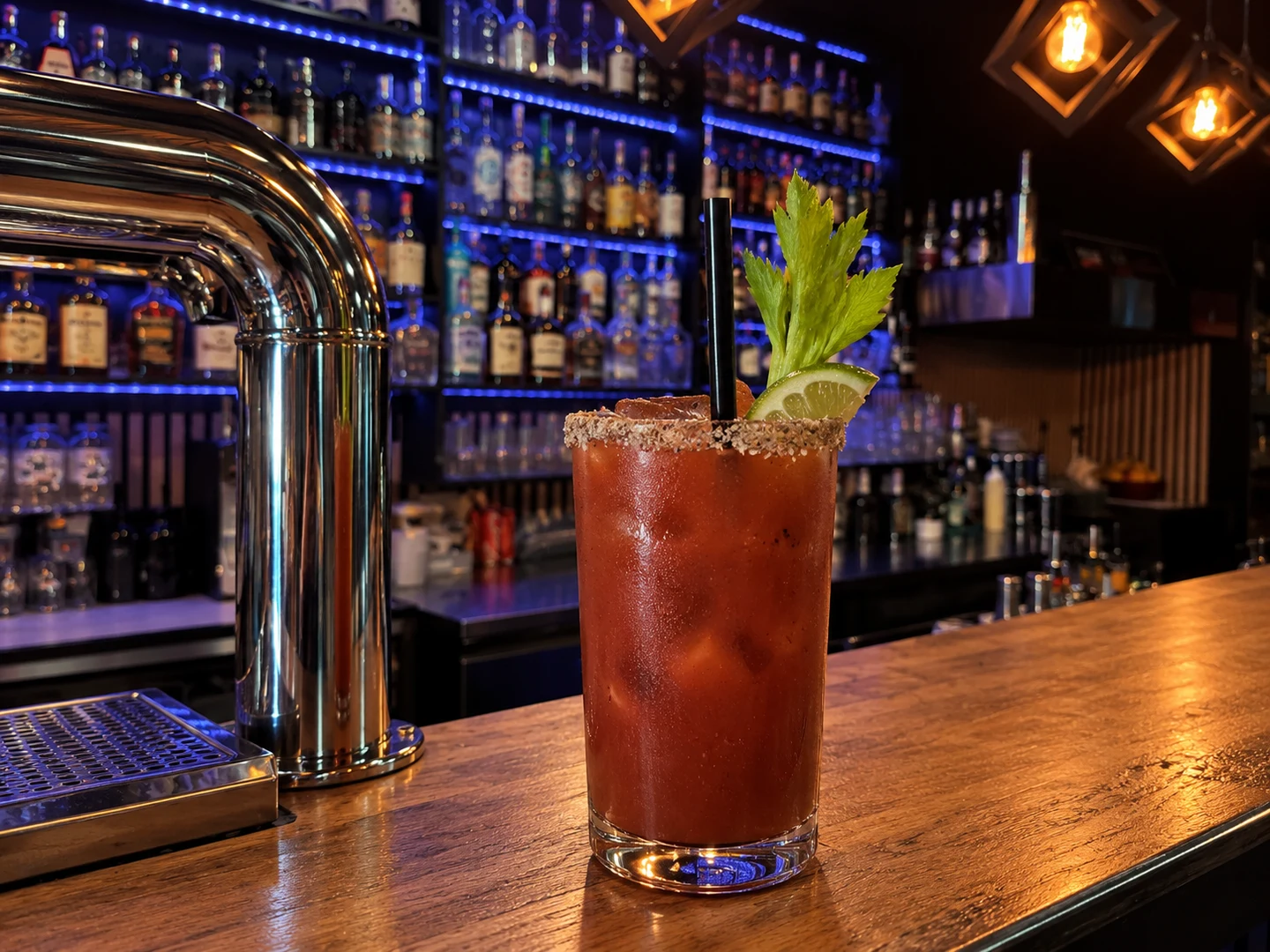
Vodka, clamato, lime, Worcestershire, Tabasco, celery salt.
Vodka, clamato, lime and spice with a celery-salt rim. The Canadian Bloody Mary, more saline and deep.
Invented in Calgary in 1969, it's Canada's national drink: the twist is clamato, tomato juice cut with clam broth. Saline, oceanic, surprising. At Jimmy it's for the curious who've made peace with the Bloody Mary and want to go further.
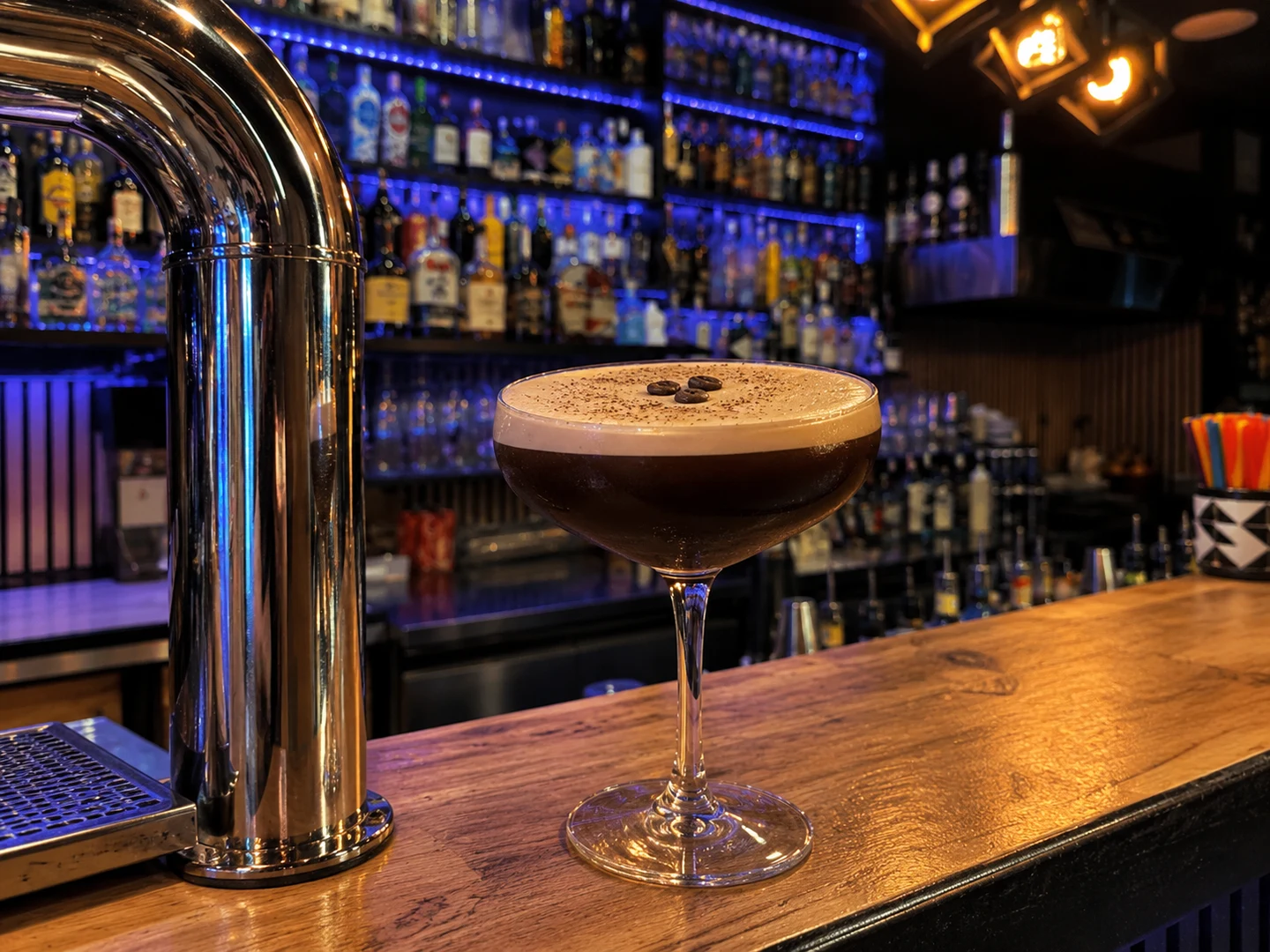
Vodka, chilled espresso, coffee liqueur, sugar, cold foam.
The Espresso Martini taken to its coldest extreme. Icier, creamier, with a foam built for long nights.
Our version comes from one obsession: the foam. Chilled espresso, vodka, coffee liqueur and a cold foam whipped separately that stays tight to the bottom. The Espresso Martini for people already thinking about their second. You'll only find it here, on Via Petroni.
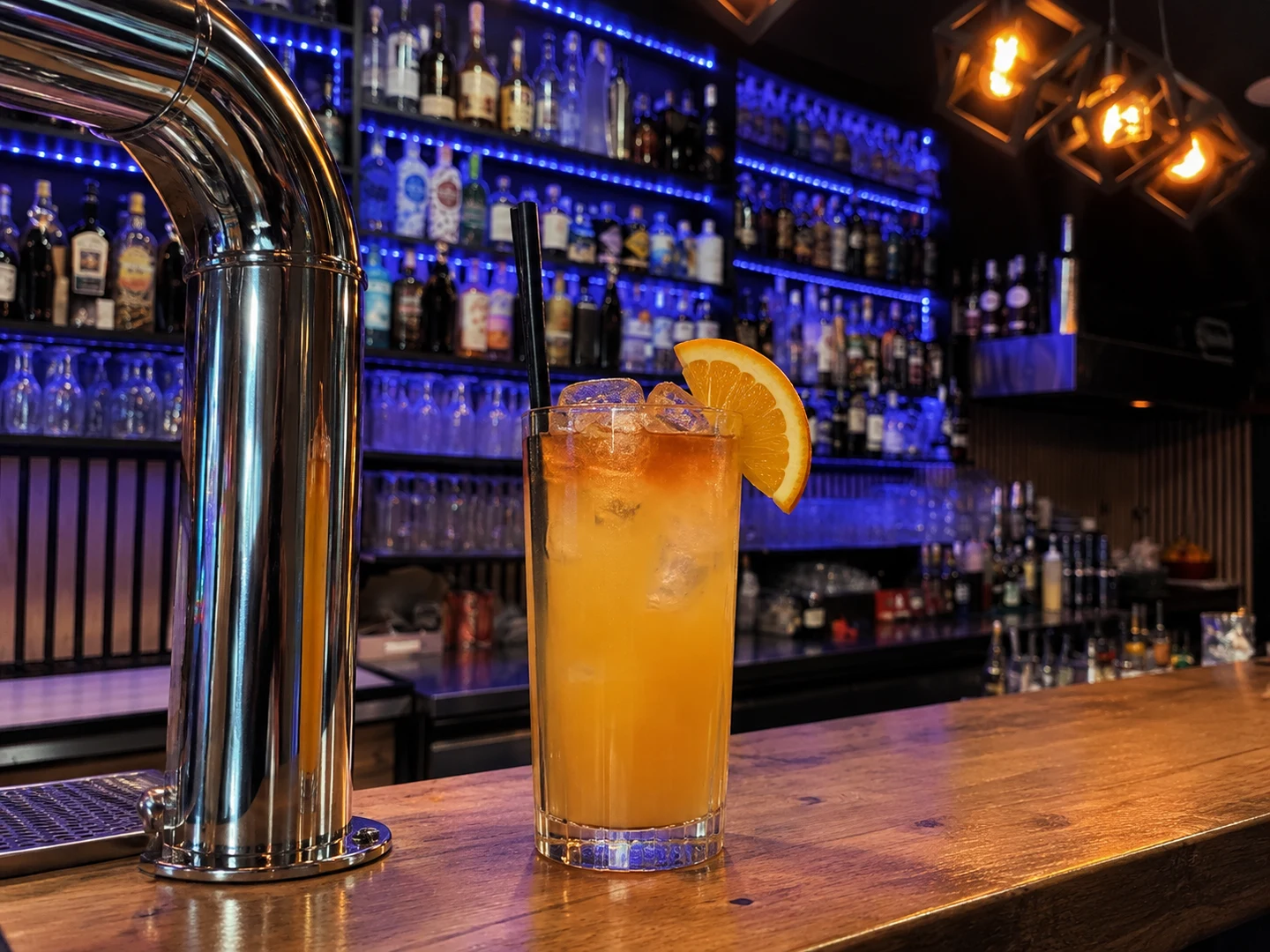
Vodka, orange juice, Galliano.
Vodka, orange and a float of vanilla Galliano. The Screwdriver in seventies clothes, sweet and nostalgic.
The legendary name comes from a Californian surfer called Harvey who, after a few too many, kept walking into walls. The Galliano floated over the orange adds vanilla and herbs, turning a plain Screwdriver into something vintage and aromatic.
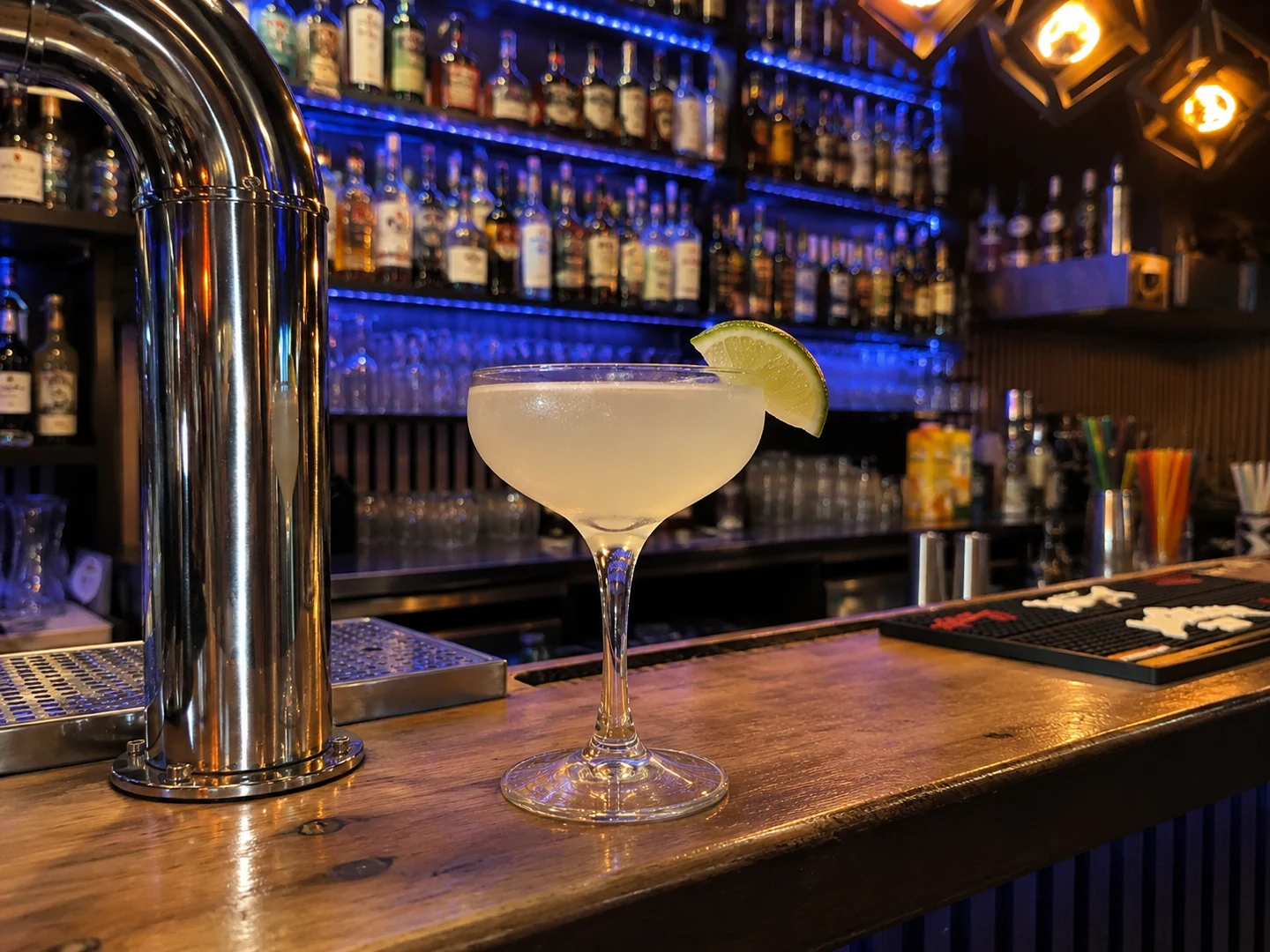
Vodka, triple sec, lime.
Vodka, triple sec and lime in near-equal parts. Short, cold, straight to the point. The sour that kicks fast nights off.
Born as a shot and grown into a cocktail, the Kamikaze is the sour stripped to the bone: citrus, orange sweetness, clean vodka. Drunk short and ice-cold, usually more than one. A favourite at Jimmy for tables that start strong.
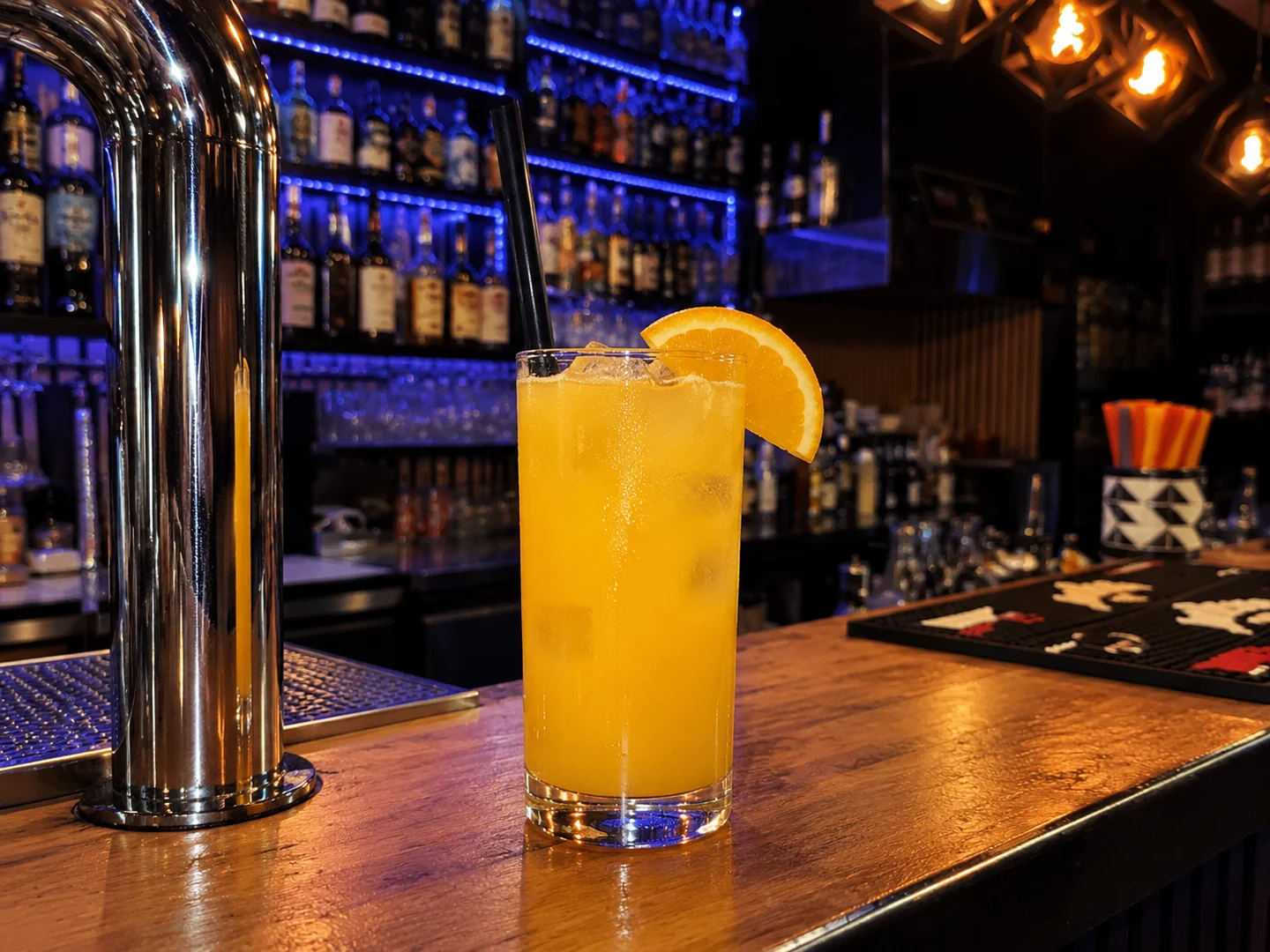
Vodka, orange juice.
Vodka and orange juice, no complications. The sunniest, most honest long drink at the bar.
The story goes that American oil workers in the Middle East stirred it with a screwdriver — hence the name. Two ingredients, no secrets: the quality is all in the orange and the ice. At Jimmy we make it with fresh juice when we have it.
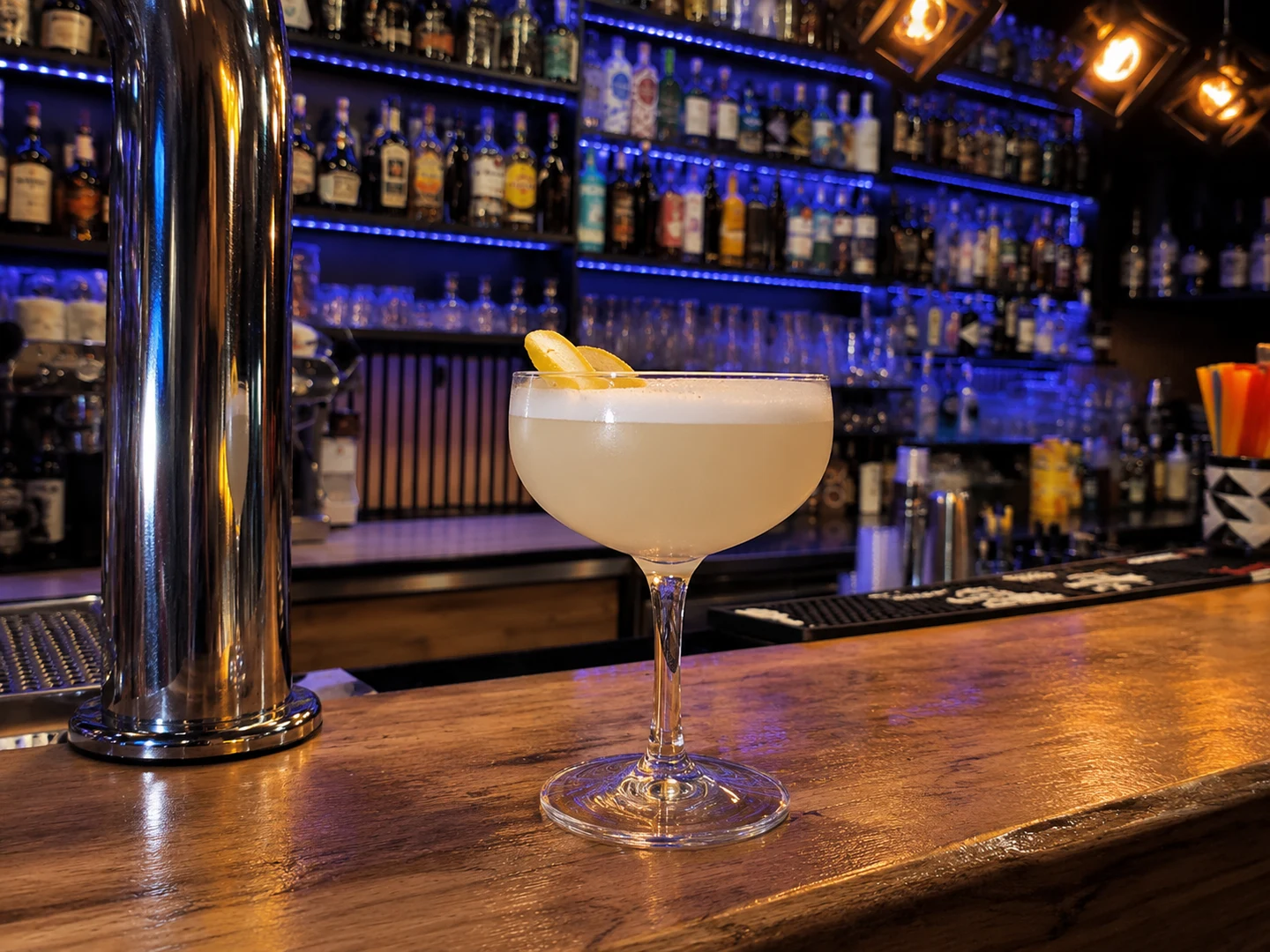
Soju, lemon, sugar, egg white.
Korean soju, lemon and a silky egg-white foam. Light, clean, surprisingly elegant.
Soju is the world's best-selling spirit, yet in Italy it stays a curiosity. As a sour it turns approachable: gentle strength, bright citrus, velvety foam. At Jimmy it's the drink for anyone who wants something new without overcommitting.
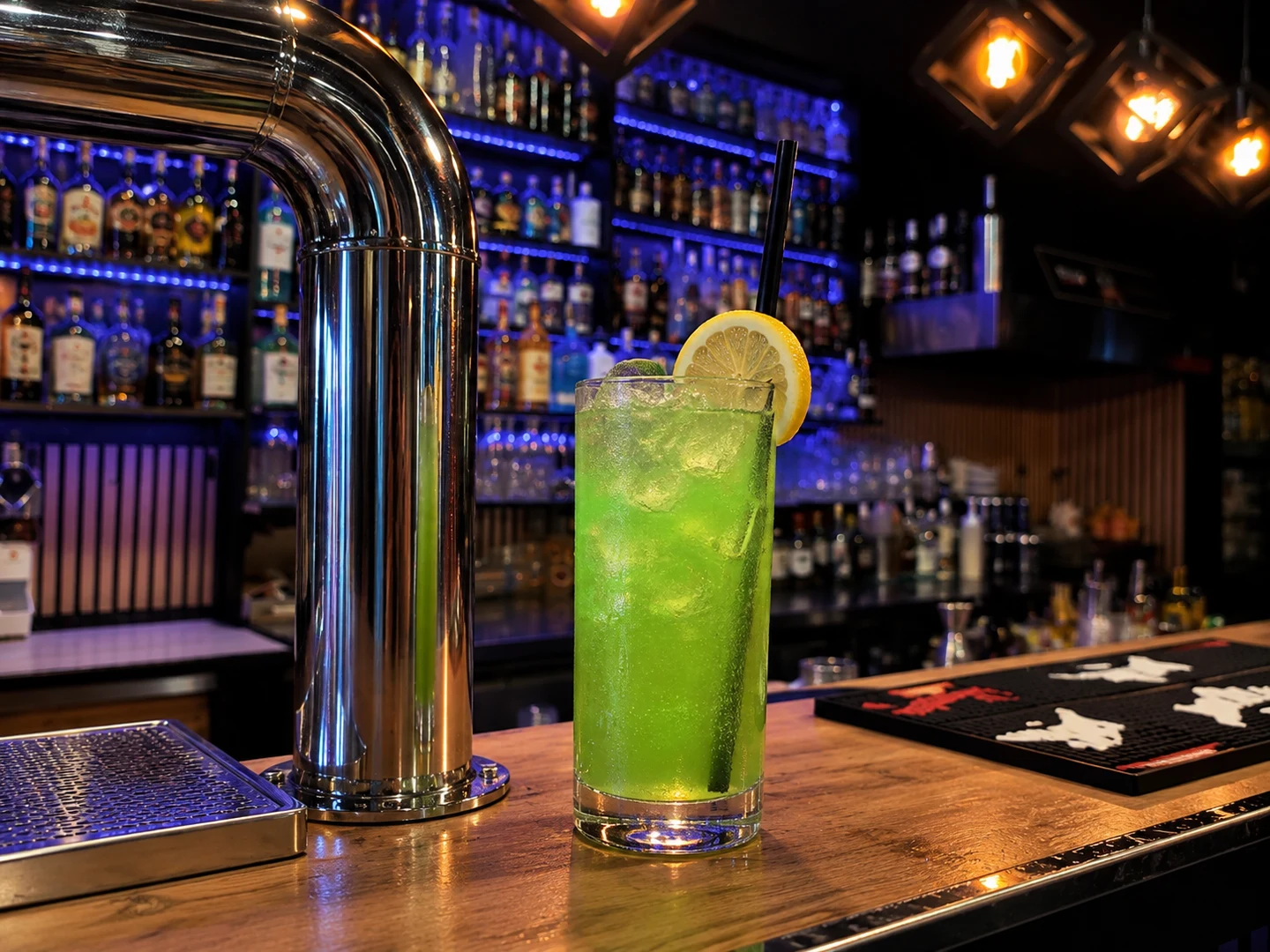
Vodka, gin, rum, tequila, Midori, lemon, lemon soda.
Four white spirits, Midori and lemon soda. Fluorescent green, strong under the pop. A Long Island in melon disguise.
A Long Island Iced Tea variant, the Tokyo swaps cola for melon Midori: same robust skeleton, impossible colour. It looks like a soft drink but carries vodka, gin, rum and tequila inside. At Jimmy it's the showpiece for groups.
 20 items
 Bourbon, scotch, rye and peated pours. Drinks that stay on the palate and in memory.
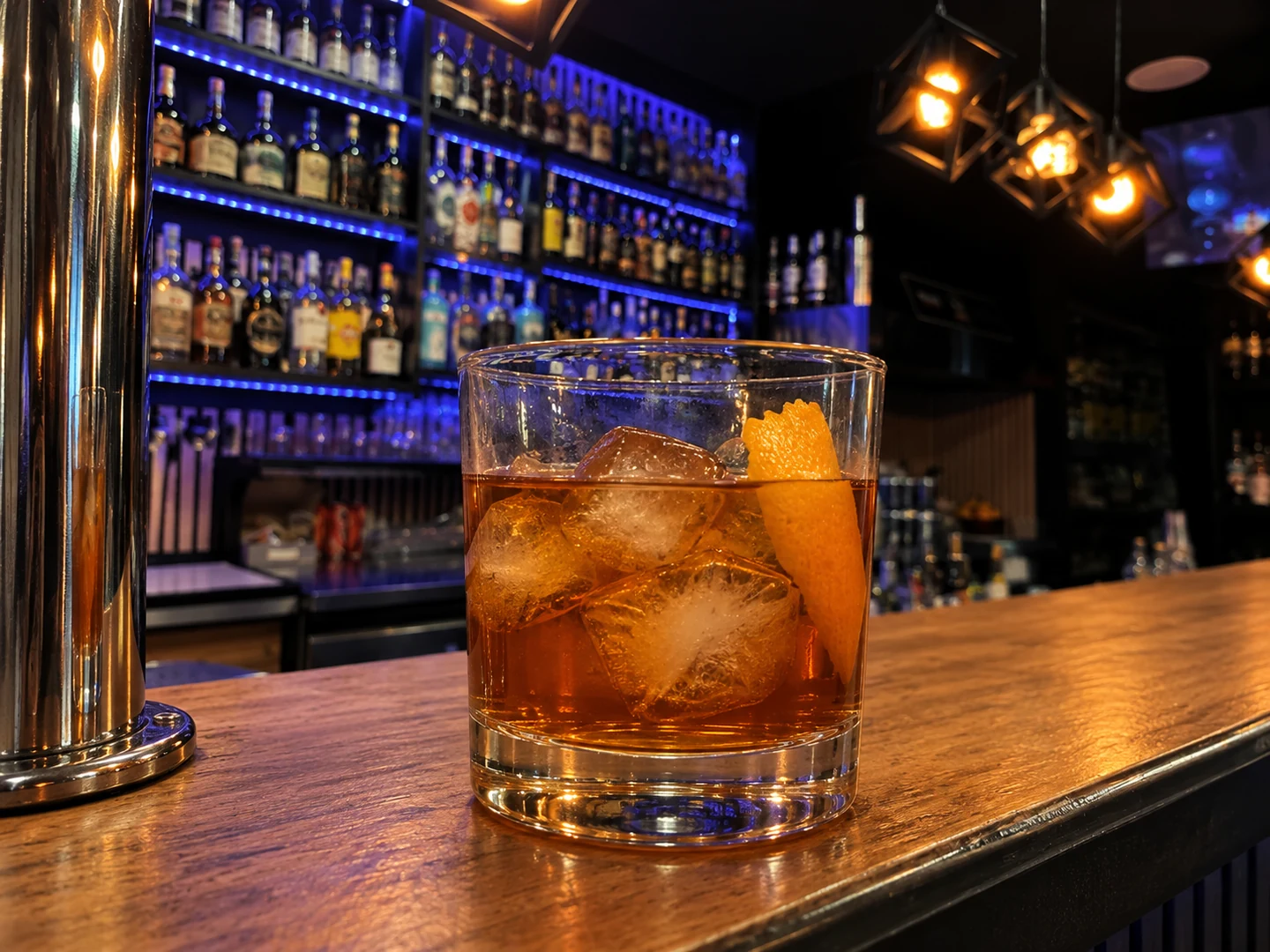
Bourbon, sugar, angostura, orange peel.
One of the oldest cocktails there is. Bourbon, sugar, bitters and ice, nothing more.
One of the oldest cocktails there is. Bourbon, sugar, bitters and ice, nothing more.
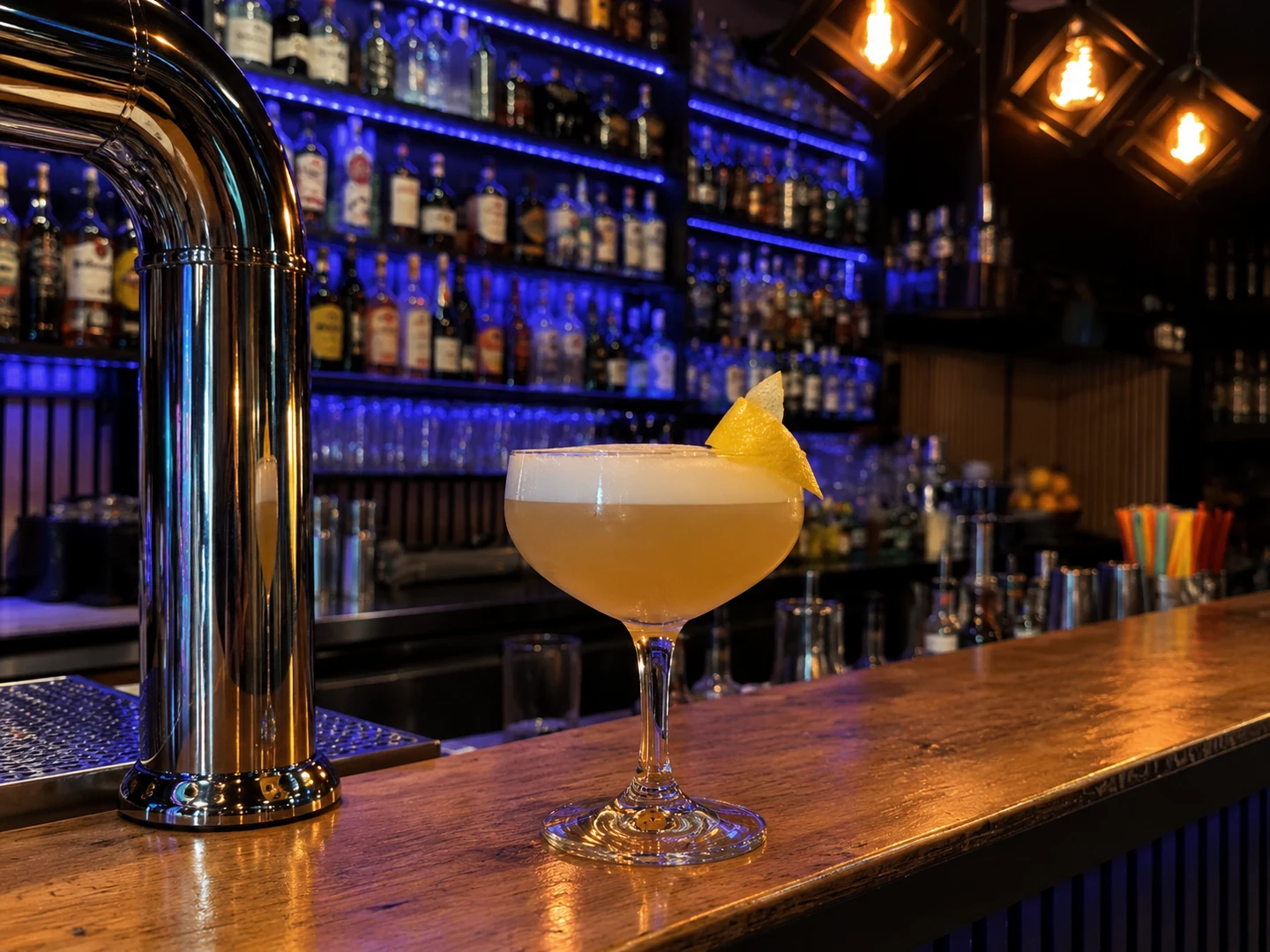
Bourbon, lemon, sugar, egg white.
Soft bourbon, creamy foam and bright citrus. A sour done the way it should be.
Soft bourbon, creamy foam and bright citrus. A sour done the way it should be.
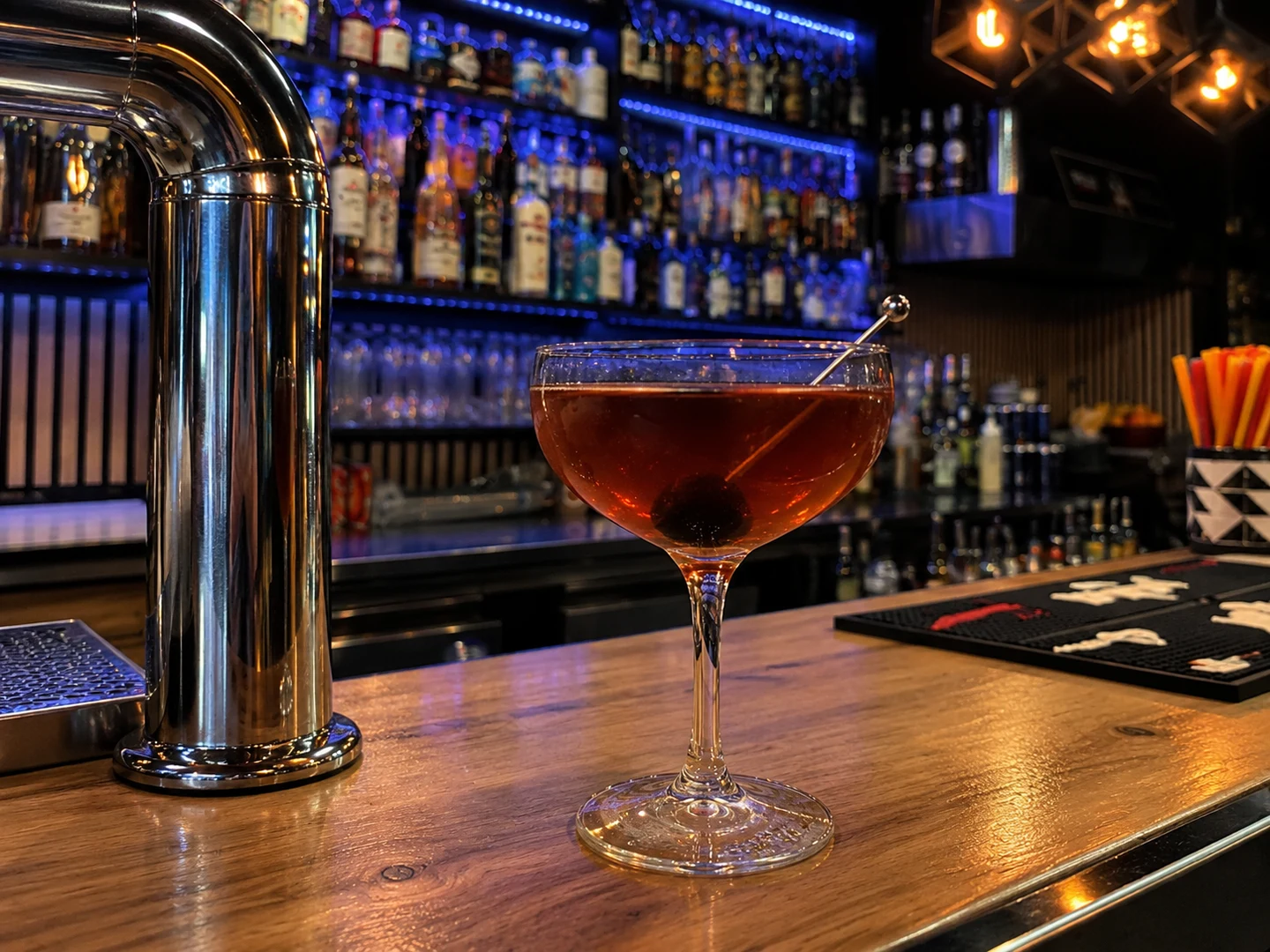
Rye whiskey, red vermouth, angostura, cherry.
Stirred, deep, commanding. New York in a glass.
Stirred, deep, commanding. New York in a glass.
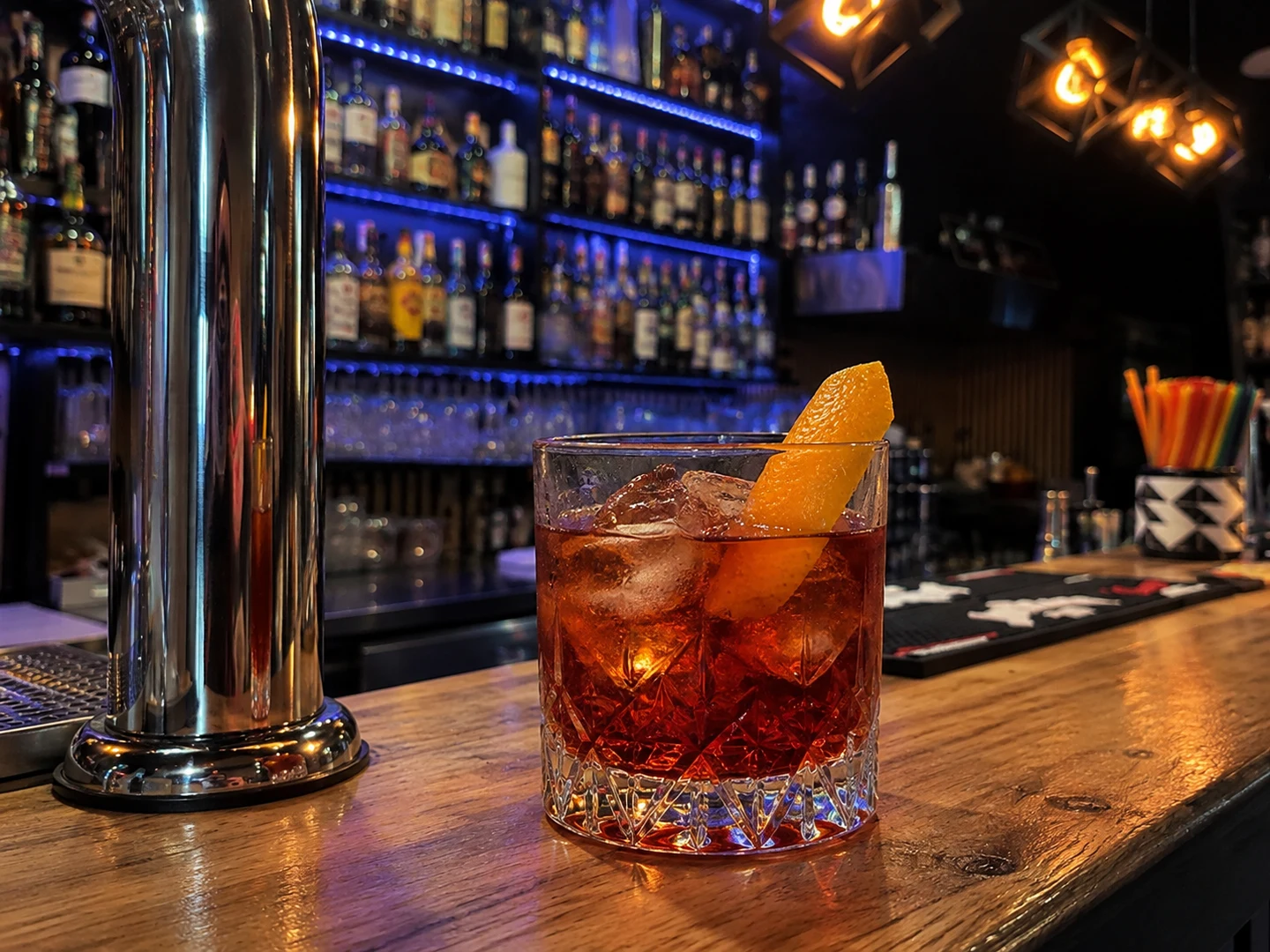
Bourbon, Campari, red vermouth, orange peel.
A Negroni with bourbon. Warmer, rounder, with a note of tobacco.
A Negroni with bourbon. Warmer, rounder, with a note of tobacco.
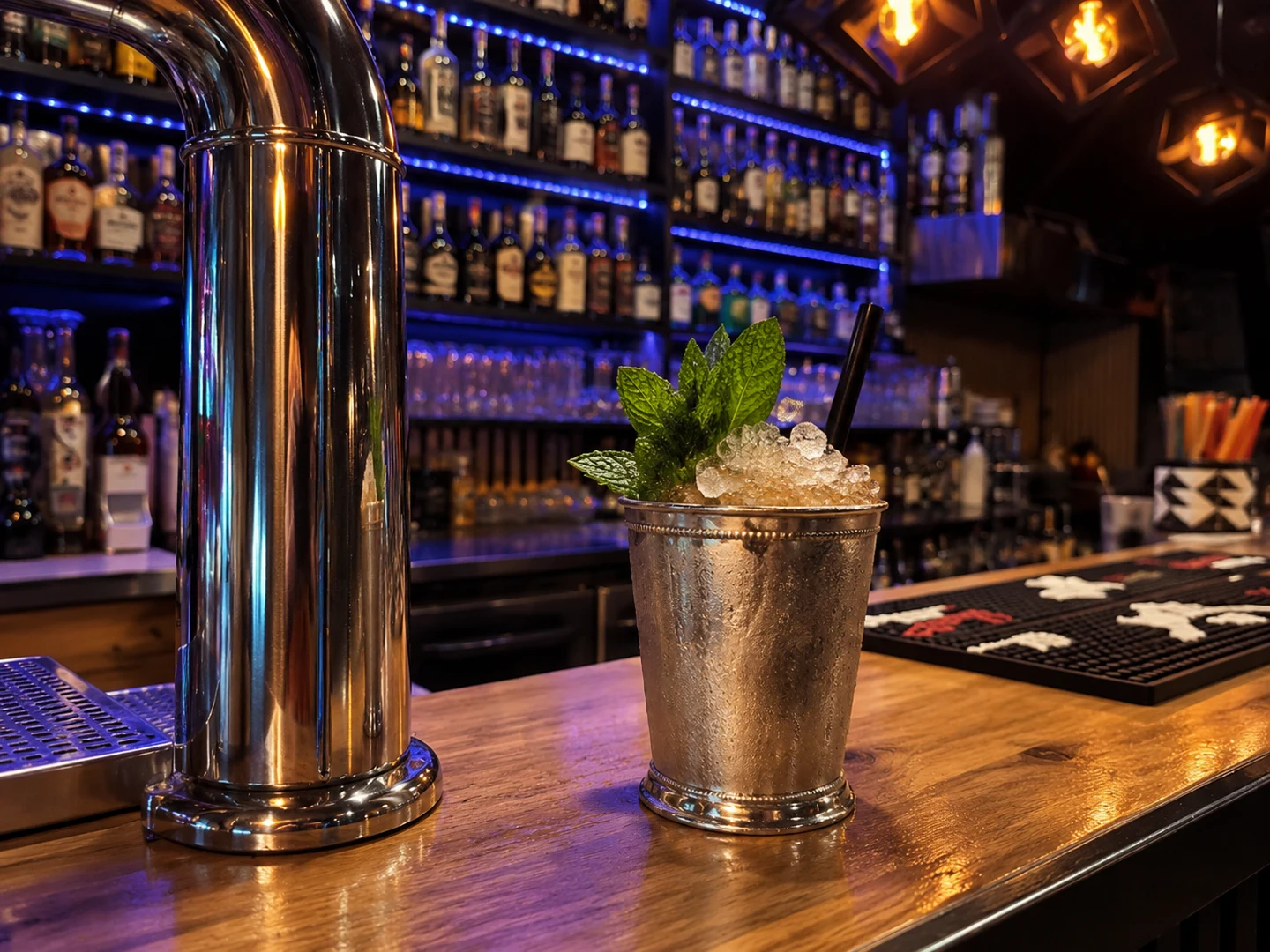
Bourbon, fresh mint, sugar, crushed ice.
Bruised mint, packed crushed ice and a frosted mug. The Deep South.
Bruised mint, packed crushed ice and a frosted mug. The Deep South.
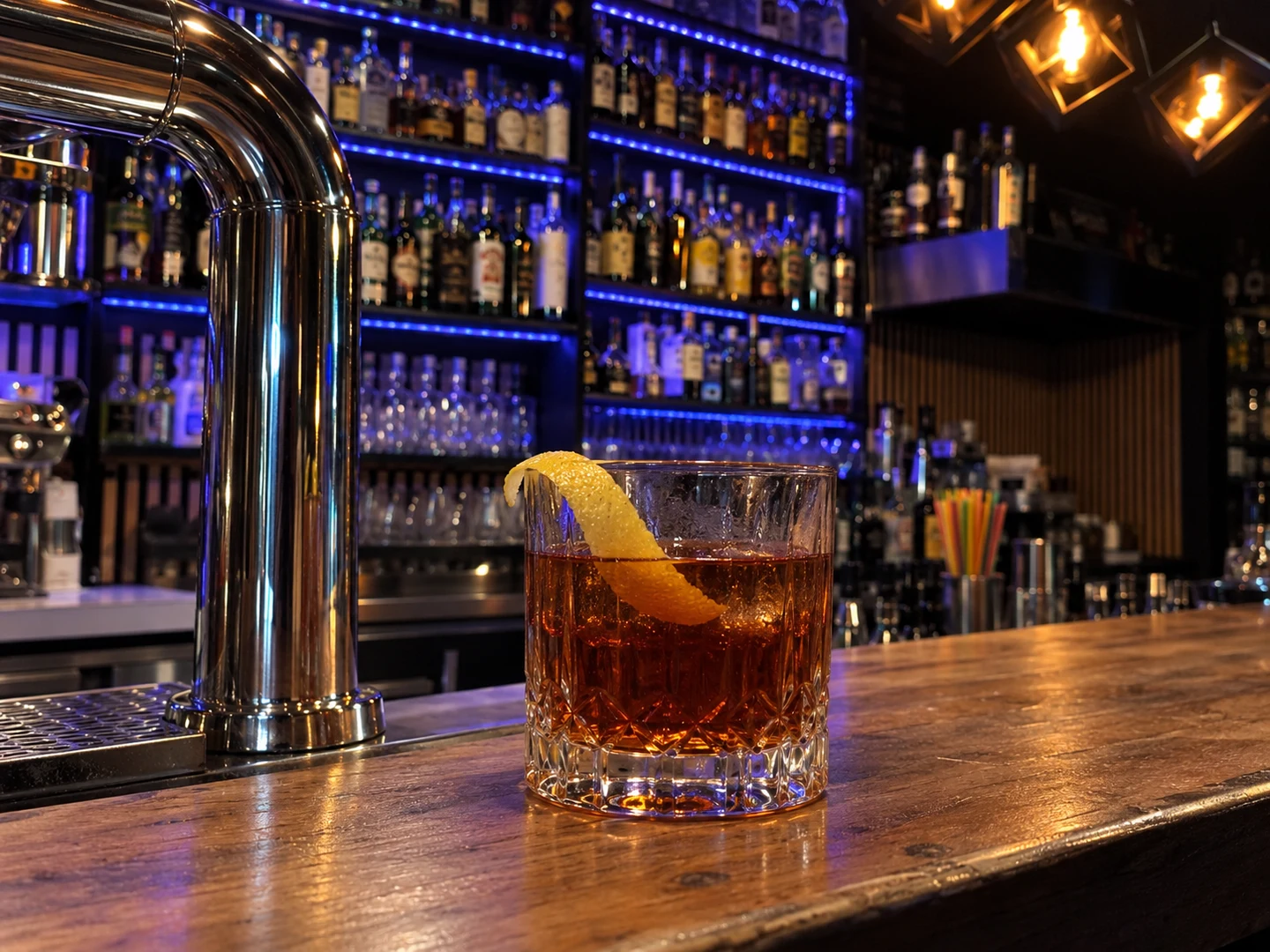
Rye whiskey, sugar, Peychaud's bitters, absinthe rinse, lemon peel.
New Orleans in a glass. Anise, bitters, rye and lemon peel.
New Orleans in a glass. Anise, bitters, rye and lemon peel.
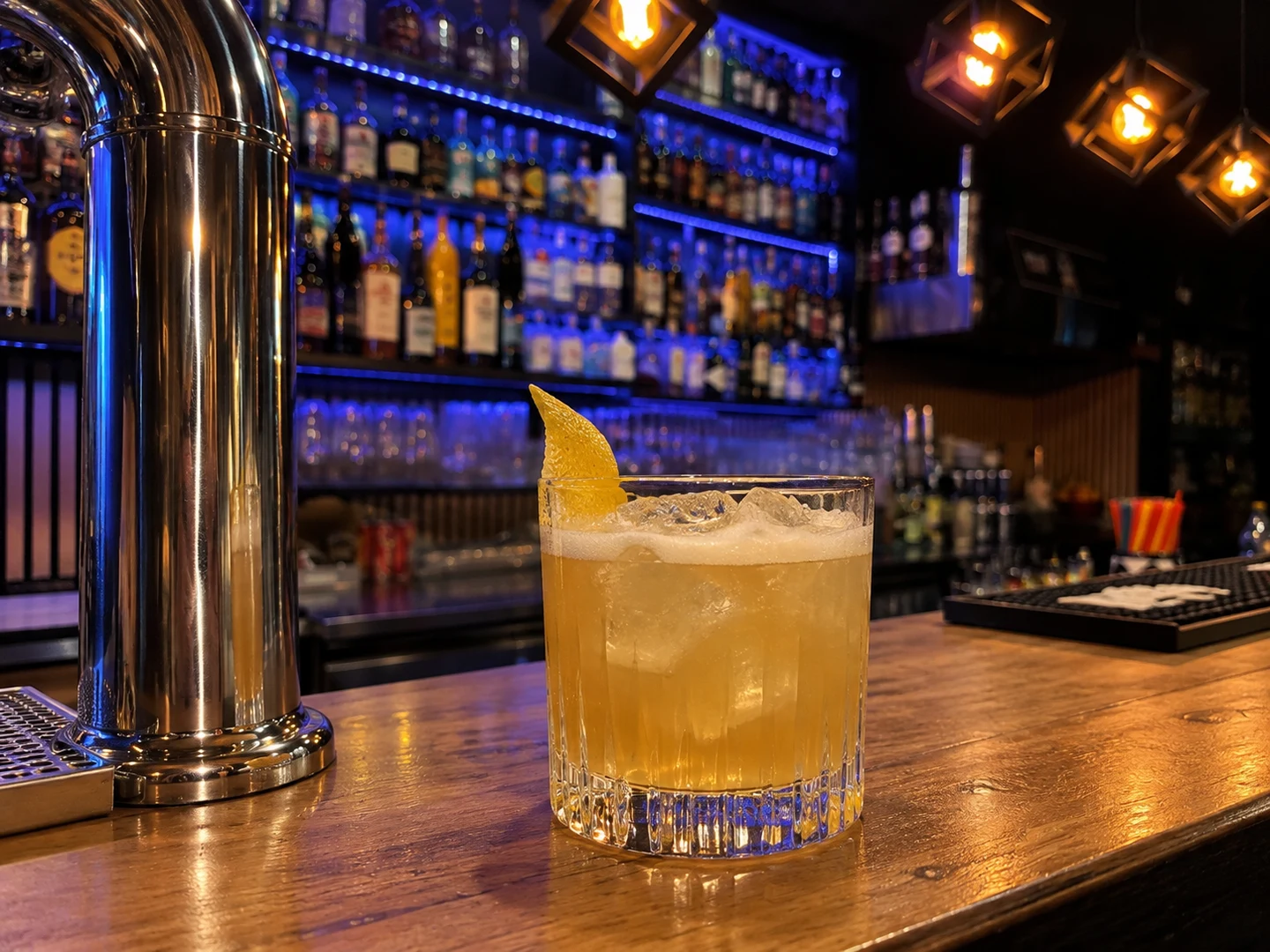
Bourbon, honey, lemon.
The Whiskey Sour in a honeyed version. Silky, golden, immediate.
The Whiskey Sour in a honeyed version. Silky, golden, immediate.
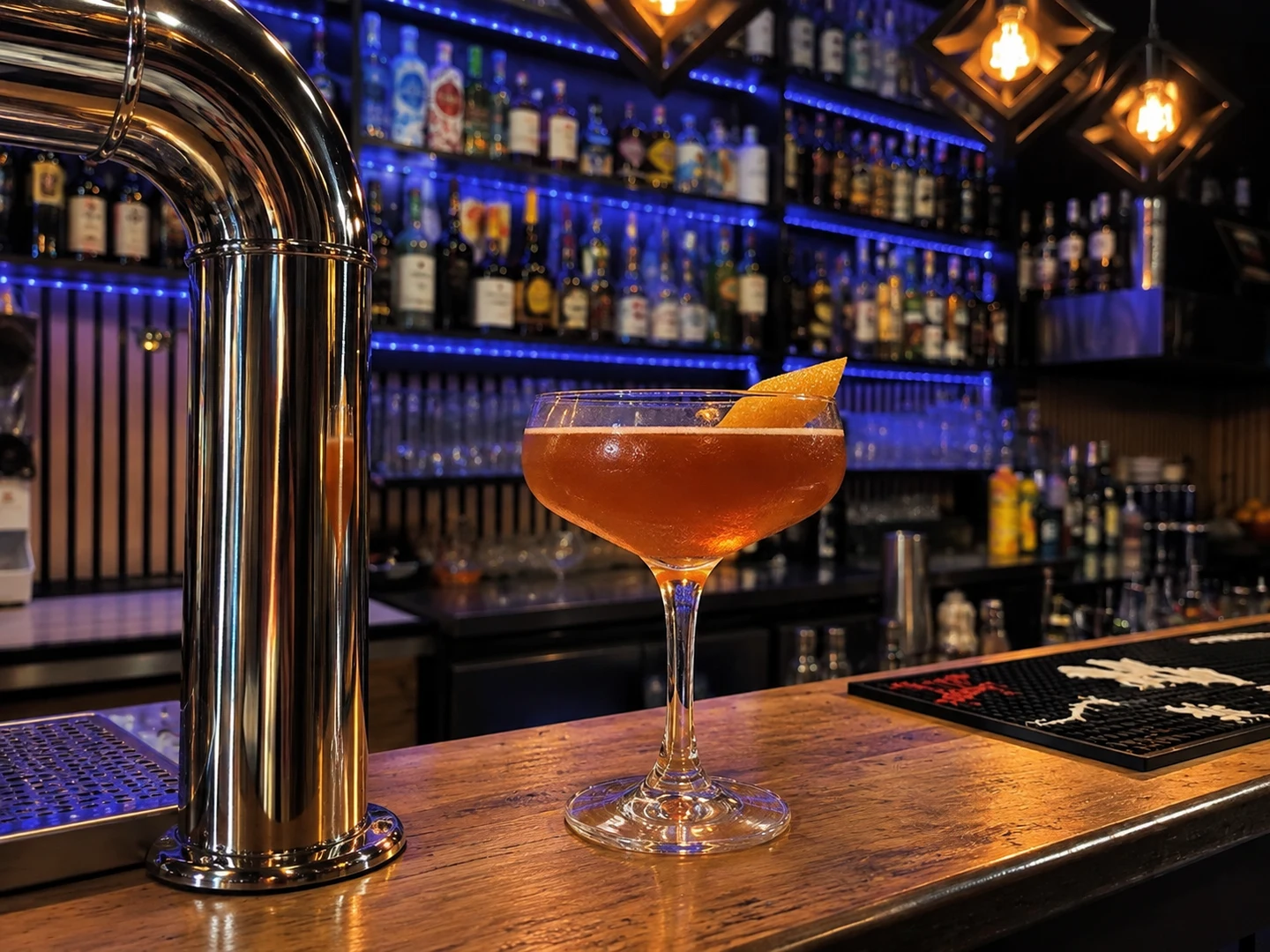
Bourbon, Aperol, Amaro Nonino, lemon.
Equal parts Italian bitters and American bourbon. A modern drink turned cult.
Equal parts Italian bitters and American bourbon. A modern drink turned cult.
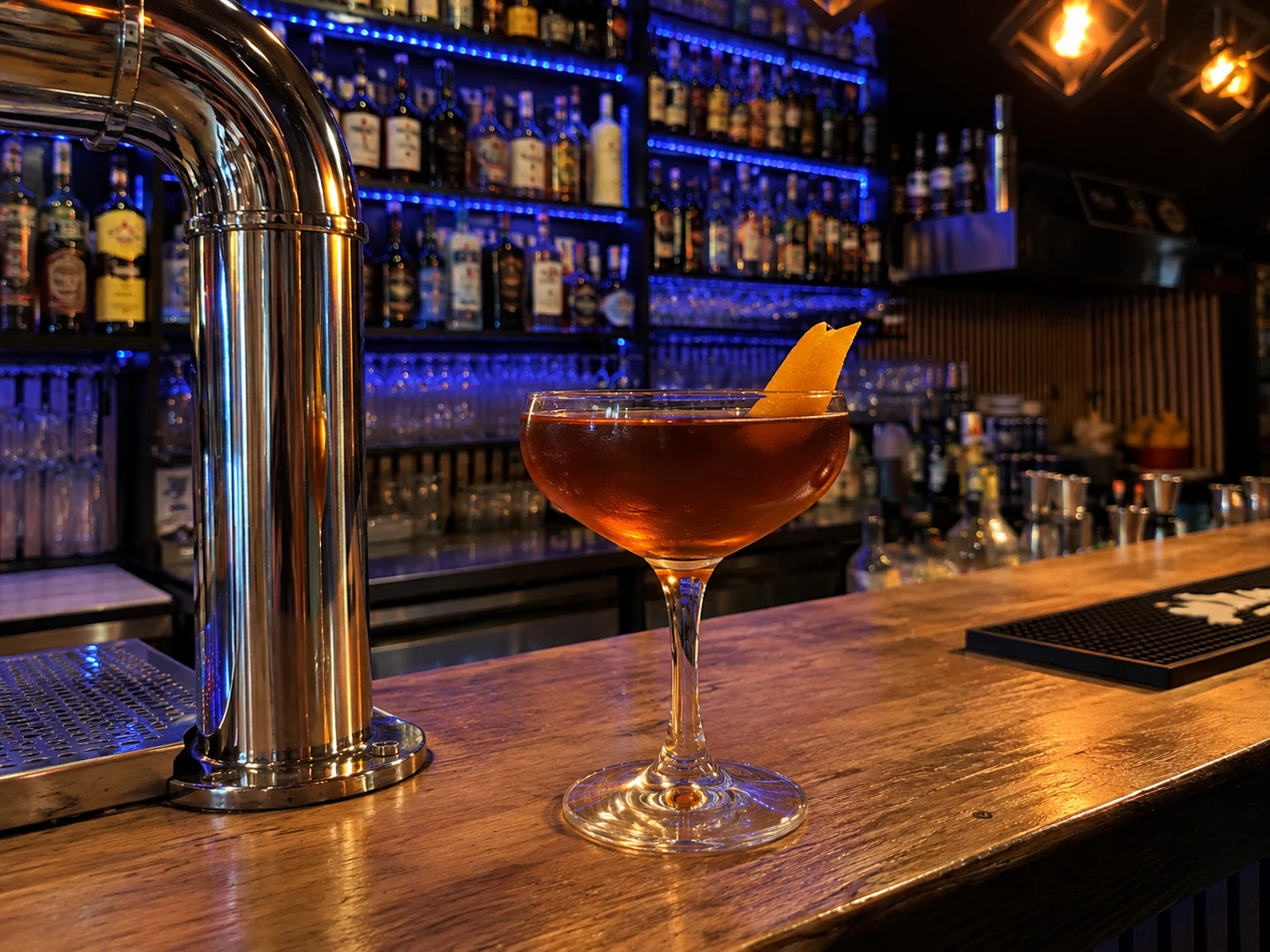
Irish whiskey, red vermouth, orange bitters.
The Irish take on the Manhattan. Softer, a little greener.
The Irish take on the Manhattan. Softer, a little greener.
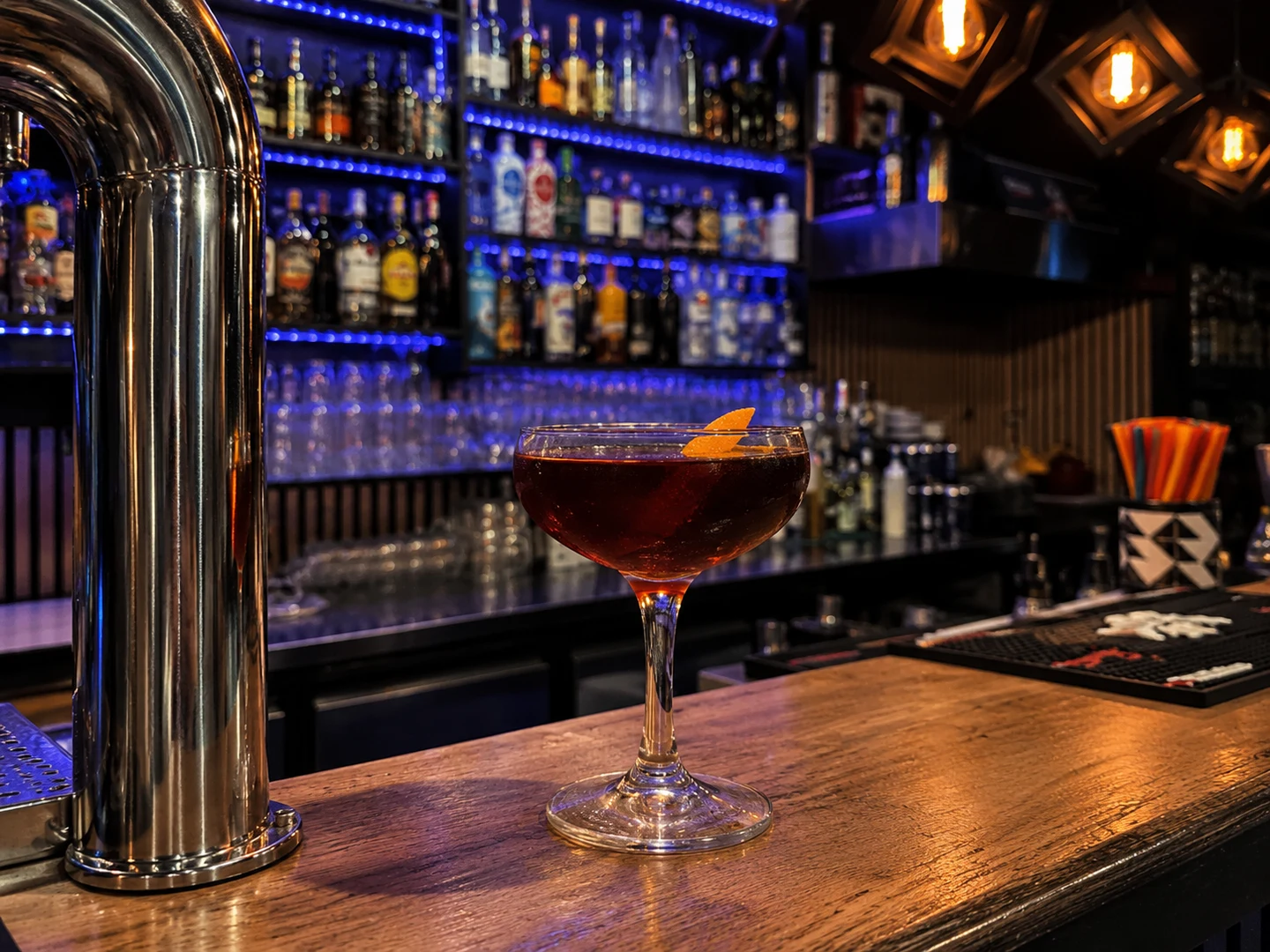
Bourbon, red vermouth, Fernet-Branca.
An Italian Manhattan with Fernet. Minty, dark, commanding.
An Italian Manhattan with Fernet. Minty, dark, commanding.
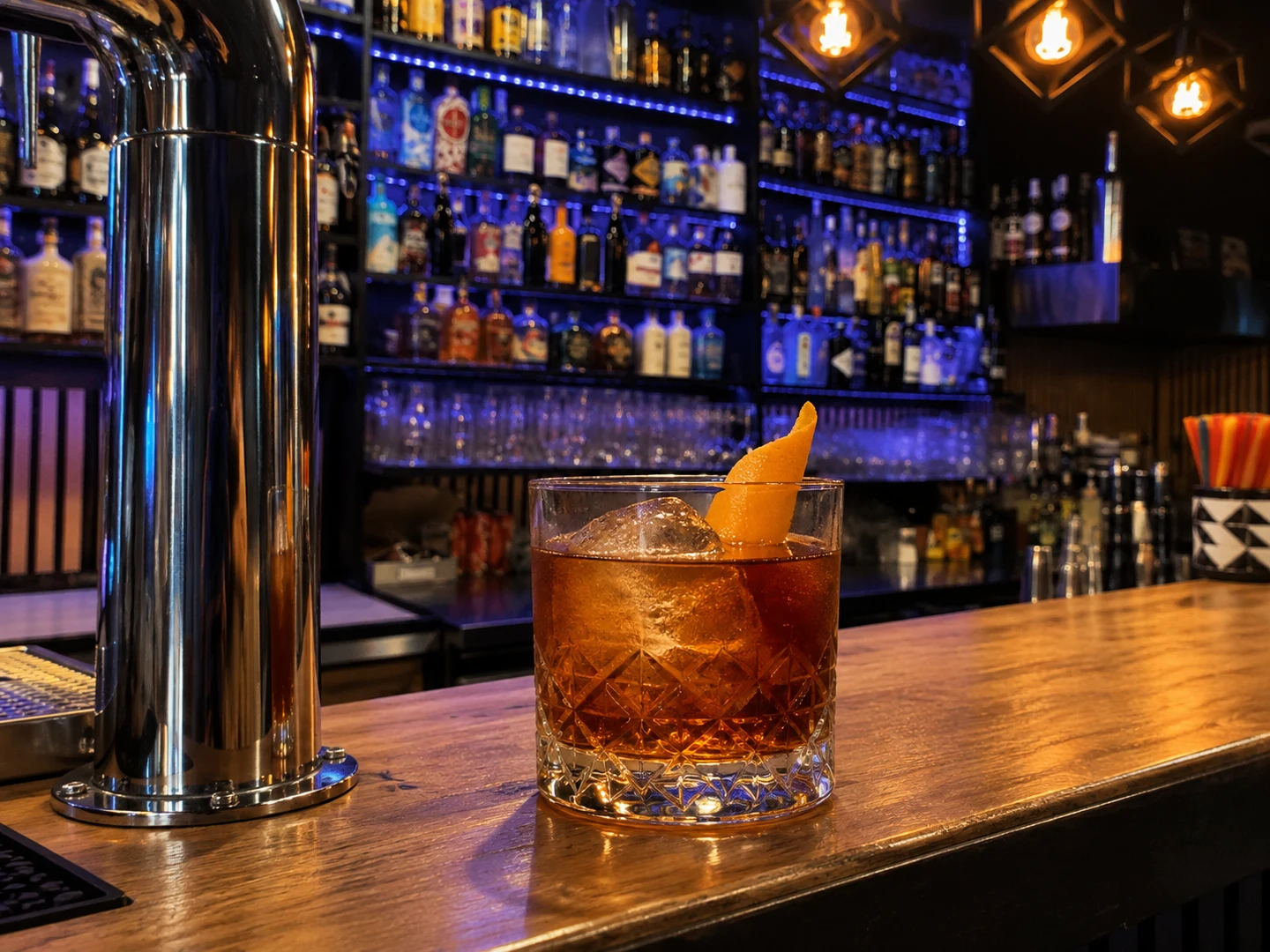
Peated whiskey, vermouth, spiced syrup, bitters.
Smoky, spiced and deep. For anyone chasing peat.
Smoky, spiced and deep. For anyone chasing peat.
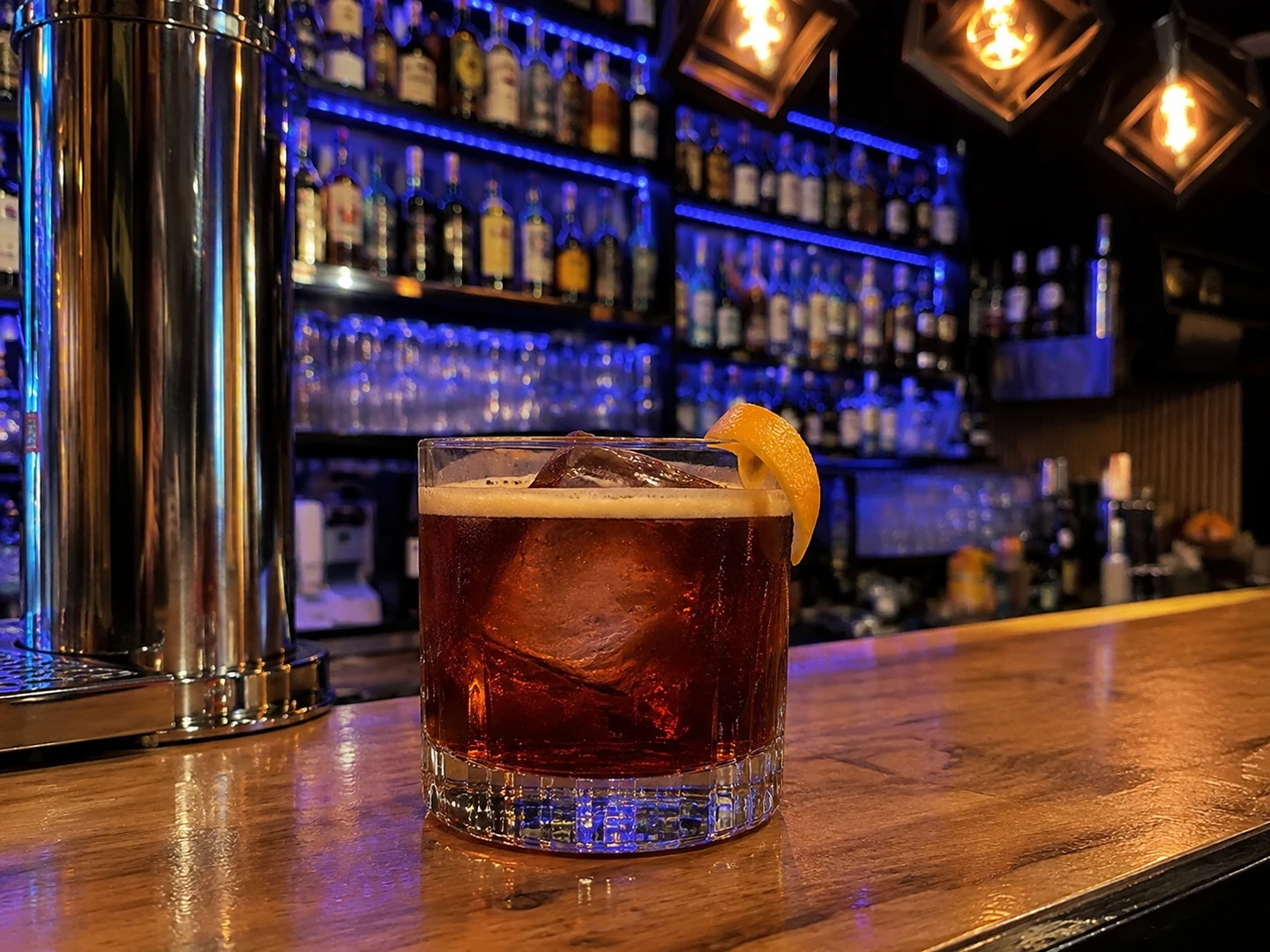
Bourbon, Campari, vermouth, fresh espresso.
The Boulevardier meets coffee. Night and morning in the same glass.
The Boulevardier meets coffee. Night and morning in the same glass.
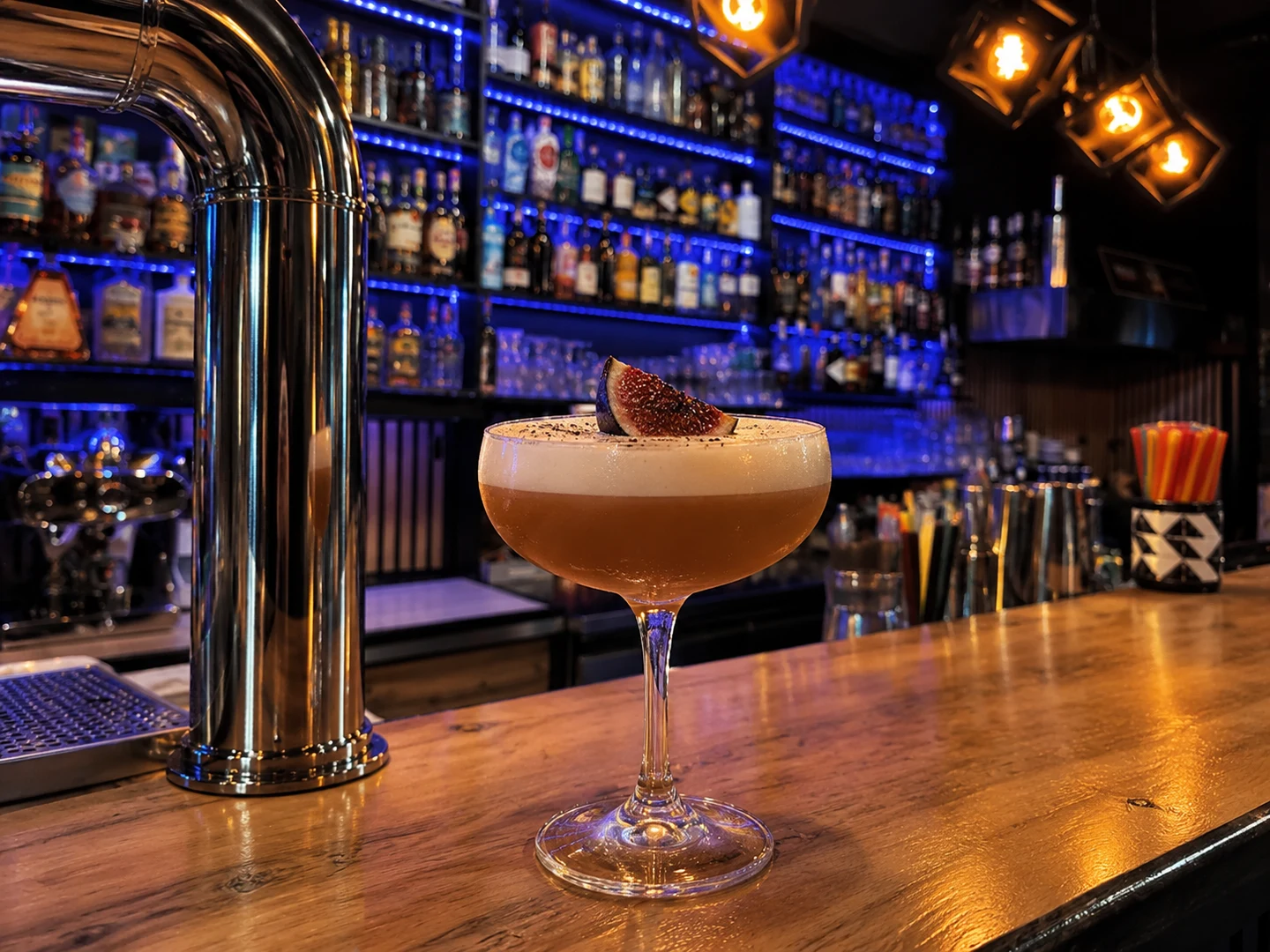
Bourbon, smoked caramelised figs, lemon, egg white.
A dense sour, smoked figs and a serious foam. A cocktail made for the camera.
A dense sour, smoked figs and a serious foam. A cocktail made for the camera.
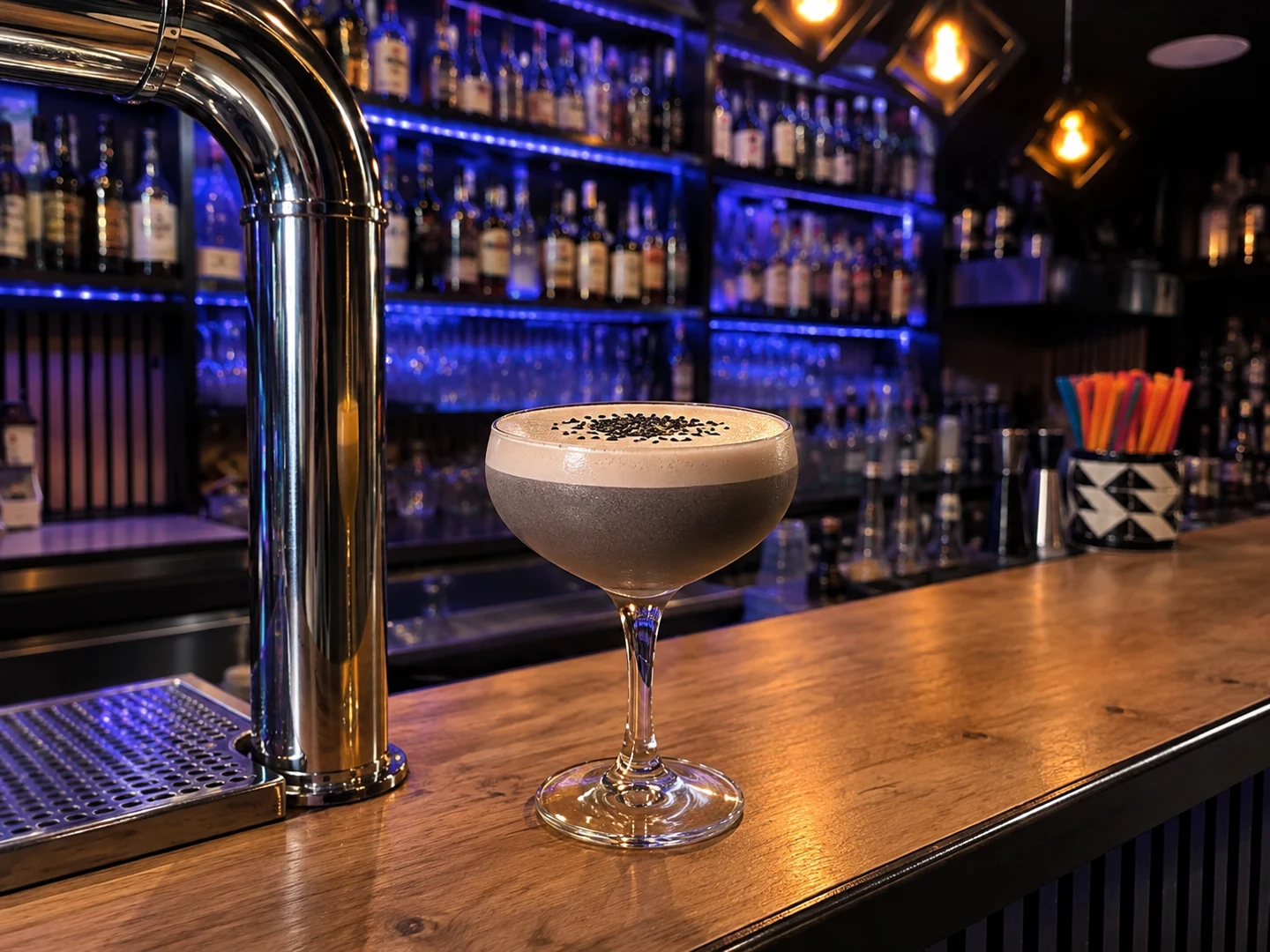
Bourbon, black sesame paste, syrup, whole egg.
A creamy flip with toasted black sesame. Wild texture, long finish.
A creamy flip with toasted black sesame. Wild texture, long finish.
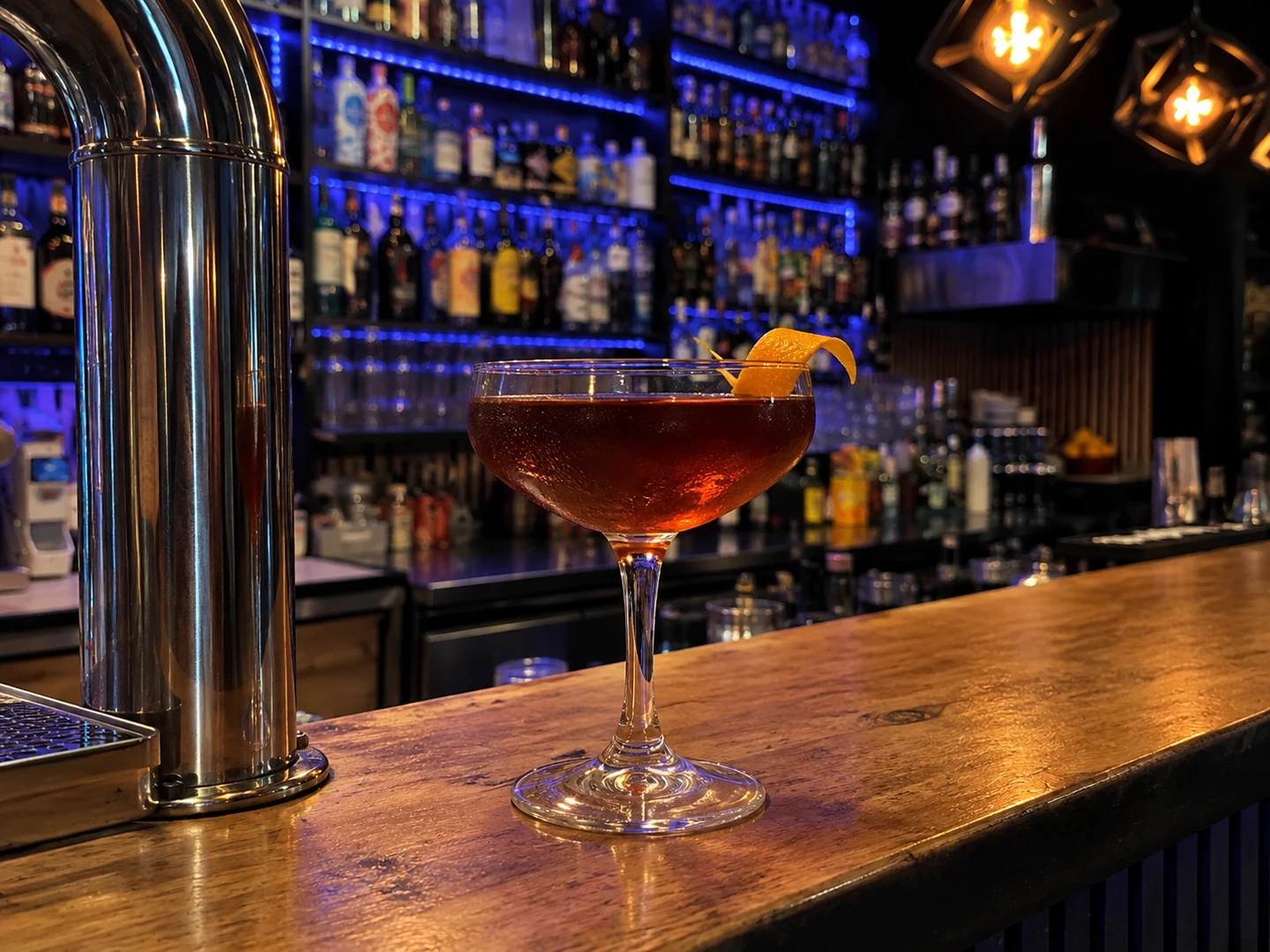
Brandy, Calvados, red vermouth.
A dark, fruity stirred drink, built to get you back on your feet.
A dark, fruity stirred drink, built to get you back on your feet.
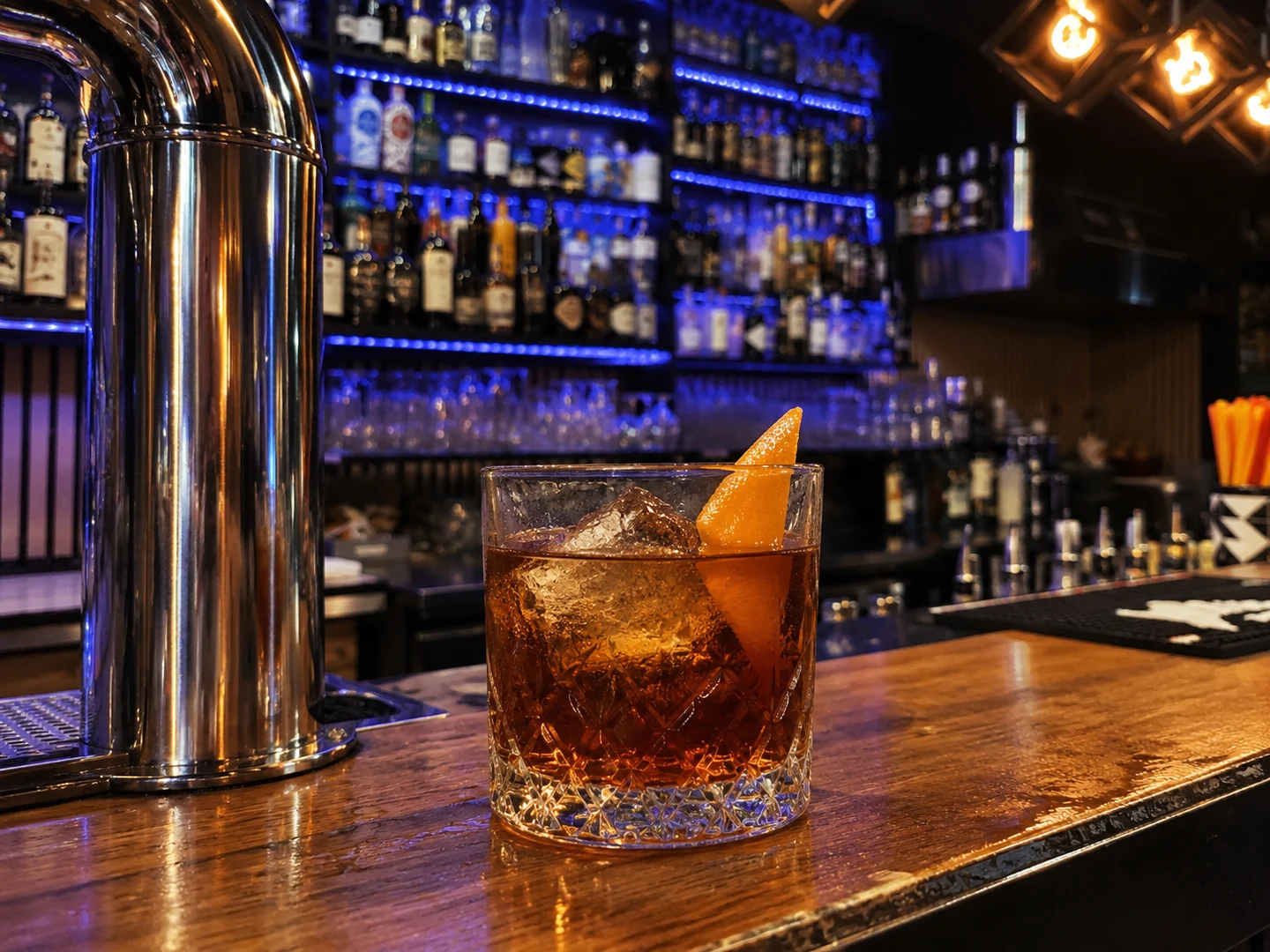
Rye whiskey, Bénédictine, angostura.
A more herbal Old Fashioned, with monastery sweetness and firm rye.
A more herbal Old Fashioned, with monastery sweetness and firm rye.
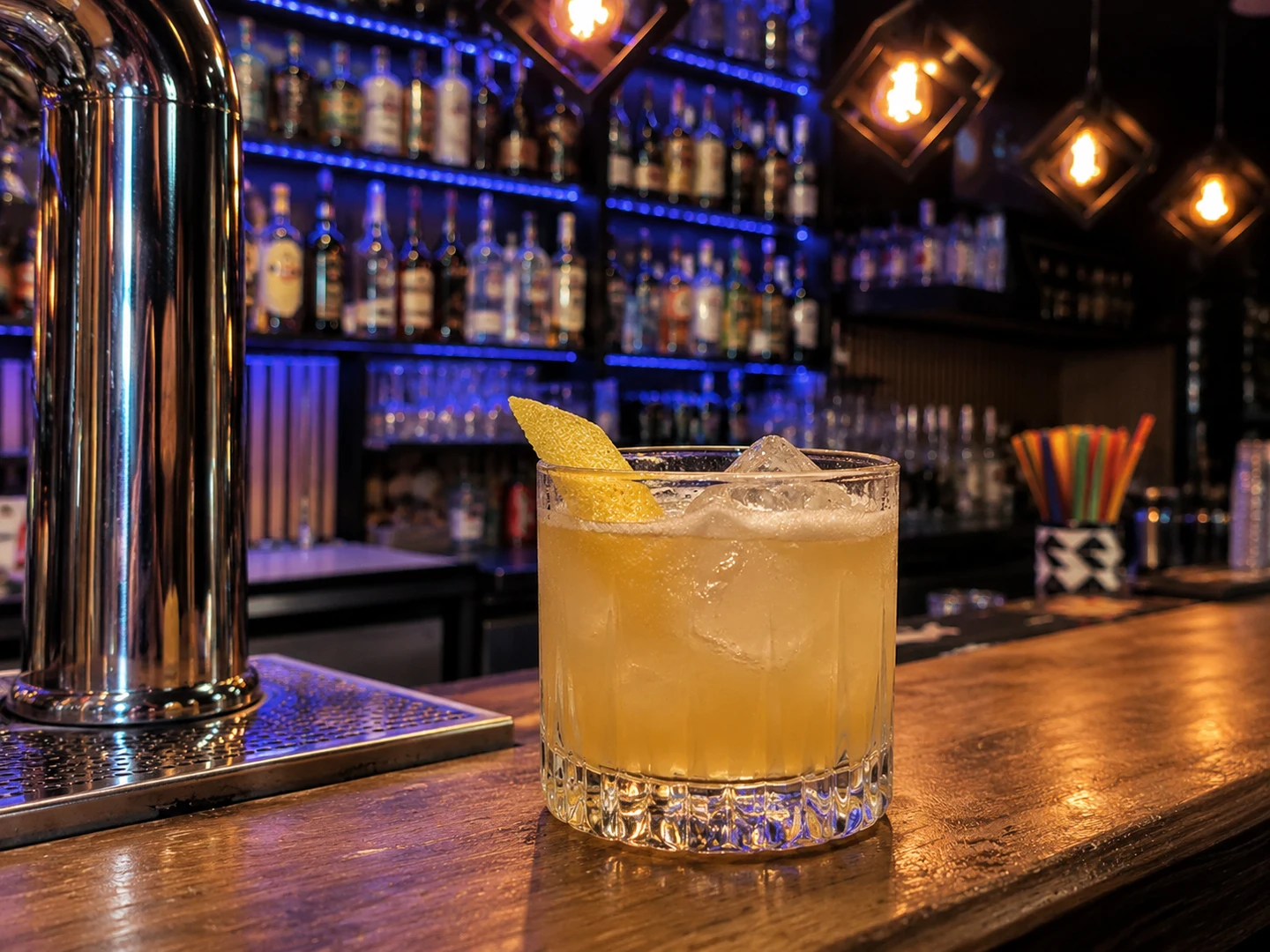
Scotch, lemon, honey-ginger, peated whisky float.
Modern medicine: smoke, honey, ginger and lemon. Cure guaranteed.
Modern medicine: smoke, honey, ginger and lemon. Cure guaranteed.
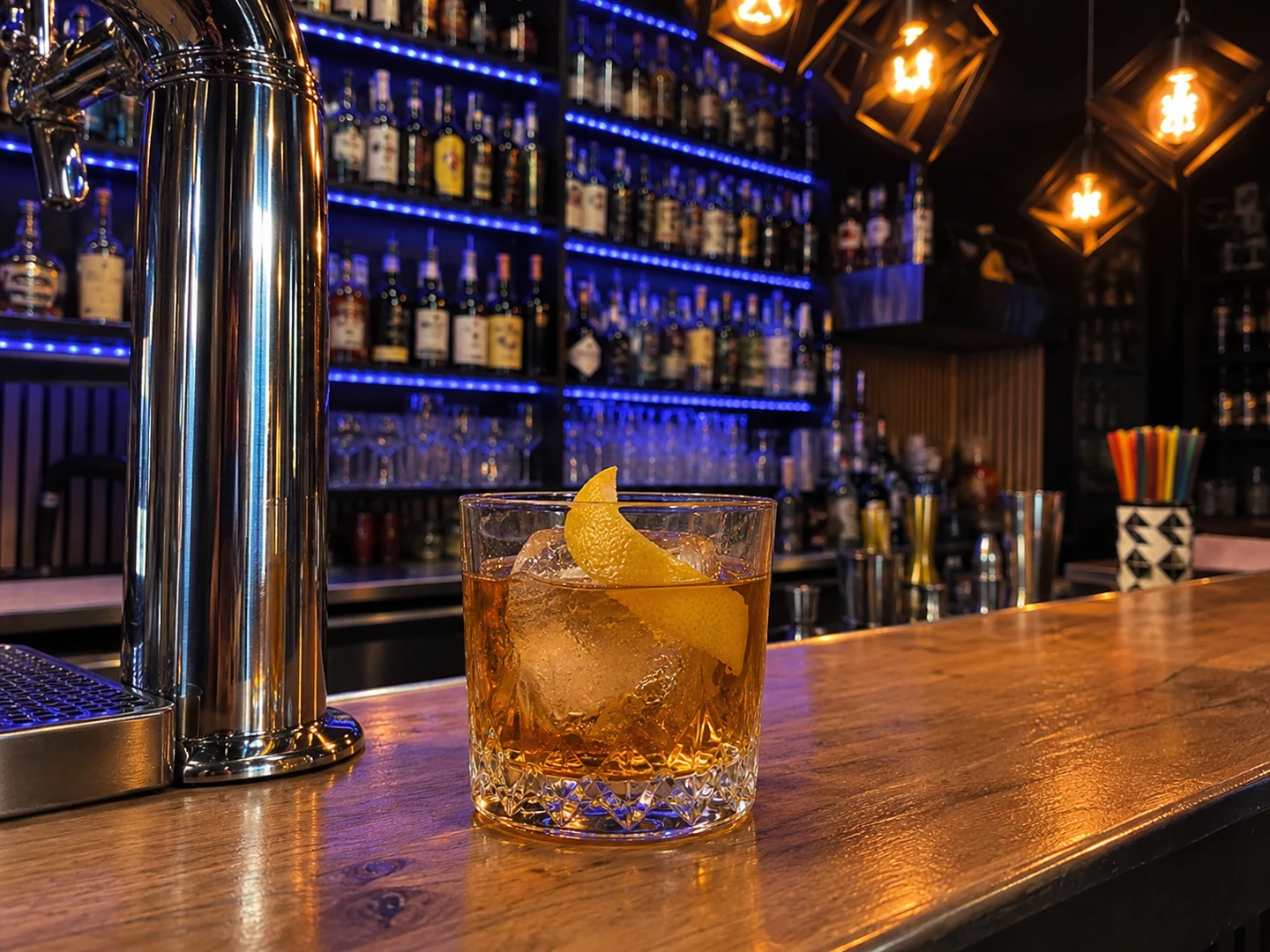
Scotch whisky, Drambuie, lemon peel.
Whisky and spiced honey. Short, round, for the end of the night.
Whisky and spiced honey. Short, round, for the end of the night.
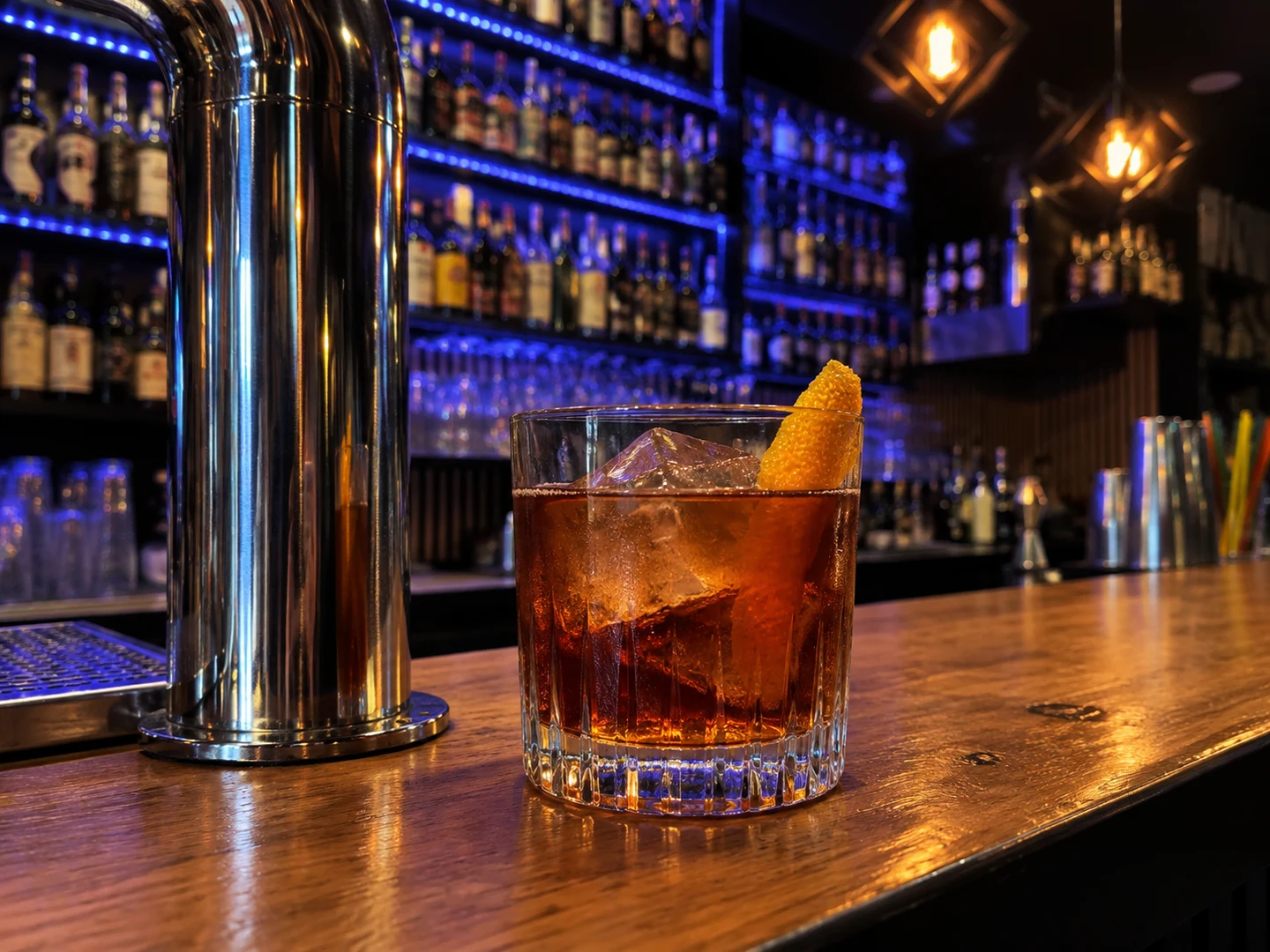
Rye whiskey, Fernet-Branca, sugar, angostura.
Rye and Fernet, dry and mentholated. For real bitter lovers.
Rye and Fernet, dry and mentholated. For real bitter lovers.
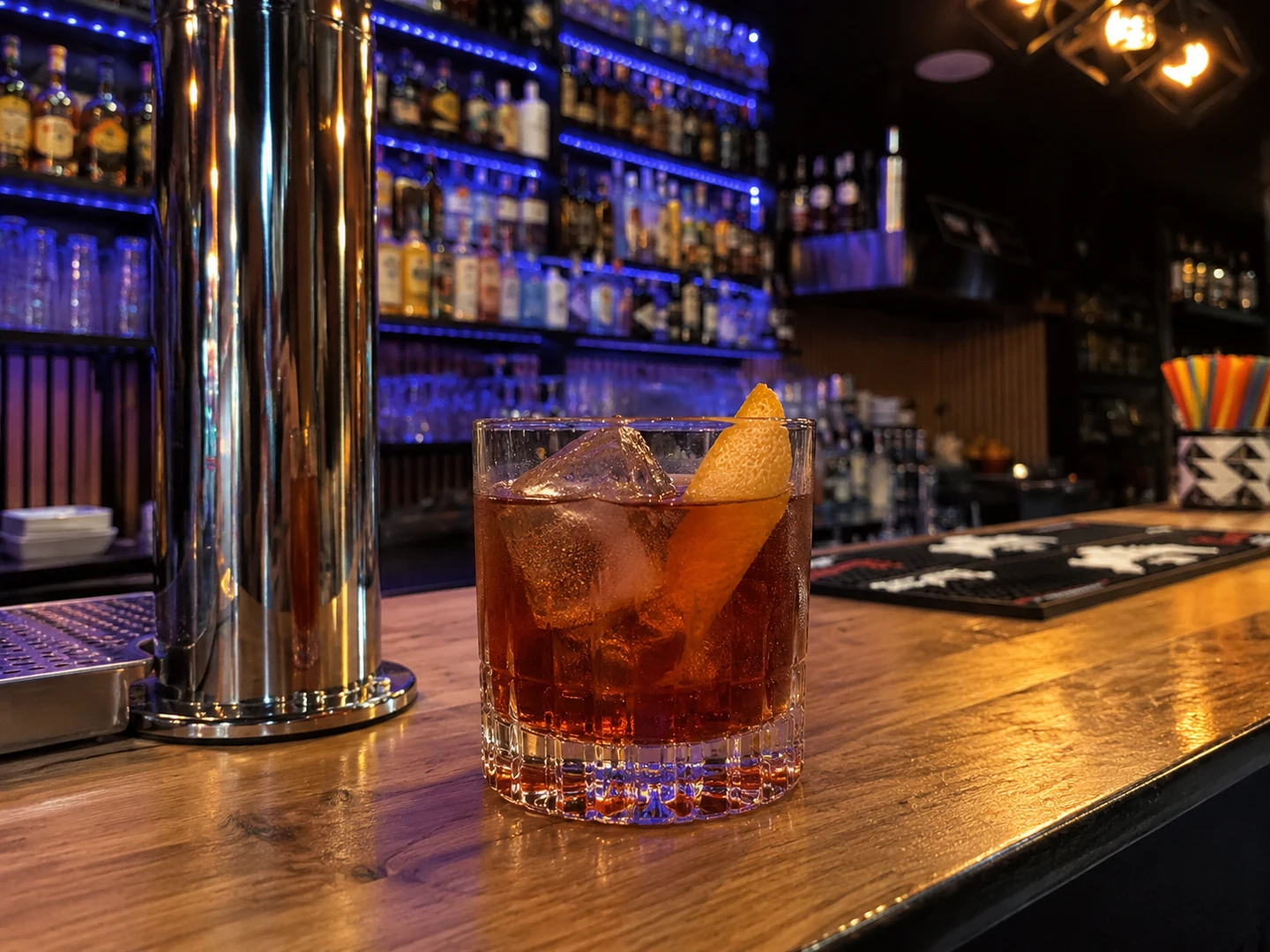
Rye, cognac, red vermouth, Bénédictine, Peychaud's, angostura.
New Orleans at its most powerful: whiskey, cognac, vermouth and deep herbs.
New Orleans at its most powerful: whiskey, cognac, vermouth and deep herbs.
 29 items
 White, dark and agricole rums: real fruit, crushed ice, tropical energy without compromise.
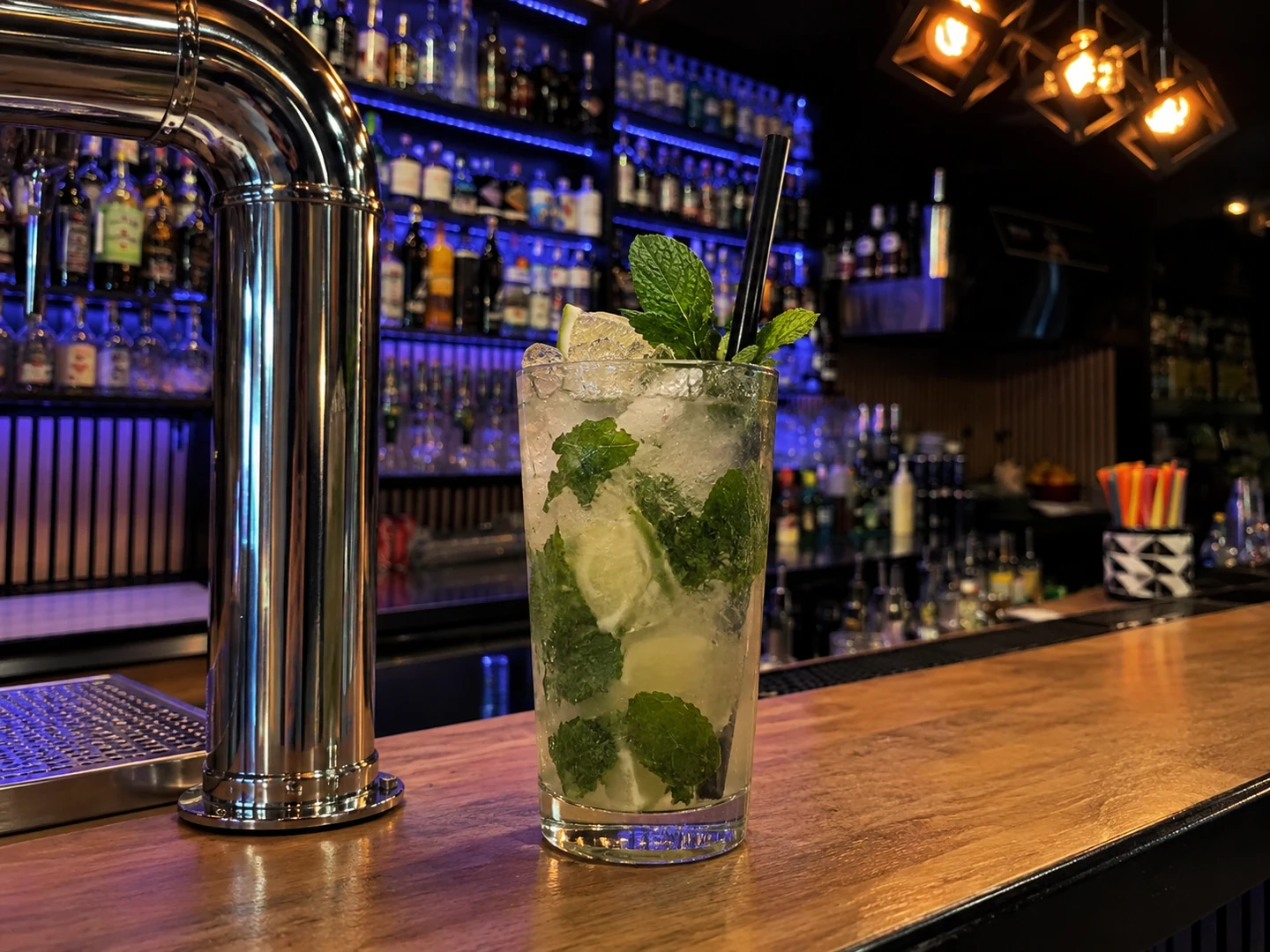
White rum, fresh mint, lime, sugar, soda.
Bruised mint, bright lime and fizz. Cuba in a tall glass, no fuss.
Legend ties it to La Bodeguita del Medio in Havana, the sailors-and-writers haunt where Hemingway ordered it against the heat. The whole trick is in the touch: you bruise the mint, never grind it into bitterness. We pack it with ice so it stays refreshing well past midnight.
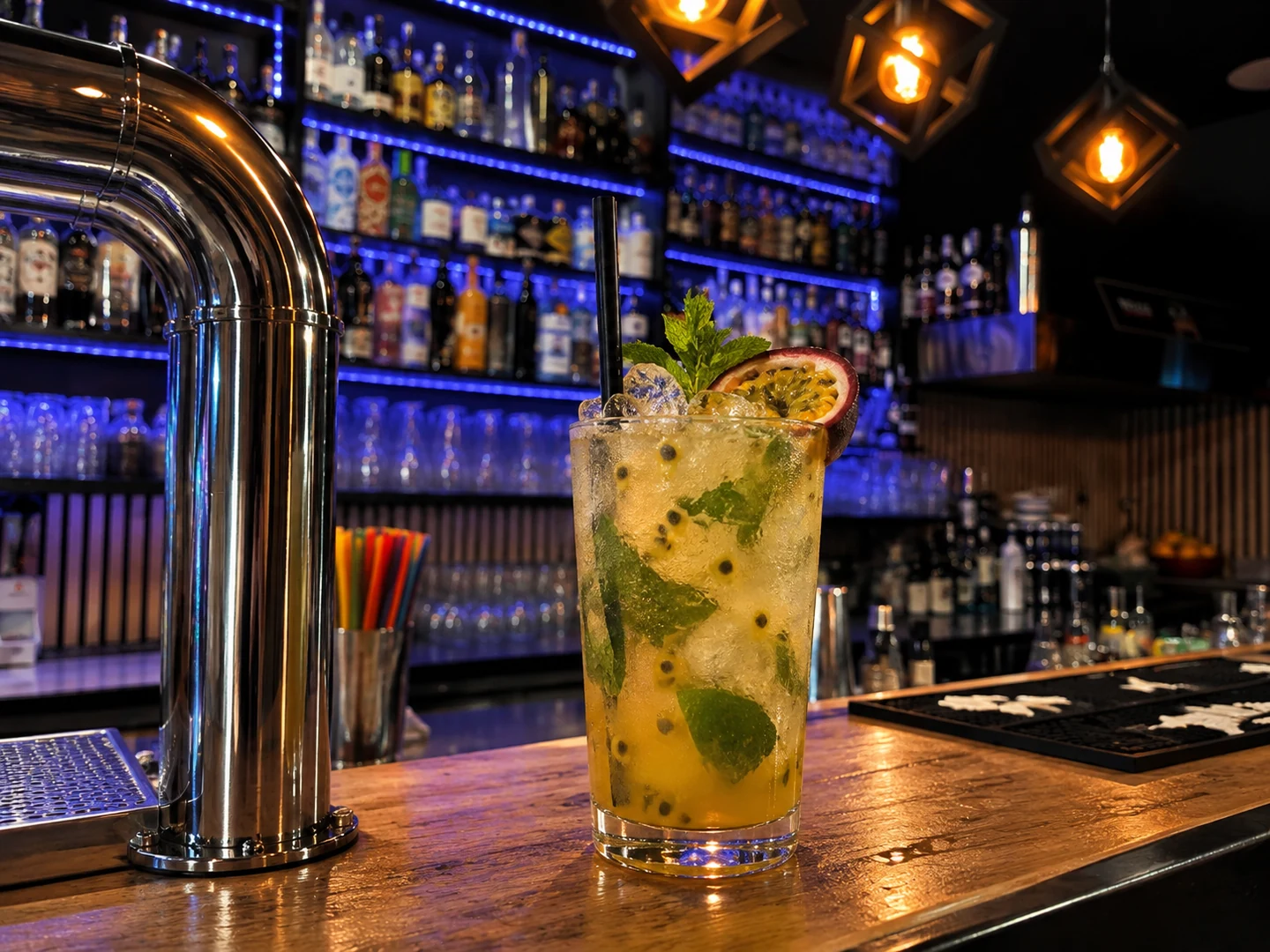
White rum, passion fruit, mint, lime, sugar, soda.
Exotic passion fruit and cold mint. The Mojito that smells like holiday even in January.
Passion fruit moved into tropical bars in the nineties, when bartenders started pushing the Mojito past plain lime and sugar. The fruit brings tropical acidity and an aroma you catch before the first sip. The one to pick when you want freshness with a touch of extra drama.
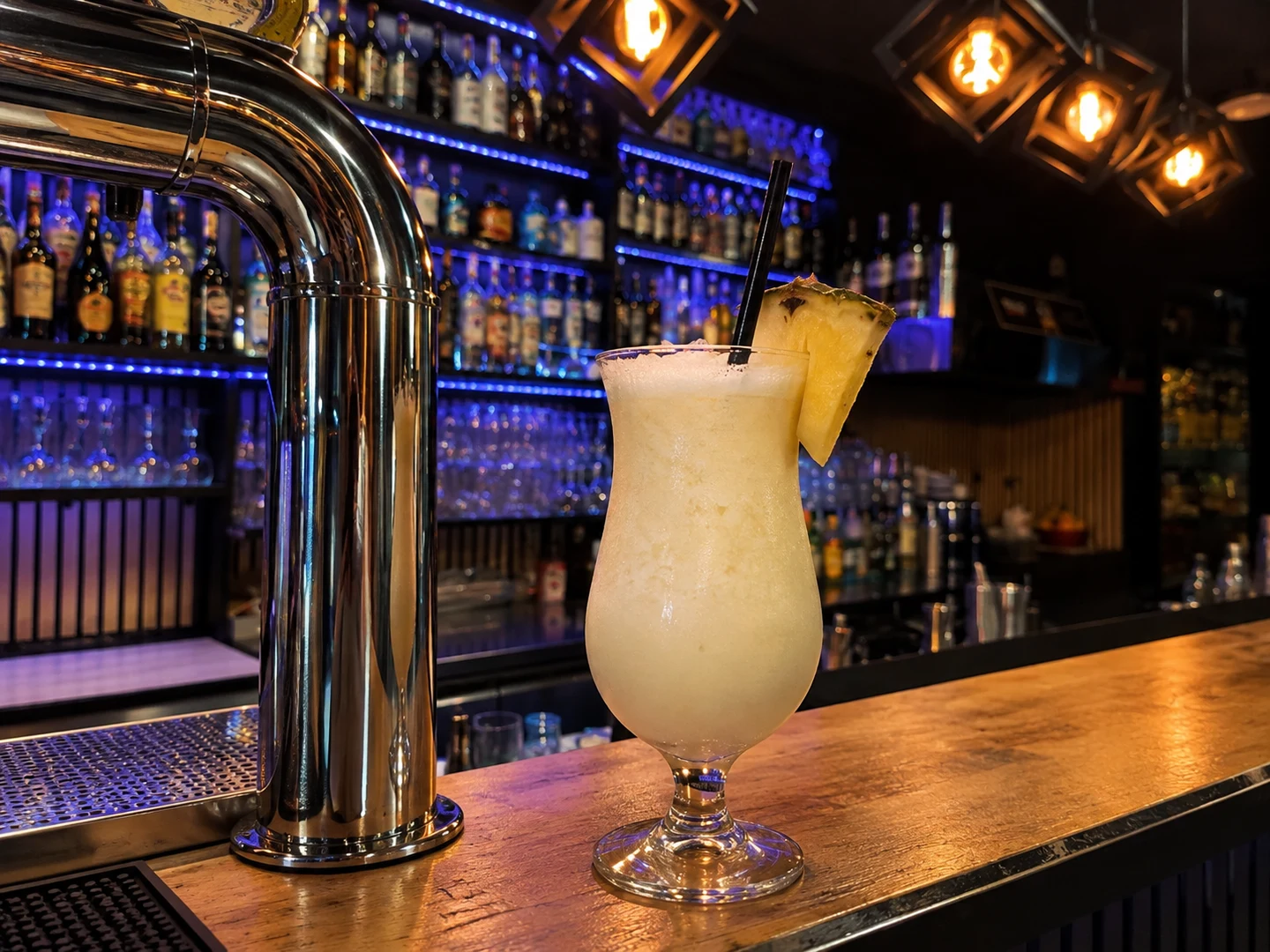
Rum, pineapple, coconut cream.
Creamy, sweet and tropical. The drink that smells like a beach even when it's raining out.
Born in San Juan in the fifties, the Piña Colada became Puerto Rico's national drink in 1978 and hasn't stopped travelling since. Pineapple and coconut aren't garnish: they balance the rum and build a texture close to liquid dessert. The cocktail you enjoy without feeling guilty about it.
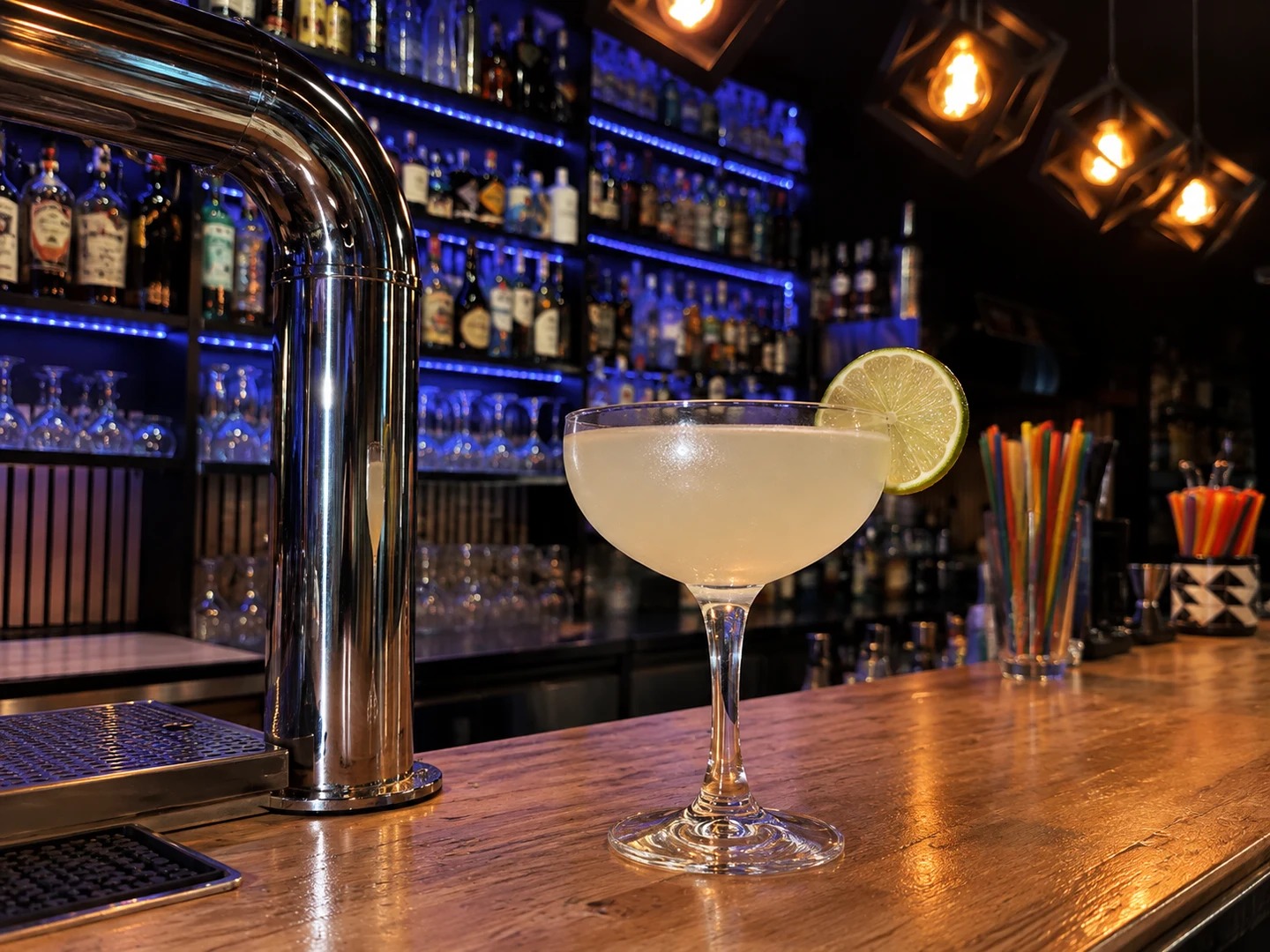
White rum, lime, sugar.
Three ingredients, shaken ice-cold. Total clarity, nothing in the way.
The Daiquiri was born in Cuba around 1898, when an American engineer invented it to cool the iron miners at the Daiquiri works. Hemingway loved it frozen, but the shaken version is a bar's real test: get the balance wrong and you'll taste it straight away. Ours is dry, cold and direct.
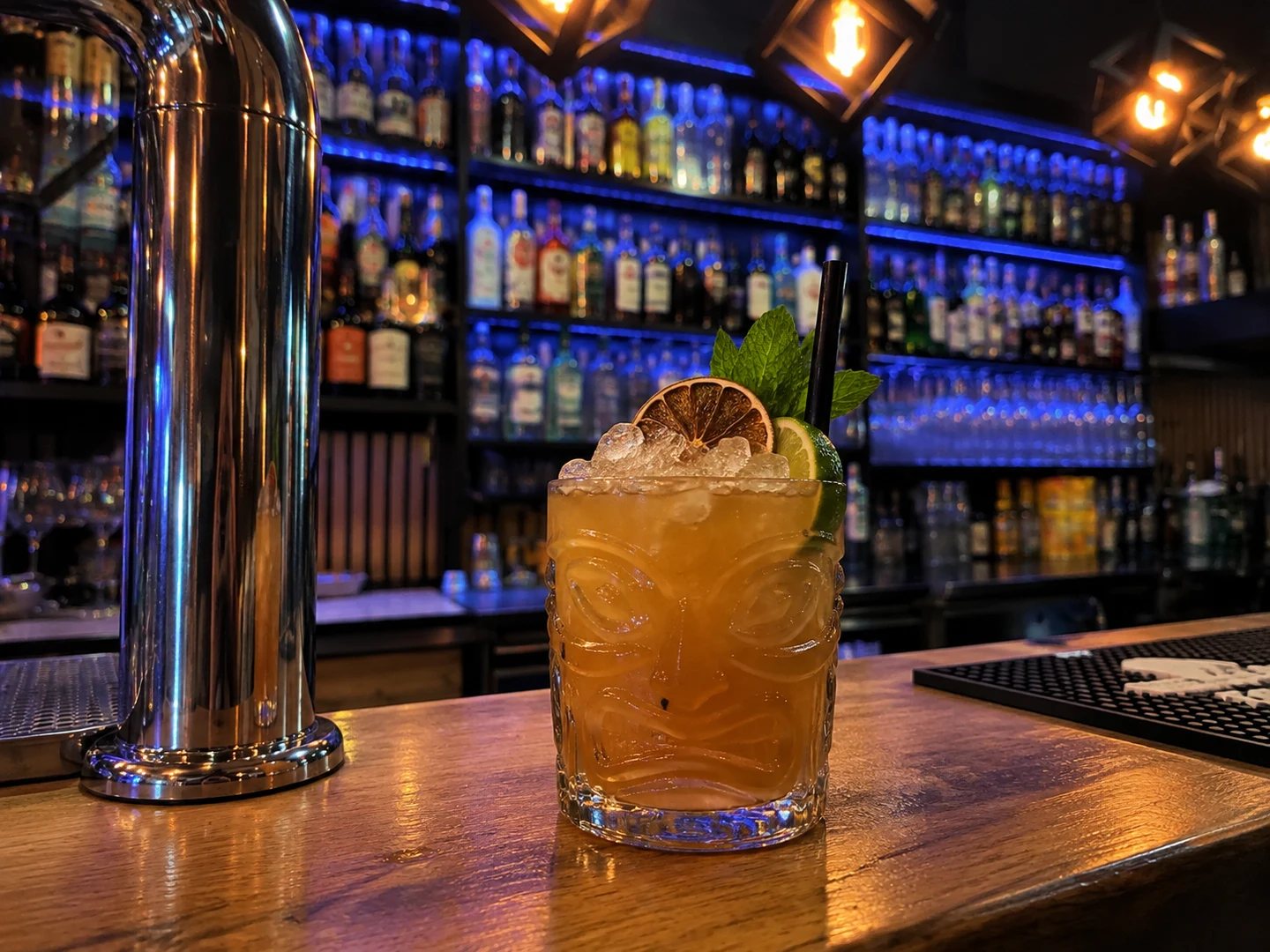
White and dark rum, orgeat, curaçao, lime.
Almond, citrus and double rum. A potent tiki dressed up as a holiday.
Victor Bergeron created it in 1944 at Oakland's Trader Vic's: a guest tasted it and shouted 'Maita'i ro'a ae!', Tahitian for 'out of this world', and the name stuck. Almond orgeat and orange curaçao keep it sweet on top and serious underneath. Fair warning: it's stronger than it looks.
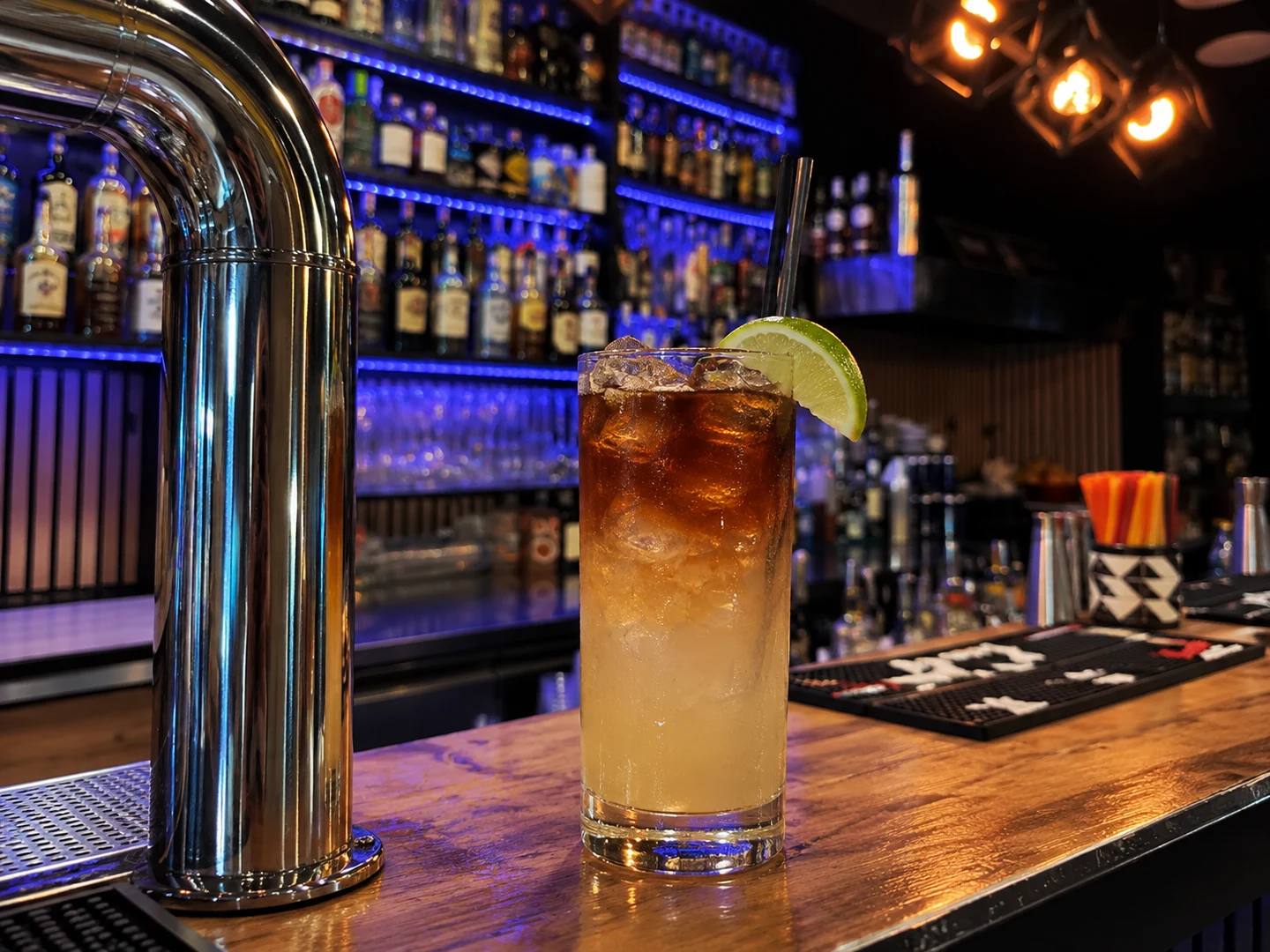
Dark rum, ginger beer, lime.
Dark rum floating on spicy ginger beer. A storm caught in a tall glass.
It's Bermuda's official drink: Gosling's Black Seal and ginger beer, full stop. The name comes from the visual contrast, dark rum 'floating' on a pale, fizzy base, like clouds over the sea. It's one of the few cocktails on earth protected by trademark, which is why it's made with exactly those two ingredients.
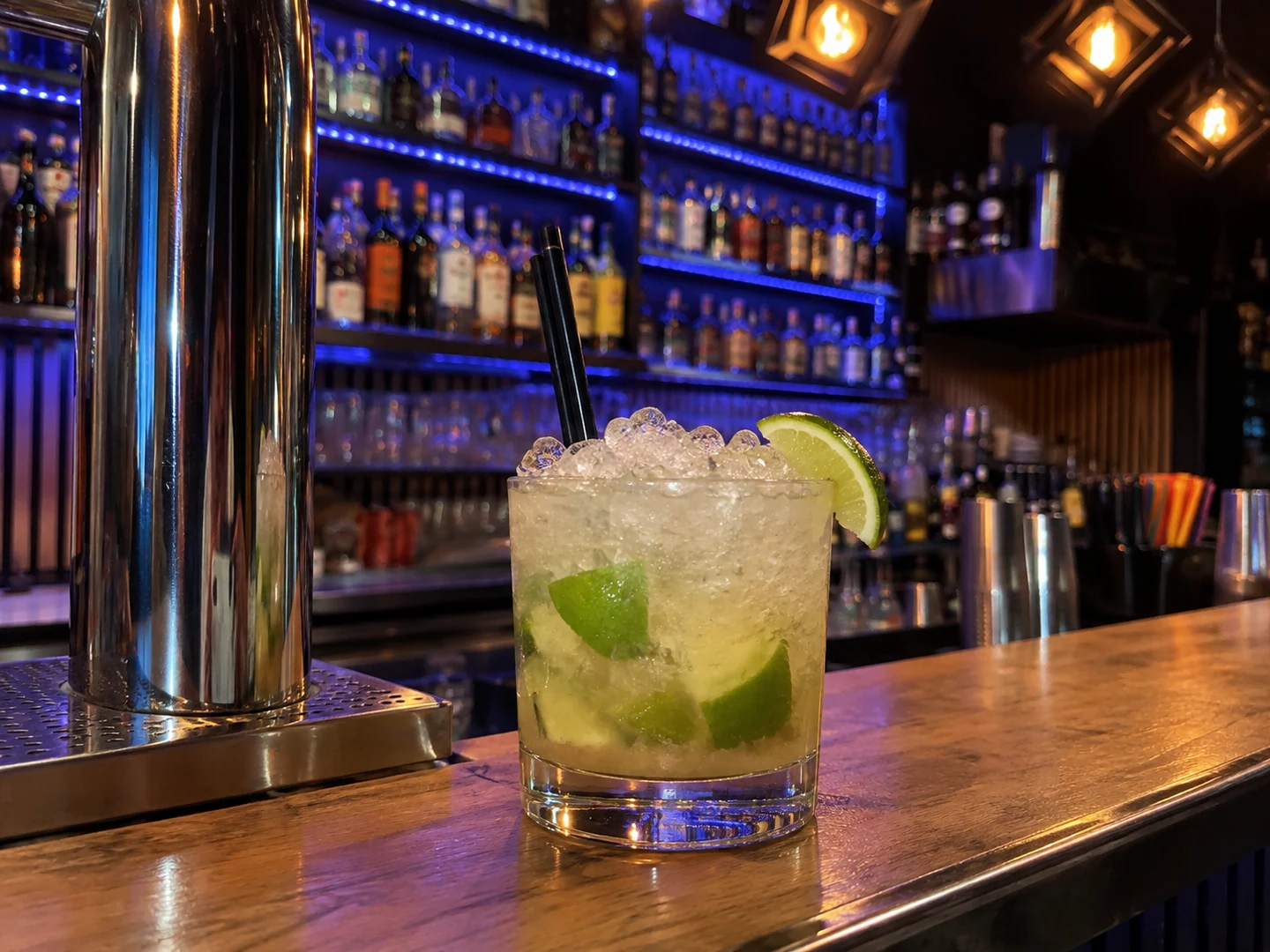
Cachaça, lime, brown sugar, crushed ice.
Brazil in three ingredients. Raw, grassy, refreshing to a fault.
The Caipirinha uses cachaça, an unaged sugarcane spirit, rougher and grassier than regular rum. It's been Brazil's national drink since 2003, though the favelas had been drinking it for decades as folk medicine for colds. The lime gets muddled with sugar, not juiced: that's where the oleo-saccharum comes from.
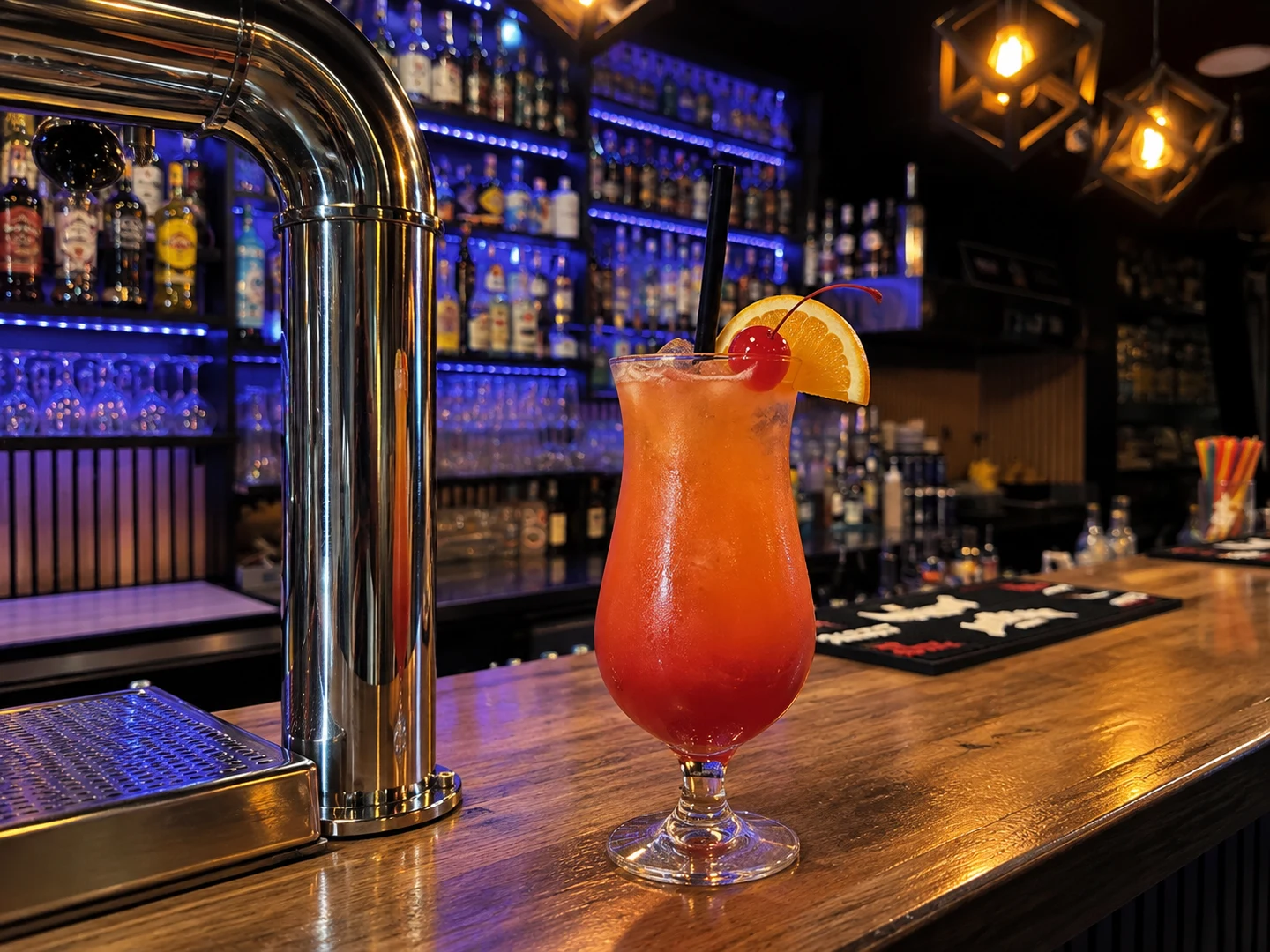
Rum blend, tropical juices, citrus, grenadine.
Sunset red and tropical juices. The one to share when the night picks up.
Punch was born in the 1600s among English traders in the Caribbean, mixing rum, lime, sugar and spice to make trade alcohol drinkable. The golden rule goes 'one of sour, two of sweet, three of strong, four of weak', and we keep to it with a modern tropical touch. By the pitcher it's the right call for a whole table.
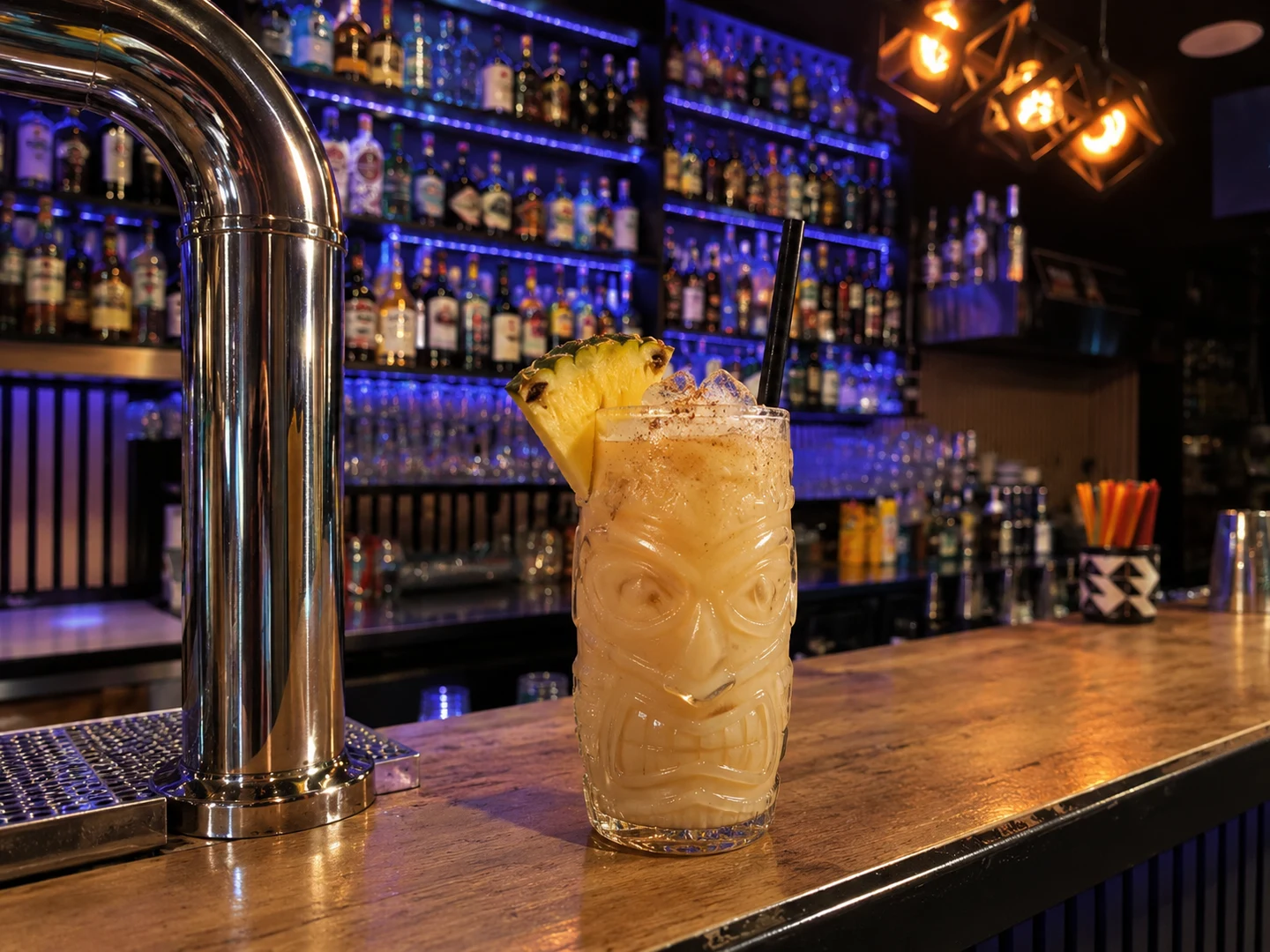
Dark rum, pineapple, orange, coconut cream, nutmeg.
Darker and spicier than a Piña Colada. Coconut, pineapple and a grating of nutmeg on the finish.
Invented in 1970 by Daphne Henderson at the Soggy Dollar Bar on Jost Van Dyke, in the British Virgin Islands. The secret ingredient was Pusser's Rum, the Royal Navy's historic brand, and freshly grated nutmeg on top was the signature. It's also famous for the 'Painkiller Contest': finish two in time and you win a T-shirt.
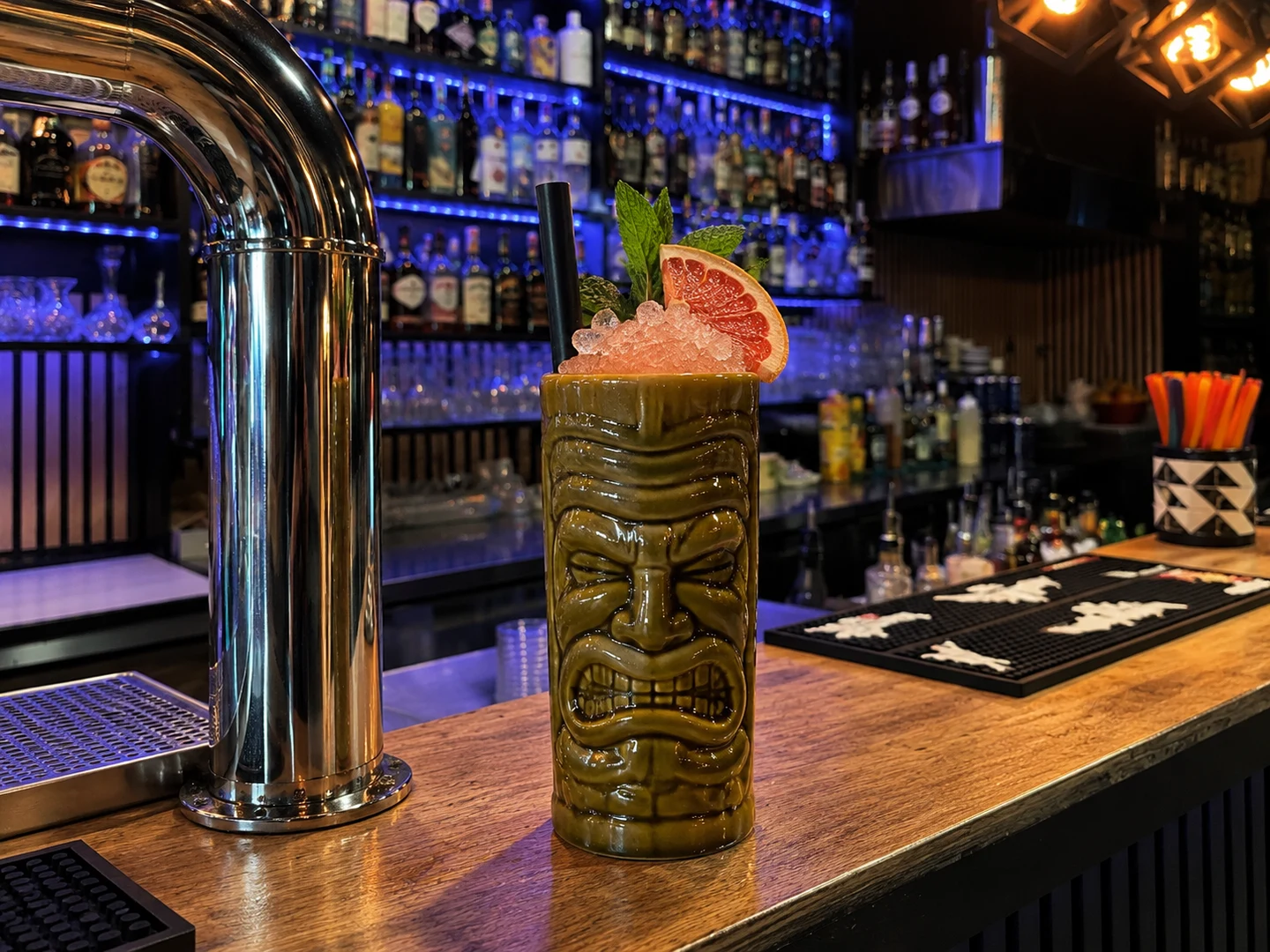
Rum blend, falernum, lime, grapefruit, grenadine.
A legendary tiki. More rum than you think, more fruit than you expect.
Don the Beachcomber created it in the thirties for a customer facing a university exam, and called it Zombie because 'it turned him into a zombie for two days'. The original recipe stayed secret for decades, with numbered ingredients to throw rivals off. Don Beach capped customers at two Zombies a week: still good advice.
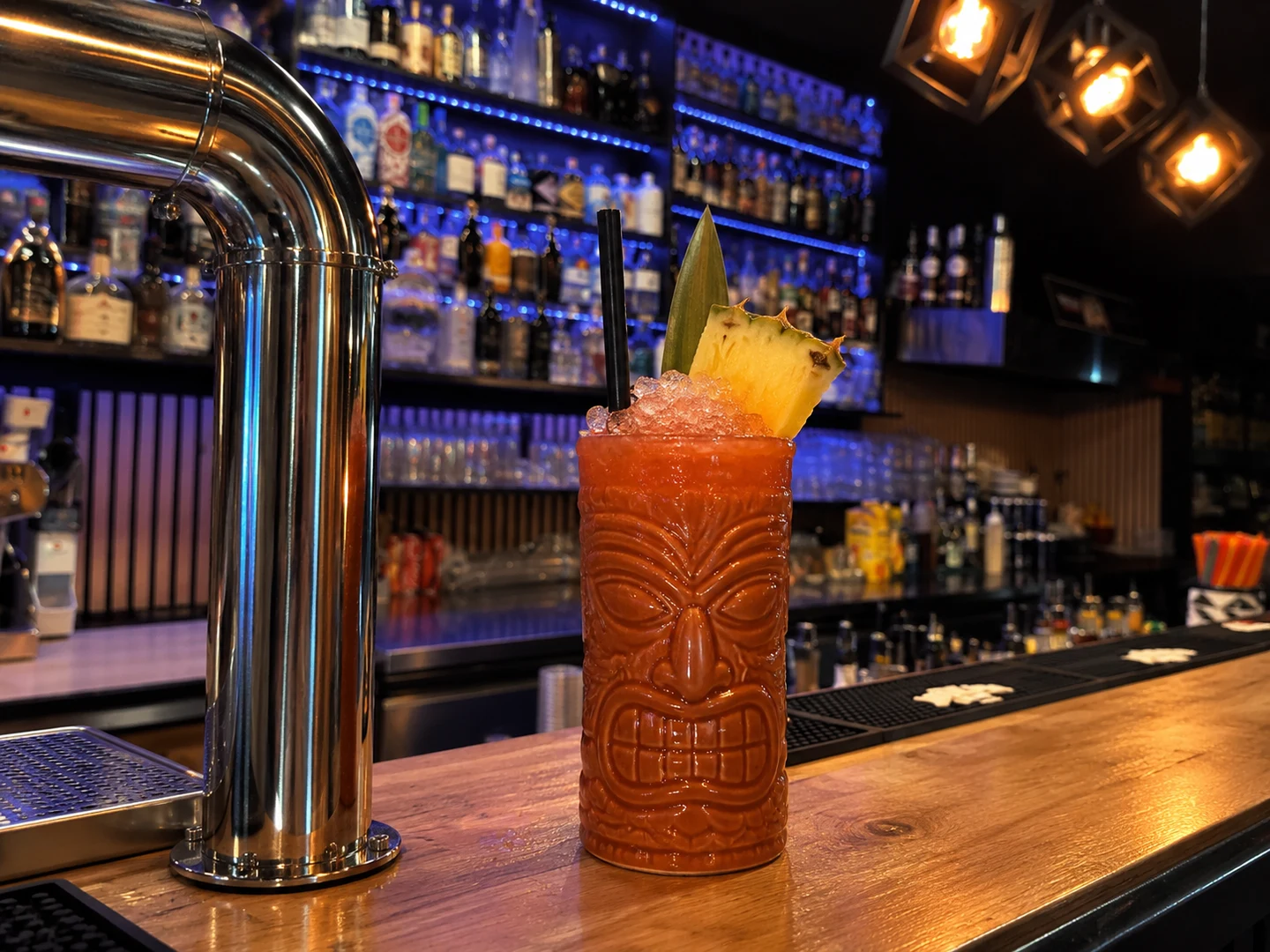
Dark rum, Campari, pineapple, lime, sugar.
Campari and pineapple together. Tropical, with a grown-up bitter edge.
Born in 1978 at the Aviary Bar in Kuala Lumpur's Hilton, Malaysia: tiki meets Italian bitter in a luxury hotel. It stayed a local secret for years, until American bartenders rediscovered it in the 2000s. The contrast between pineapple sweetness and Campari bitterness is exactly what makes it stick.
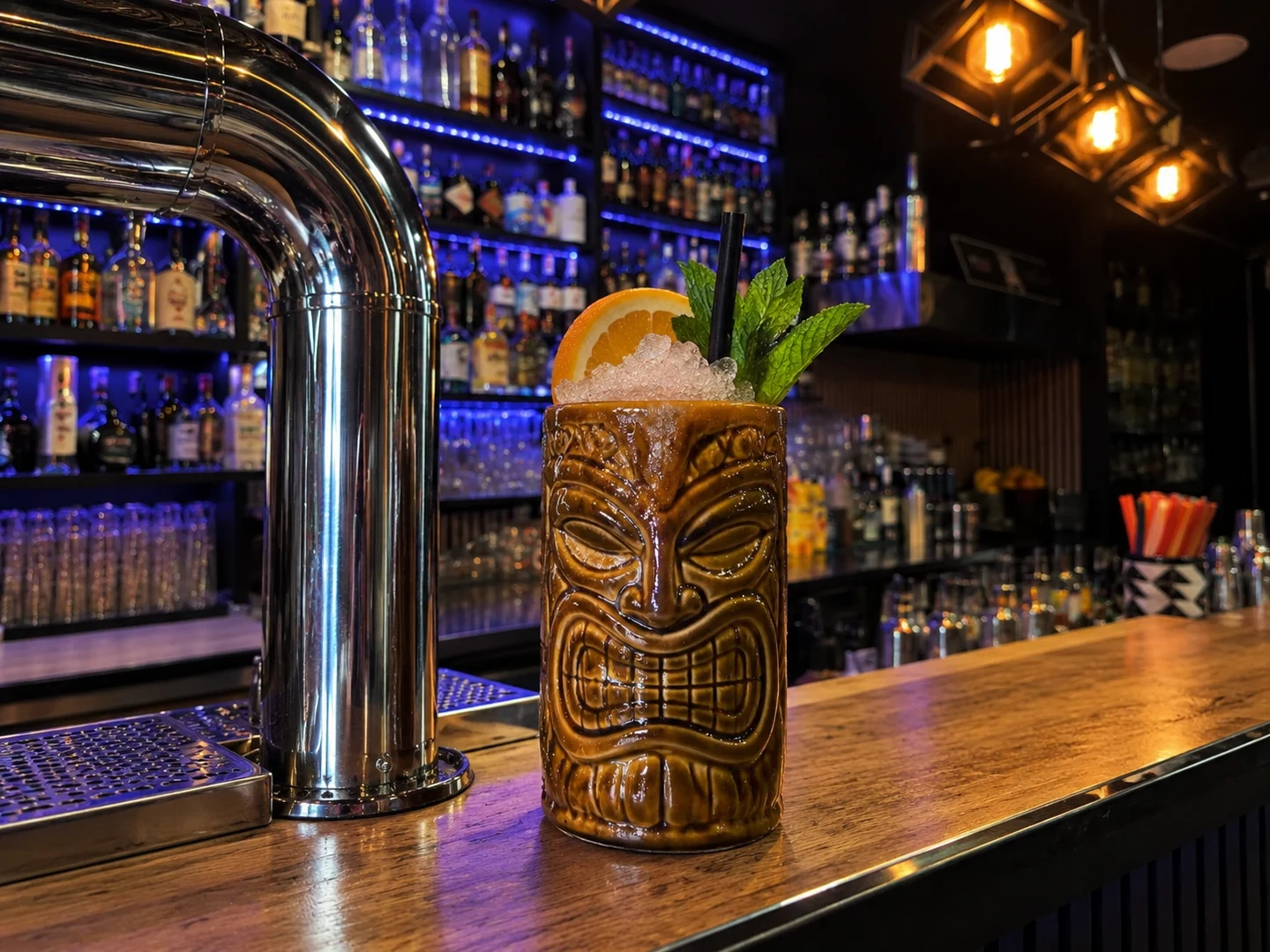
Light rum, brandy, orange, lemon, almond orgeat.
Brandy and orgeat in a tiki bowl. Almond, citrus and crushed ice that won't quit.
The name comes from the 'Scorpion Bowl', served with a floating gardenia and shared straws: the party drink by definition. Victor Bergeron put it on the menu in the forties as a more elegant take on the classic tiki bowl. Brandy and orgeat push it toward tropical cognac-sour territory: powerful, but surprisingly refined.
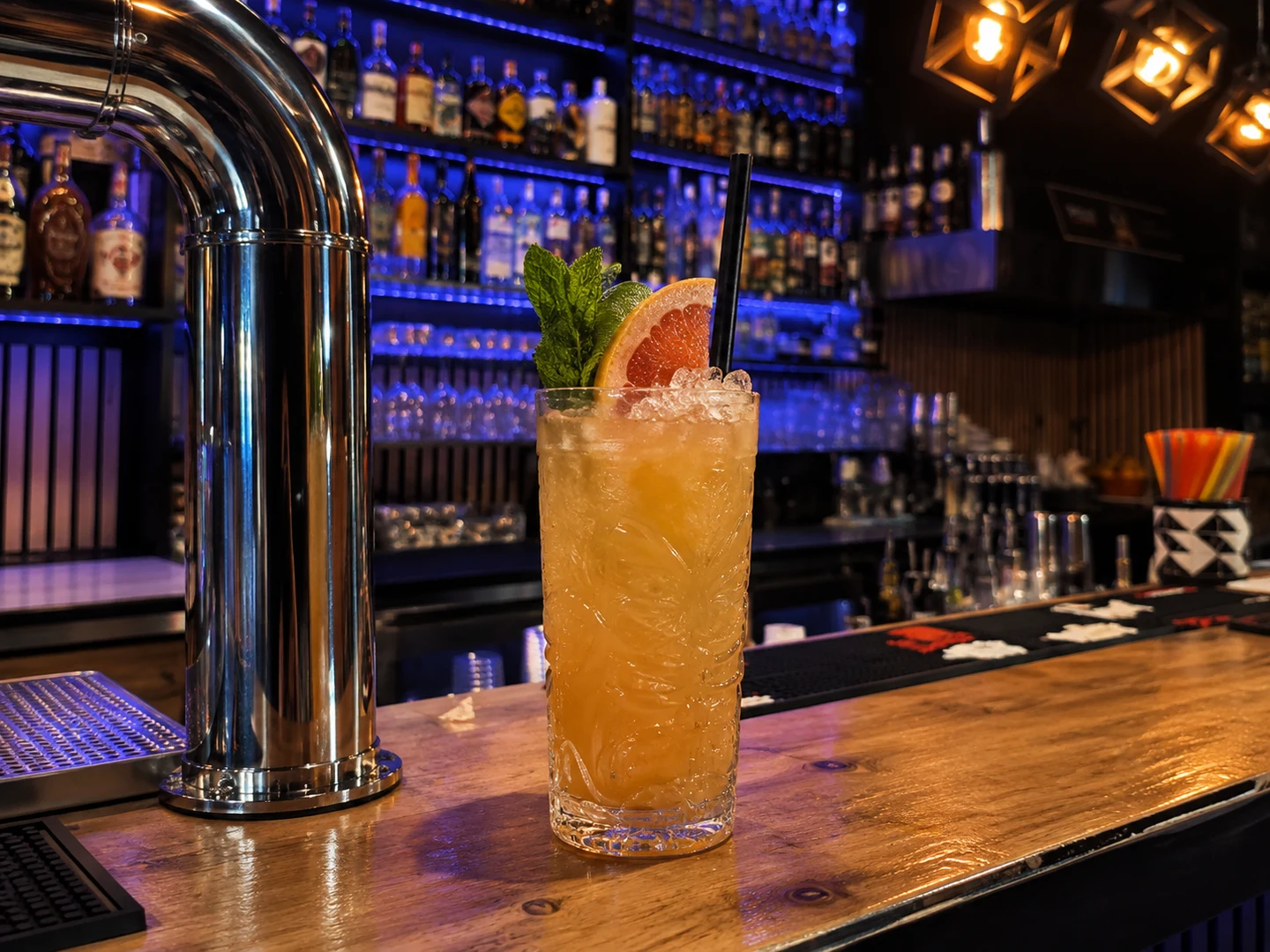
Rum blend, honey, lime, grapefruit.
The grassy bite of a navy grog, with honey and grapefruit instead of rain.
Grog was the Royal Navy's daily ration: rum diluted to fight scurvy and keep the crew's morale up. Don Beach reworked it tiki-style in the forties, adding honey and citrus to soften the blow. The result tastes like naval history but drinks like a holiday.
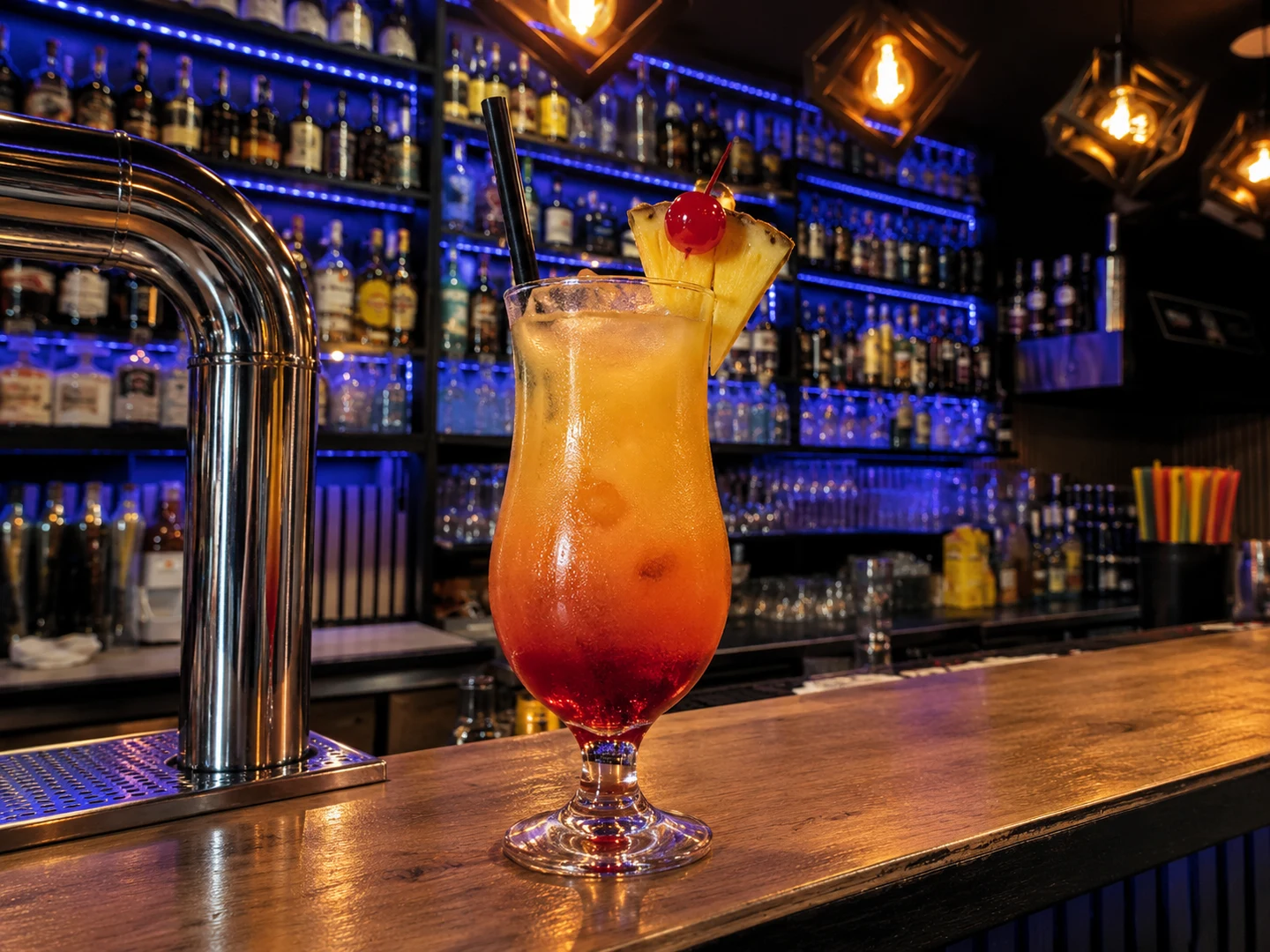
Dark rum, coconut rum, pineapple, orange, grenadine.
Red at the bottom, gold on top. A layered tropical, ready for the photo.
Born in the seventies in the Bahamas, the Bahama Mama is pure island-party culture: bright colours, double rum and zero pretension. Grenadine builds the red layer that sinks slowly, sunset effect guaranteed. It's the long drink that never takes itself seriously, which is exactly why it always works.
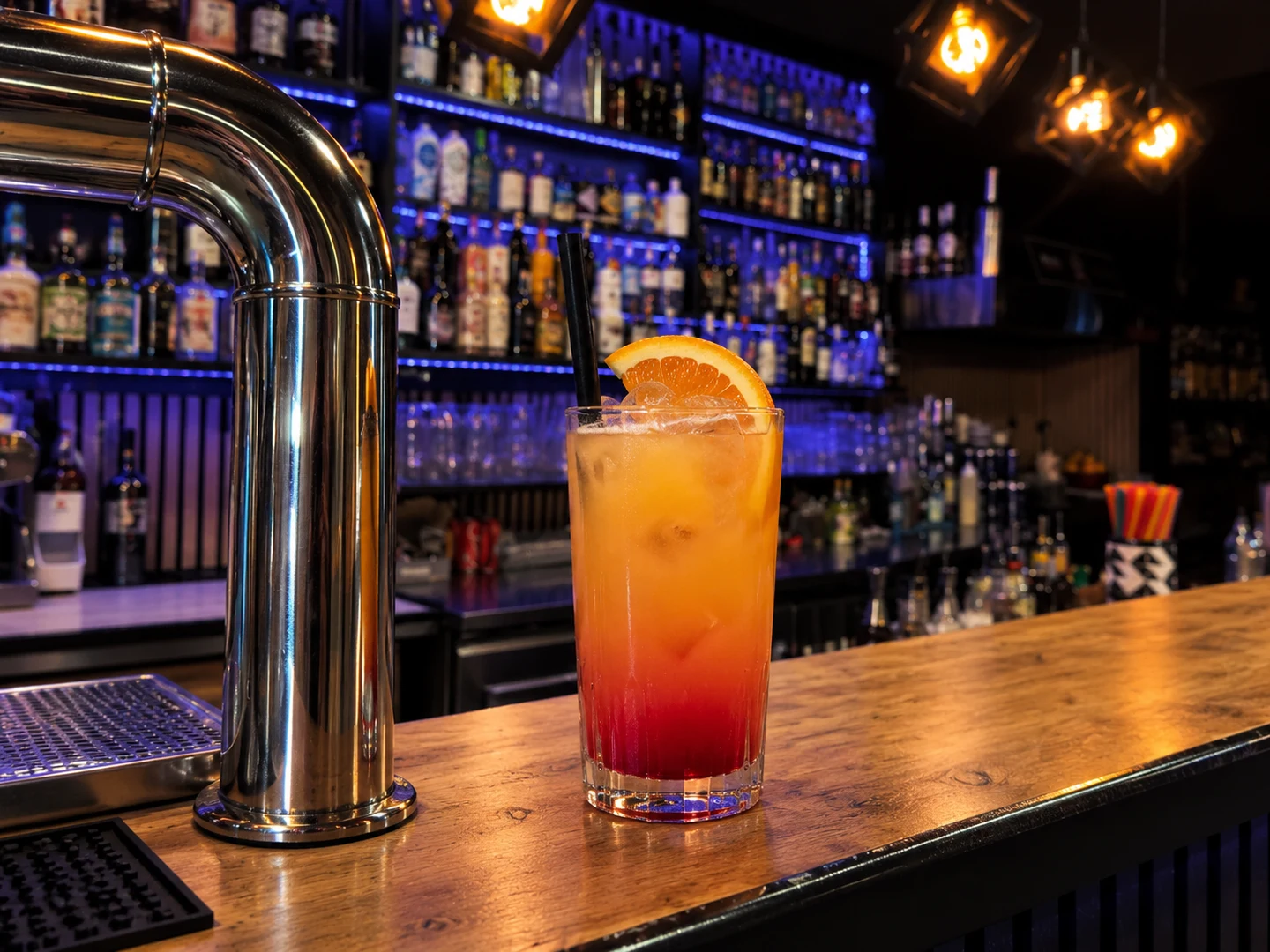
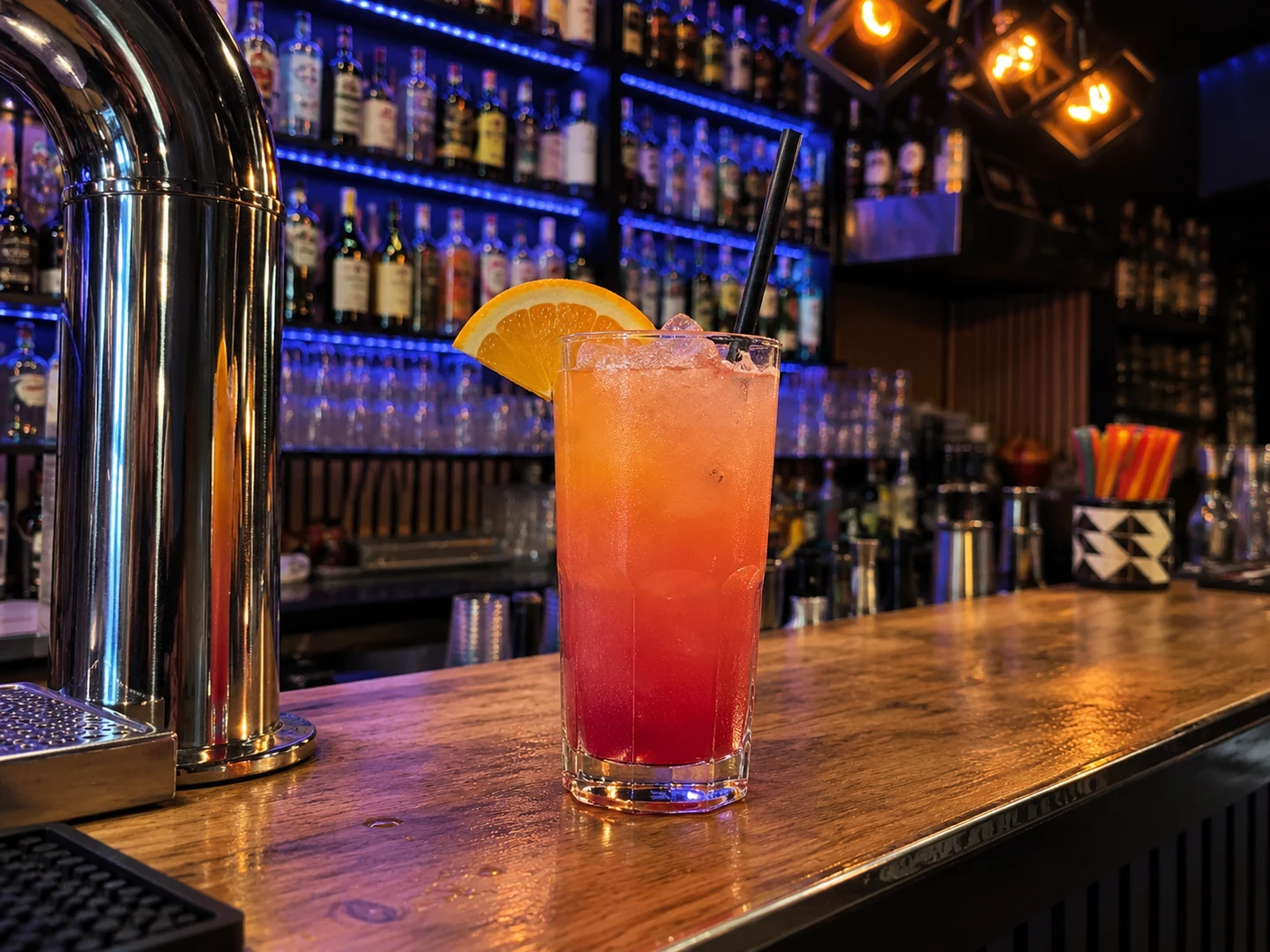
Malibu, orange juice, grenadine.
Coconut, orange and sinking grenadine. Easy drinking with a sunset view.
Malibu was born in Jamaica in 1890 as a rum-and-coconut liqueur, then became the base for decades of beach cocktails. The Sunrise is the most photogenic version: grenadine sinks slowly to the bottom, building that orange-to-red gradient. The drink that taught the whole world what 'holiday in a glass' means.
Malibu, mango juice, cranberry juice.
Mango and cranberry. The Sunrise's pinker twin, more exotic and less cloying.
The Sunset came along as a Sunrise variant when tropical bars started playing with juices more complex than plain orange. Mango and cranberry bring pink-violet tones and a more interesting acidity. Proof that even 'easy' drinks can grow up without losing their charm.
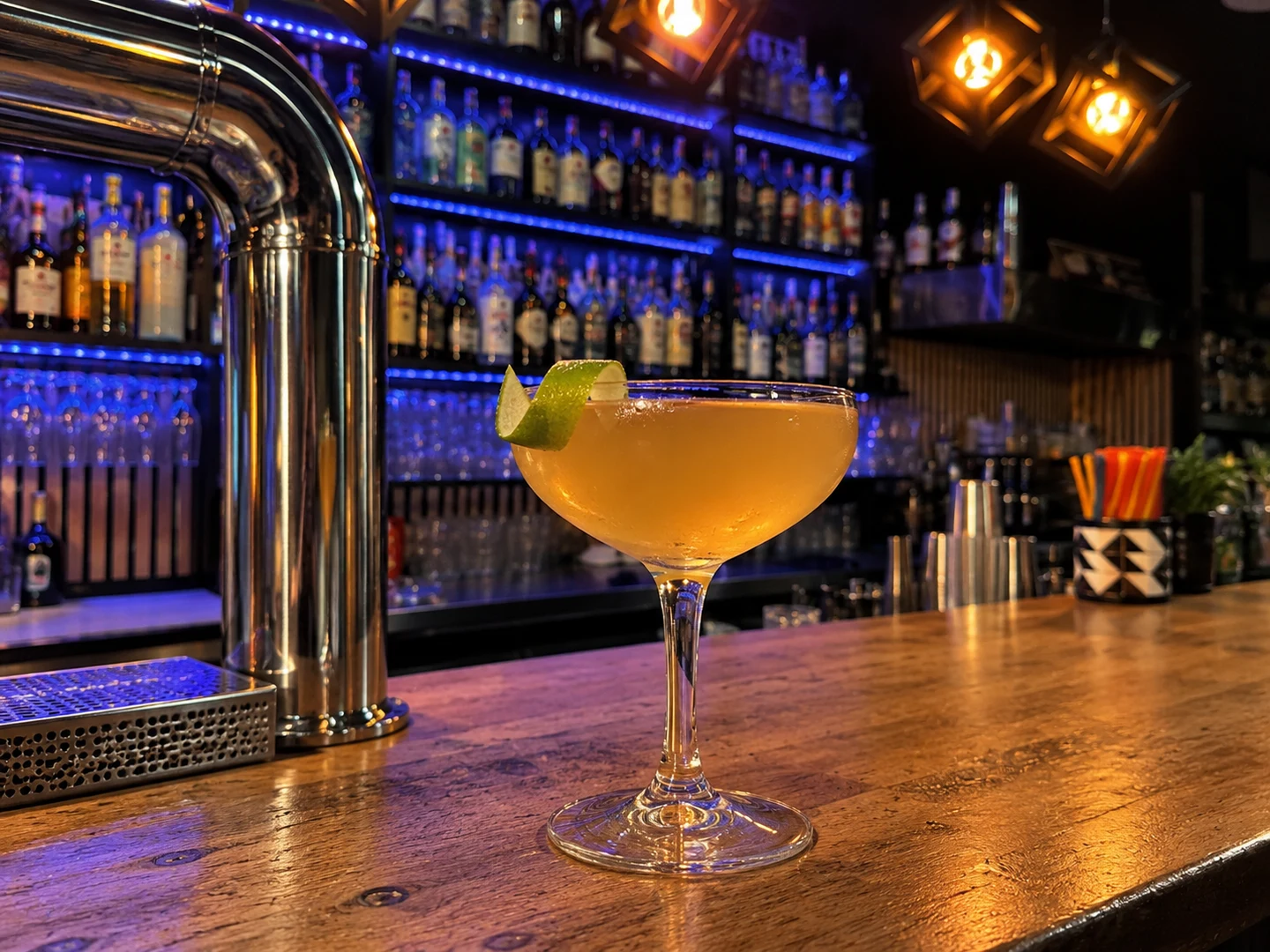
Rum, brandy, triple sec, lime, angostura.
Thirties Hollywood in a coupe. Dry, balanced, with a red-carpet pedigree.
It appears in Harry Craddock's 1930 Harry's ABC of Mixing Cocktails, but its fame is tied to Los Angeles luxury-hotel bars and silent-film parties. Putting rum and brandy together was considered bold back then: today it reads as classic elegance. A drink for anyone who loves a more structured sour without losing the finesse.
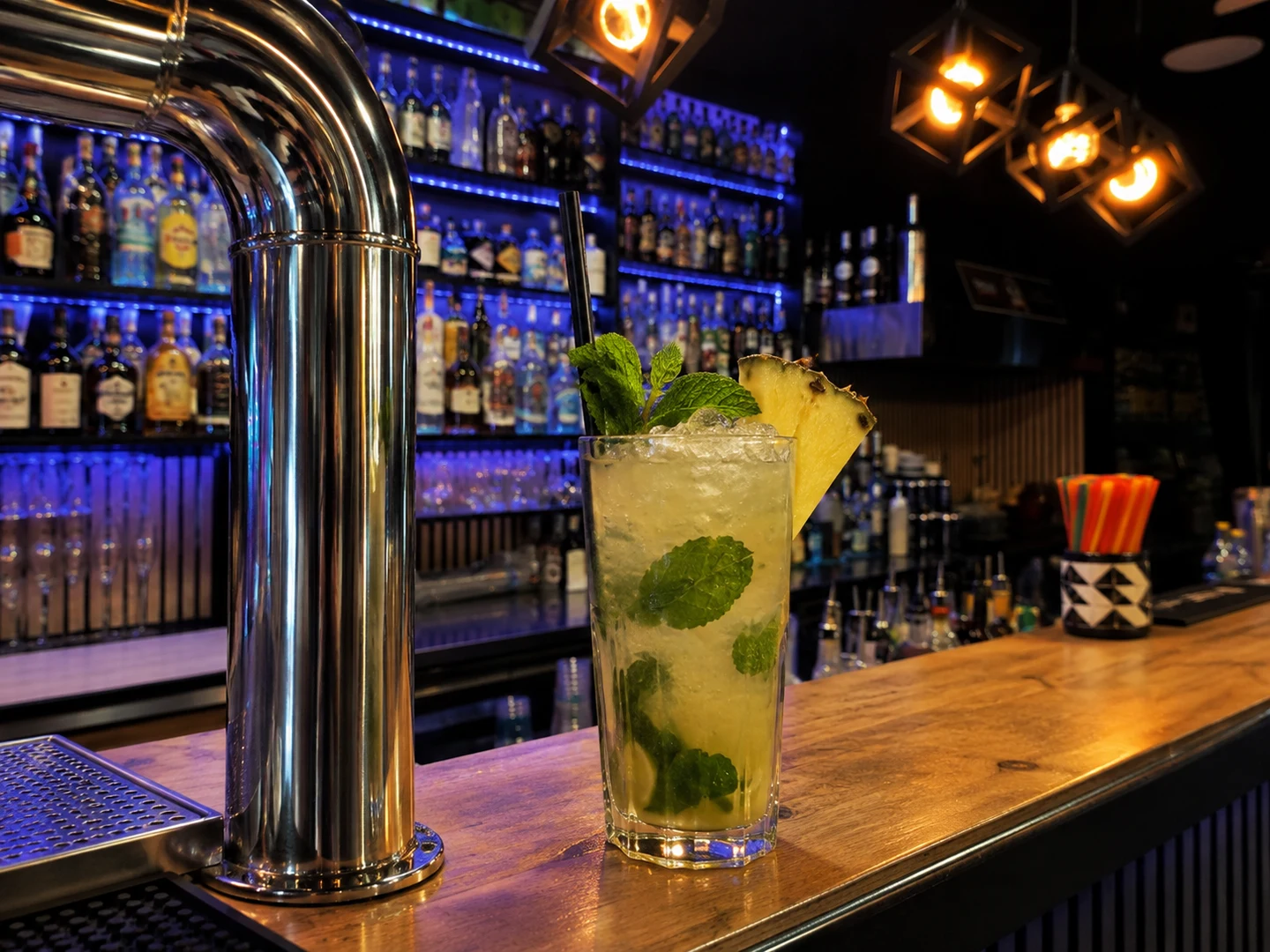
White rum, pineapple, lime, mint, sugar.
A pineapple Mojito. Golden-green, fragrant, refreshing to the last sip.
It's named after the Isle of Pines, a small South Pacific island famous for its postcard beaches. The recipe blends Cuban Mojito freshness with tropical pineapple sweetness, two worlds in one glass. Less famous than its classic sibling, but most people who try it order it again.
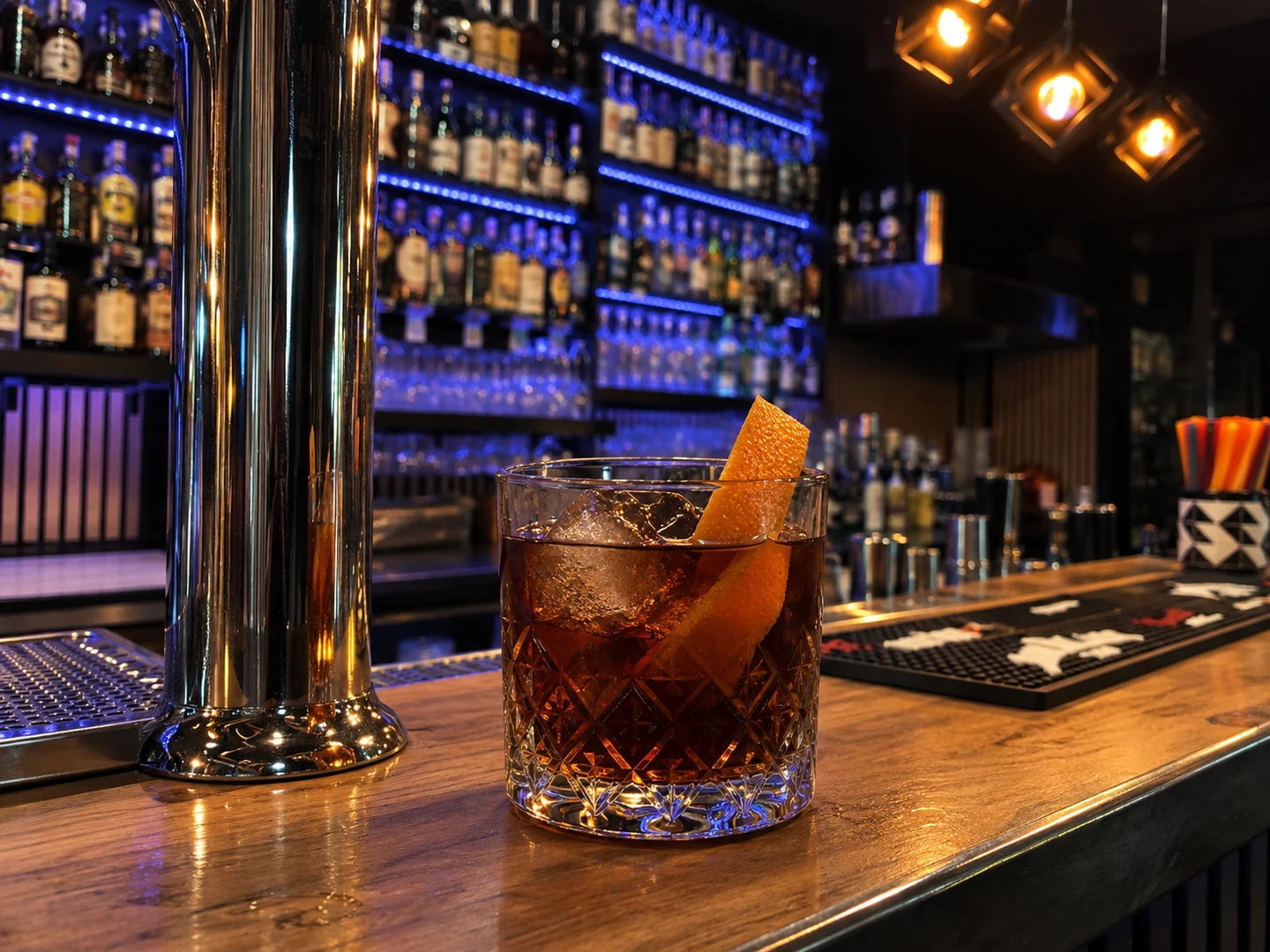
Dark rum, toasted cacao syrup, mole bitters, orange peel.
An Old Fashioned with toasted cacao. Deep, bitter and lightly smoky. A house signature.
The Old Fashioned dates to the 1800s as the 'whiskey cocktail', back before drinks had proper names. We move it to the Caribbean with dark rum and toasted cacao, adding a mole bitter that nods to Mexico. Our answer for anyone who wants a drink to sit with, not knock back.
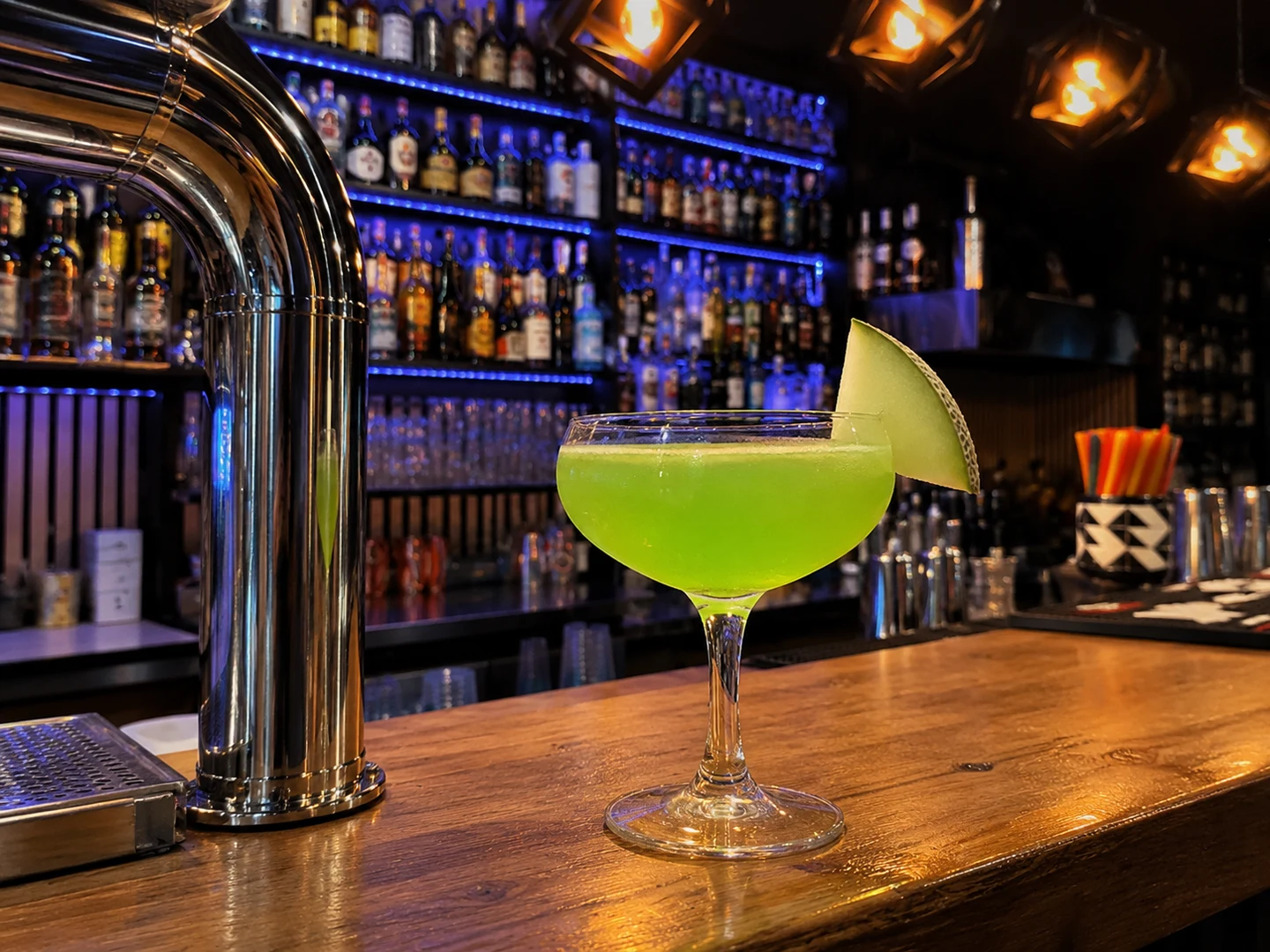
Midori, triple sec, lemon juice.
Neon green and Japanese melon. An eighties vintage cocktail that never dates.
Created in 1984 by Jean-Paul Bourguignon at Melbourne's Mietta's, curiously far from Japan. Midori melon liqueur was the 'exotic' ingredient of the day, and the fluorescent green made it a disco icon. Today it's a cocktail museum piece, respected by bartenders for its flawless simplicity.
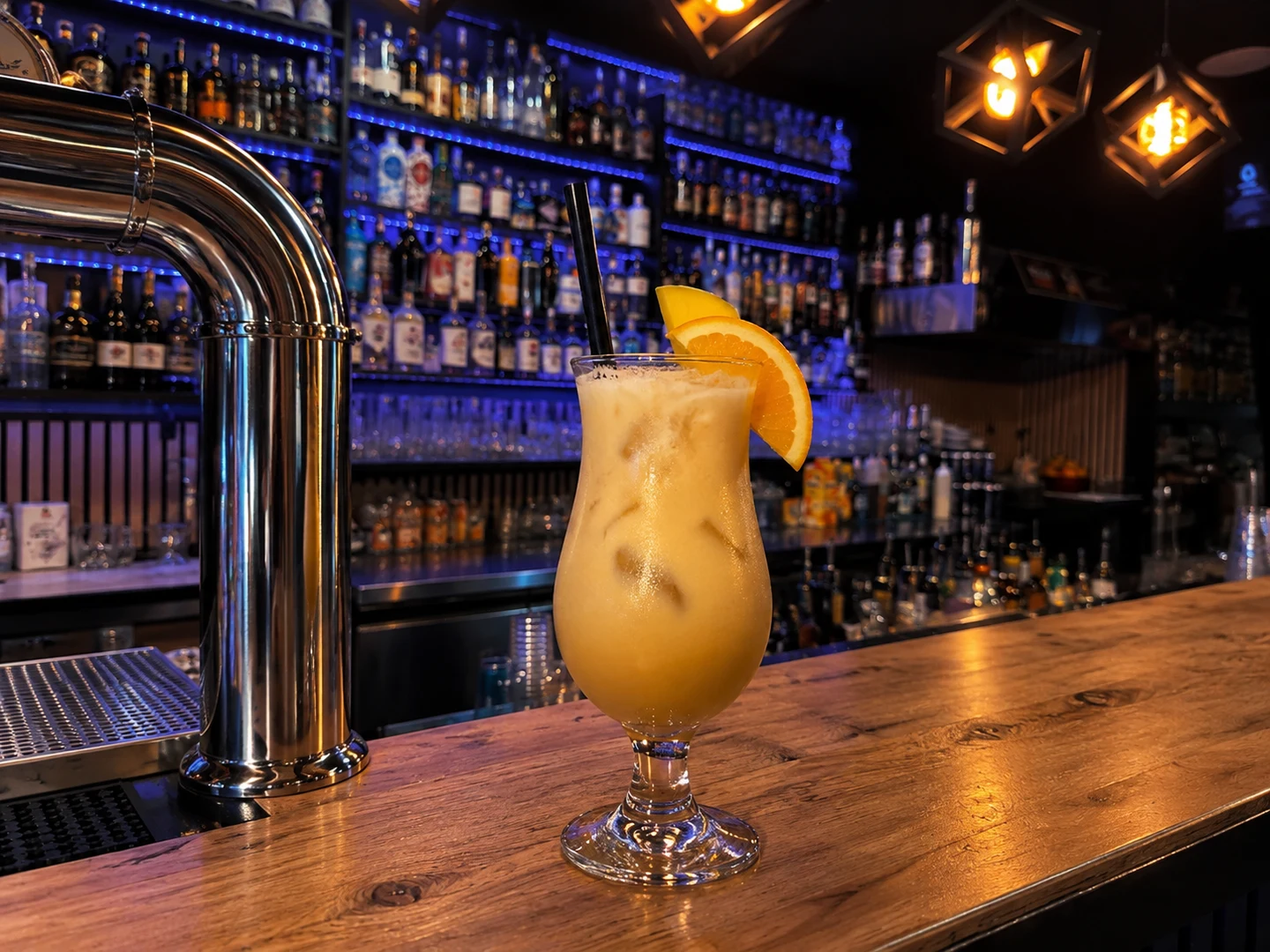
Amarula, rum, mango, orange, coconut cream.
A creamy sunset. Yellow fruit, coconut and velvety Amarula from South Africa.
Amarula is a South African liqueur made from marula, the tree whose fallen fruit elephants can't get enough of. Fermented, distilled and oak-aged, it has unusual caramel and tropical-citrus notes. In the Sunset it meets rum and coconut, for a drink that tastes like safari at dusk.
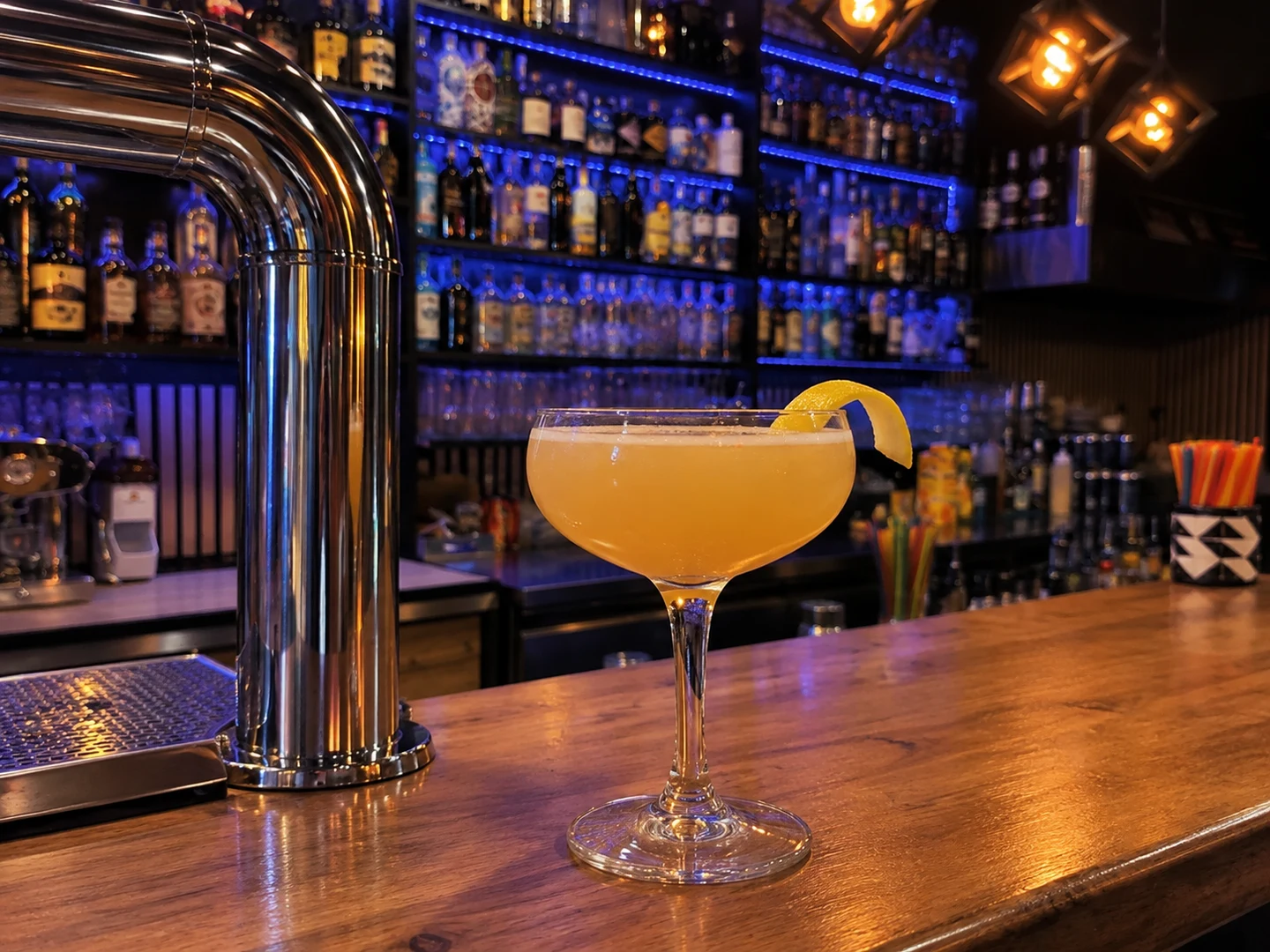
White rum, brandy, triple sec, lemon.
A sharper tropical Sidecar. Citrus, rum and brandy, no compromises.
Harry MacElhone recorded it in 1930 at Paris's Harry's New York Bar as a cheeky take on the classic Sidecar, swapping cognac for white rum. The name plays on the drink's elegance and the double meaning of 'between the sheets', classic twenties Paris humour. Three spirits in equal parts: bold, dry, memorable.
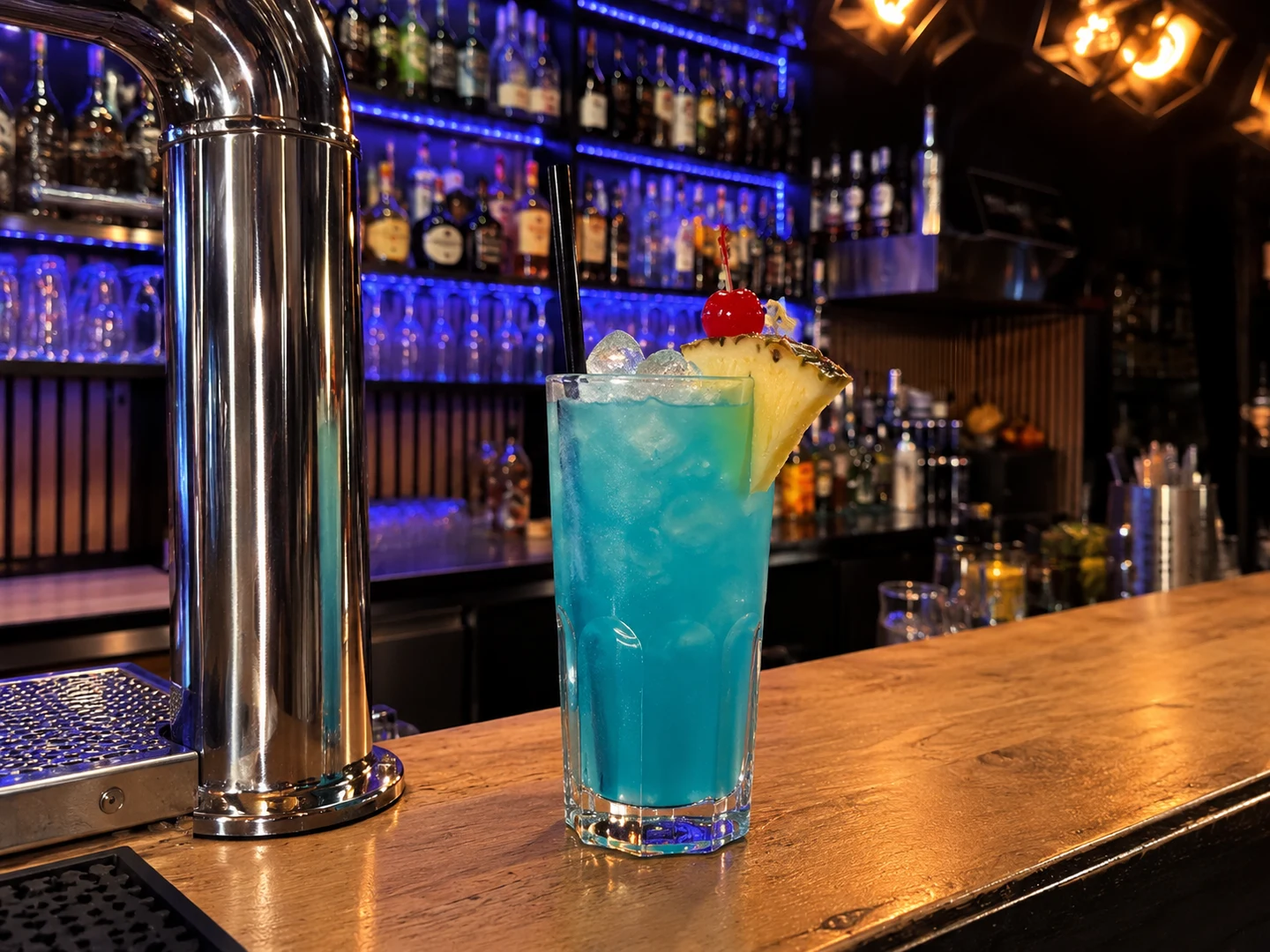
Rum, vodka, blue curaçao, pineapple, sweet & sour.
Pool-blue and pineapple. Shamelessly tropical, holiday guaranteed.
Created in the fifties by Harry Yee at Waikiki's Kaiser Hawaiian Village, the Blue Hawaii rode the blue-curaçao wave, the blue liqueur that conquered bars half the world over. Rum and vodka together make it stronger than classic tiki, but the postcard look stays intact. The drink that made electric blue an acceptable colour in a glass.
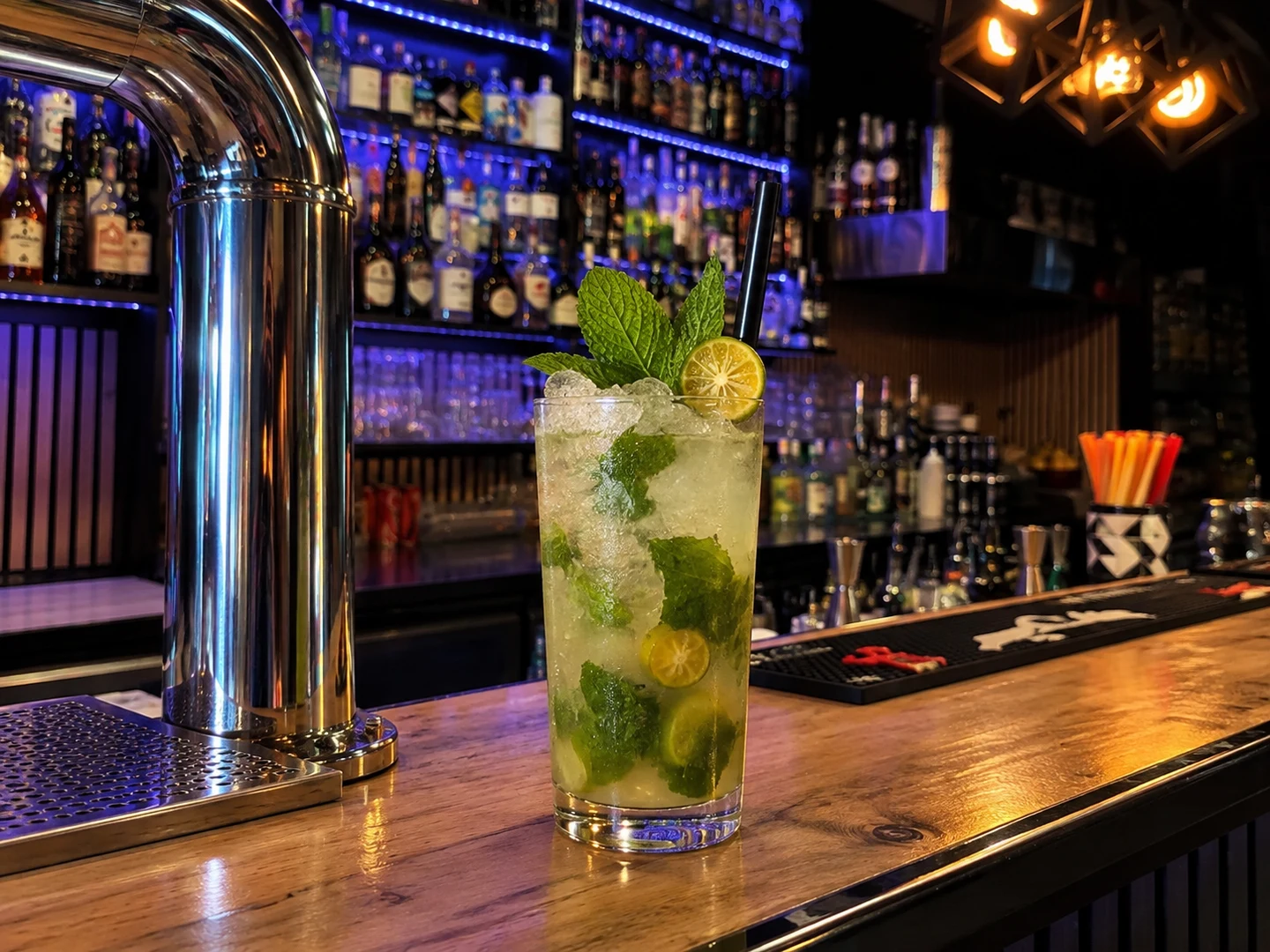
White rum, calamansi, mint, sugar, soda.
An Asian Mojito. Calamansi sharper than lime, cold mint, piercing freshness.
Calamansi, or calamondin, is a kumquat-mandarin hybrid found all over Southeast Asia, from the Philippines to Vietnam. Sharper and more aromatic than lime, it gives the Mojito a citrus dimension the Cuban classic doesn't have. Proof that even the great classics gain something by travelling.
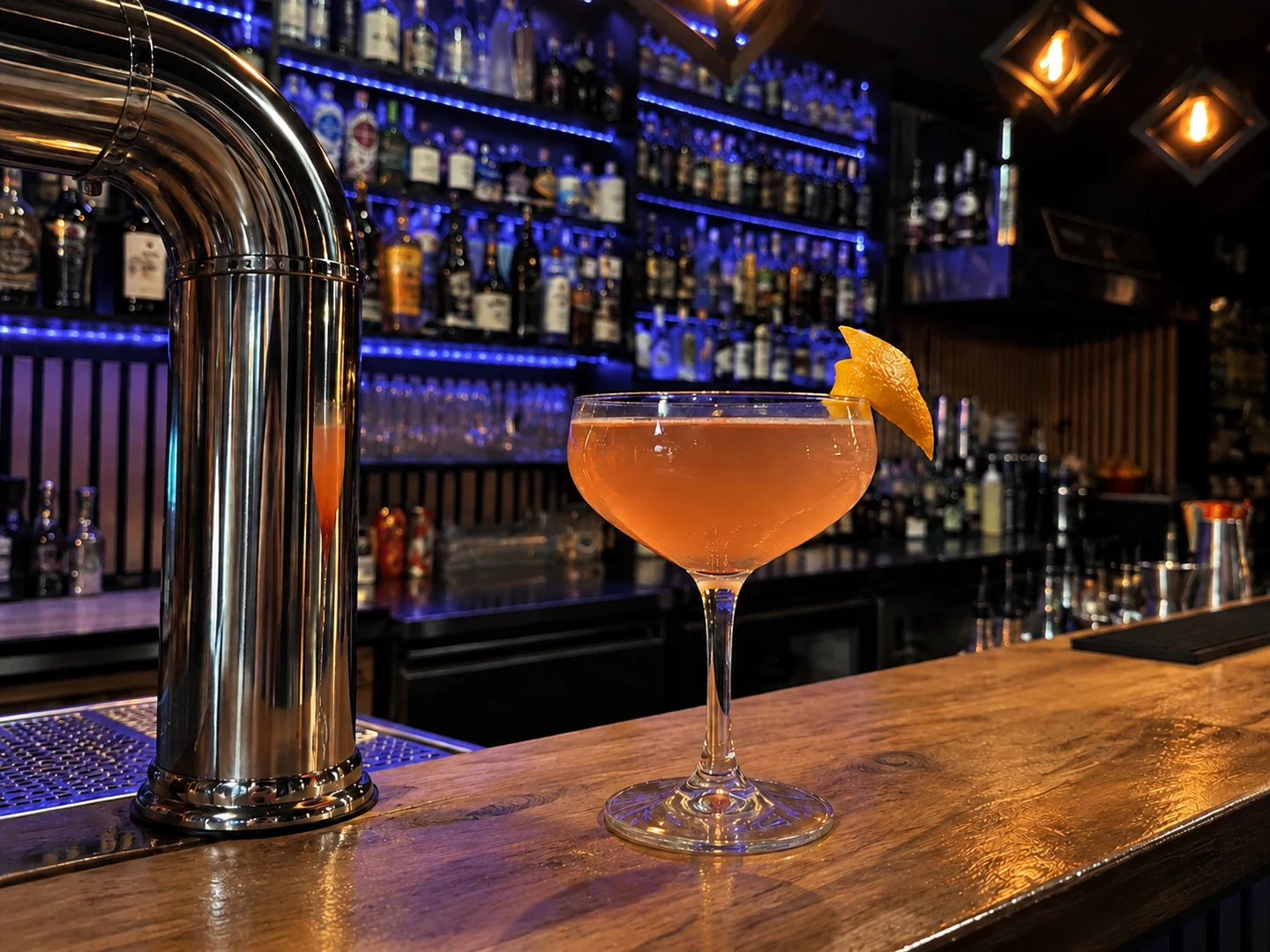
White rum, dry vermouth, orange curaçao, grenadine.
Elegant Cuba. Dry vermouth, white rum and a red line of grenadine.
Born in Cuba in the twenties, El Presidente is named after Gerardo Machado, the island's president from 1925 to 1933. Essentially a Cuban Manhattan: rum instead of whiskey, dry vermouth and a drop of grenadine for colour. Less famous than the Daiquiri, but still poured in Havana's historic bars.
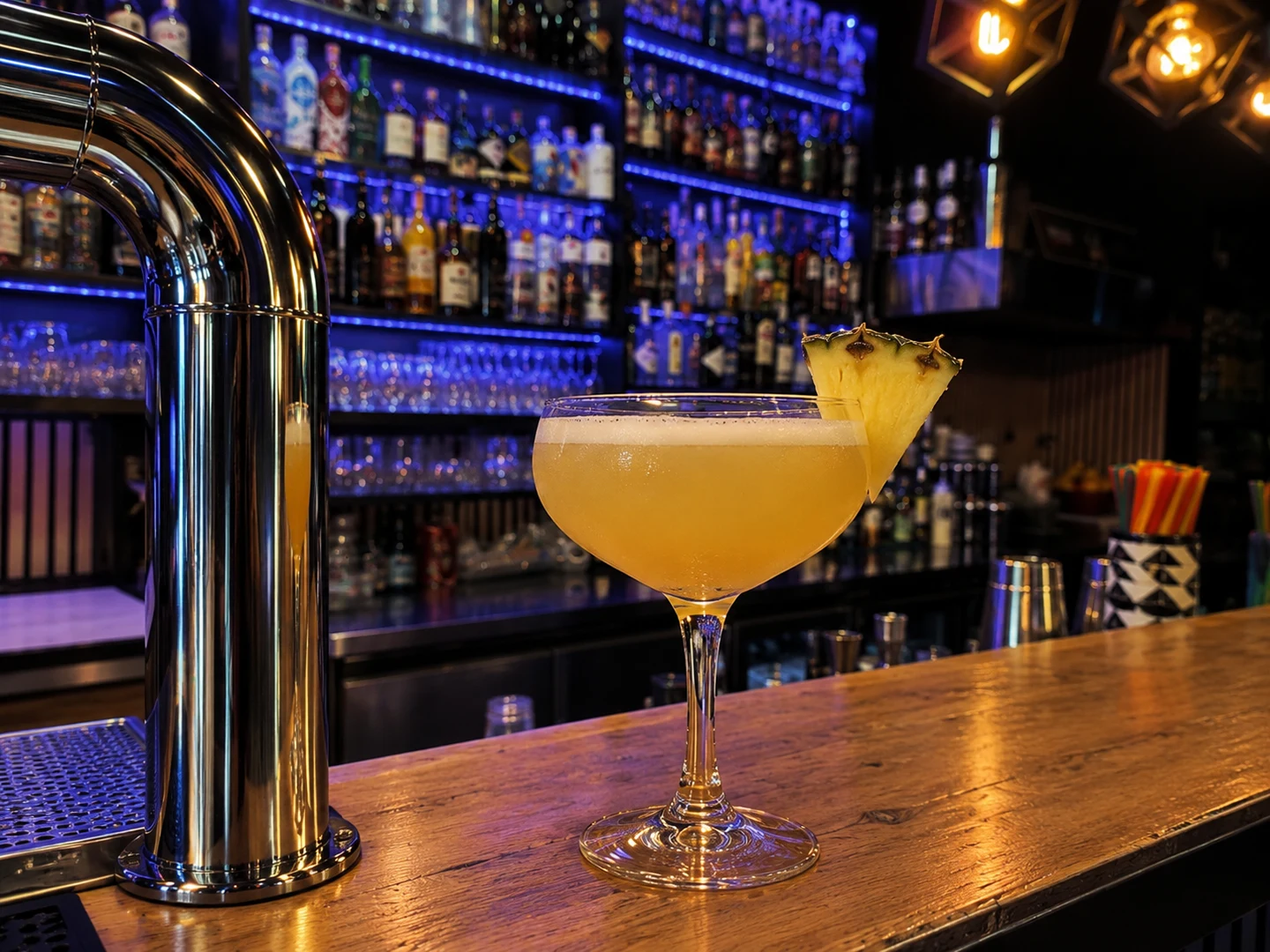
Rum, apricot brandy, pineapple, lime.
Havana in a coupe. Apricot, pineapple and rum, with a dry, refined finish.
Created in the thirties by Will Parker, head barman at Havana's Hotel Nacional de Cuba, the same hotel where Hemingway kept his regular table. Apricot and pineapple echo the island's flavours while lime cuts the sweetness. Considered one of the great forgotten Cuban cocktails.
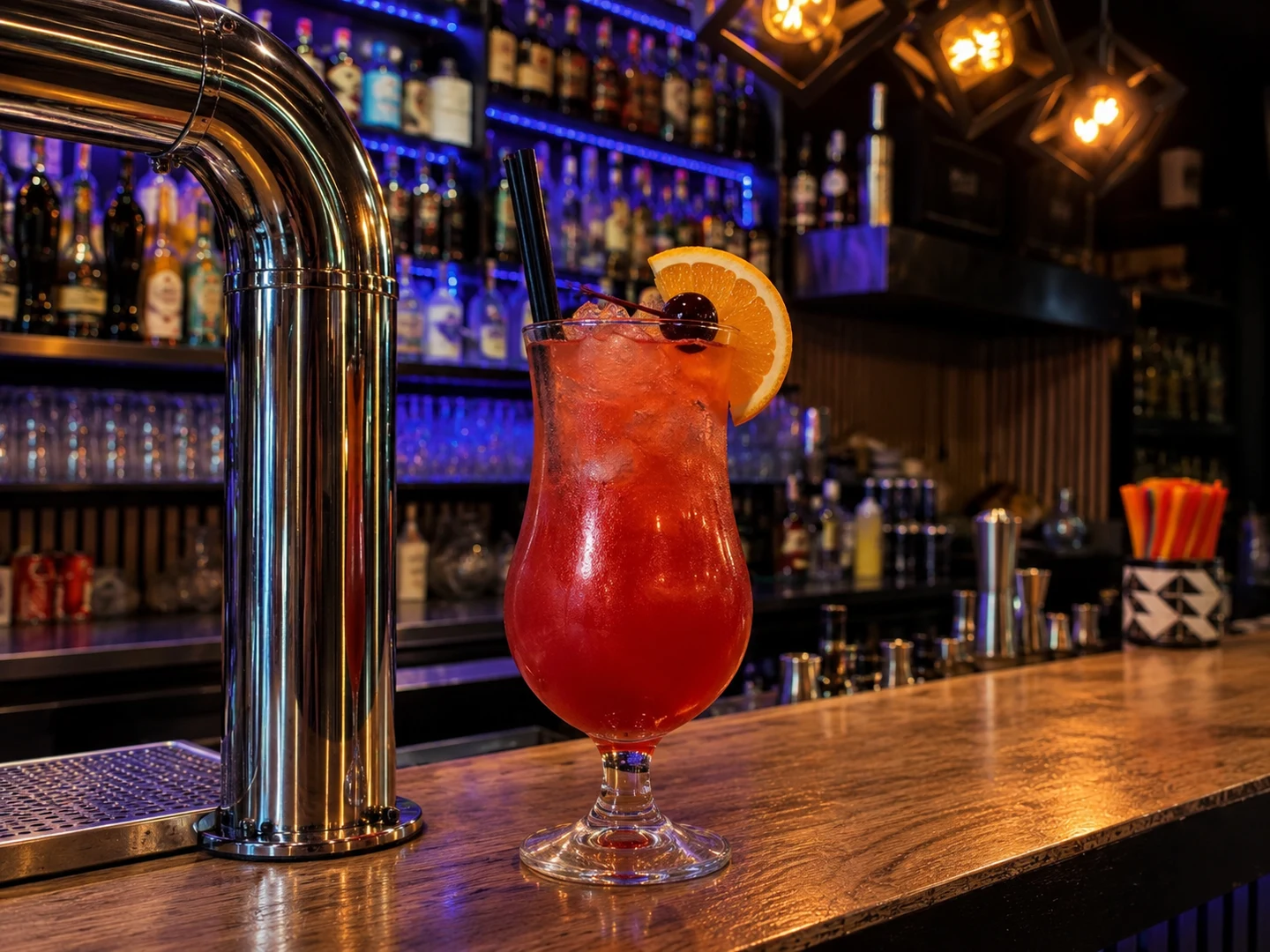
Light and dark rum, passion fruit, orange, lime, grenadine.
Tropical New Orleans. Big, red and rum-heavy: a hurricane in a glass.
Invented in the forties by Pat O'Brien at his Bourbon Street bar in New Orleans. The name comes from the hurricane-lamp-shaped glass it was served in, now a French Quarter icon. Two rums, passion fruit and citrus: looks innocent, but it has a reputation for knocking you off your feet.
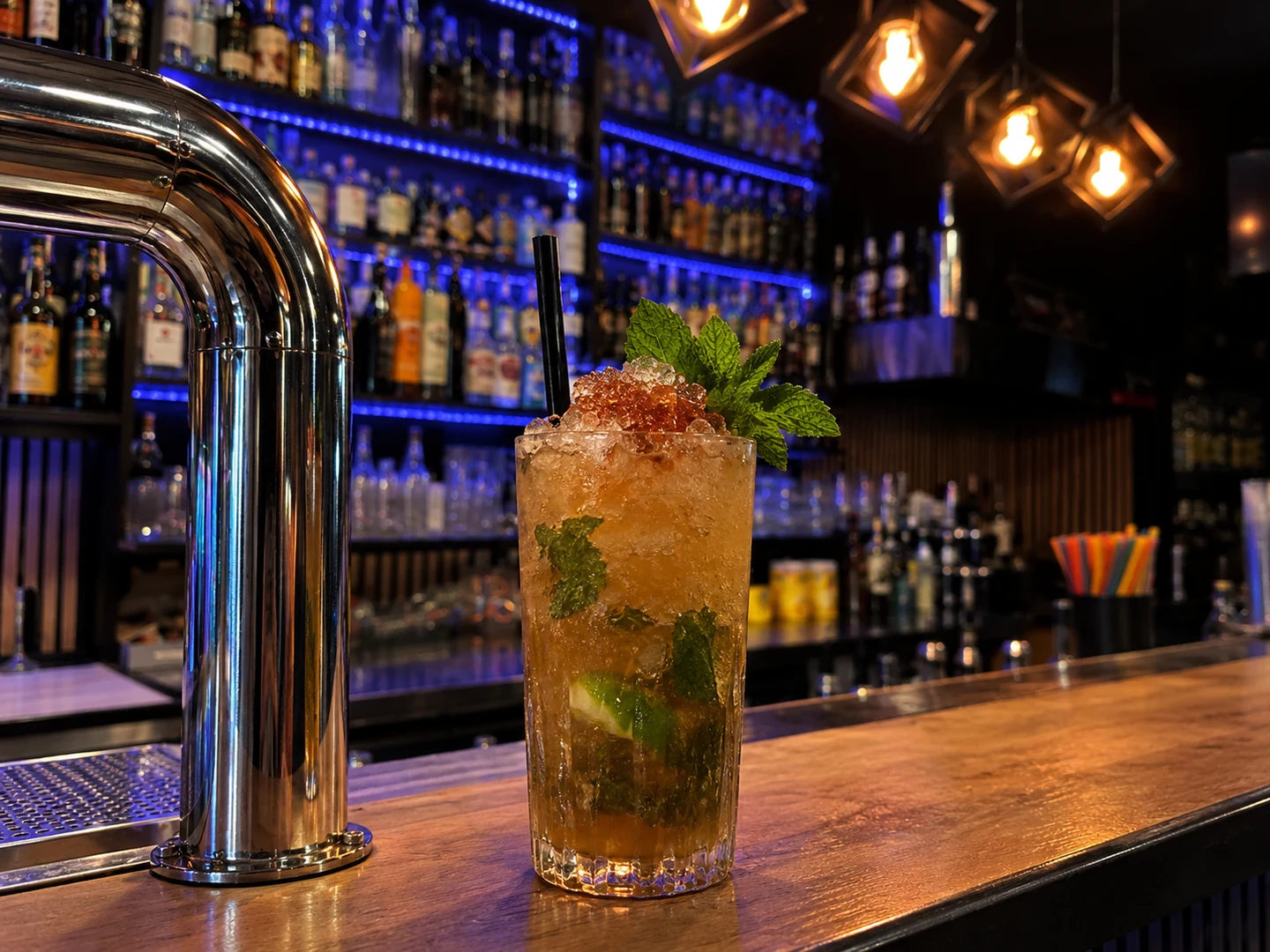
Dark rum, mint, lime, sugar, angostura.
A darker, more aromatic Mojito. An icy swizzle, with bitters perfuming the top.
Born at Port of Spain's Queen's Park Hotel in Trinidad around 1900: one of the oldest drinks in the tiki world. The swizzle technique uses a wooden twig, the 'swizzle stick', to chill and dilute the drink in crushed ice. The bitters on top aren't garnish: they're the aroma that announces a more grown-up Mojito.
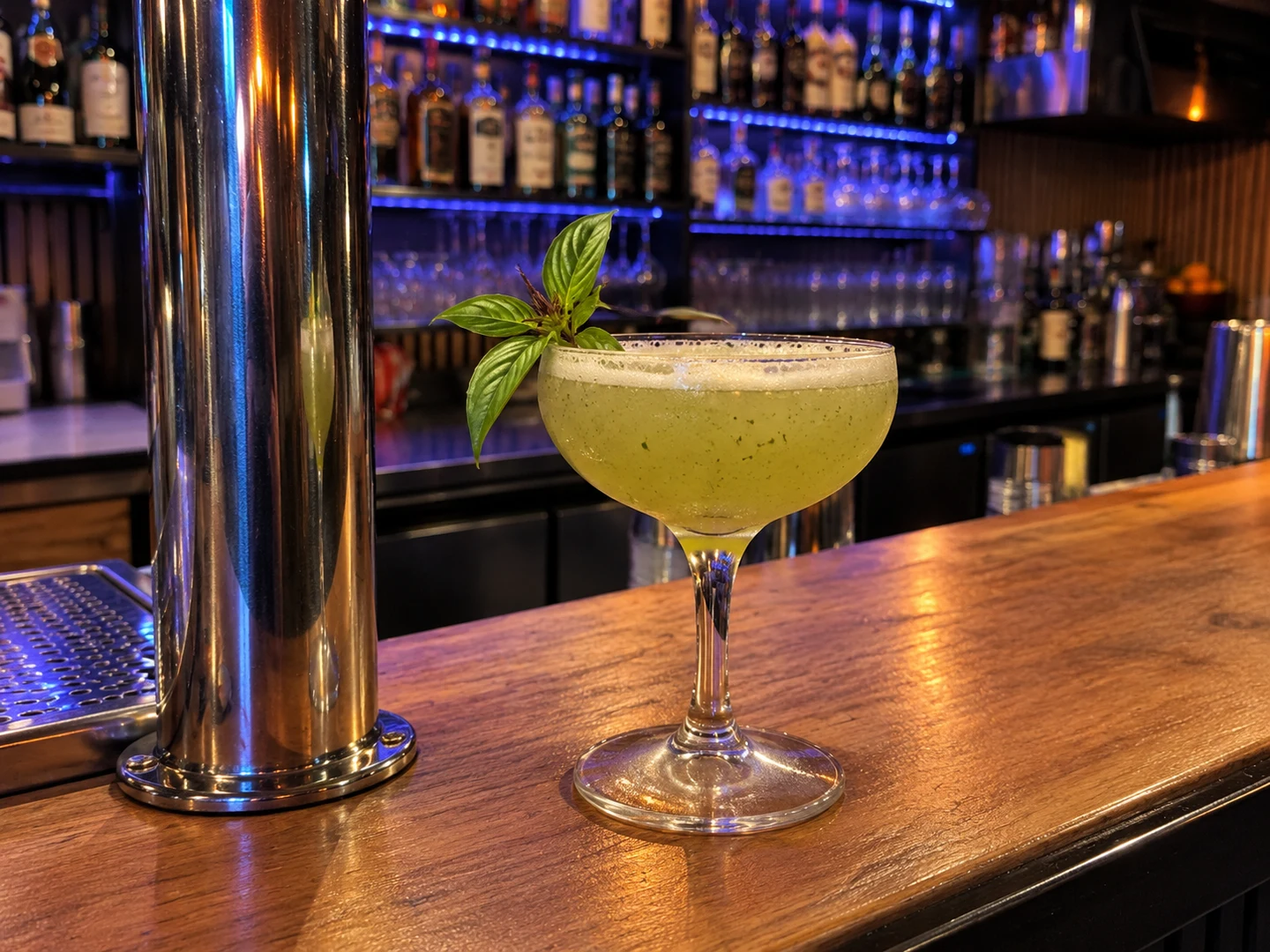
White rum, lime, sugar, Thai basil.
A green, spiced Daiquiri. Fragrant Thai basil in place of mint.
Thai basil carries anise and black-pepper notes that mint just can't give: more exotic, more complex. Putting Asian herbs in a Cuban Daiquiri is a modern trend, but it works because white rum is a neutral canvas. Our signature for anyone who wants a classic reinvented without betraying its soul.
 16 items
 100% agave: blanco, reposado, añejo, plus mezcal smoke when the night asks for depth.
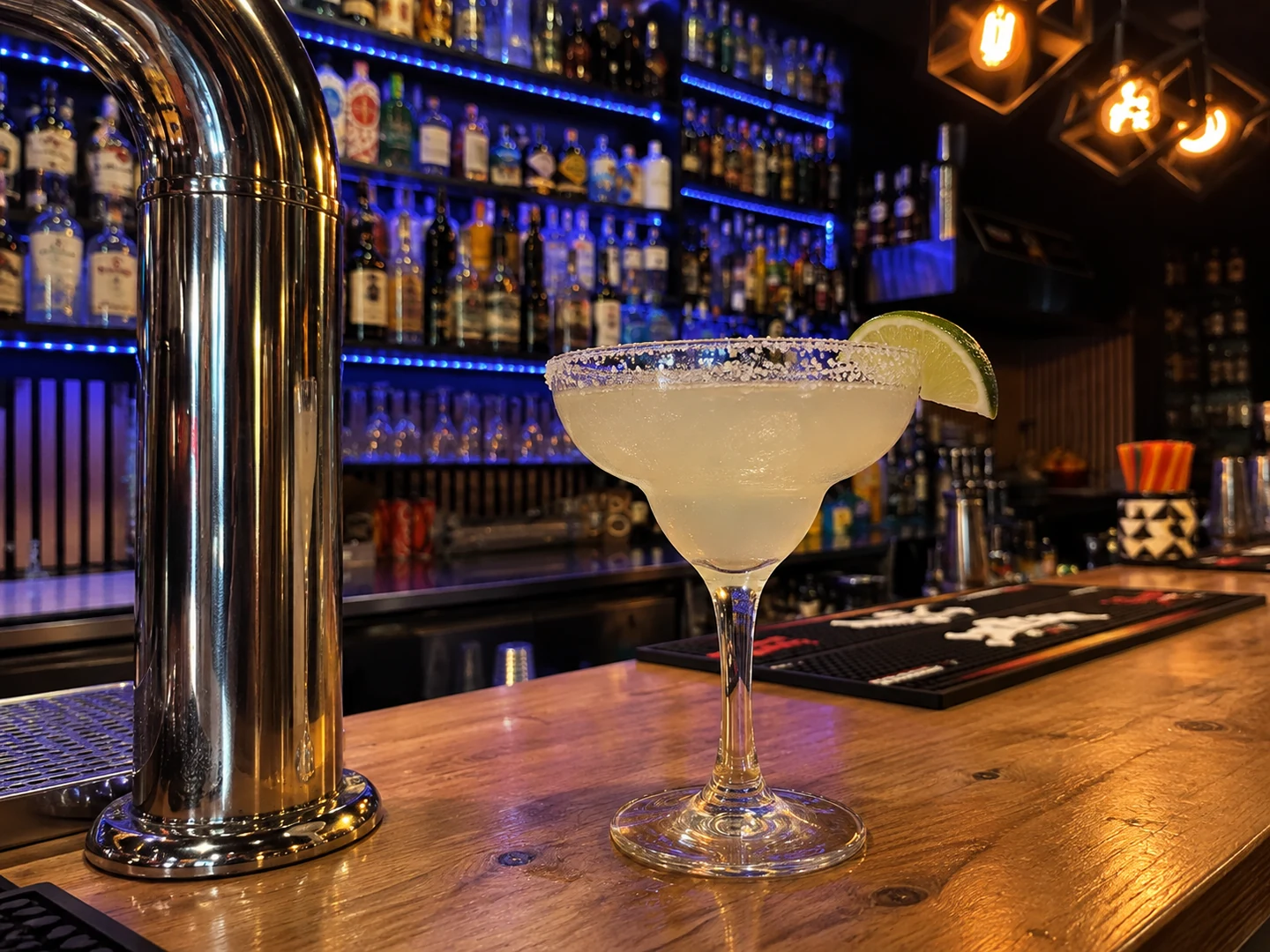
Tequila, triple sec, lime, salt rim.
Tequila, citrus and salt, three notes in balance. No compromise.
Tequila, citrus and salt, three notes in balance. No compromise.
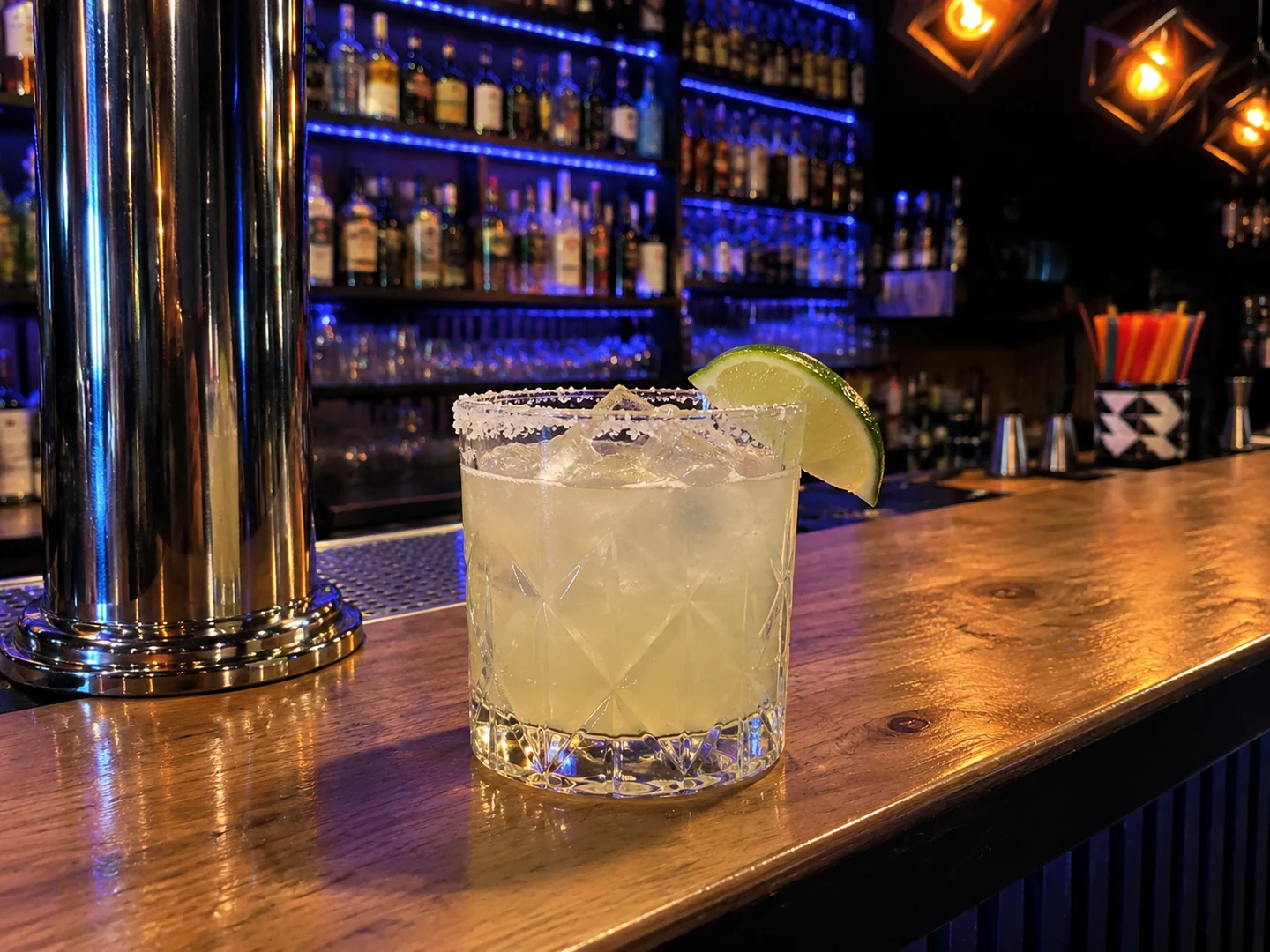
Tequila, lime, agave syrup.
The Margarita without triple sec, sweetened with agave. More tequila, cleaner.
The Margarita without triple sec, sweetened with agave. More tequila, cleaner.
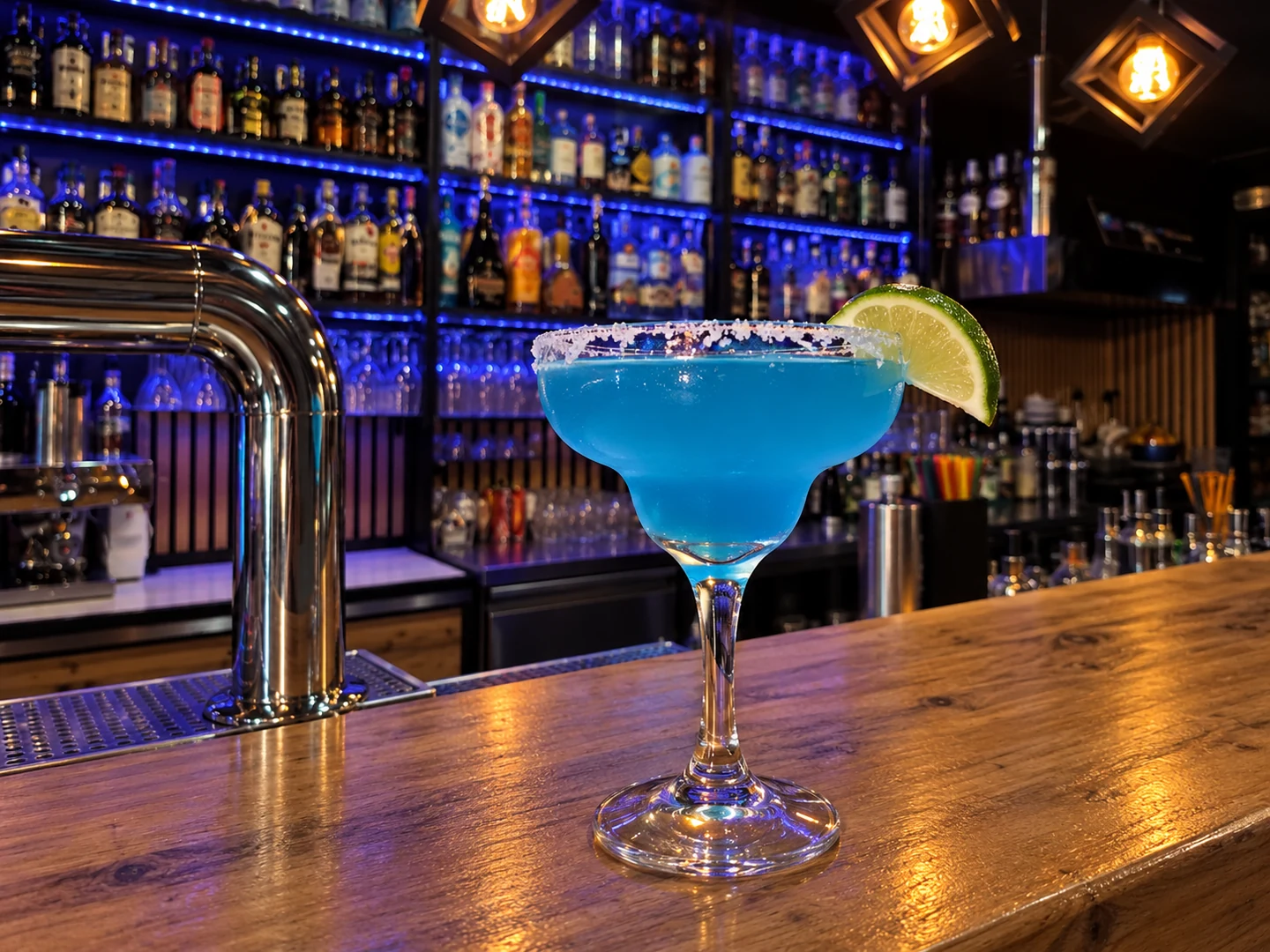
Tequila, blue curaçao, lime, salt rim.
An electric-blue Margarita. Same DNA, different look.
An electric-blue Margarita. Same DNA, different look.
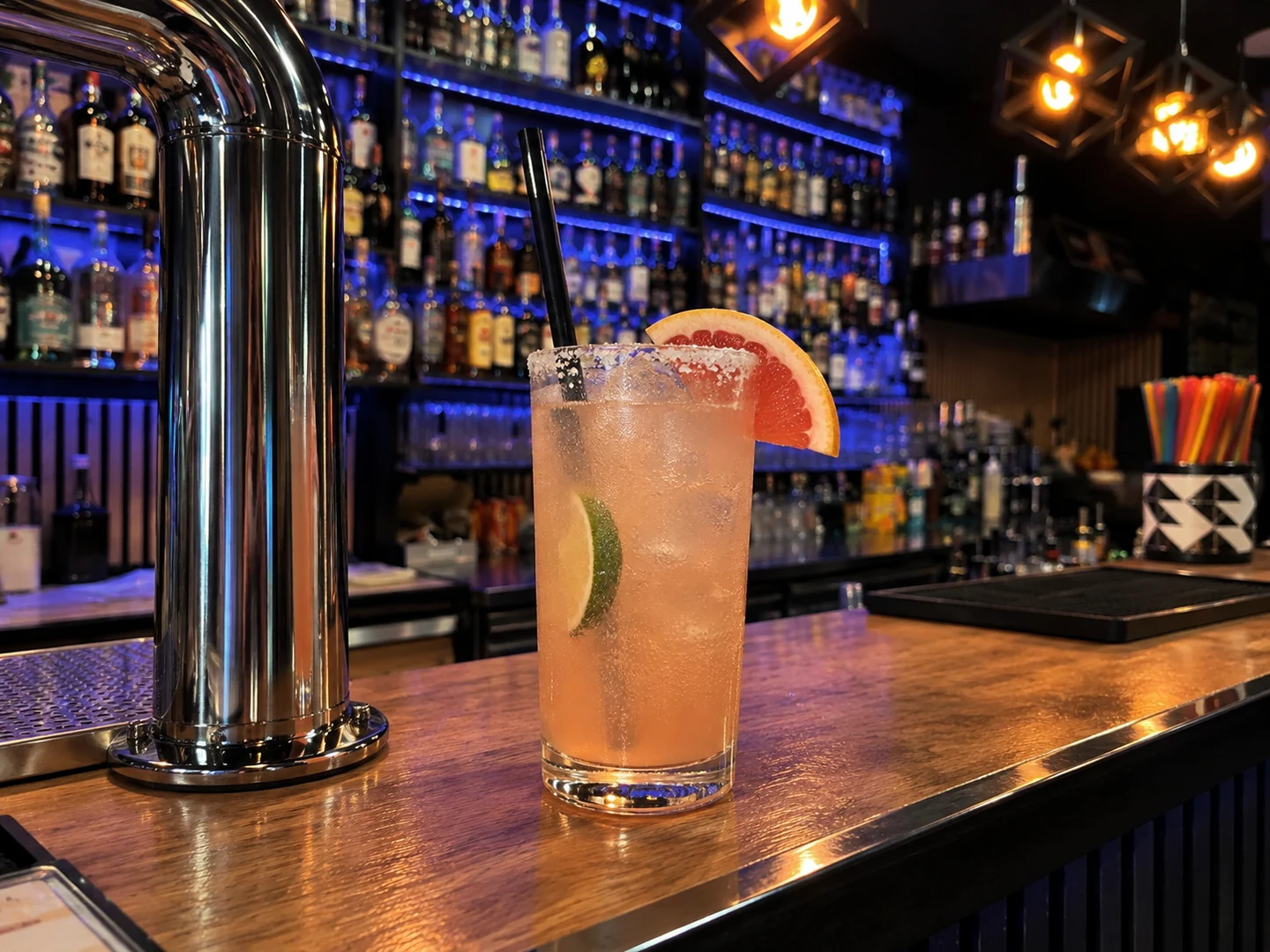
Tequila, grapefruit soda, lime, salt.
Bitter grapefruit, salt and light tequila. Mexico's most-poured cocktail.
Bitter grapefruit, salt and light tequila. Mexico's most-poured cocktail.
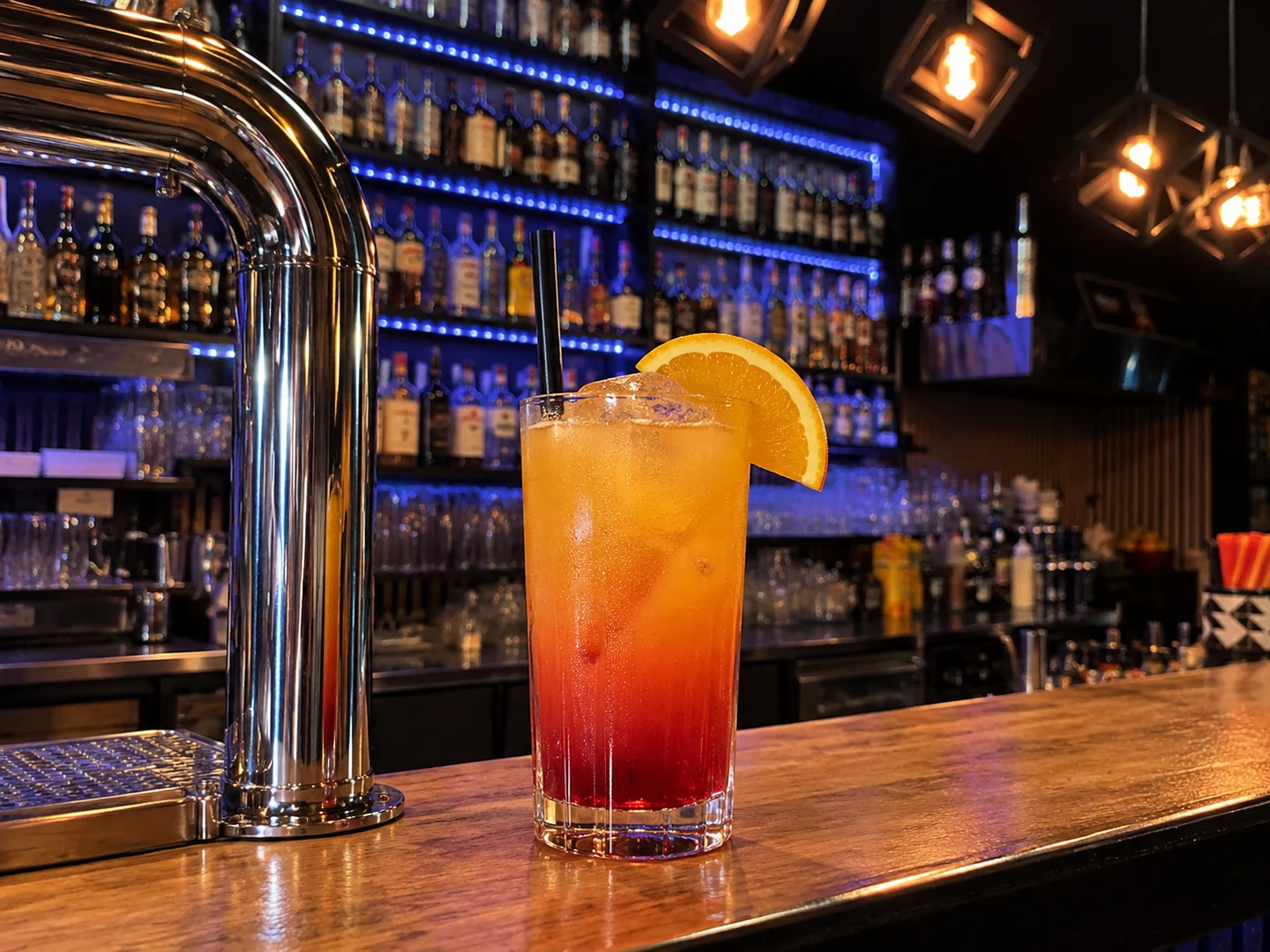
Tequila, orange juice, grenadine.
A sunset in a glass: vivid orange and red sinking slowly.
A sunset in a glass: vivid orange and red sinking slowly.
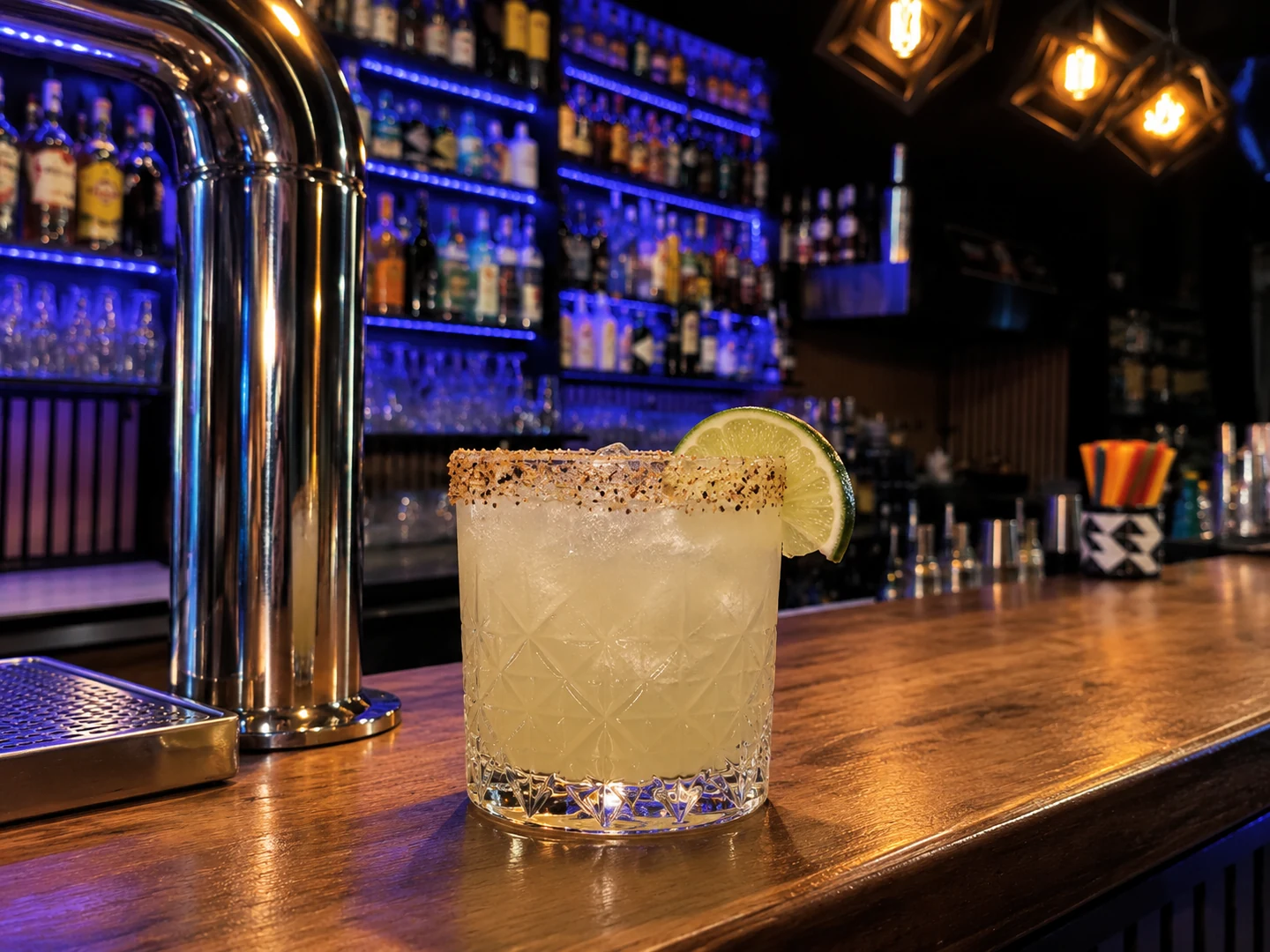
Mezcal, triple sec, lime, smoked salt.
The Margarita with mezcal: smoke underneath, toasted salt on the rim.
The Margarita with mezcal: smoke underneath, toasted salt on the rim.
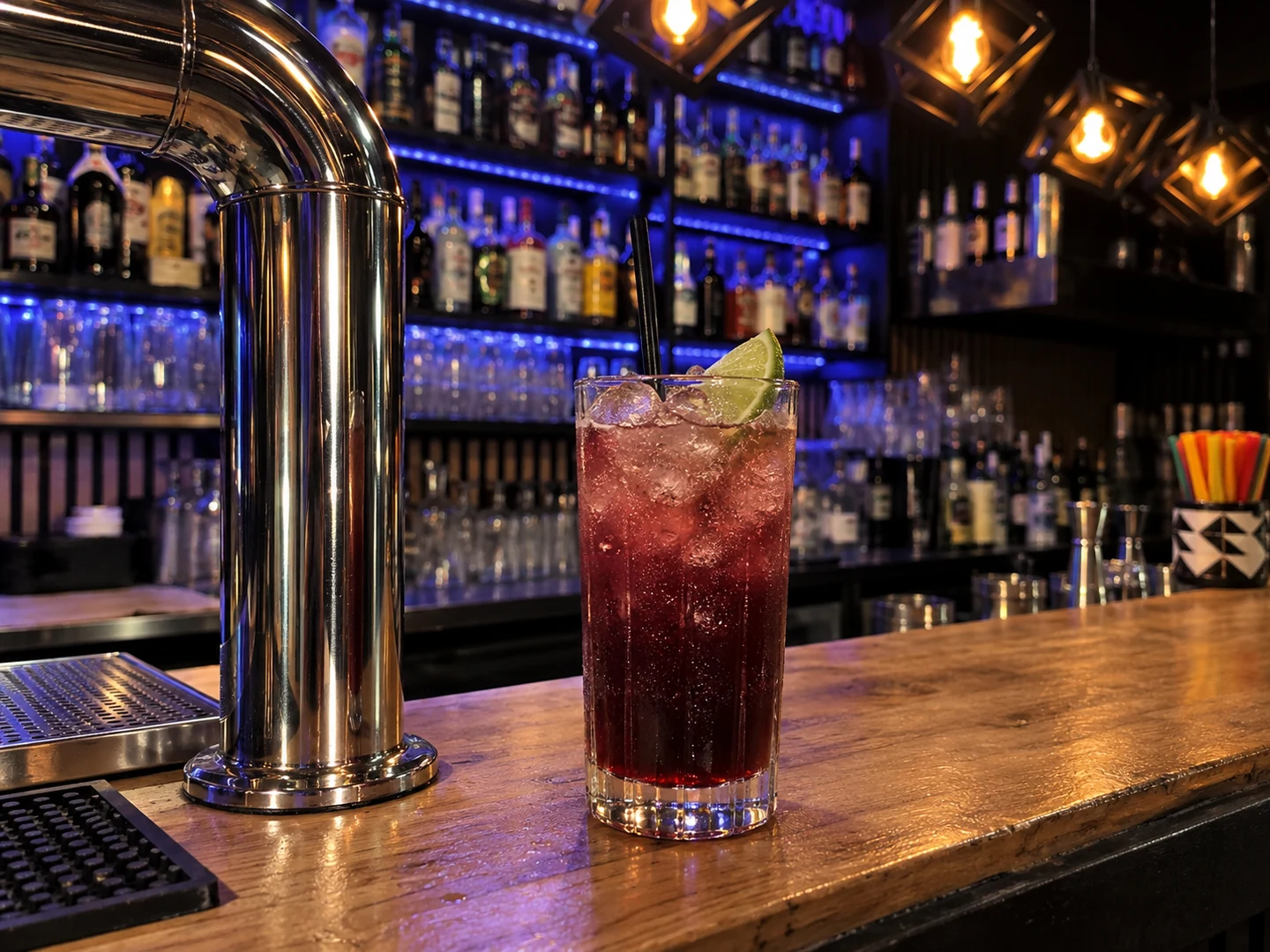
Tequila, crème de cassis, lime, ginger beer.
Black cassis, sharp ginger and tequila. A dark, lively long drink.
Black cassis, sharp ginger and tequila. A dark, lively long drink.
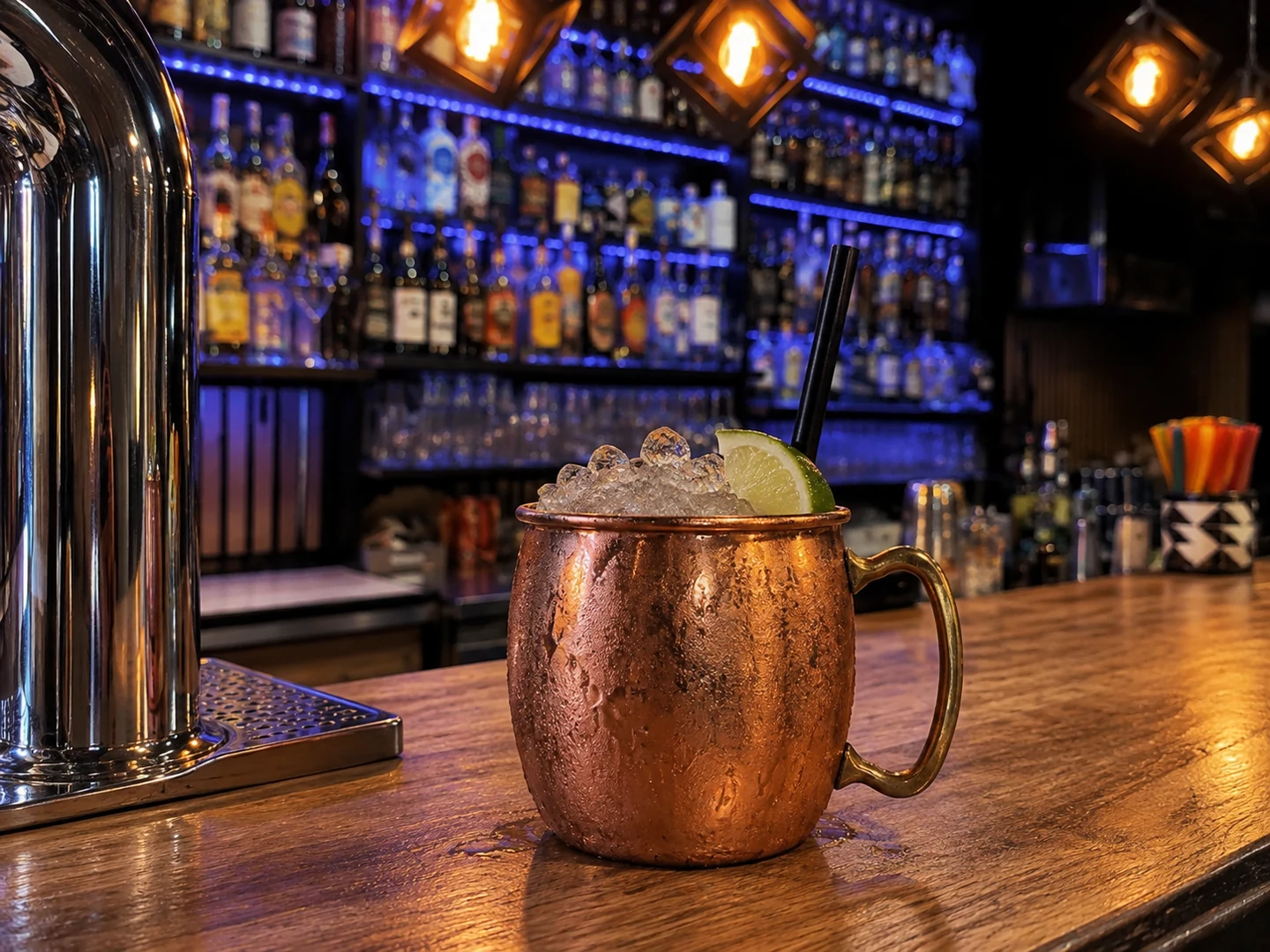
Tequila, ginger beer, lime.
The Moscow Mule in a tequila version. More herbal, warmer.
The Moscow Mule in a tequila version. More herbal, warmer.
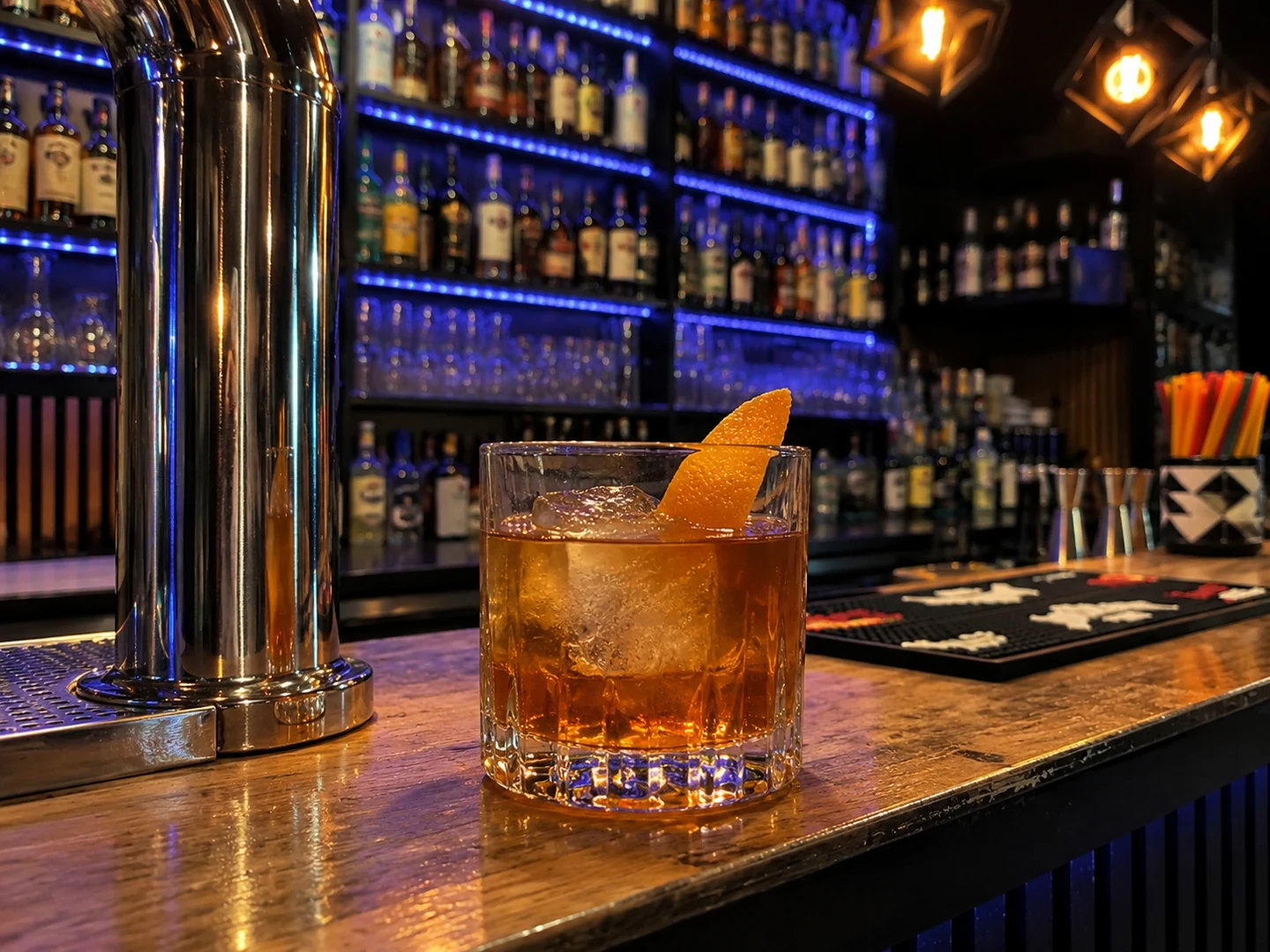
Reposado tequila, mezcal, agave, mole bitters, orange peel.
A Mexican Old Fashioned. Smoky, vegetal, structured.
A Mexican Old Fashioned. Smoky, vegetal, structured.
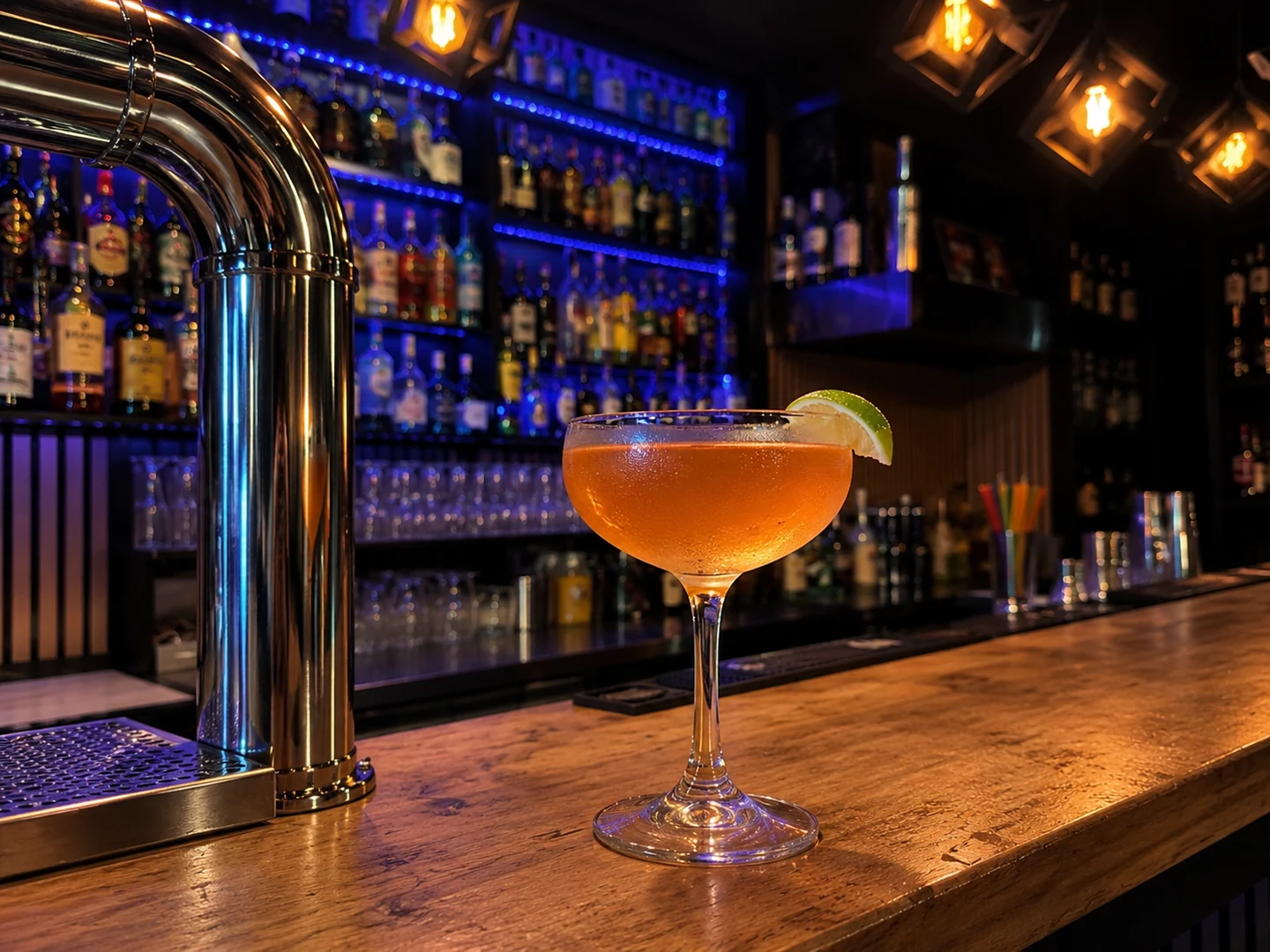
Mezcal, Aperol, Yellow Chartreuse, lime.
A modern equal-parts: smoke, yellow herbs and citrus. Turned cult.
A modern equal-parts: smoke, yellow herbs and citrus. Turned cult.
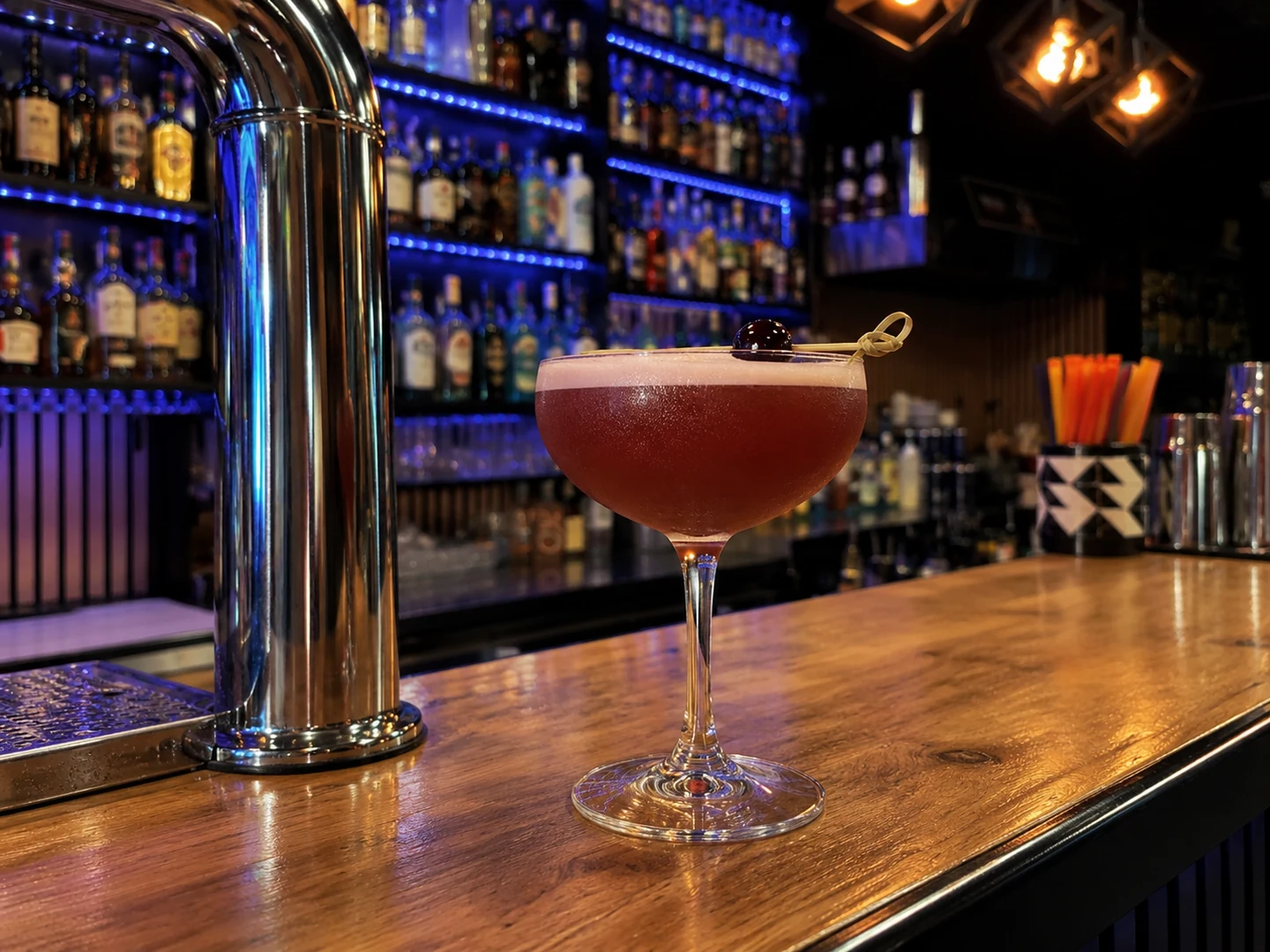
Mezcal, Aperol, maraschino, lime.
A dark sour of cherry and smoke. Balanced between bitter and sweet.
A dark sour of cherry and smoke. Balanced between bitter and sweet.
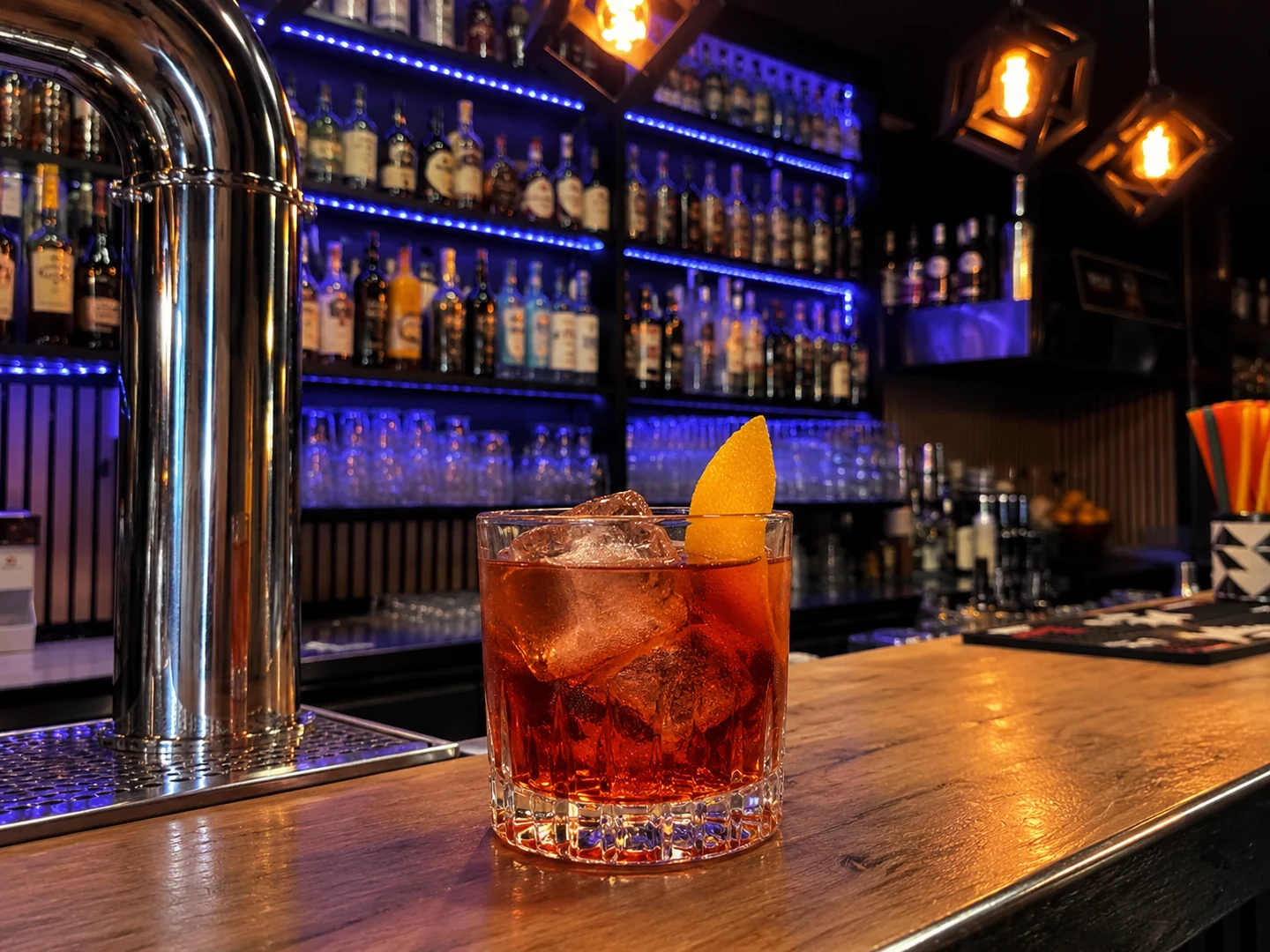
Mezcal, Campari, red vermouth, orange peel.
A smoky Negroni. Same skeleton, different soul.
A smoky Negroni. Same skeleton, different soul.
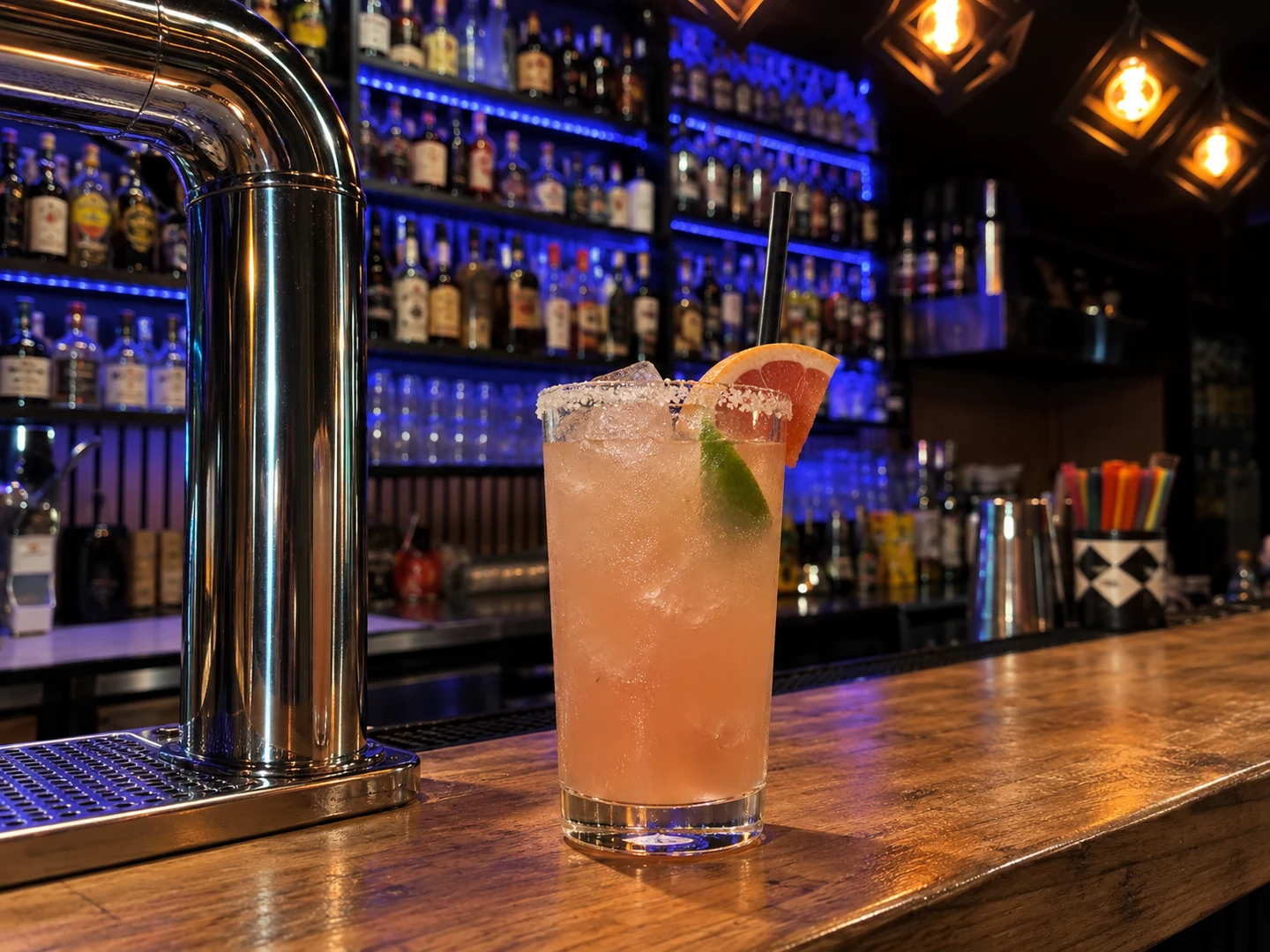
Mezcal, grapefruit soda, lime, salt.
The Paloma gone smoky. Grapefruit, salt and lively mezcal.
The Paloma gone smoky. Grapefruit, salt and lively mezcal.
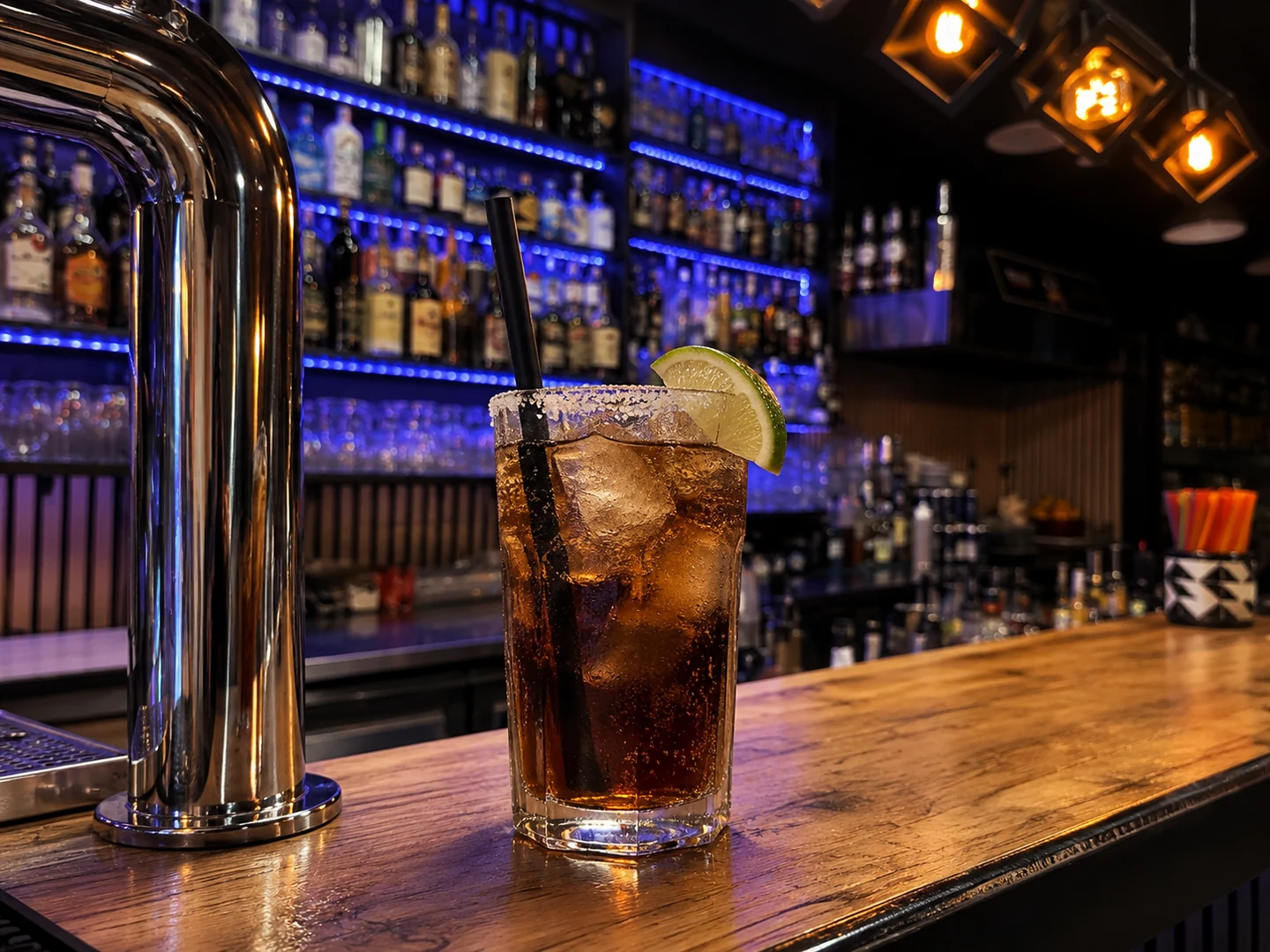
Blanco tequila, cola, lime, salt.
Tequila and cola with salt and lime. Simple, Mexican, perfect.
Tequila and cola with salt and lime. Simple, Mexican, perfect.
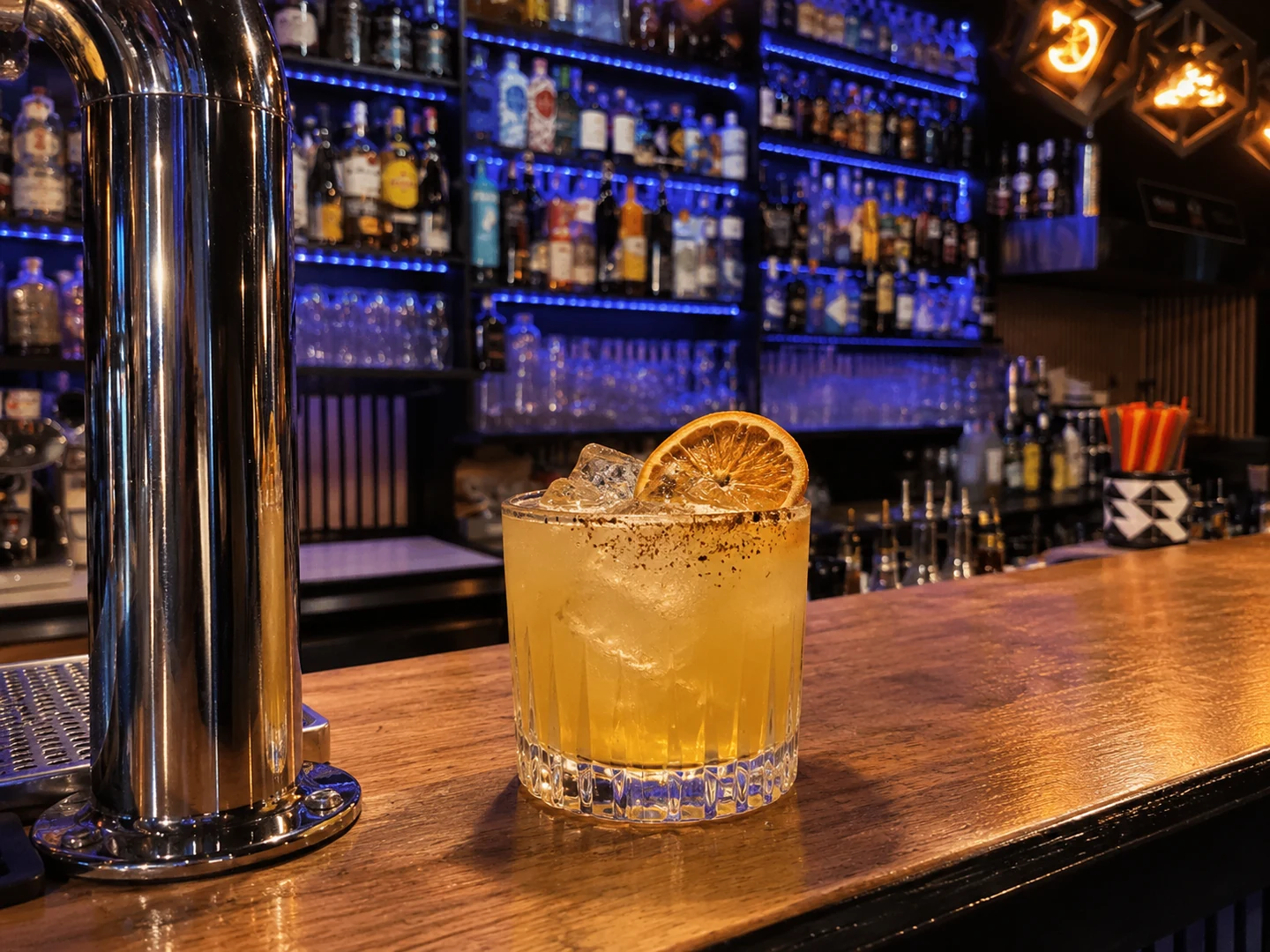
Mezcal, fresh citrus, agave, aromatic bitters, smoked salt.
Golden citrus and mezcal smoke. Fresh, saline, bright.
Golden citrus and mezcal smoke. Fresh, saline, bright.
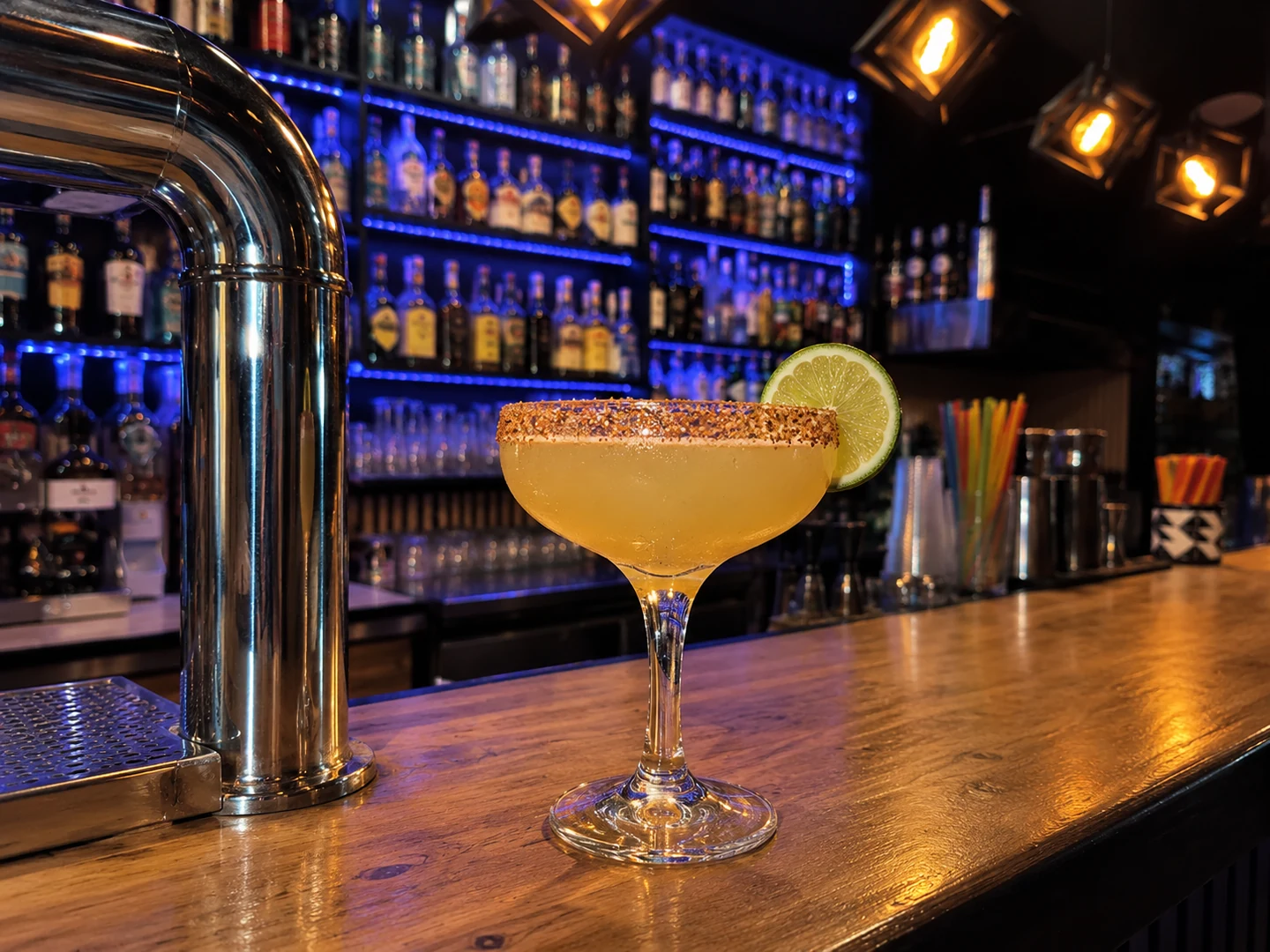
Tequila, lime, triple sec, masala syrup, spiced salt.
A spiced Margarita of citrus and masala. Warm, dry, surprising.
A spiced Margarita of citrus and masala. Warm, dry, surprising.
 8 items
 Real cocktails, zero alcohol: same care, same time at the bar, same respect for the glass.
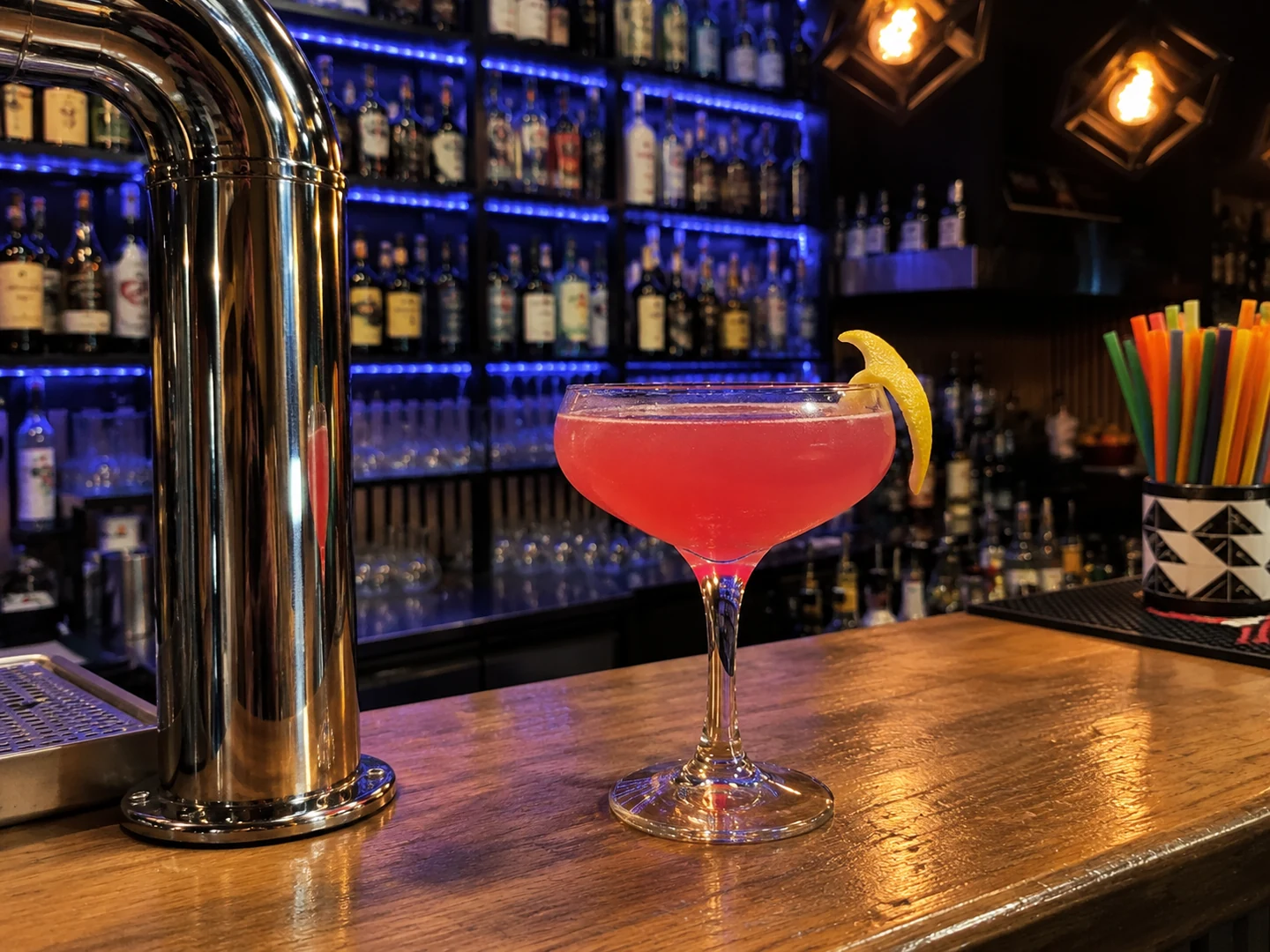
Cranberry, lime, citrus soda, lemon peel.
Neon pink, clean acidity. The Cosmopolitan that never asks for ID.
The Cosmopolitan took over New York in the nineties; this version keeps the iconic colour and citrus profile without a drop of alcohol. Cranberry and lime do the heavy lifting, citrus soda keeps it light. At Jimmy it's the drink for anyone who wants to stay on the floor without giving up the cocktail-bar look.
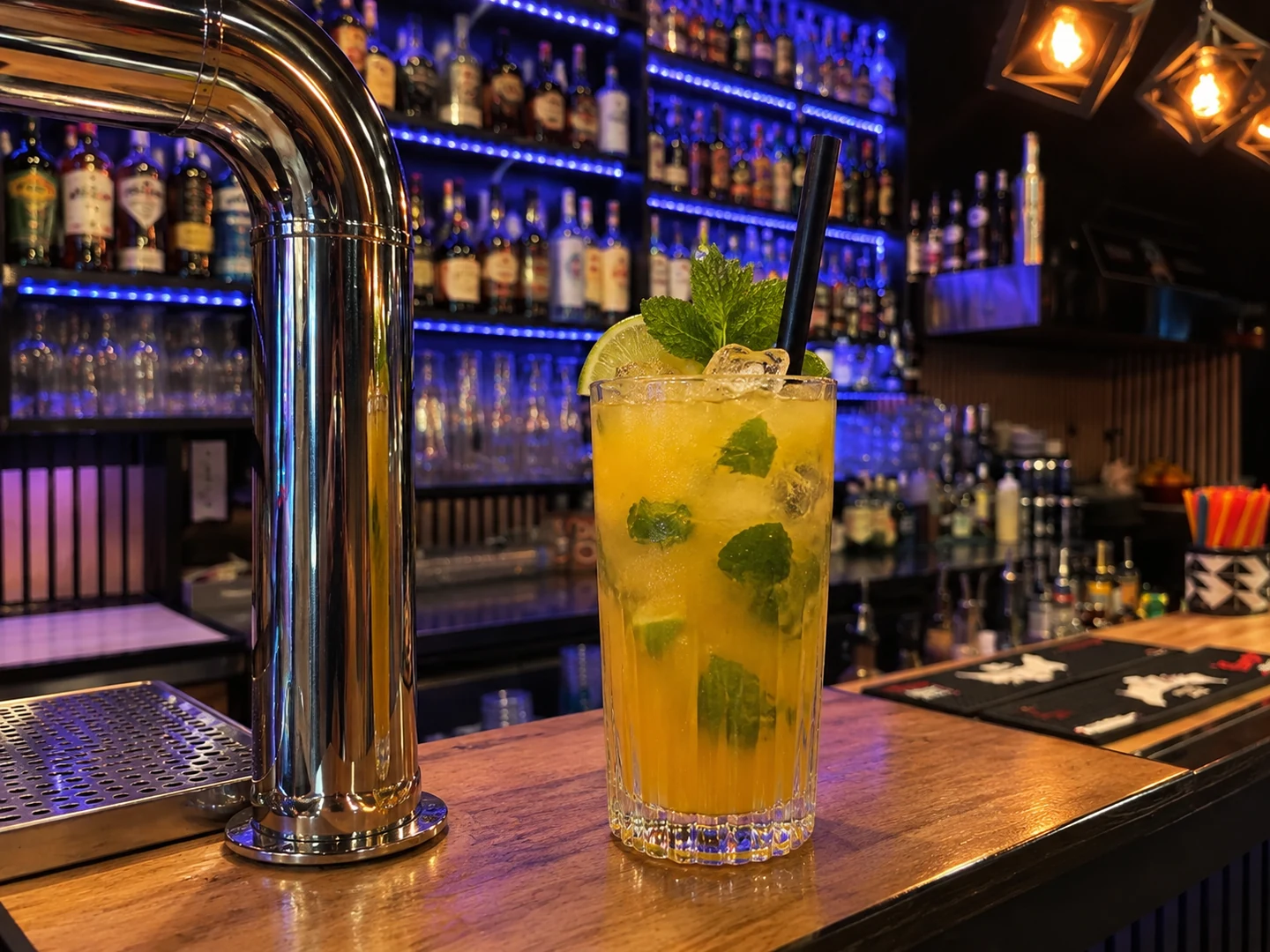
Mango pulp, mint, lime, soda.
Ripe mango and bruised mint. Tropical, fresh, zero proof.
The mint gets bruised in the glass, not dropped in for decoration — it releases essential oils that ripe mango amplifies rather than hides. Lime cuts the sweetness before it turns cloying. The drink you order when it's hot outside and you want to pretend you're further south.
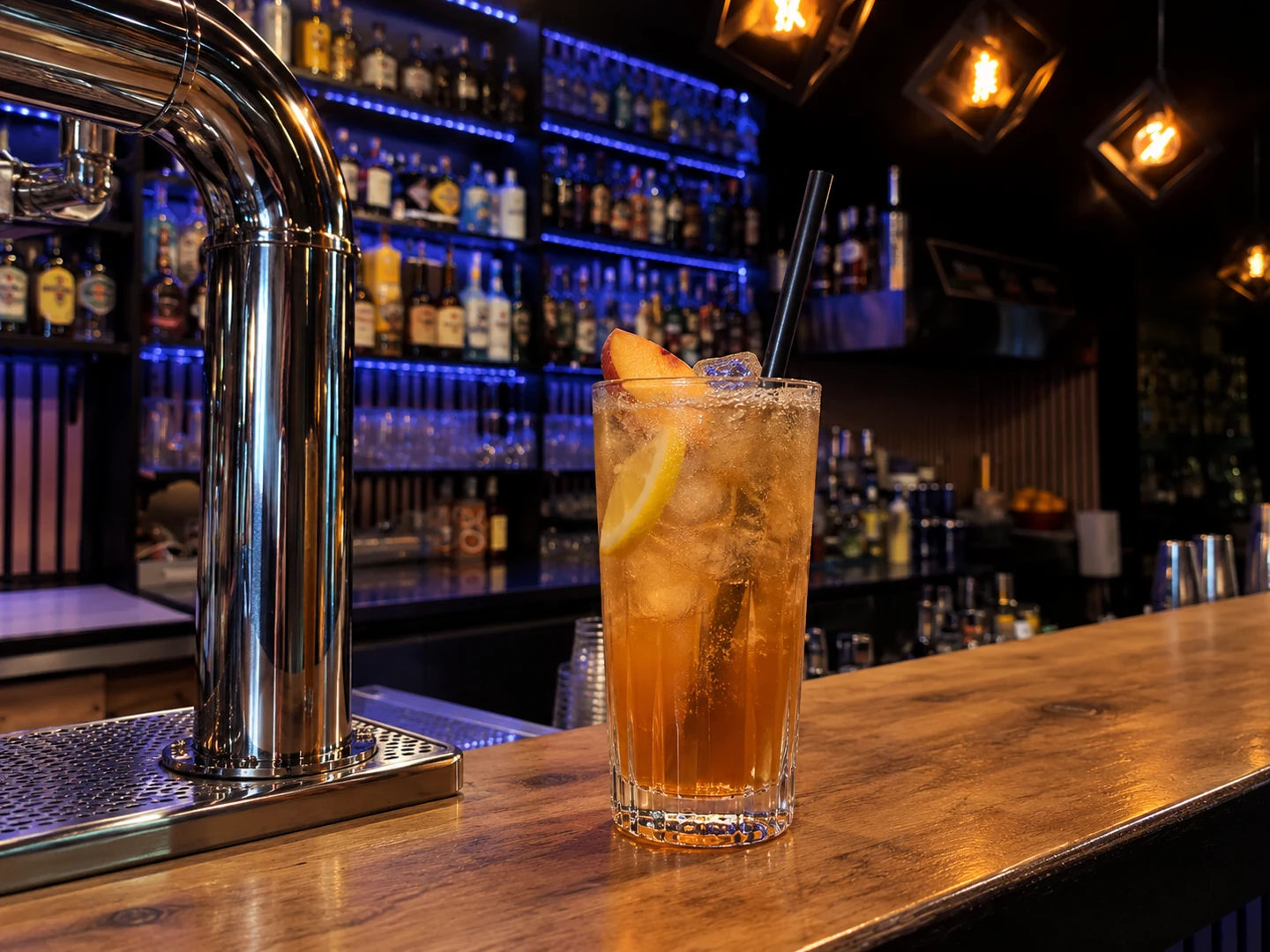
Black iced tea, peach, lemon, soda.
Iced tea, juicy peach and fizz on top. A comfort drink with character.
Cold black tea brings tannins and structure; ripe peach adds softness without over-sweetening. The fizz on top isn't a trick — it separates the textures and makes every sip feel lighter. Built for anyone who wants something familiar but not boring.
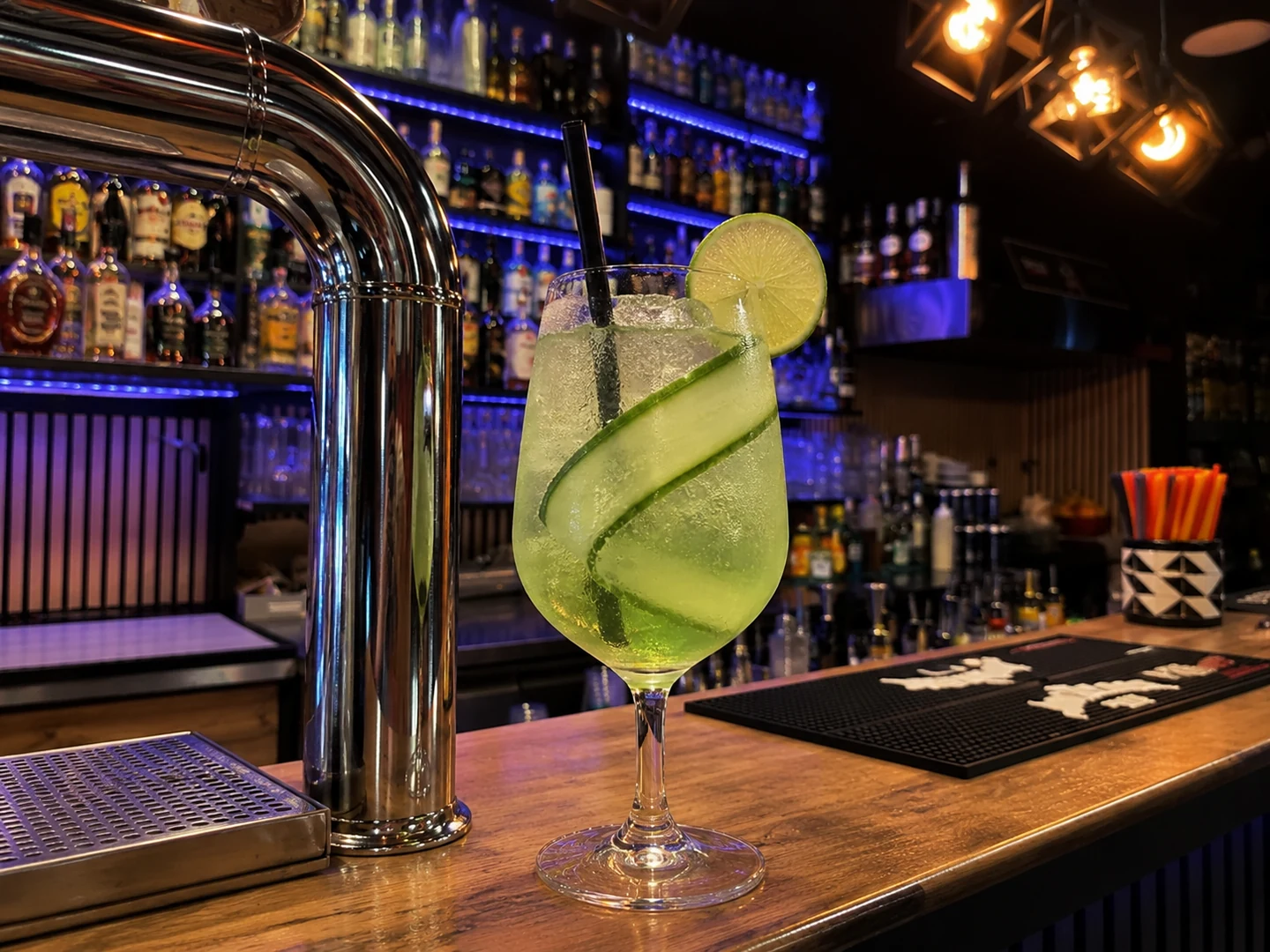
Cucumber, lime, soda, cucumber tonic.
Green, dry, thirst-quenching. The alcohol-free spritz for dry-profile lovers.
Sliced cucumber and cucumber tonic build a vegetal profile that lime keeps sharp, not floral. The anti-sweet spritz: no sugar blanket, just freshness and a light bitter edge. Perfect as a zero-proof aperitivo or a reset between rounds.
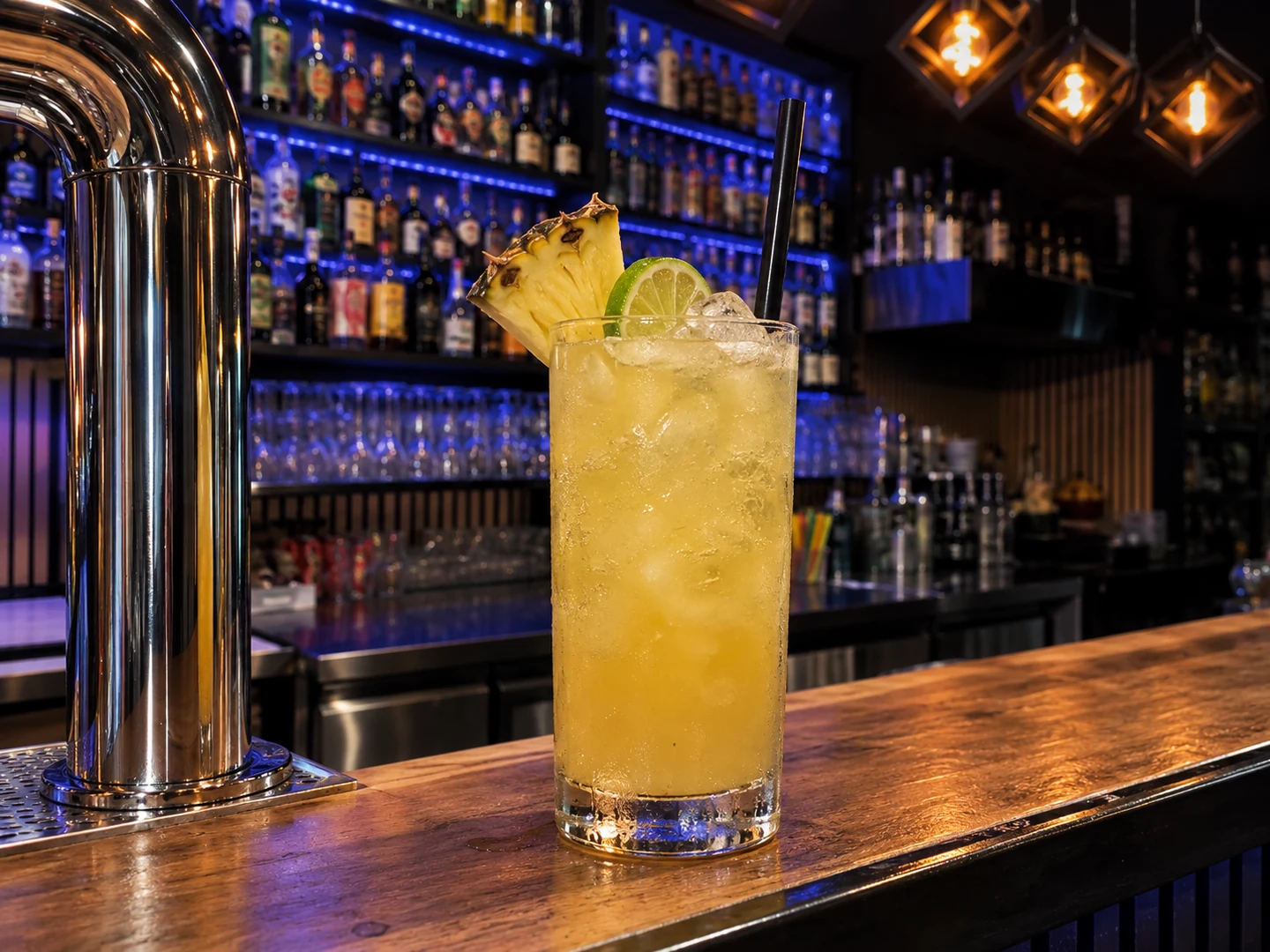
Pineapple, fresh ginger, lime, soda.
Muddled ginger, tropical pineapple. Spicy and sweet in balance.
Ginger gets muddled, not sliced — so the heat comes through immediately and pineapple doesn't have to fight whole chunks. Lime closes with clean acidity, soda lightens the whole thing. The drink that wakes up your palate without alcohol — useful when the night is long but you want to stay sharp.
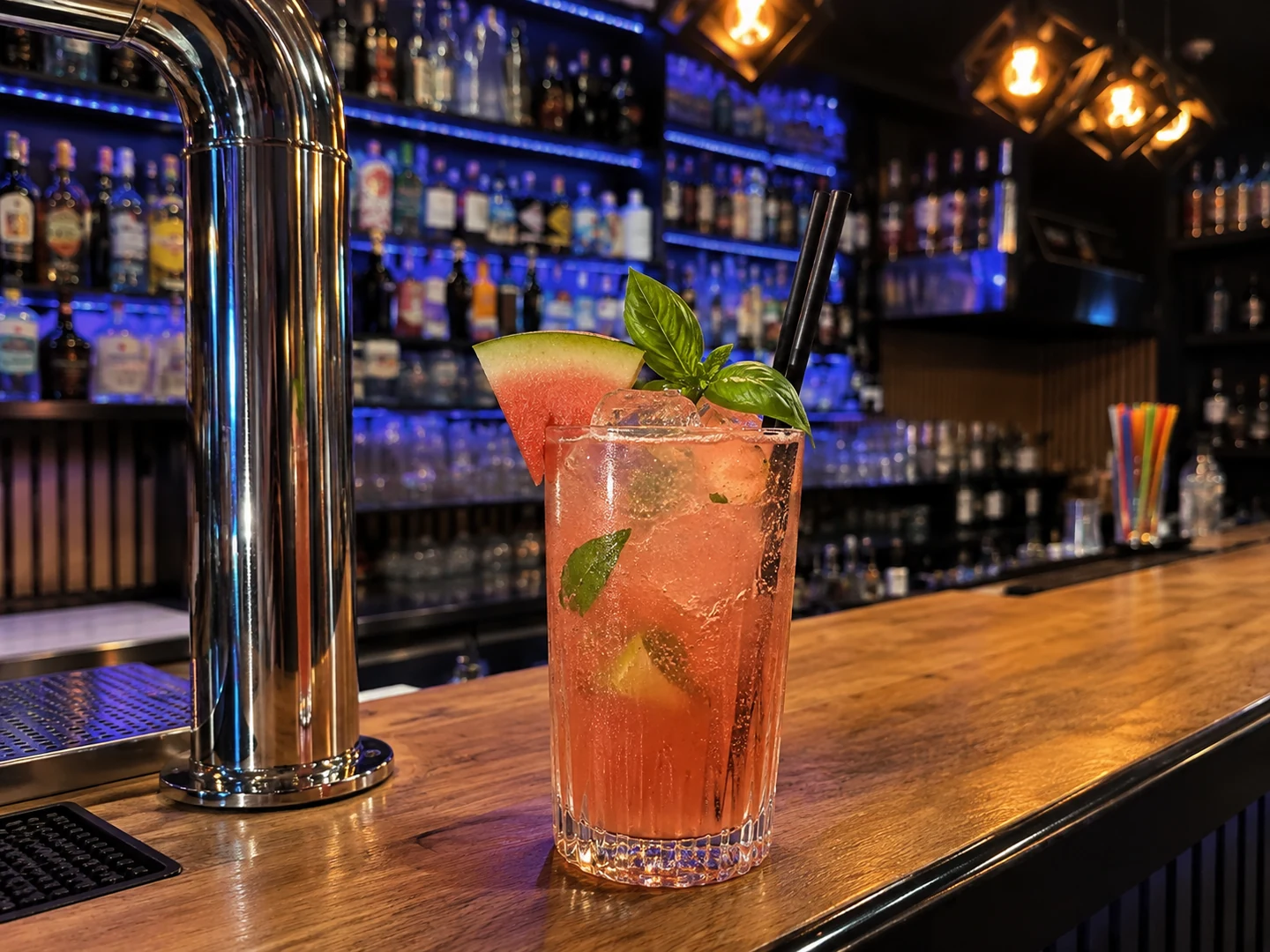
Watermelon, lime, basil, soda.
Fresh watermelon and basil. Liquid summer, light and immediate.
Watermelon brings ninety percent water and natural sweetness; basil adds an herbal note that stops it tasting like juice box. Lime keeps everything in balance. The drink that works best when it's hot outside and you want something that doesn't weigh you down.
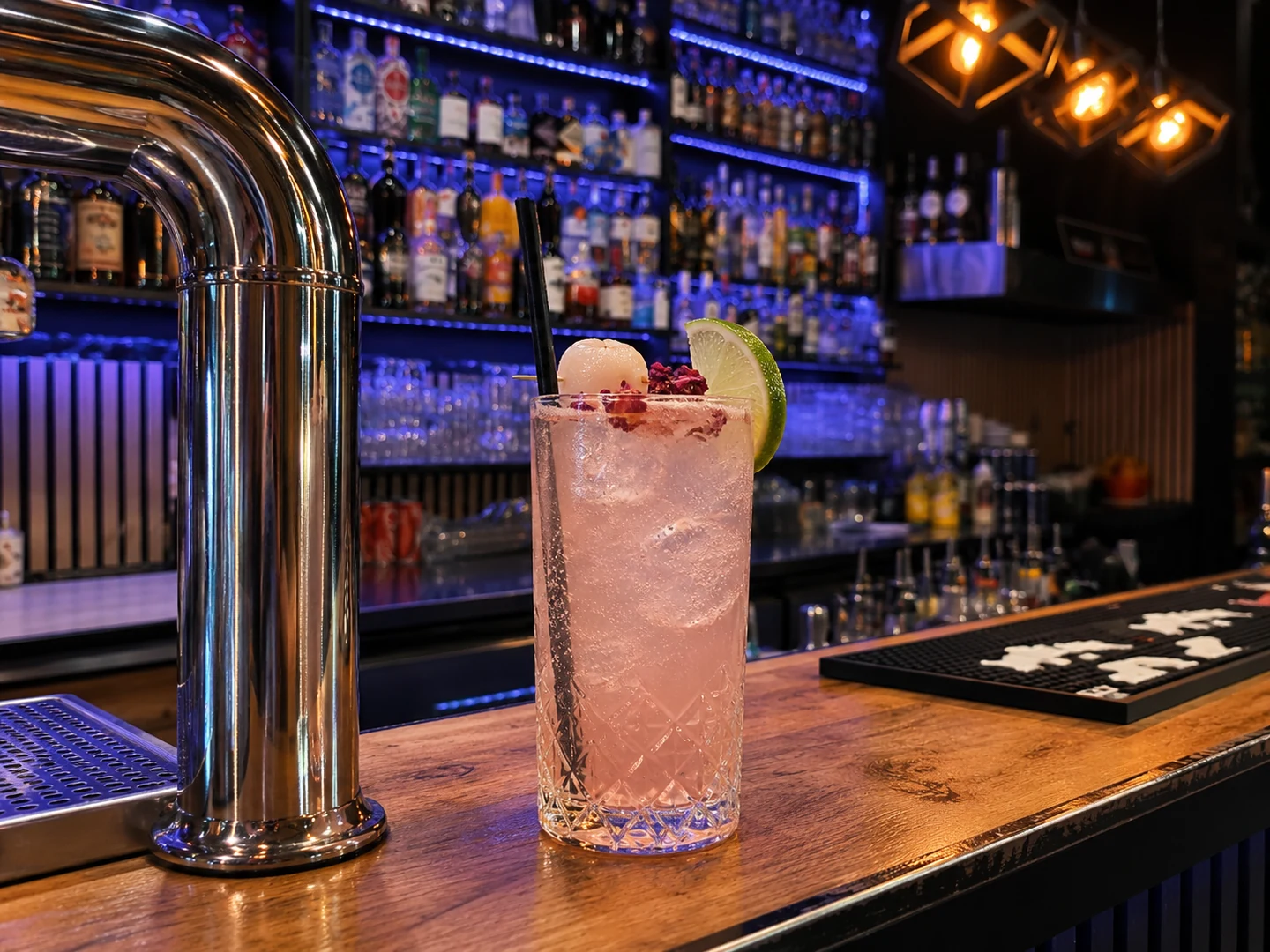
Lychee, rose water, lime, soda.
Sweet lychee, floral rose, gentle fizz. Jimmy's signature zero-proof.
Lychee has an exotic profile that rose water amplifies without turning it into perfume — lime keeps it grounded. One of the few zero-proof drinks that holds its own against the cocktail list. We flagged it because people who try it usually order it again.
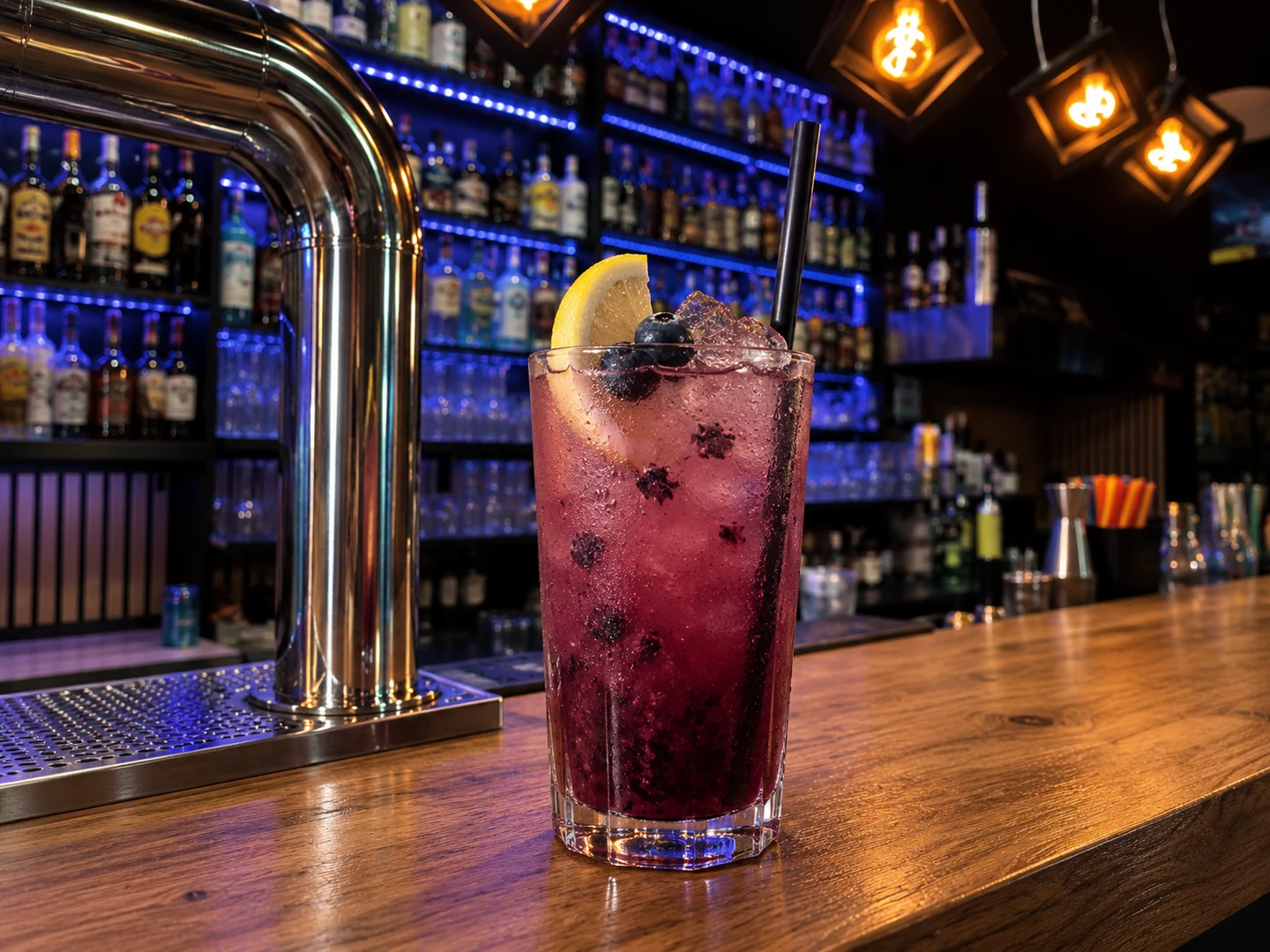
Blueberries, lemon, sugar, soda.
Muddled blueberries, sharp lemon. Violet lemonade that isn't childish.
Blueberries get muddled to release colour and juice; lemon cuts the sweetness before it turns syrupy. Soda on top makes it more drinkable than flat lemonade. The summer classic rewritten for a bar — not too sweet, not too sharp.
 7 items
 Herbs, roots and citrus: to close the meal or restart the night with character.
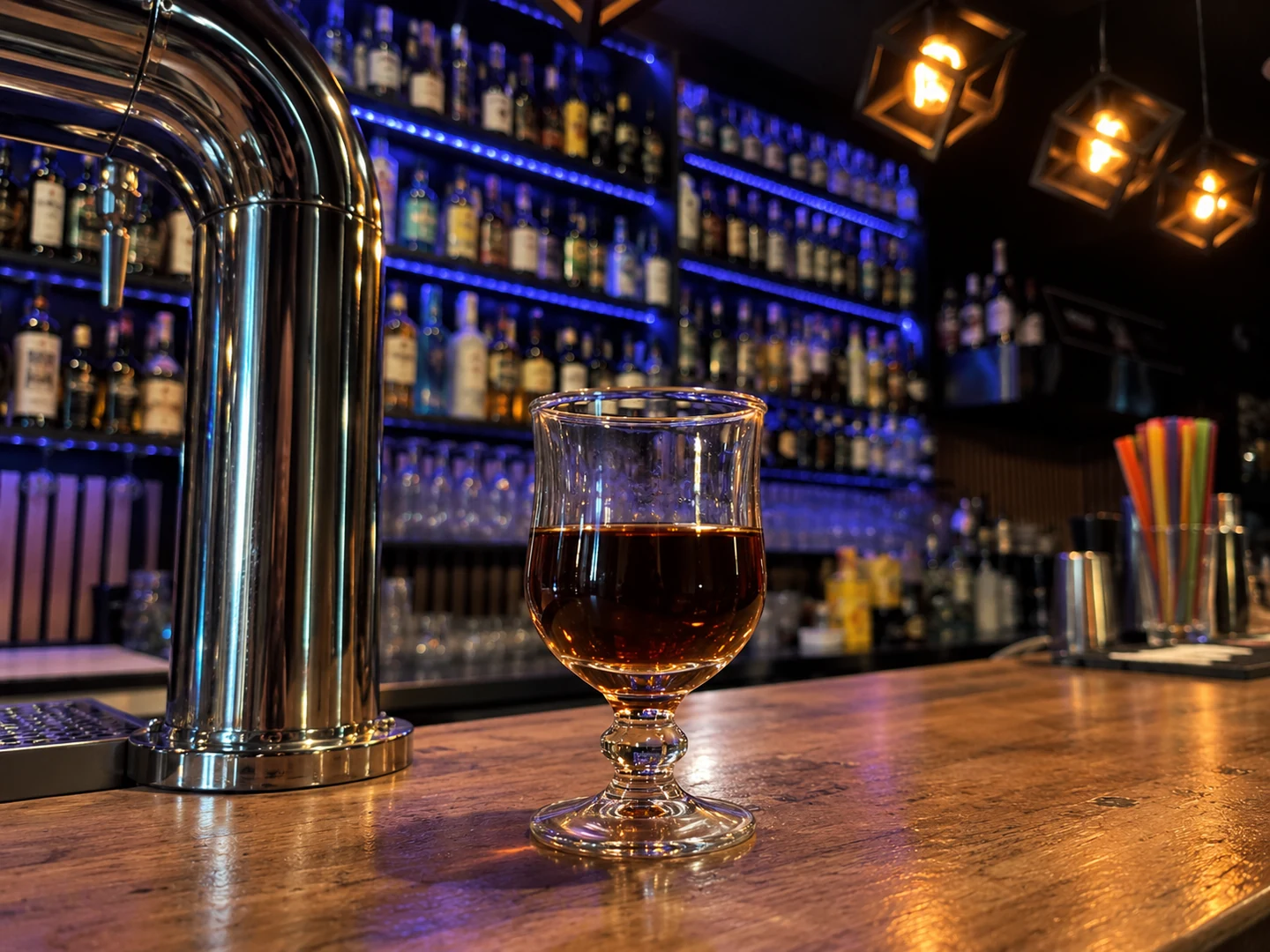
Sicilian amaro, balanced sweet-bitter. The nightcap that never disappoints.
Born in Sicily in 1868, Averna started as a monastic recipe a friar gave to a merchant in Caltanissetta. Dark citrus, Mediterranean herbs and a soft finish made it Italy's most recognisable amaro. At Jimmy we pour it neat or on ice — always cold.
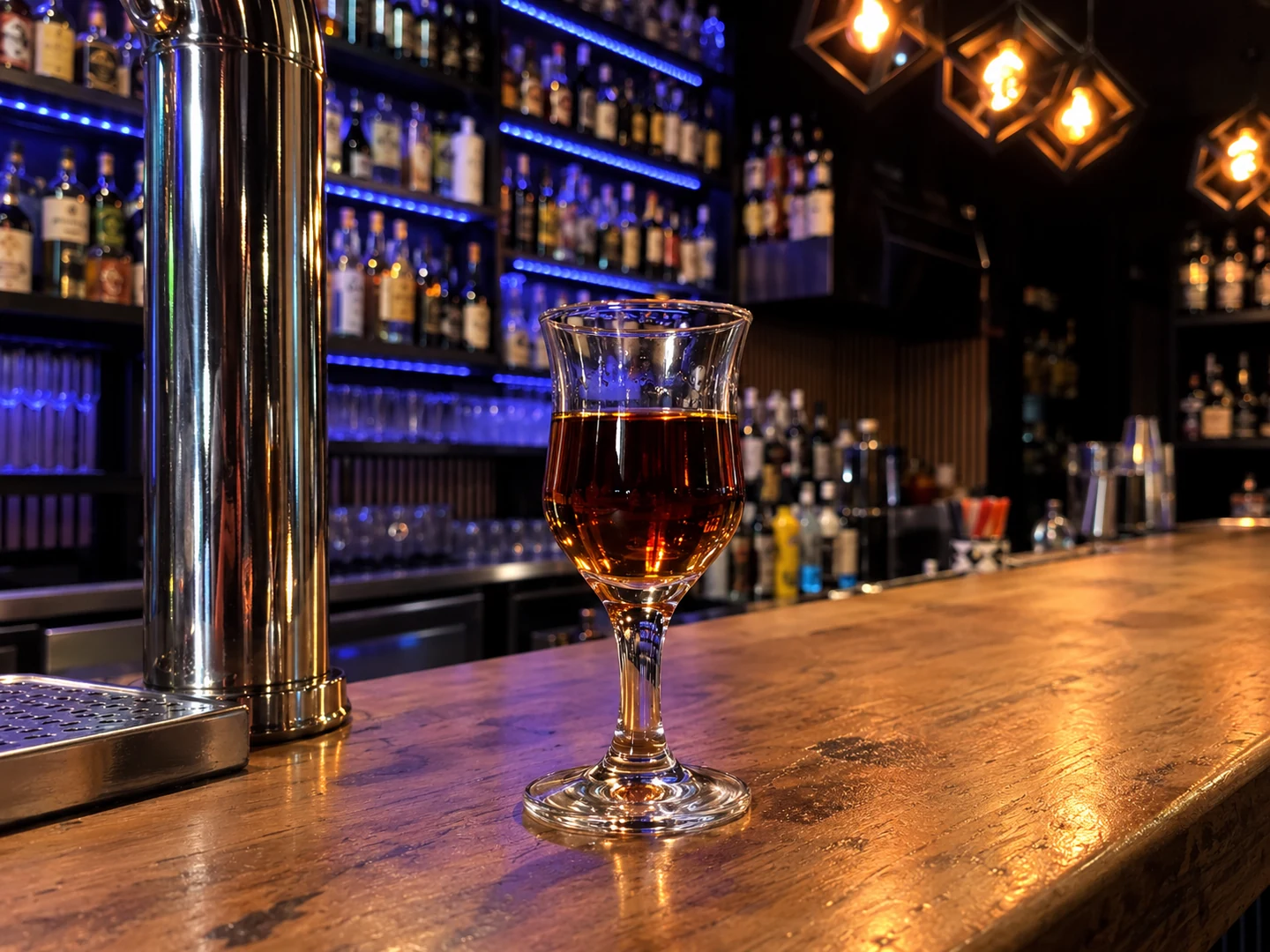
Bologna's amaro by definition. Floral, light, drinkable all evening.
Made in Bologna since 1885, Montenegro is the city's amaro: less aggressive than Fernet, more elegant than Averna, with a floral profile that never tires. Stanislao Cobianchi created it by blending over forty botanicals. At Jimmy it's a signature because on Via Petroni, this is home turf.
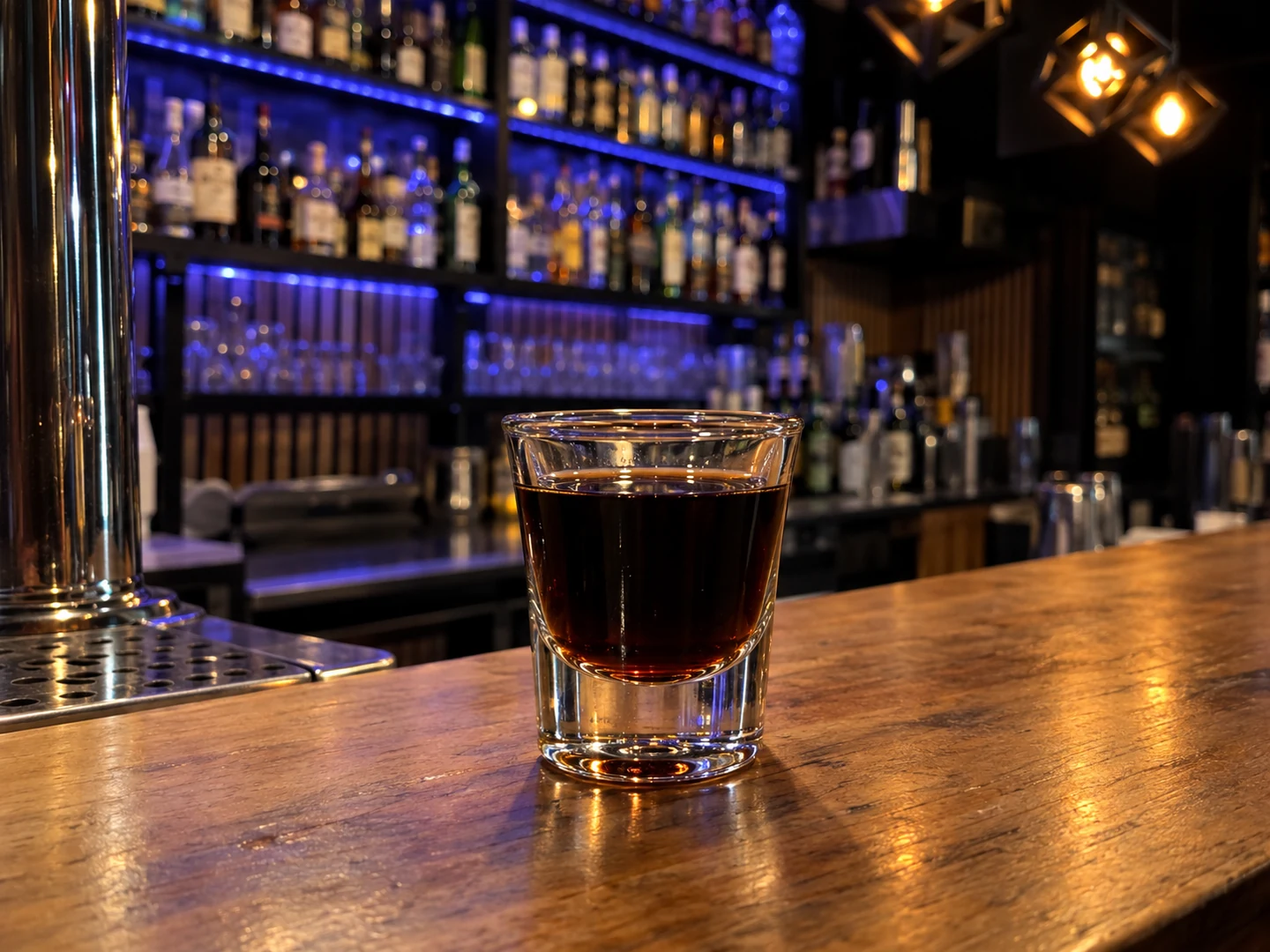
Minty, relentless, long finish. The shot that closes the night.
Fernet-Branca has existed since 1845 and the recipe is still secret: herbs, roots and a menthol hit that clears everything that came before. In Argentina they drink it with cola; in Italy neat or iced after dinner. At Jimmy we serve it cold — the amaro for people who aren't afraid of bitter.
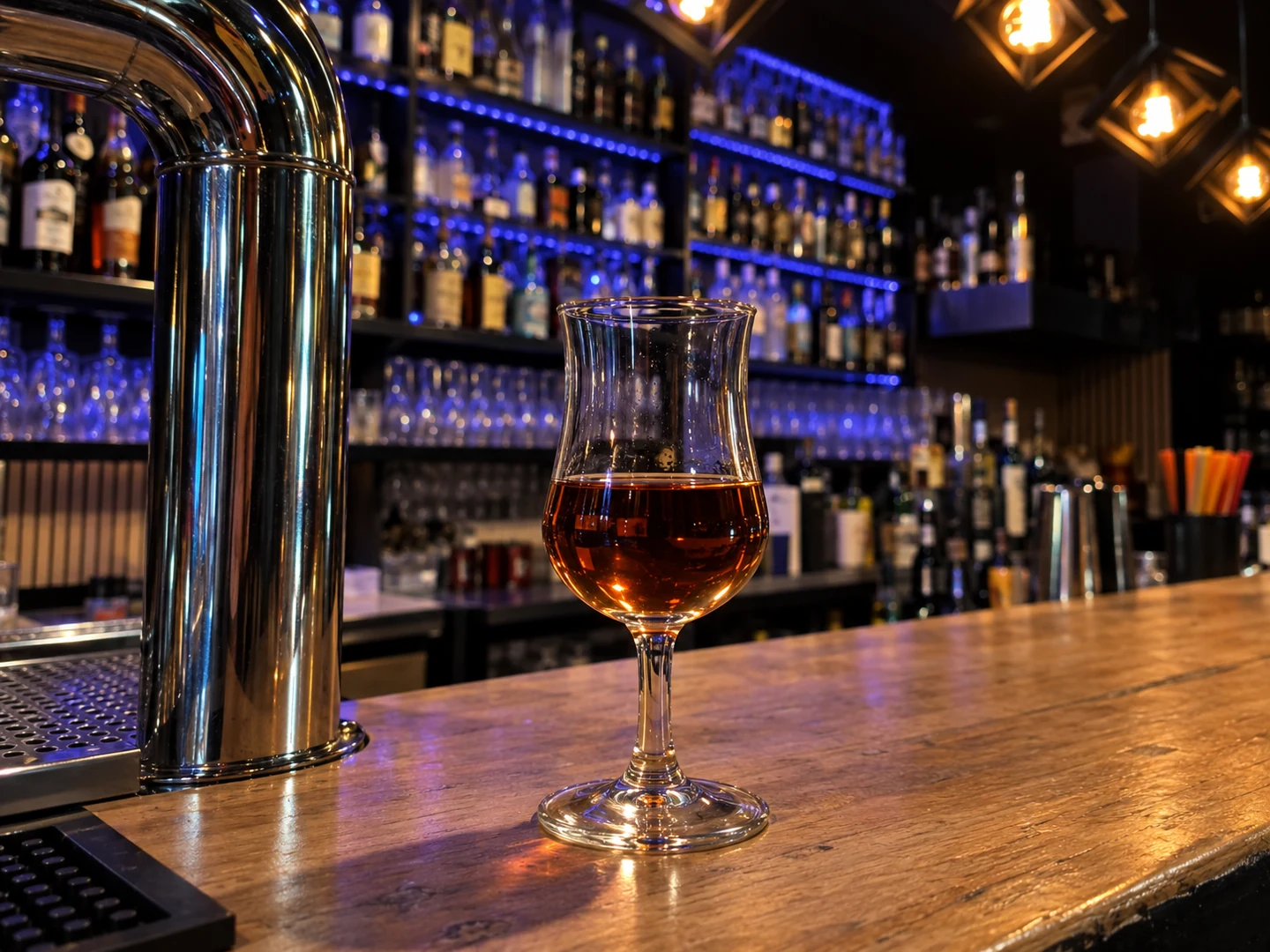
From Friuli, grappa-based, citrus and spice. Elegant, contemplative.
Antonio Nonino launched it in the seventies from a picolit-grape grappa: a more refined amaro, less rustic, with citrus and spice that unfold slowly. One of the most awarded amari in the world. At Jimmy we keep it in premium because it deserves time and attention.
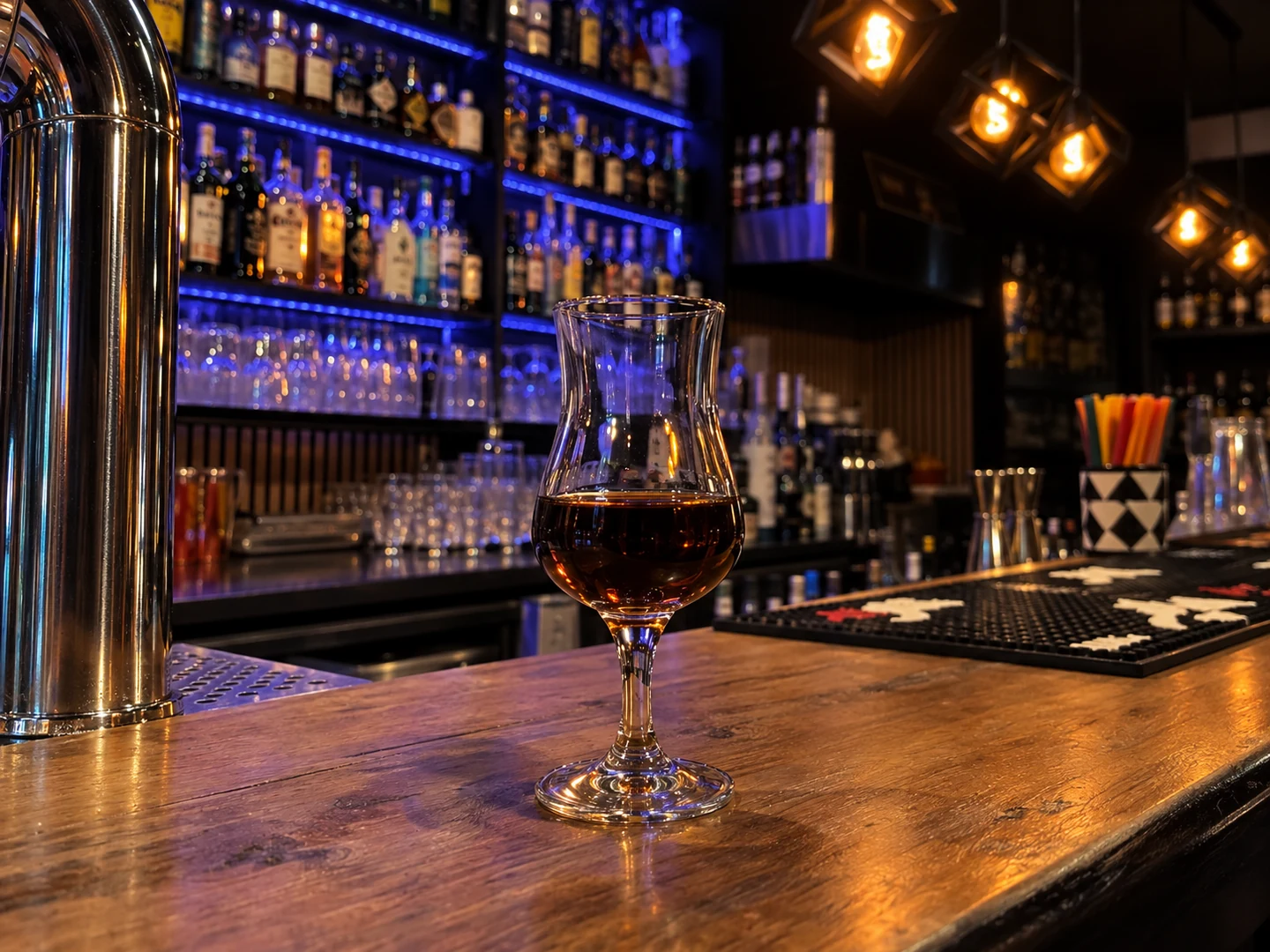
Calabrian, freezer-cold. Southern herbs, solid ice, clean finish.
Amaro del Capo comes from Calabria and is meant to be served frozen — literally from the freezer, not just on the rocks. Mint, liquorice and Mediterranean herbs create a fresh profile that extreme cold amplifies. The quintessential summer amaro: sweet-bitter without weighing you down.
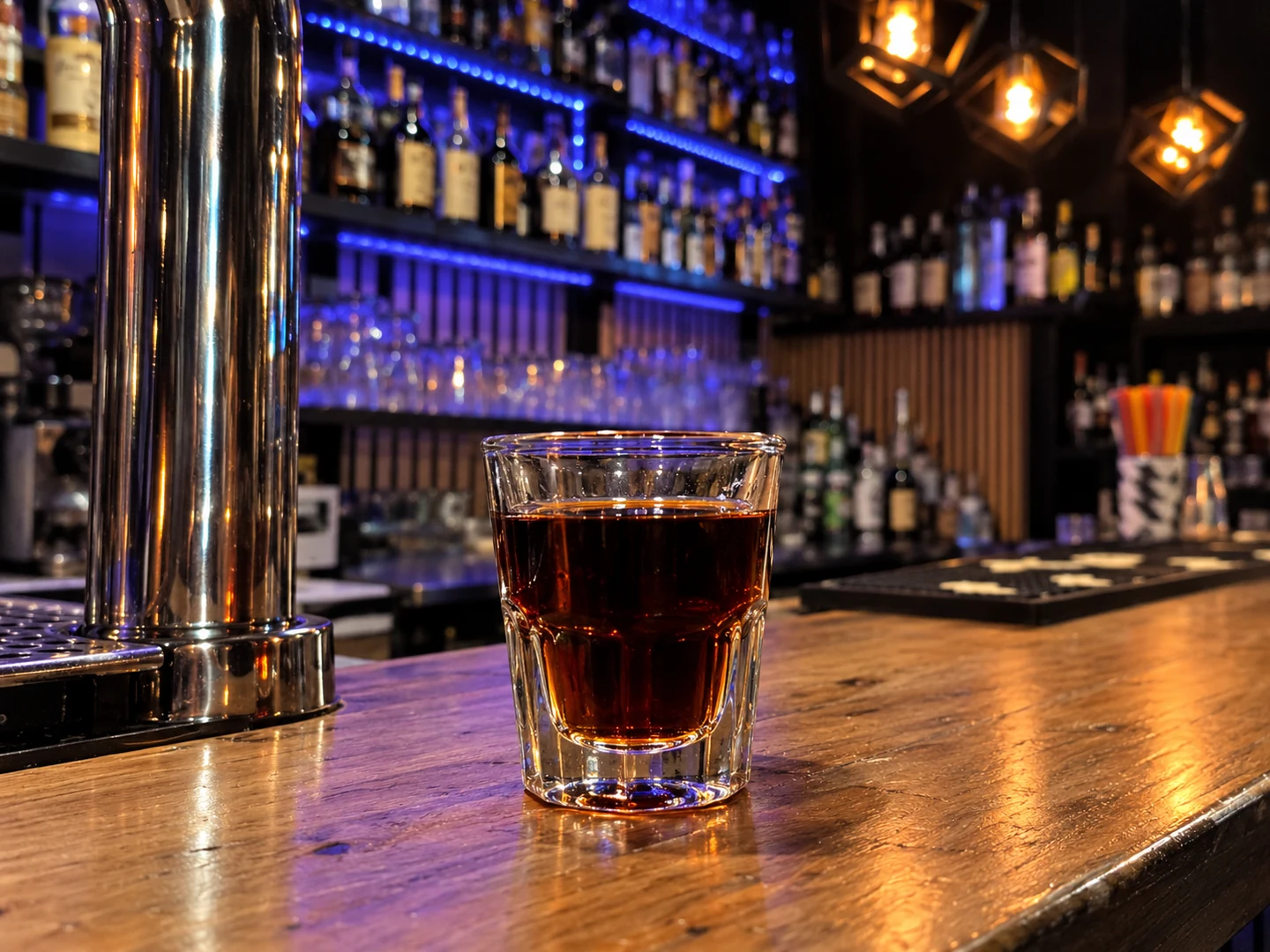
German dark herbs, anise, cold finish. The amaro that took over clubs.
Jägermeister was born in 1934 in Germany from a recipe of fifty-six herbs and spices — the name means 'master hunter'. Its anise profile and menthol finish made it Europe's most-requested shot. At Jimmy we serve it ice-cold, neat or in a Fernandito.
Fernet-Branca, cola, ice, optional lime.
Fernet and cola. The Argentinian long drink that went global.
The Fernandito — or Fernet with cola — is Argentina's national drink: bitter Fernet, dark cola, full ice, optional lime. In Argentina they drink it at lunch, dinner and after; the bitter-sweet ratio is deliberate. At Jimmy we pour it generous — the most approachable way into Fernet.
 13 items
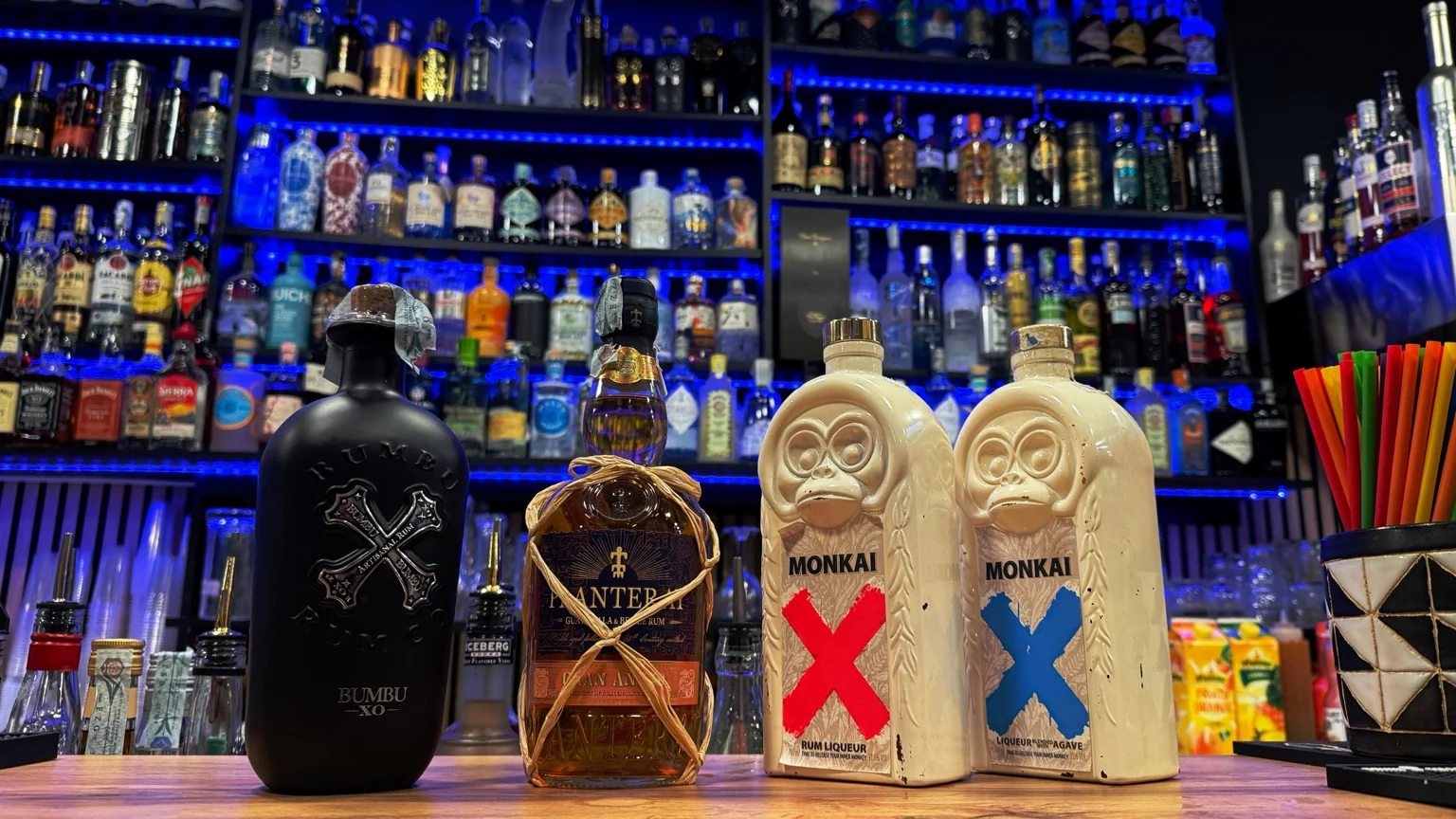
 500+ labels on the wall: gin, vodka, whiskey, rum, tequila, mezcal, amari. Pick the base, we build the drink.
Tap a label for photographs, origins and flavours. Ask the bar about availability, price and serving options.
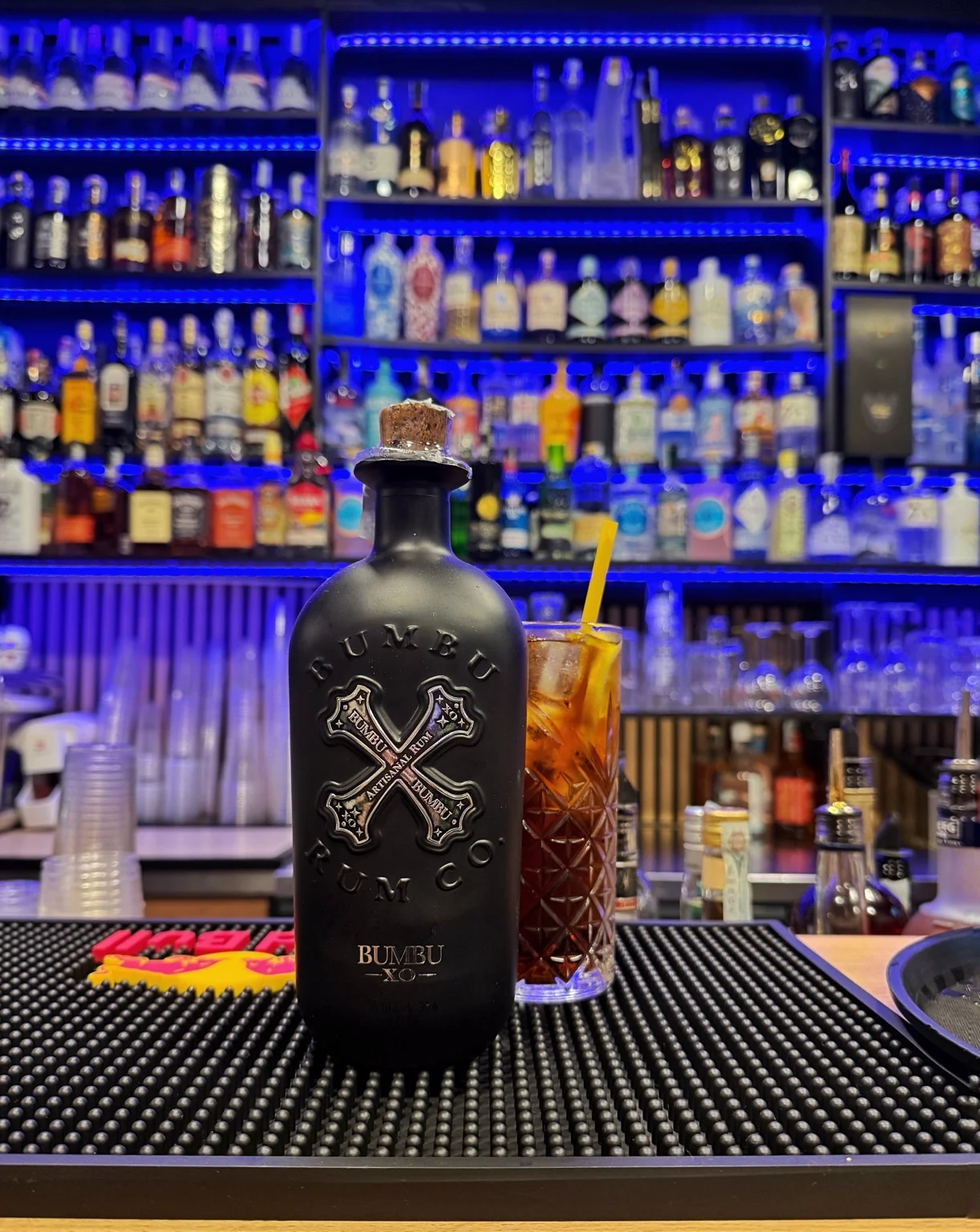
Toffee · Orange · Spice
Explore this bottle ↗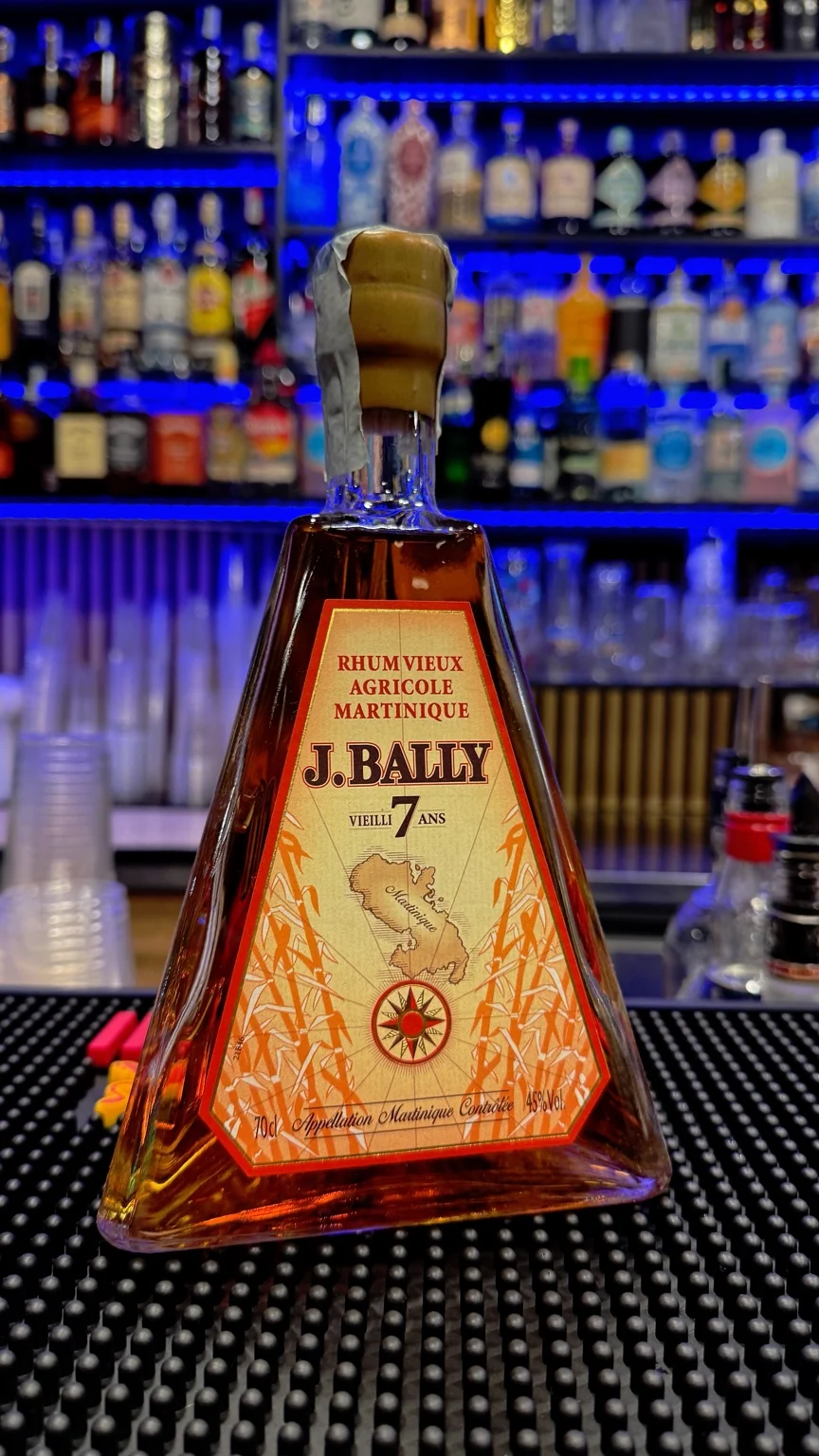
Grassy · Fruity · Oak
Explore this bottle ↗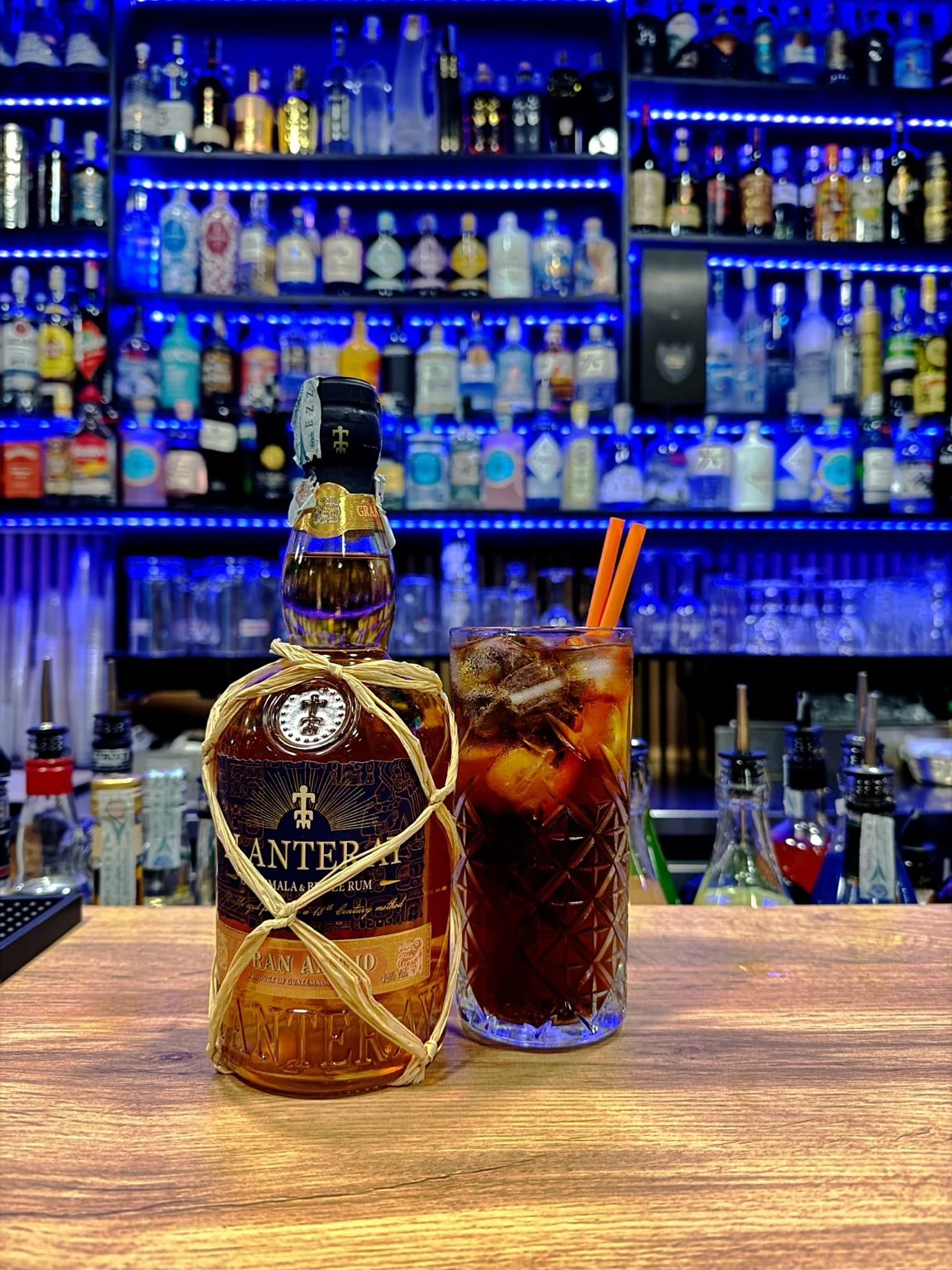
Ripe fruit · Plum · Wood
Explore this bottle ↗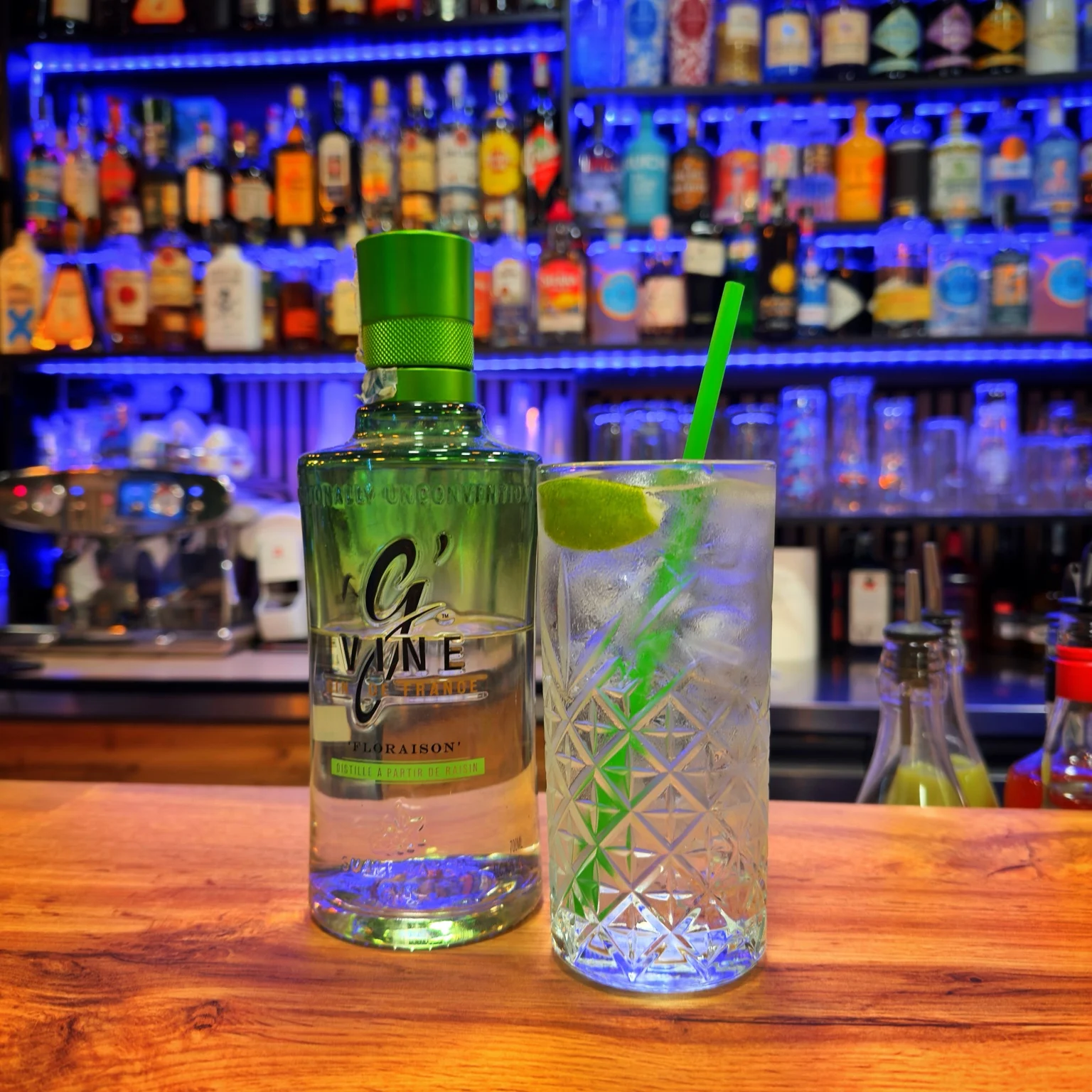
Grape · Floral · Juniper
Explore this bottle ↗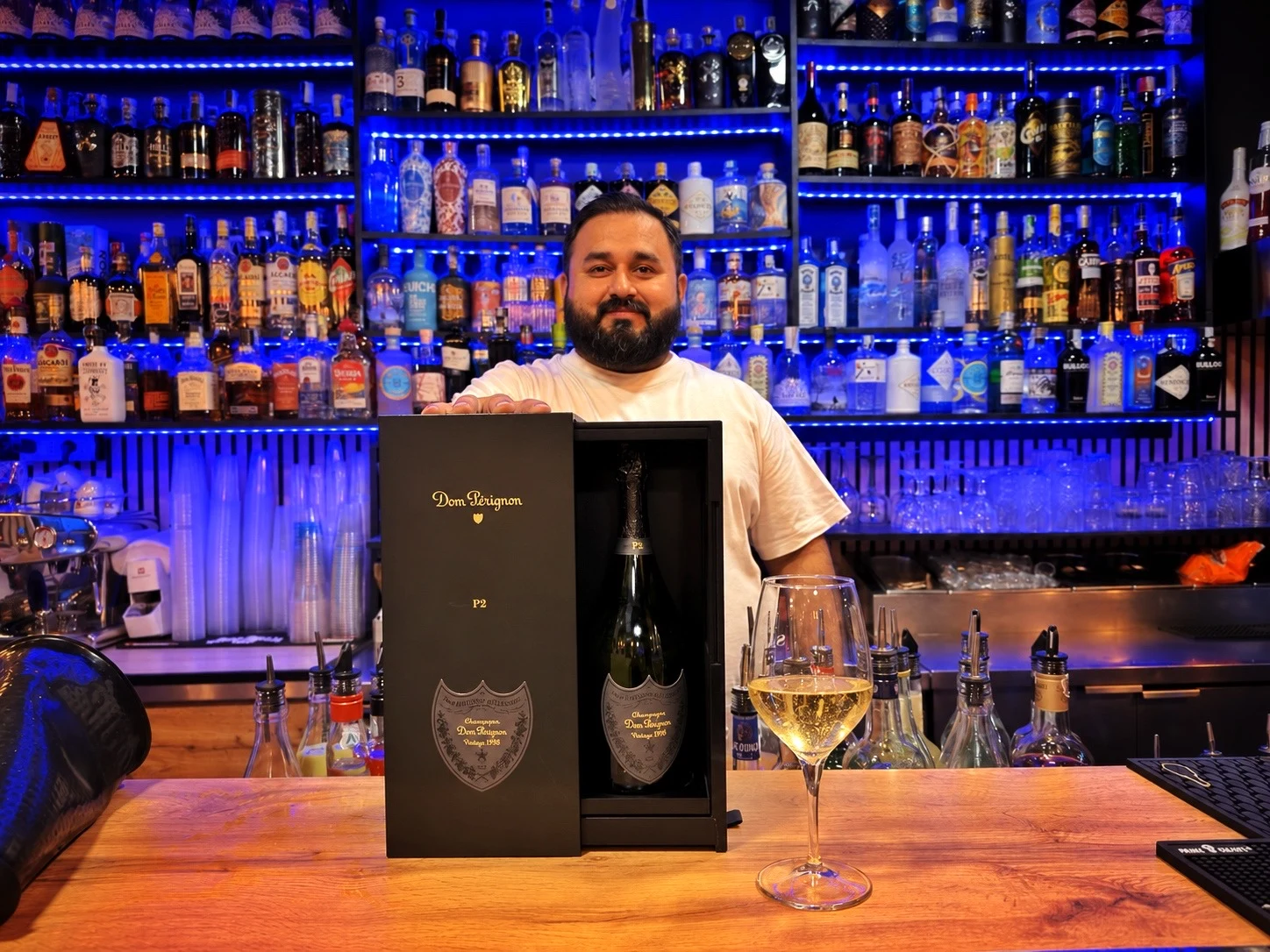
Floral · Ripe fruit · Almond
Explore this bottle ↗Vanilla · Fudge · Soft
Explore this bottle ↗Caramel · Vanilla · Coffee
Explore this bottle ↗ London Dry, Old Tom, Navy Strength, botanical and signature gins.
Over 40 gin labels. Ask the cocktail lab for the right bottle for your drink.
Jimmy's gin wall isn't a display — it's an archive. London Dry for the classic Martini, Old Tom for softer cocktails, Navy Strength for character, botanical and signature gins for Negronis and creative twists. You don't need to know every label: describe the drink you want and we'll guide you.
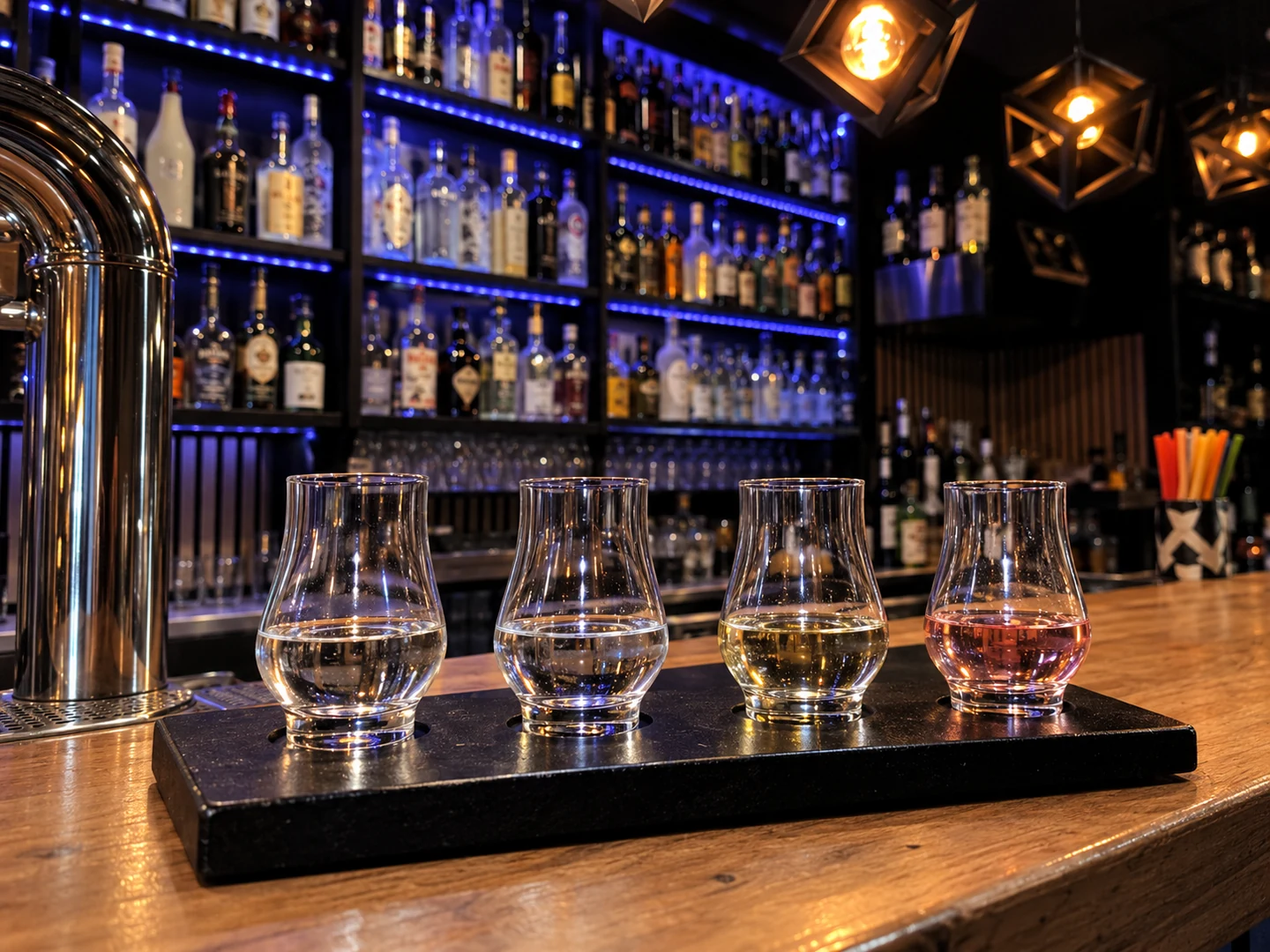
Filtered, potato, crystal and flavoured vodkas.
Clean vodkas for Martinis, Espresso Martinis and premium shots. No aftertaste.
Premium vodka is defined by what it doesn't do: no aftertaste, no alcohol smell, silky texture. Multi-filtered, from potato or grain, crystal or flavoured — each base serves different drinks. Ask the bar which to use for your Espresso Martini or for a shot that doesn't burn.
Bourbon, rye, Tennessee, scotch single malt, blended, peated, Irish.
Jimmy's deepest wall. From smooth bourbon to peat that doesn't forgive.
Sweet bourbon, spicy rye, filtered Tennessee, complex Scotch single malt, approachable blends, peaty Islay, soft Irish — the whiskey selection covers the full spectrum. Neat after dinner, on the rocks, Old Fashioned or Manhattan: the bottle changes the drink. Come to the bar and tell us what you like — we'll take you where you need to go.
White, dark, agricole, spiced, aged and limited-edition rums.
Caribbean, Latin America, Indian Ocean. Neat or in your tropical cocktails.
Premium rum goes beyond the mojito glass: Martinique agricole with vegetal profile, aged dark rums from Jamaica, spiced for punches, limited editions from Mauritius and Guyana. Neat for explorers, in cocktails for serious Daiquiris and Mai Tais. Ask the cocktail lab — the rum list is alive.
Blanco, reposado, añejo, artisanal mezcal and special editions.
100% agave. Sip neat or build a Margarita worth the name.
Blanco tequila for Margaritas and Palomas, reposado and añejo for sipping, artisanal mezcal for smoky cocktails and for anyone who wants to understand the difference between cooked and raw agave. All 100% agave — no mixto, no shortcuts. At Jimmy the premium tequila zone is for people who've moved past shots and want to explore.
Regional Italian amari, limited editions and meditation amari.
Herbs, roots, citrus. The Italian bitter tradition in bottles worth discovering.
Beyond Montenegro and Averna there's a world of regional amari: from Friuli, Sicily, Piedmont, limited editions and meditation bottles you won't find everywhere. Every region has different herbs, every producer a recipe. Ask the bar for an amaro you don't know — it's the best way to close the night.
 7 items
 Singles, twelve-shot trays, party formats: fast, direct, table-ready.
Blanco tequila, salt and lime. The shot that needs no introduction.
Salt on the back of your hand, tequila, lime — the sequence hasn't changed in decades. Blanco tequila should be served cold; salt amplifies the agave, lime clears the palate. At Jimmy we pour it fast and precise — the shot that opens or closes the night without debate.
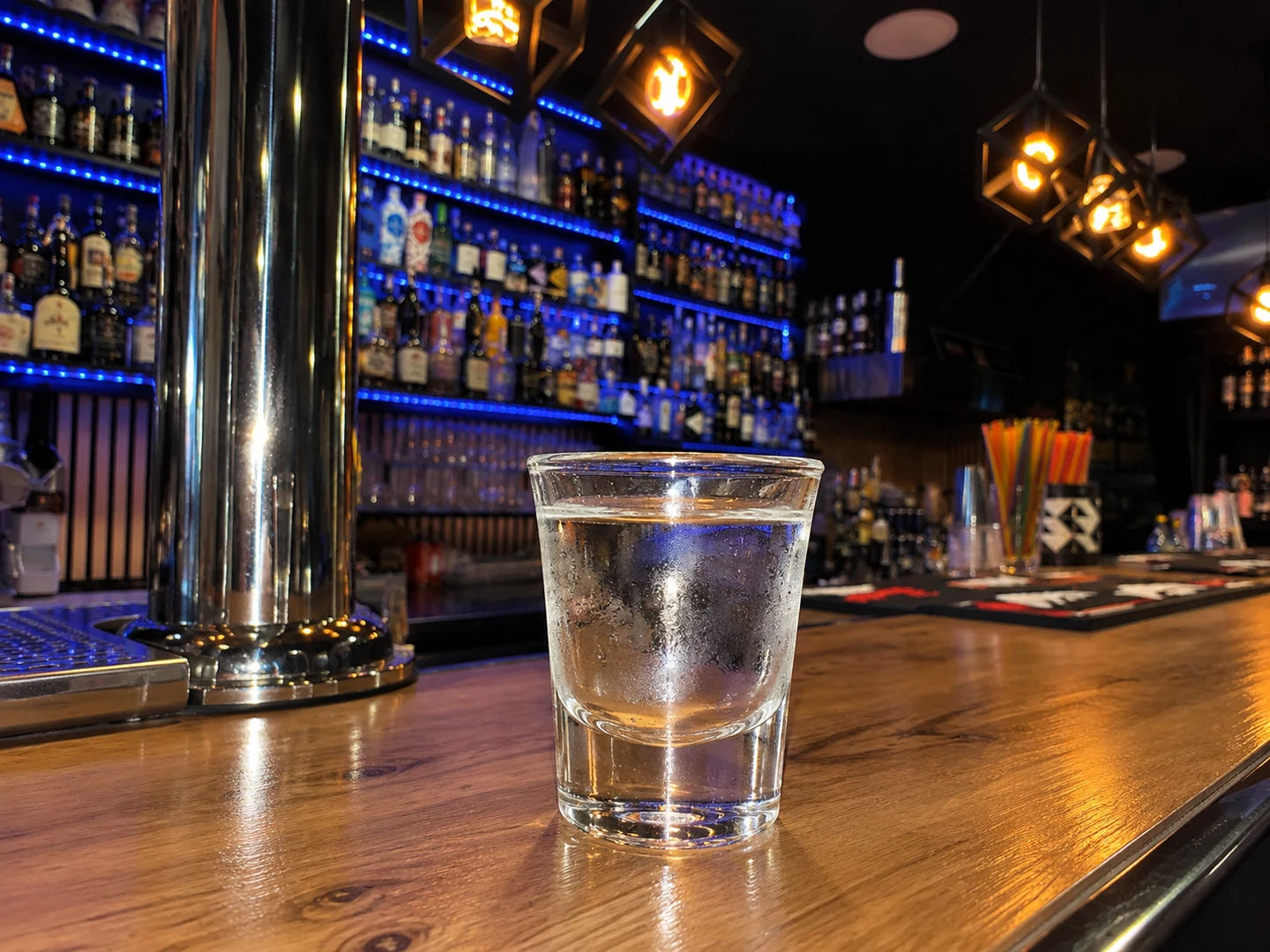
Ice-cold, crystal-clear, straight. No frills, just impact.
Vodka should be served as cold as possible: the chill masks the alcohol and makes the shot more drinkable. No mixer, no garnish — just clean spirit in one sip. The shot for anyone who wants to get straight to the point, useful as a reset or a challenge between friends.
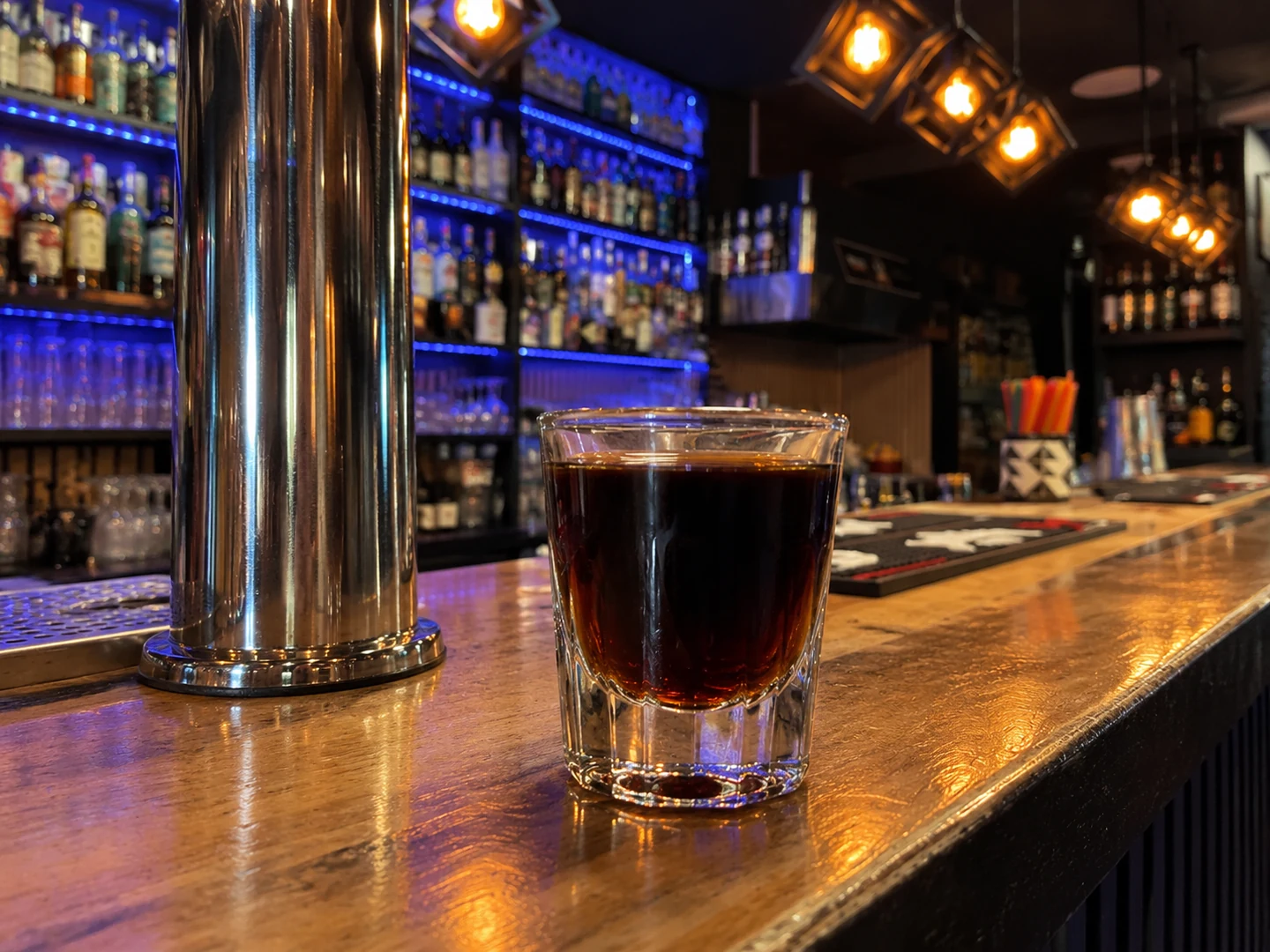
Dark herbs, frozen. Europe's most-ordered shot, served the right way.
Jägermeister at −18°C from the freezer: that's when the menthol and herbs explode in your mouth without burning. The shot that crossed generations of nights — from German clubs to bars across Europe. At Jimmy we always keep it ready in the freezer.
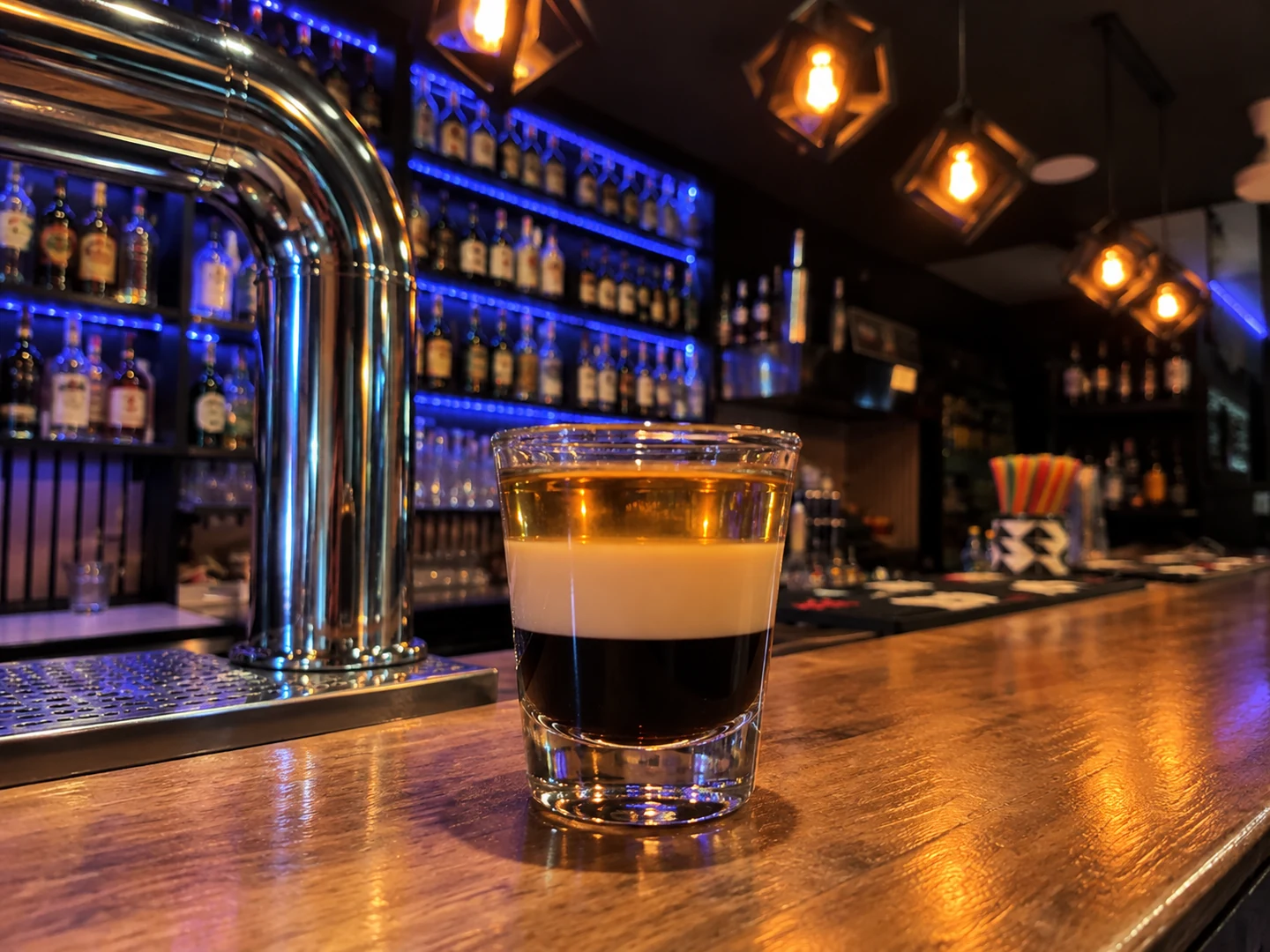
Three layers, three textures: coffee, cream, orange. An absolute icon.
The B-52 was born in the seventies and named after the American bomber: coffee liqueur on the bottom, Irish cream in the middle, triple sec on top. Drink it through the layers or all at once — both work. At Jimmy we build clean layers, no mixing.
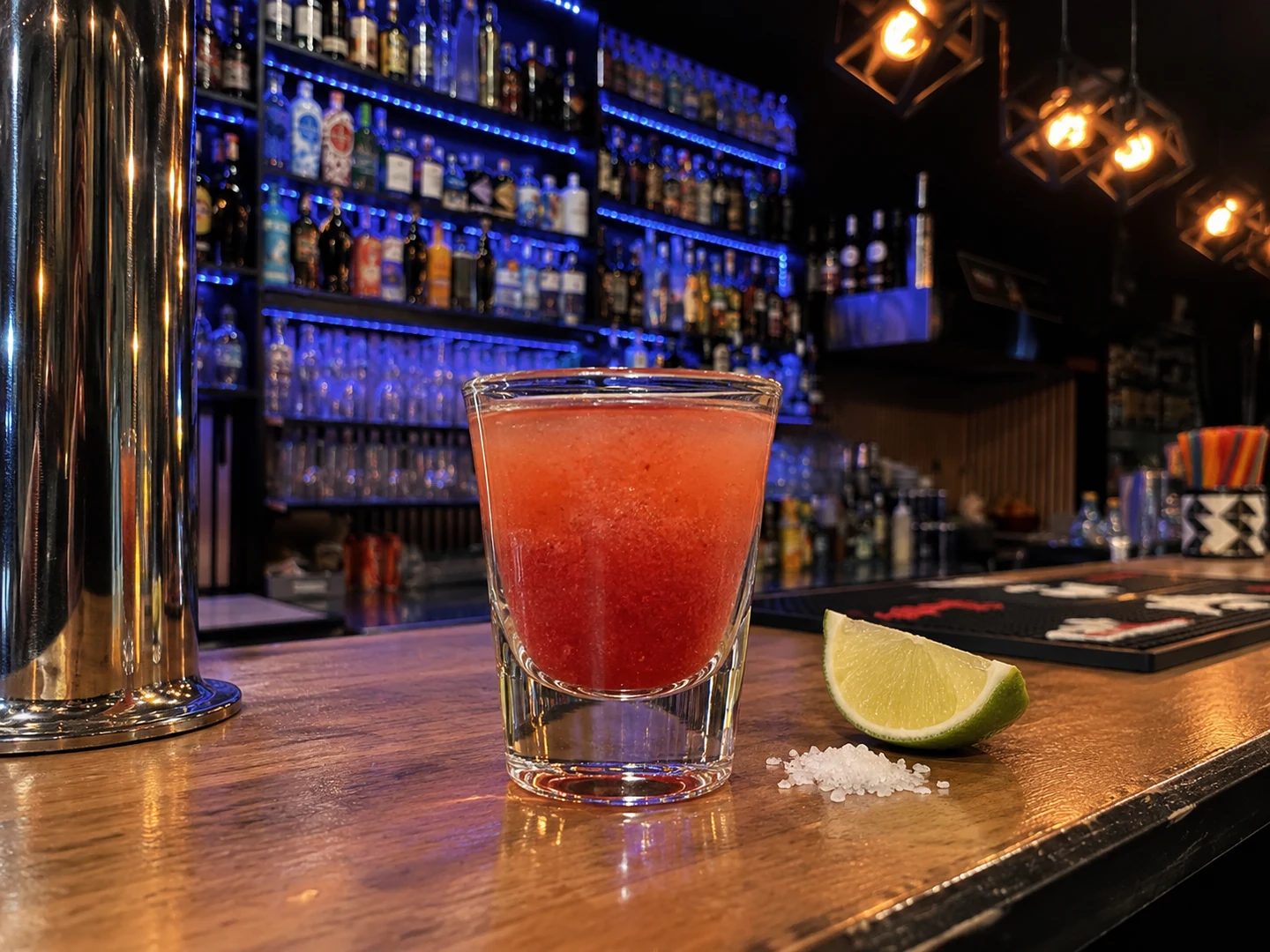
Tequila, strawberry, lime. The party shot when the night heats up.
Blanco tequila, strawberry liqueur and lime: sweetness and acidity that mask the alcohol without making it harmless. The carnival shot — more approachable than straight tequila, more fun than plain vodka. Perfect for groups who want something colourful and fast.
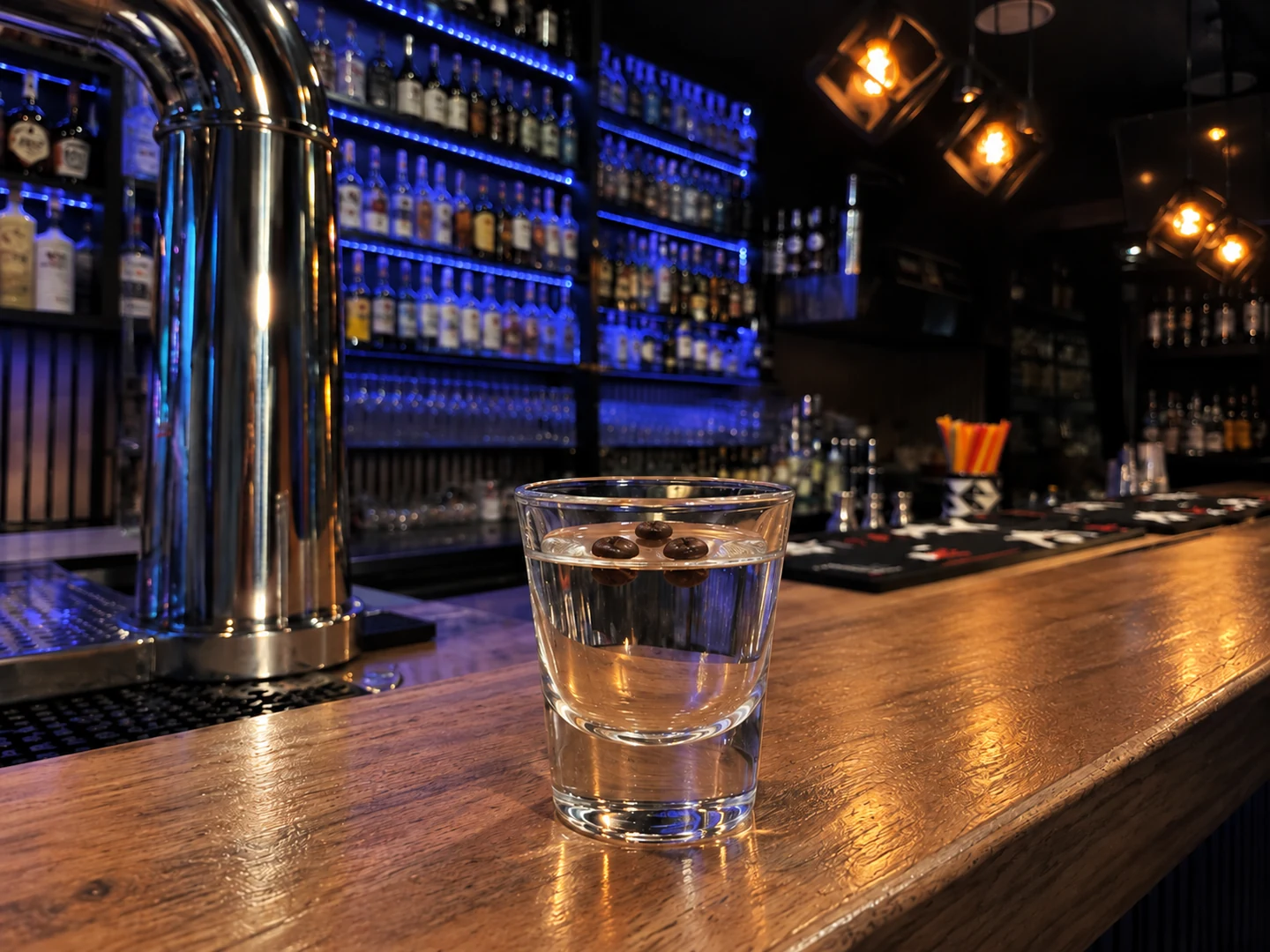
Sambuca with three coffee beans. Italian tradition, brief ritual.
Three coffee beans float in the glass: health, wealth, happiness — or simply anise and coffee in balance. The optional flame burns off excess alcohol; without flame, drink it neat. At Jimmy we serve it with the beans — the compact digestif.
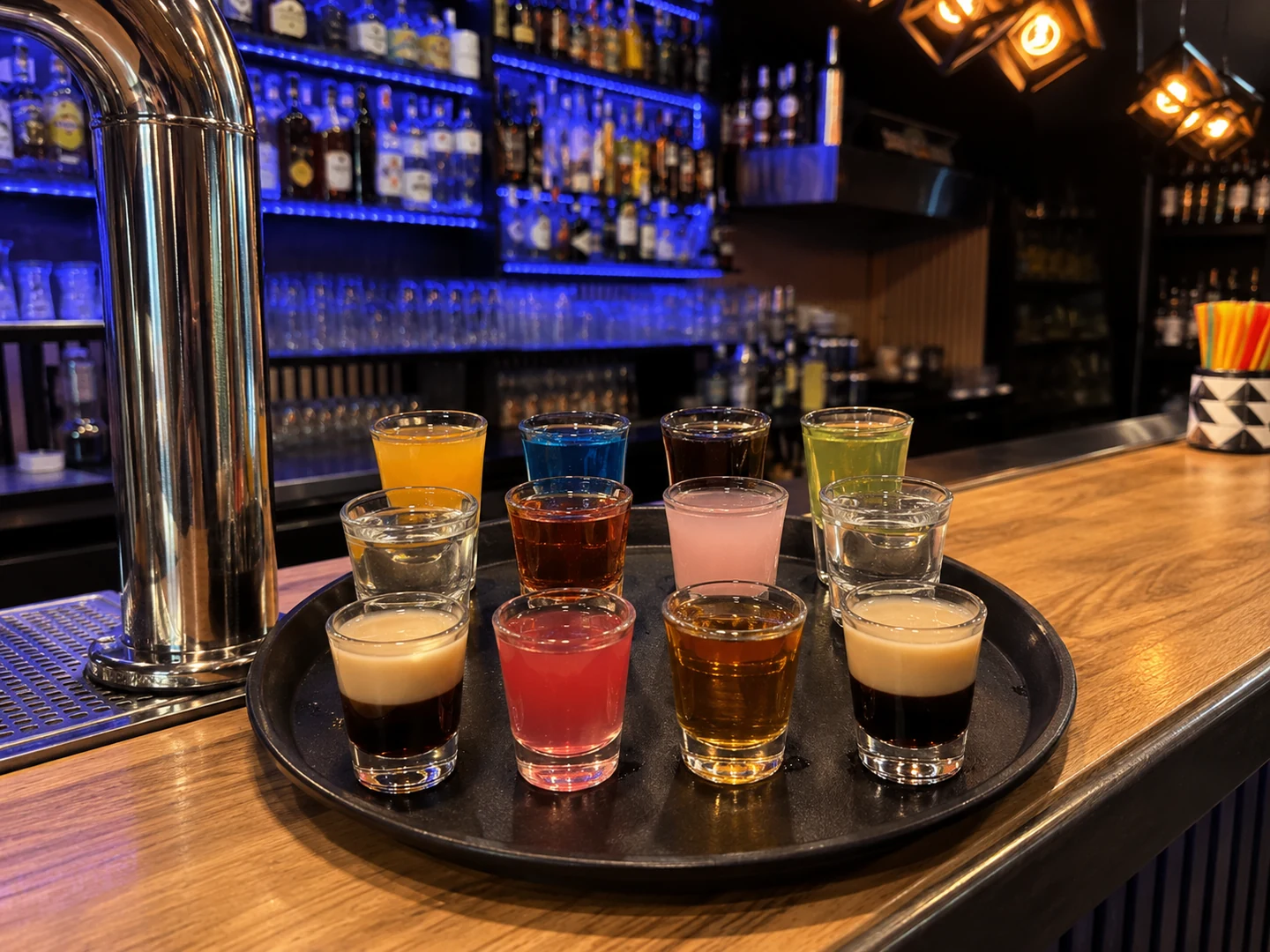
Tray of 12 mixed shots. The group package for parties and graduations.
Twelve different shots on a tray: tequila, vodka, Jäger, B-52, Mexican and more — the mix varies but the logic stays: variety for every taste, one sip each, no arguments. The most-requested offer for graduations and big birthdays. At Jimmy we build it on the fly when the group is ready.
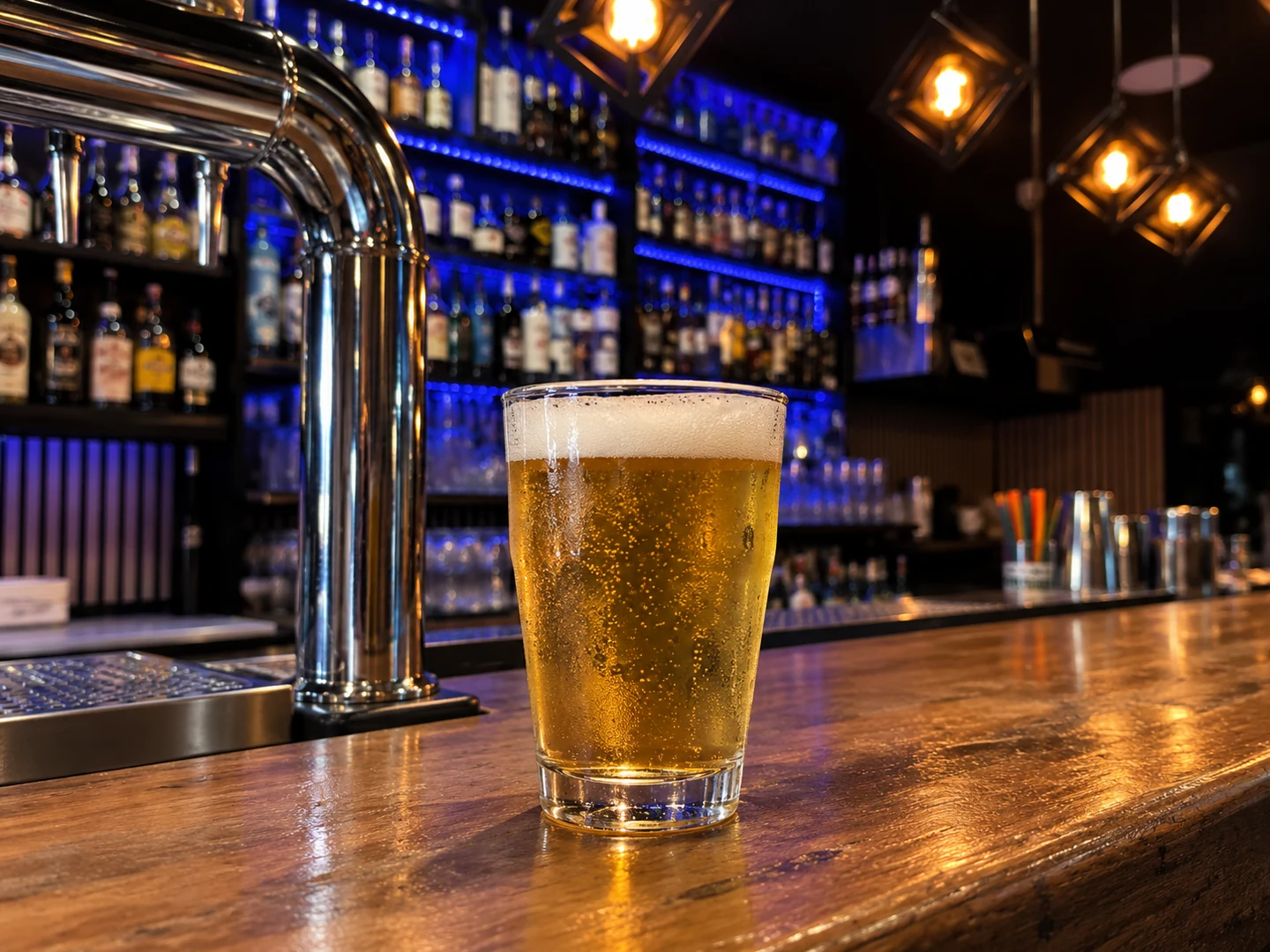 3 items
 Tap selection with a one-litre pitcher: for the table, the match or the long night.
Crisp lager, 0.2L. The right size for a quick round at the bar.
Tap lager is the world's most-drunk beer for a reason: clean, thirst-quenching, no surprises. The small size is perfect when you want a cold sip without committing to half a litre. At Jimmy we pour it fresh — tight head, right temperature.
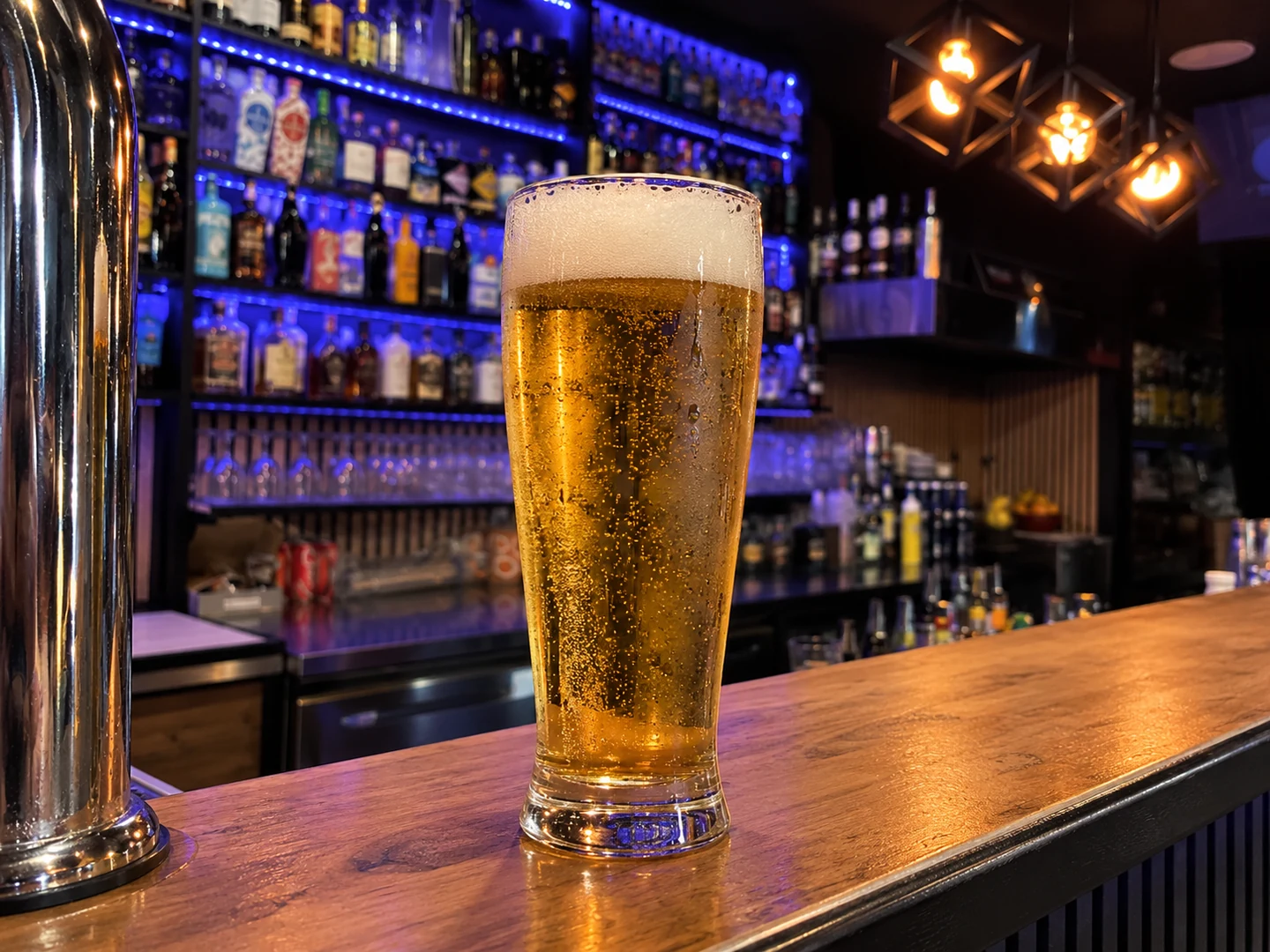
0.4L tap lager. The standard pour for anyone staying a while.
Half a litre — or close to it — is the format most bars use as default: enough beer to accompany a conversation, not so much it weighs you down. Fresh lager, head that holds, clean taste. The safe choice when you're not sure what to order.
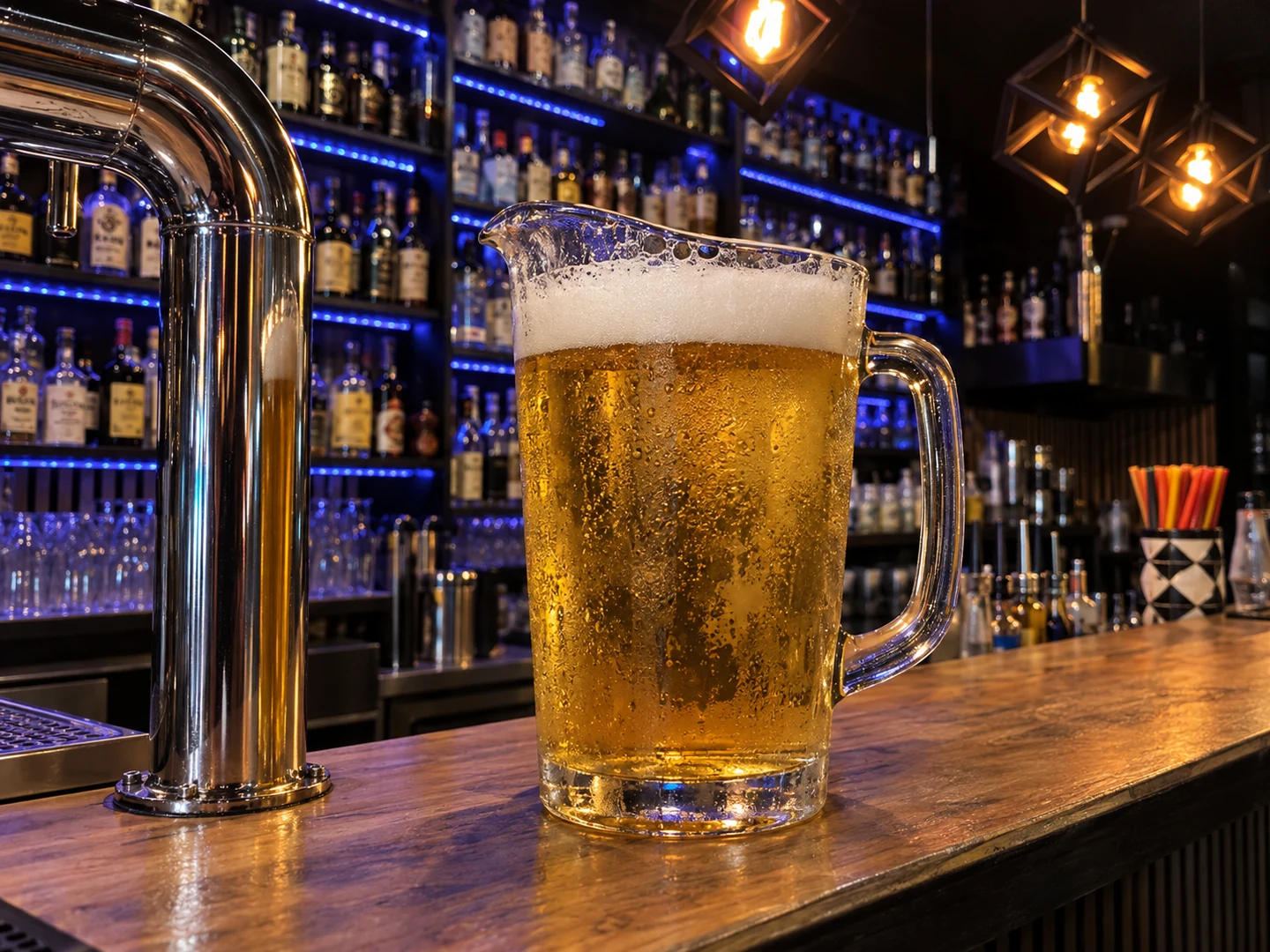
1-litre pitcher for the table. Groups, match nights, long evenings.
A litre of tap lager in a pitcher: shared at the table, ice optional, no trip to the bar every ten minutes. The group offer for graduations, birthdays and sports nights. At Jimmy we build it fresh and bring it to the table ready.
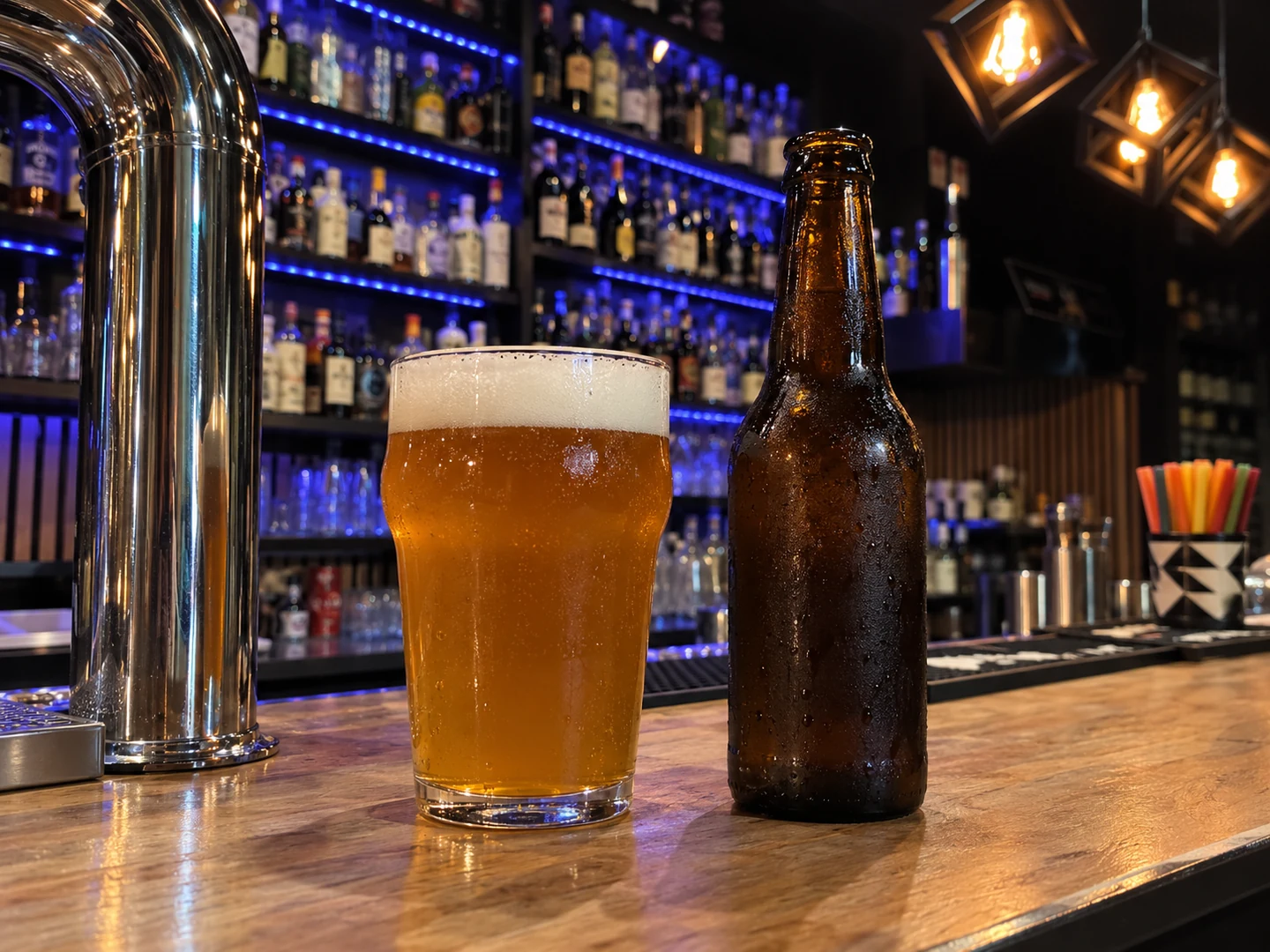 4 items
 Lager, IPA, weiss, stout: the list follows the season and what the room wants.
Hoppy India Pale Ale. Aromatic bitterness, citrus profile, dry finish.
The IPA was born from the need to preserve beer on voyages to India — more hops, more alcohol, more shelf life. Today it's the craft style par excellence: American or European hops, citrus and pine aromas, clean bitterness. For anyone who wants beer with character, not just refreshment.
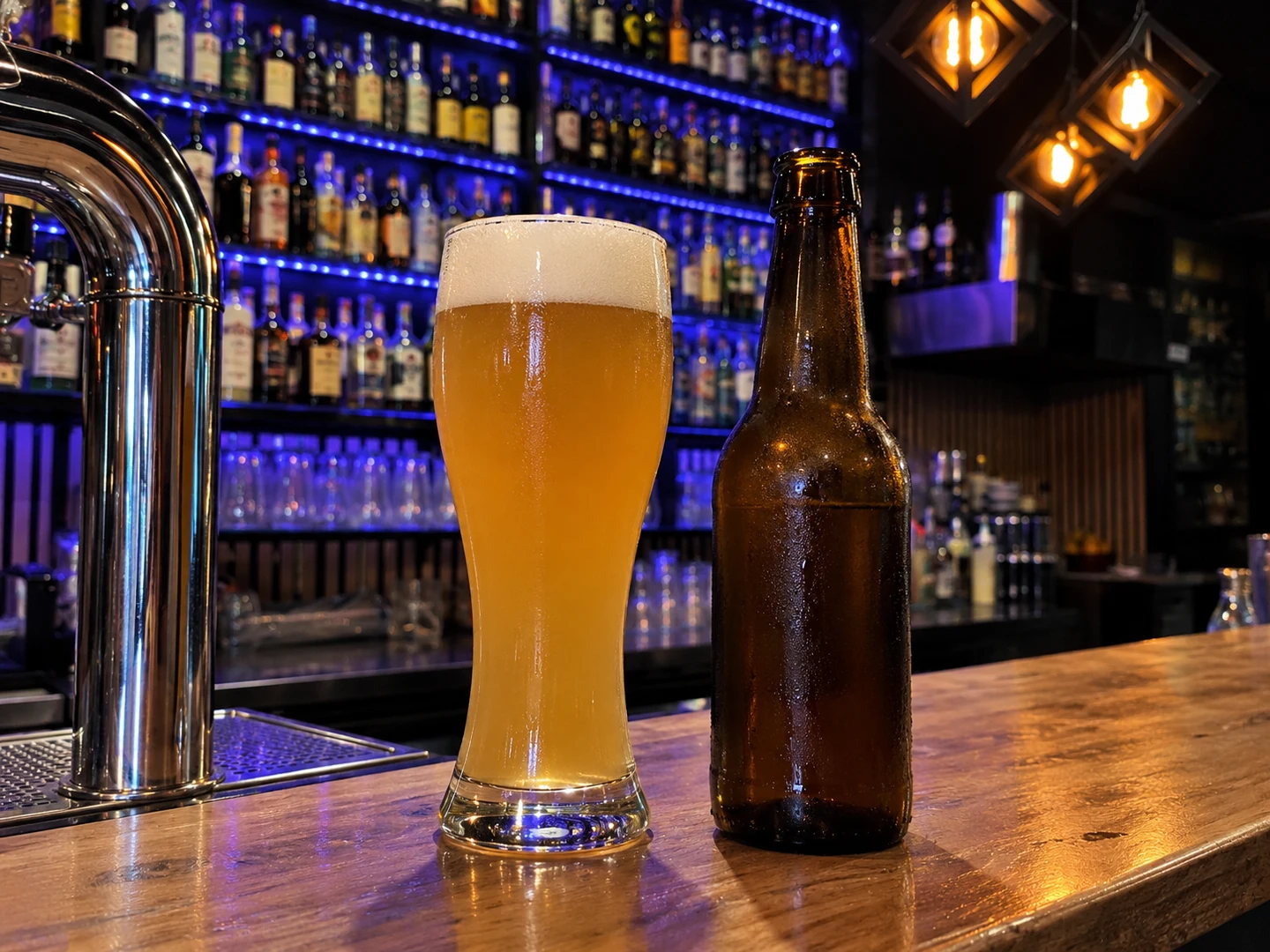
Bavarian wheat beer. Banana, clove, cloudy and aromatic.
Weiss — or Hefeweizen — uses yeast that isn't filtered out: hence the cloudy colour and banana-and-clove esters. Bavaria's beer by definition, softer than lager, more aromatic. Perfect for anyone who likes beer with personality without the push of IPA bitterness.
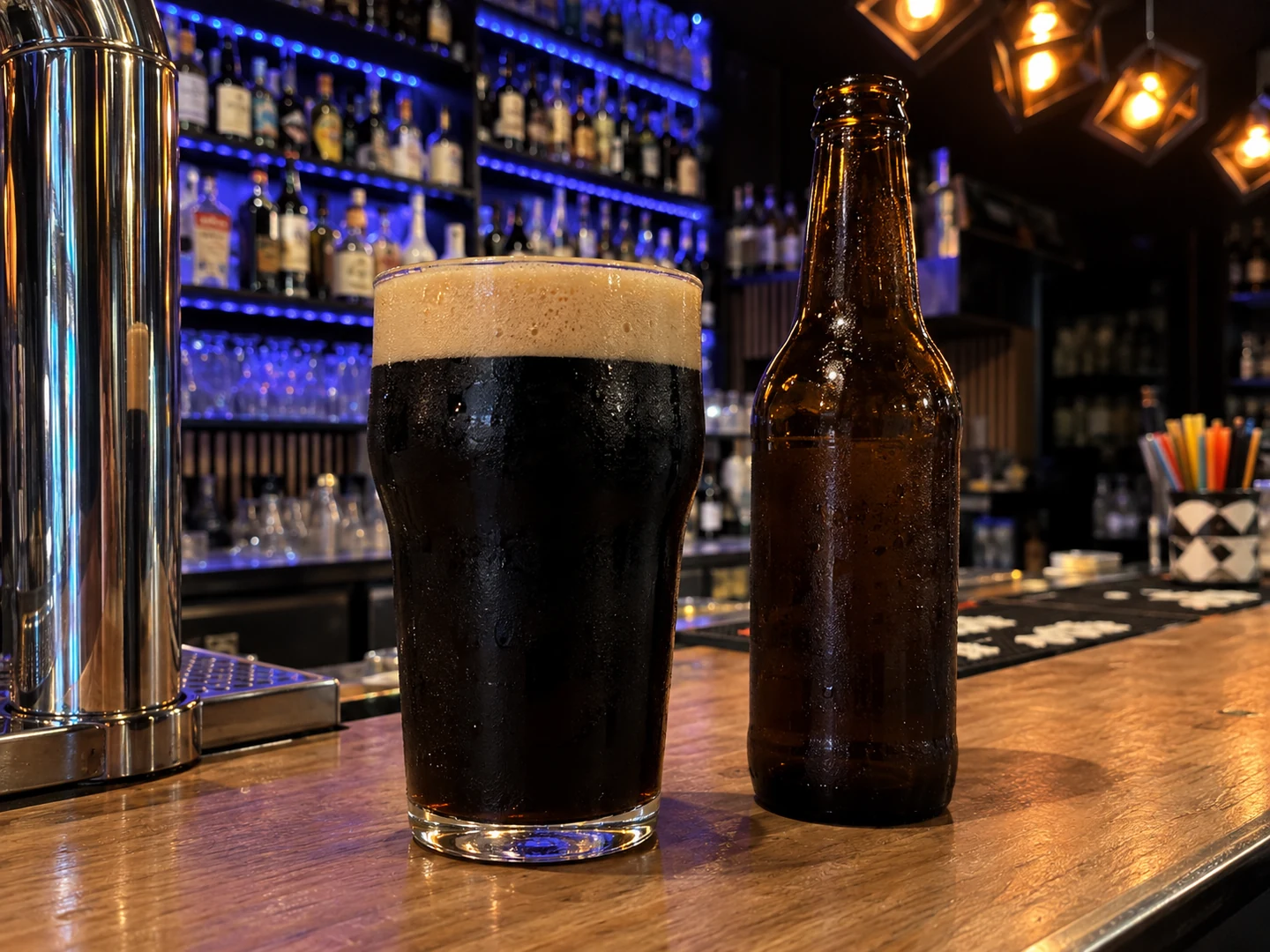
Creamy stout. Roasted coffee, dark chocolate, full body.
Stout — and Guinness in particular — made roasted malt famous: coffee, chocolate, dense body and creamy head. Beer for slow sipping, not chugging. At Jimmy we keep it bottled for anyone who wants something dark and enveloping after dinner or instead of a digestif.
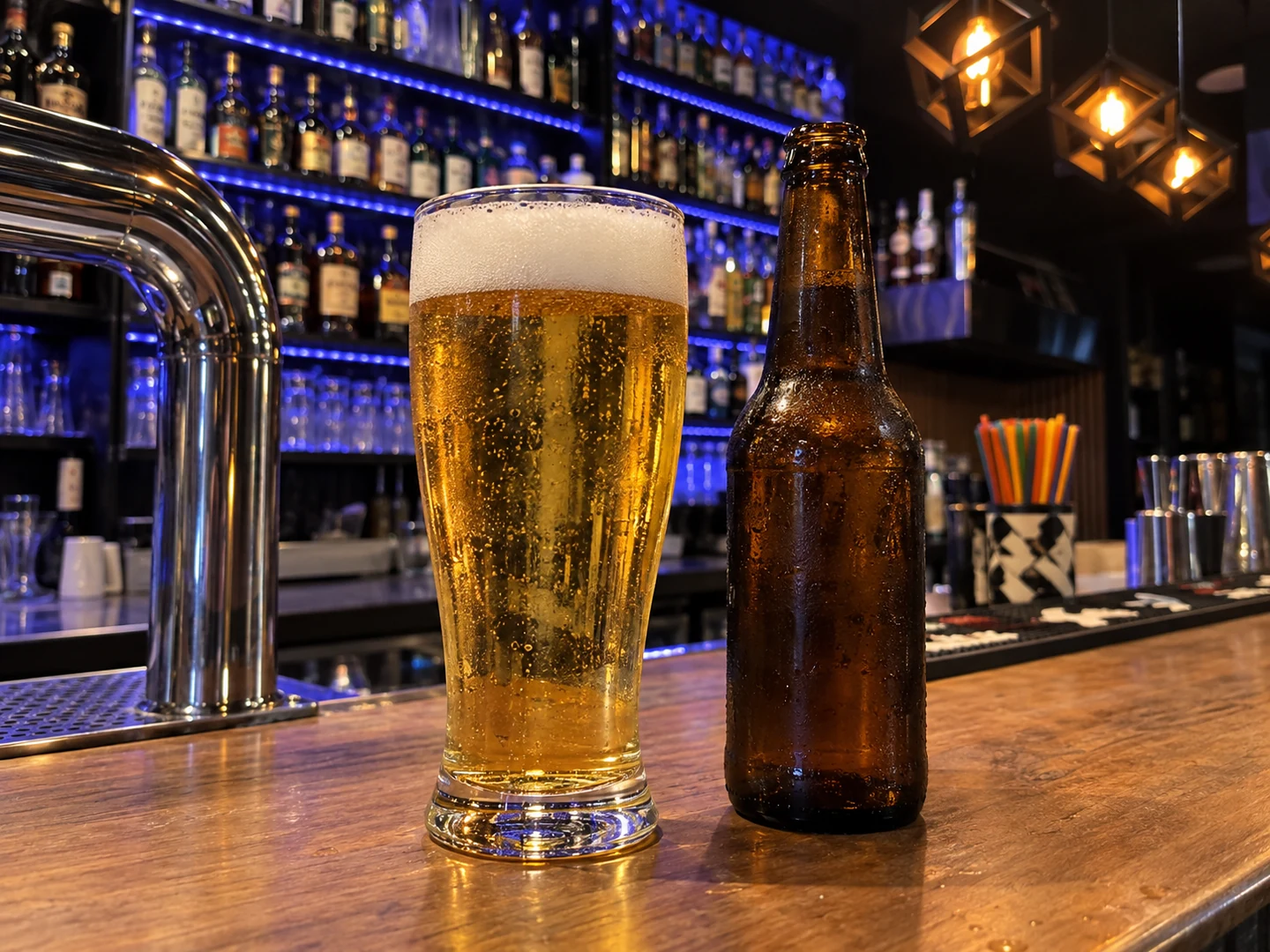
Classic bottled lager. Clean, universal, always the right call.
International lager is the world's most widespread style: bottom fermentation, clean taste, moderate ABV. In the bottle it holds carbonation and freshness. The beer that works with everything — aperitivo, dinner, match night — without demanding attention.
 4 items
 Whites, reds, bubbles: a short list, the right pick to carry the night.
Crisp white by the glass. Cocktail Lab selection, changes with the season.
White by the glass isn't generic wine: it's the bottle the Cocktail Lab opened today — sparkling or still, dry or lightly aromatic. Ask the bar what's on rotation. Perfect with a light aperitivo or as a cocktail alternative when you want something simpler.
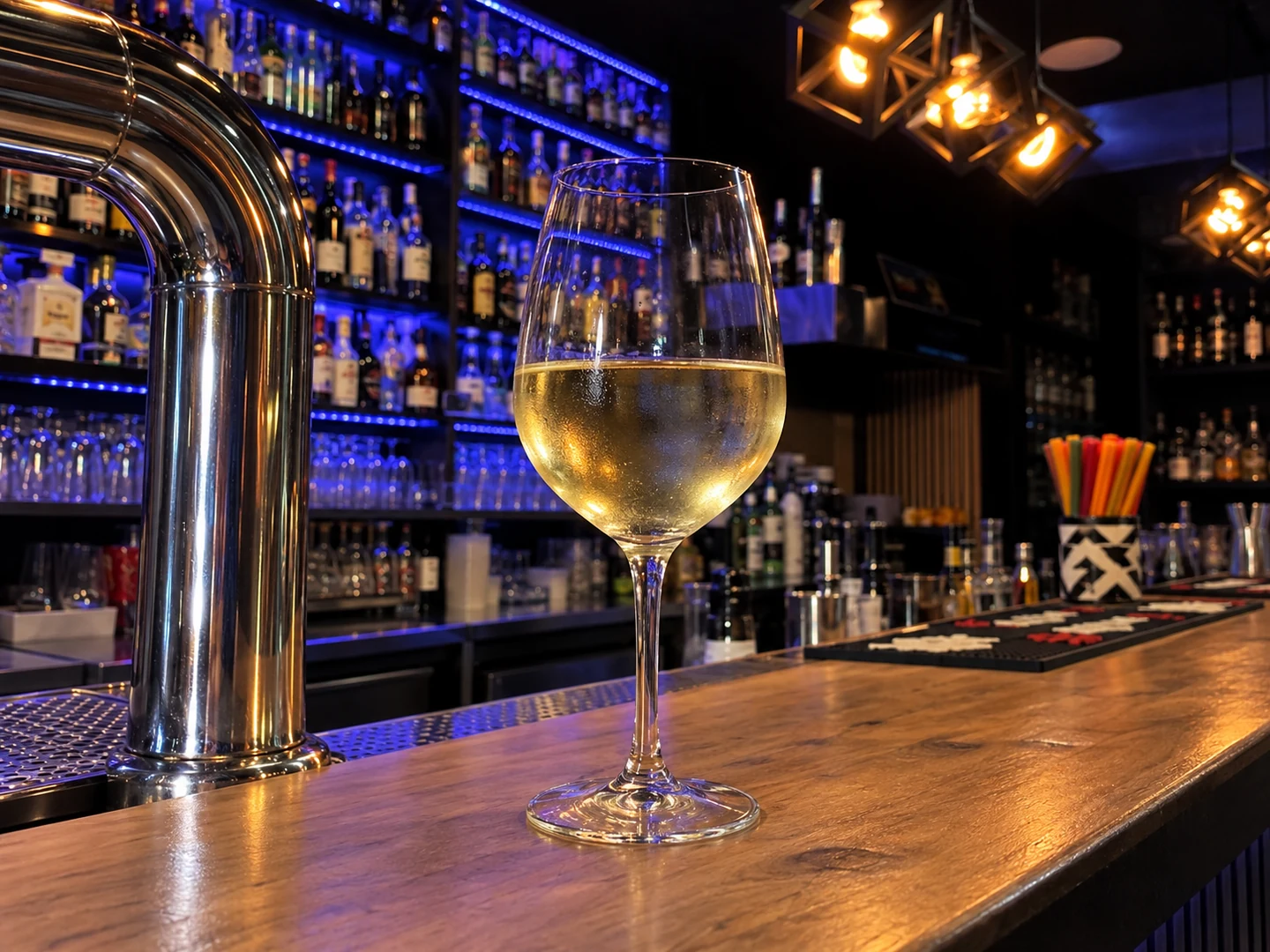
Structured red by the glass. Ask the Cocktail Lab for today's pick.
Red by the glass follows the same logic as white: rotation, seasonality, labels the bar picks to match the evening. It might be a Bolognese Sangiovese or something from further afield — depends what we've opened. Always ask: the answer is worth more than the name on the menu.
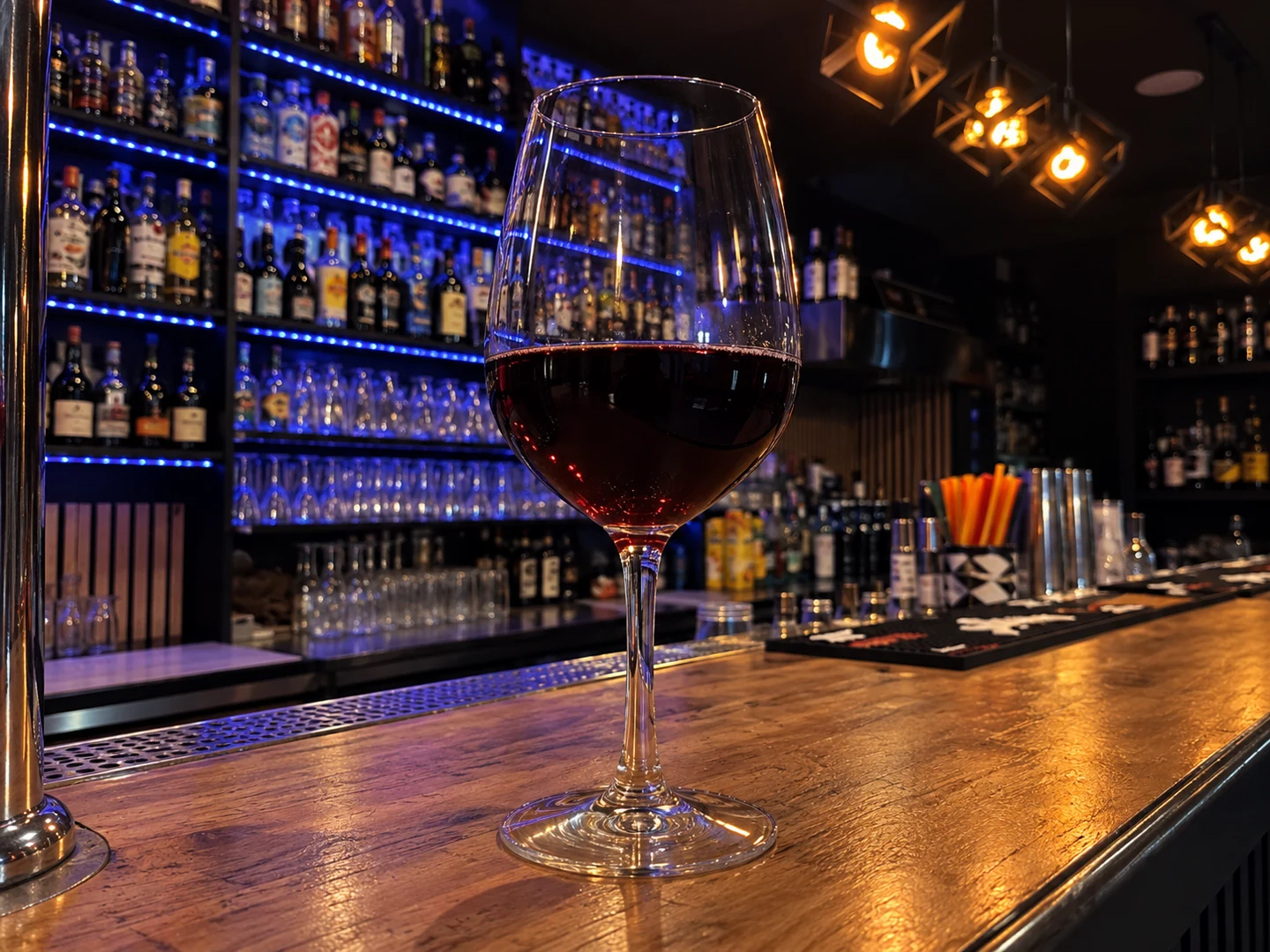
Dry bubbles by the glass. Toasts, aperitivo, start of the night.
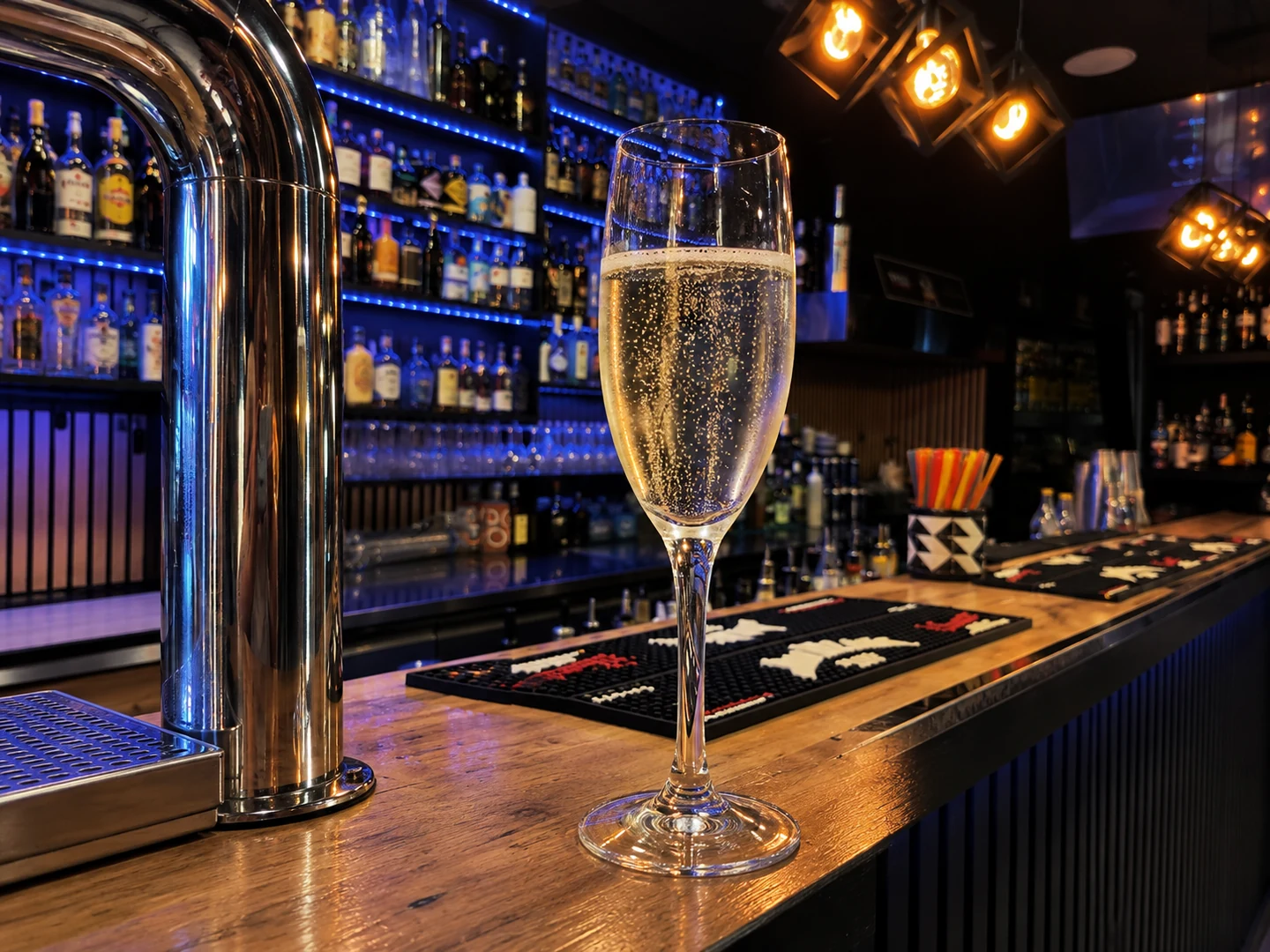
Prosecco — or rather, Glera from the Veneto hills — became Italy's toast symbol. Dry, light, fine bubbles: works alone or as a base for spritz and cocktails. At Jimmy we serve it cold in a flute — the fastest way to raise the tone of the evening.
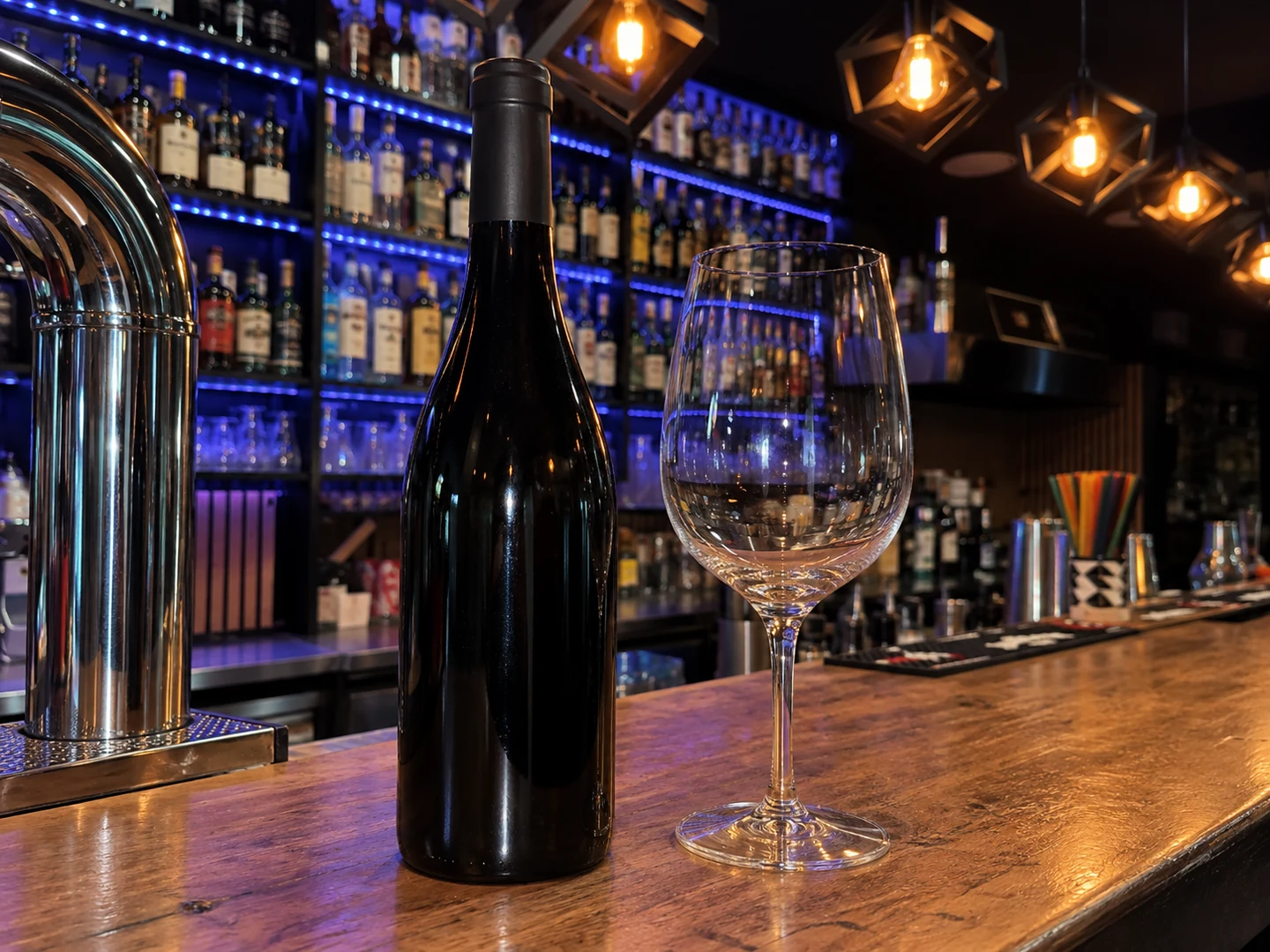
Whites, reds and bubbles by the bottle. Selection varies, ask at the bar.
The bottled wine list isn't fixed: we rotate labels by season, arrivals and what we're pouring by the glass. Fresh whites, structured reds, Prosecco and other bubbles — ask the Cocktail Lab what's available today and at what price. Ideal for tables who want to share.
 5 items
 Water, juices, soft drinks, tonics: to build the drink exactly your way.
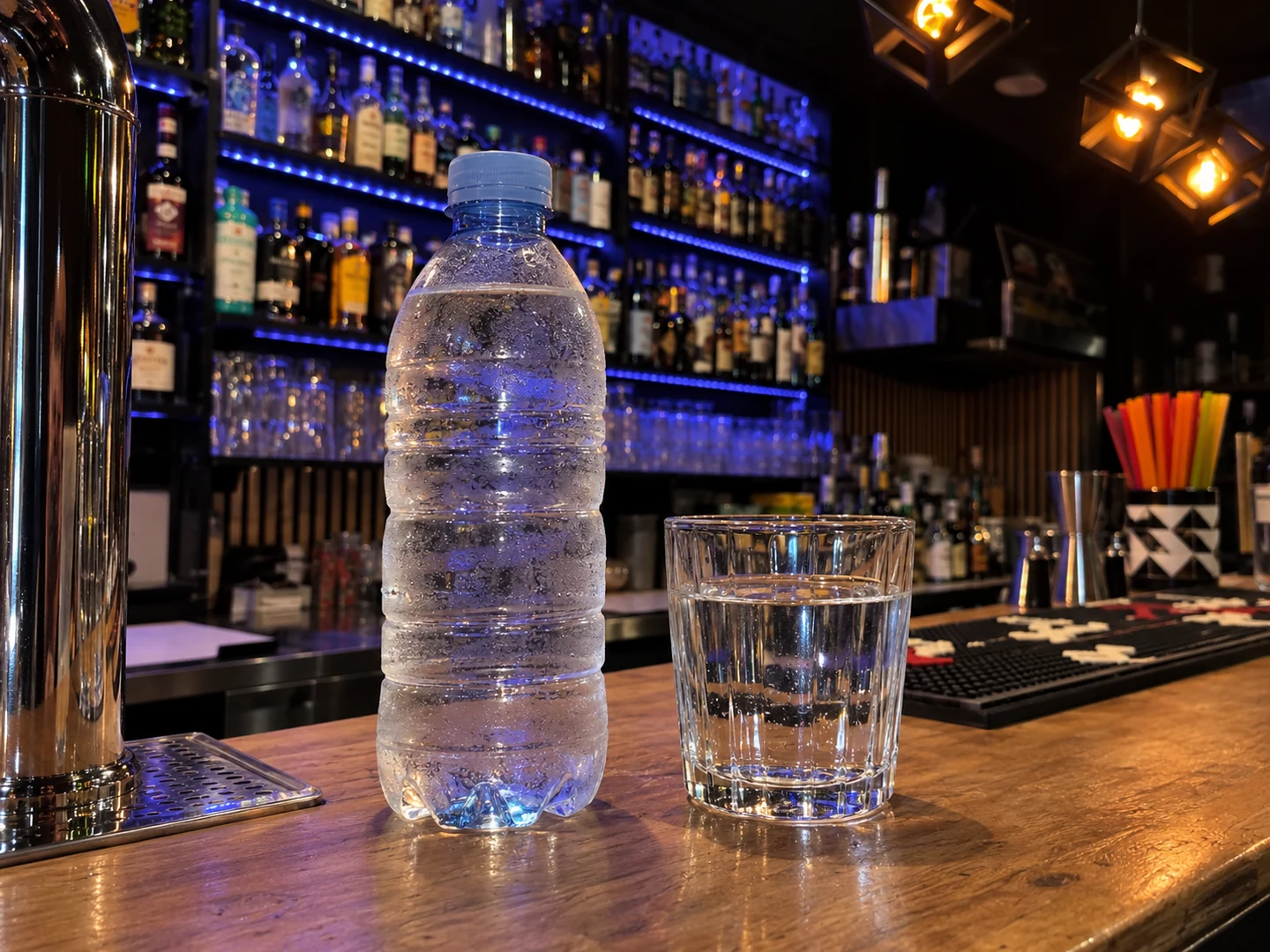
Still or sparkling water, 0.5L bottle. The base for every night out.
Water isn't a fallback — it's the reset between drinks, the hydration that lets you stay on the floor. Still or sparkling, bottle to share or keep for yourself. At Jimmy we always keep it cold.
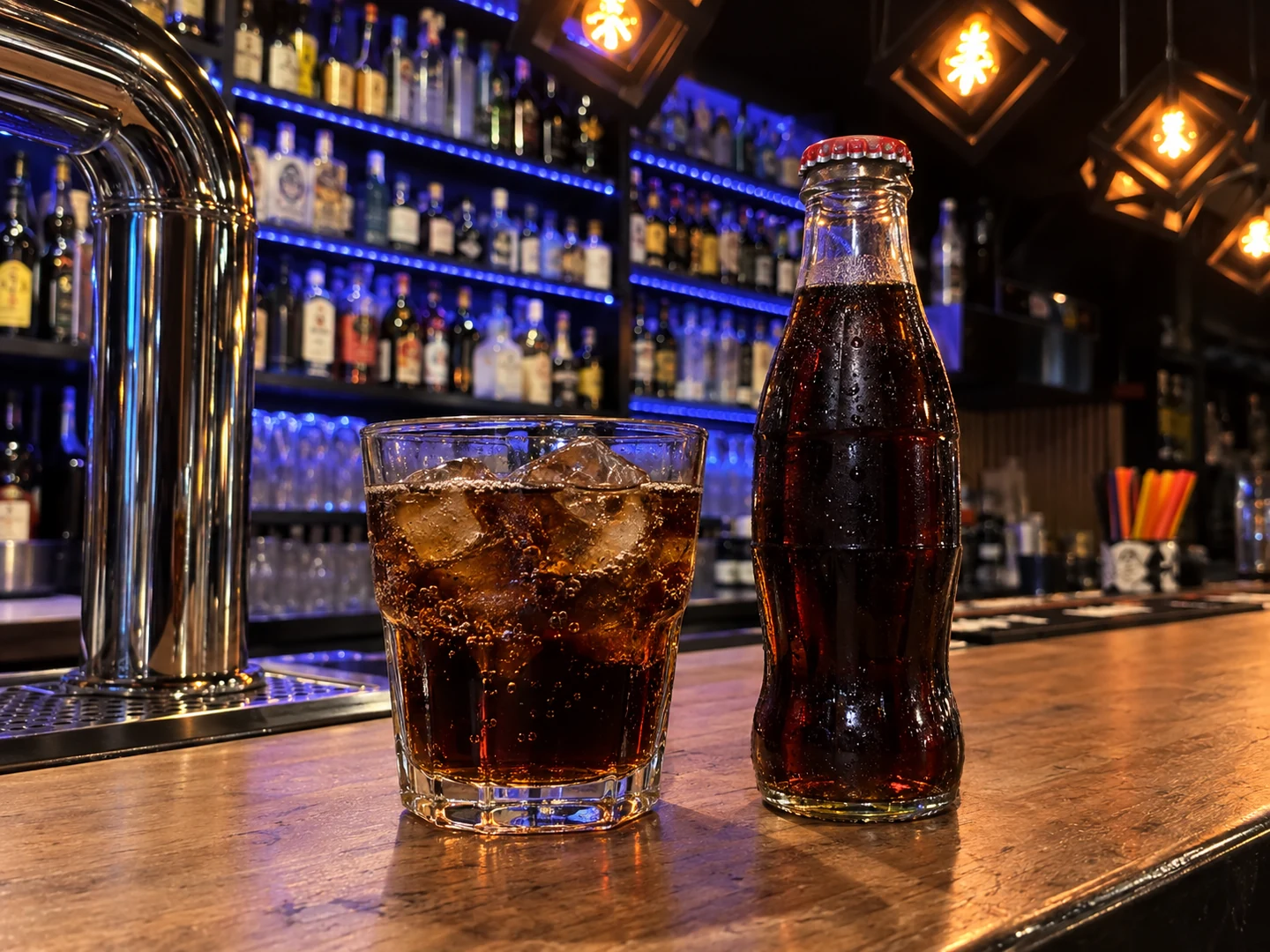
Cola in a bottle. Universal mixer or soft drink on its own.
Cola is the world's most-used mixer — Cuba Libre, Fernandito, whiskey cola — but it works alone with ice and lemon too. In the bottle it holds carbonation better than an open can. At Jimmy we keep it for anyone building drinks at the bar or wanting something sweet without alcohol.
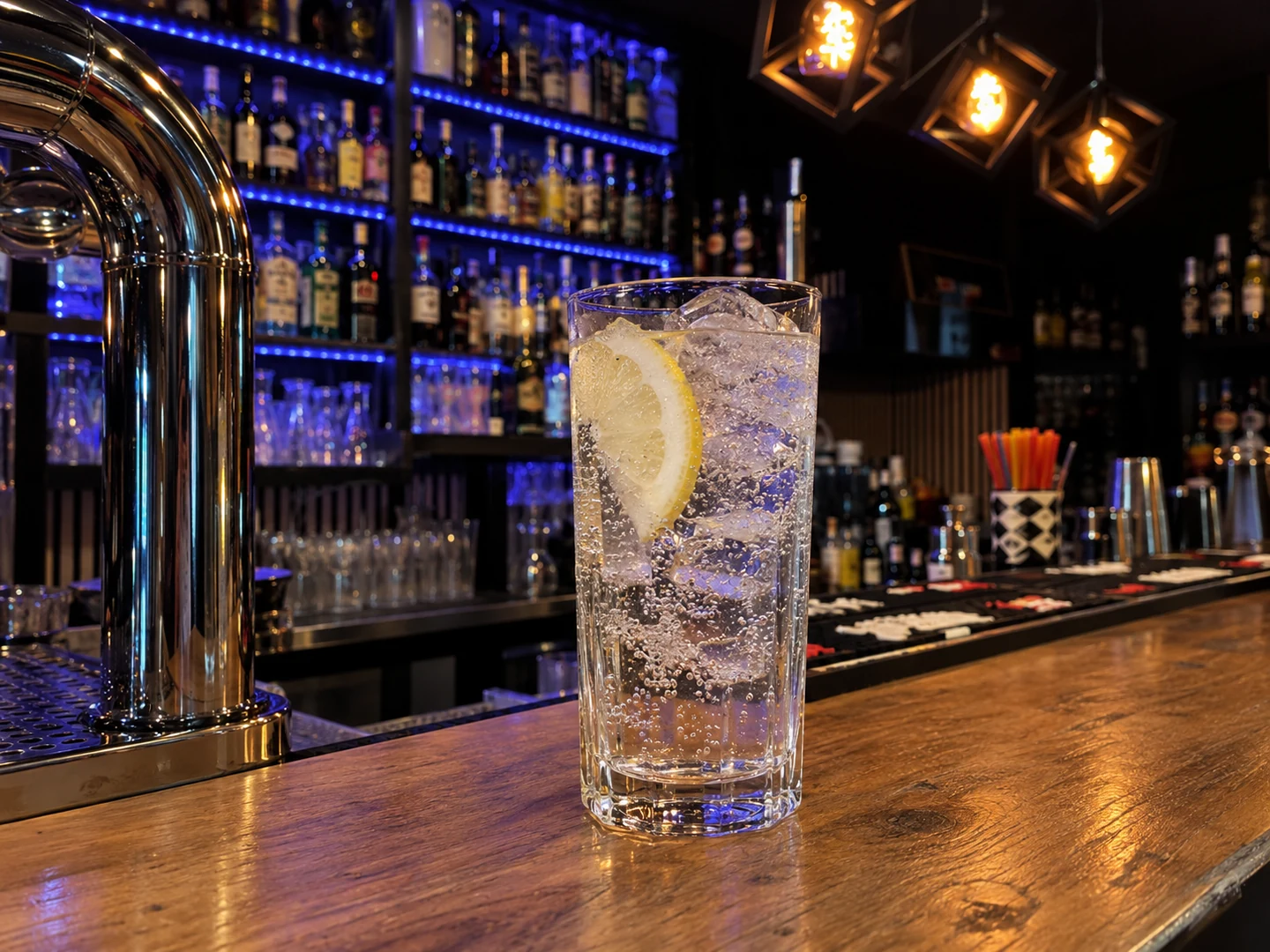
Premium tonic. For G&T, vodka tonic or alone with ice and lemon.
Quality tonic changes a Gin and Tonic: less sugar, more quinine, finer bubbles. We use it for vodka tonic too, and for anyone who wants something bitter and refreshing without alcohol. Ask the bar how you like your highball.
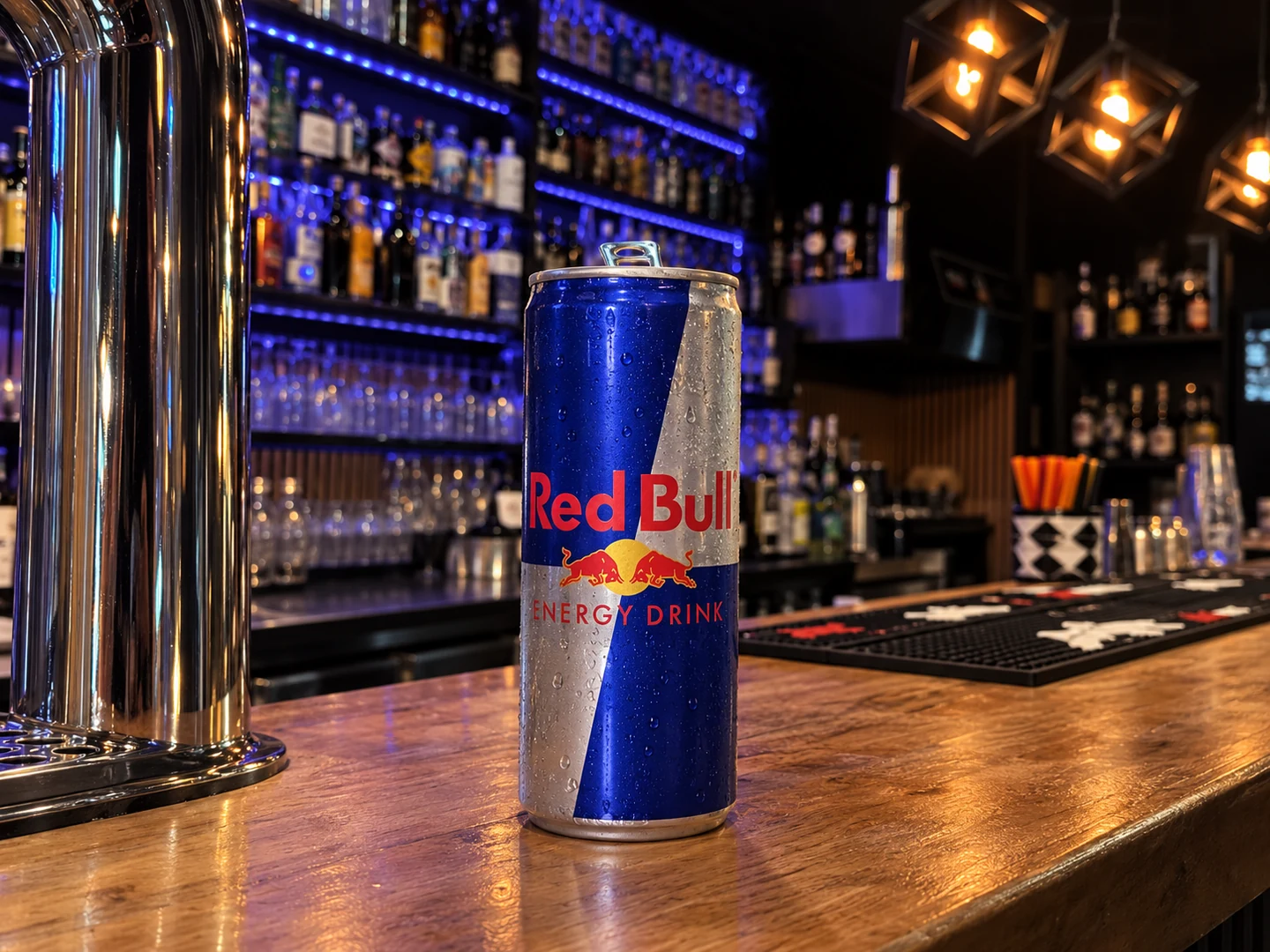
Red Bull in a can. Energy for the night or base for Jägerbombs and variants.
Red Bull made the energy drink concept famous — taurine, caffeine, sugar — and the Jägerbomb brought it to bars worldwide. Alone or as a mixer, it's the choice when the night is long and you want to keep pace. At Jimmy we keep it canned, always cold.
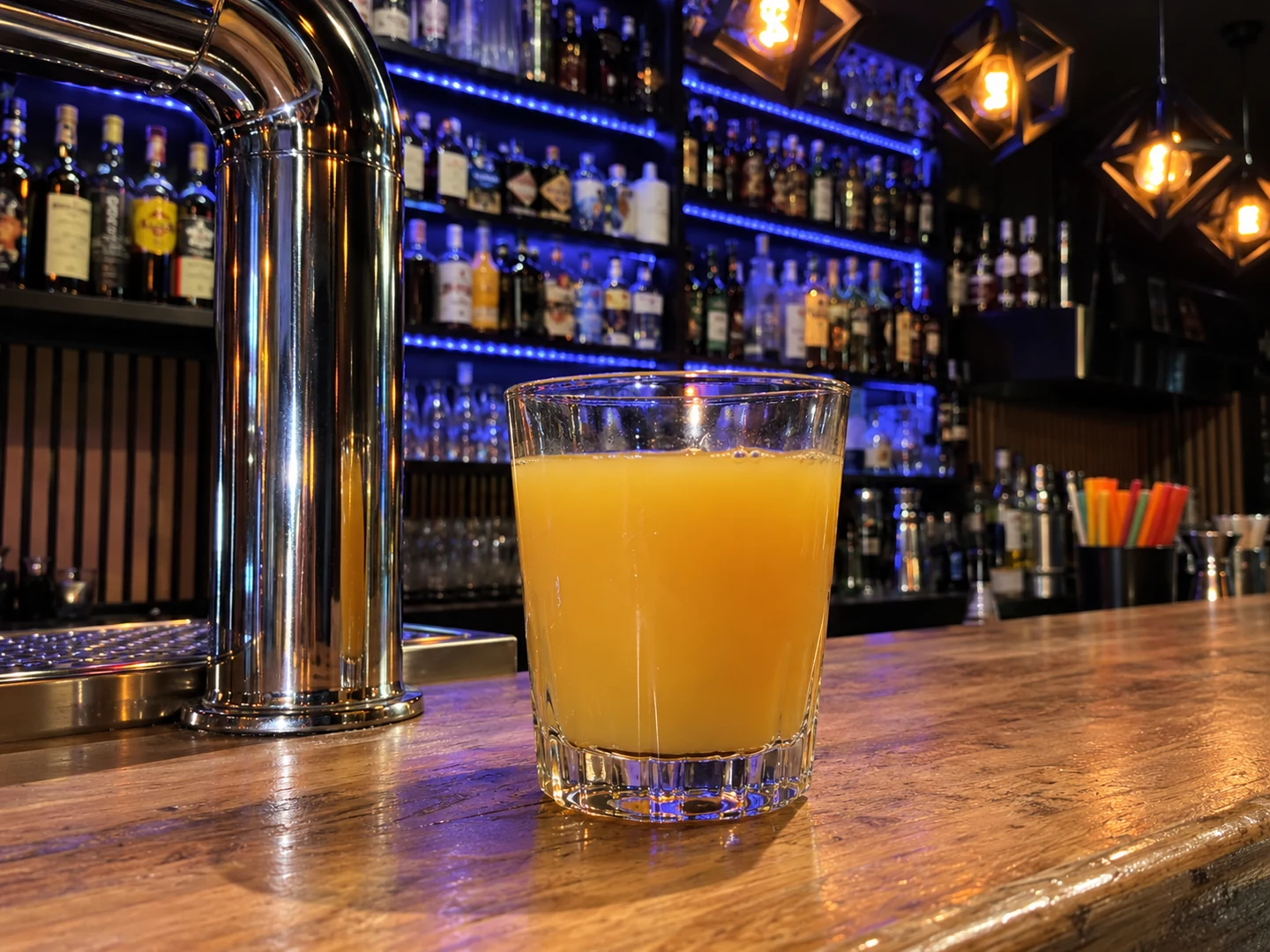
Fruit juice: pineapple, orange, cranberry, mango. Ask what's in today.
Juices work alone, as mixers for zero-proof cocktails or as a base for anyone building drinks at the bar. Pineapple, orange, cranberry, mango — availability can vary. Ask at the bar: we'll tell you what we have and how to use it.
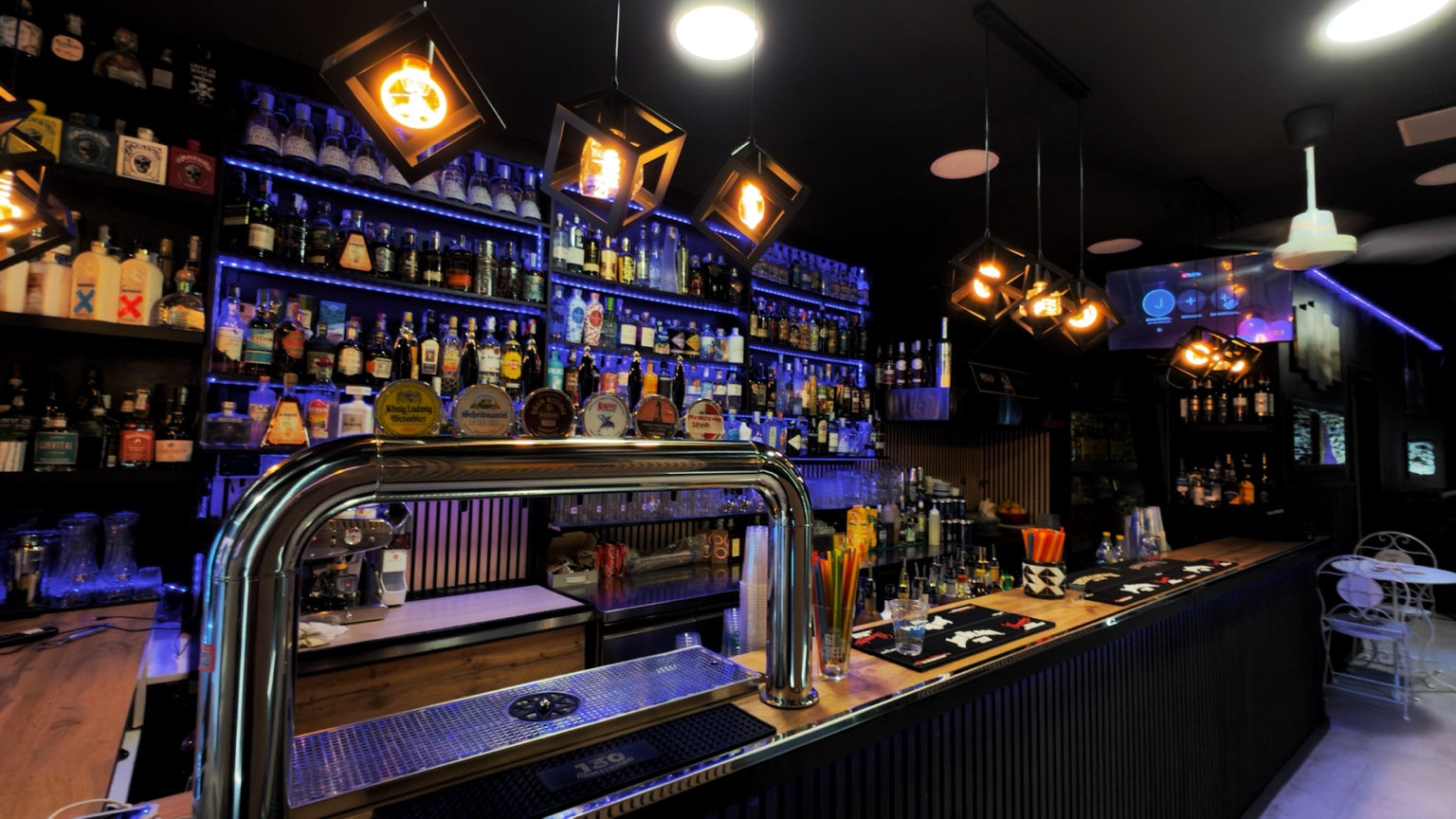 Before you drop by
 Quick answers for those planning a night out, a party, or just popping in for a drink.
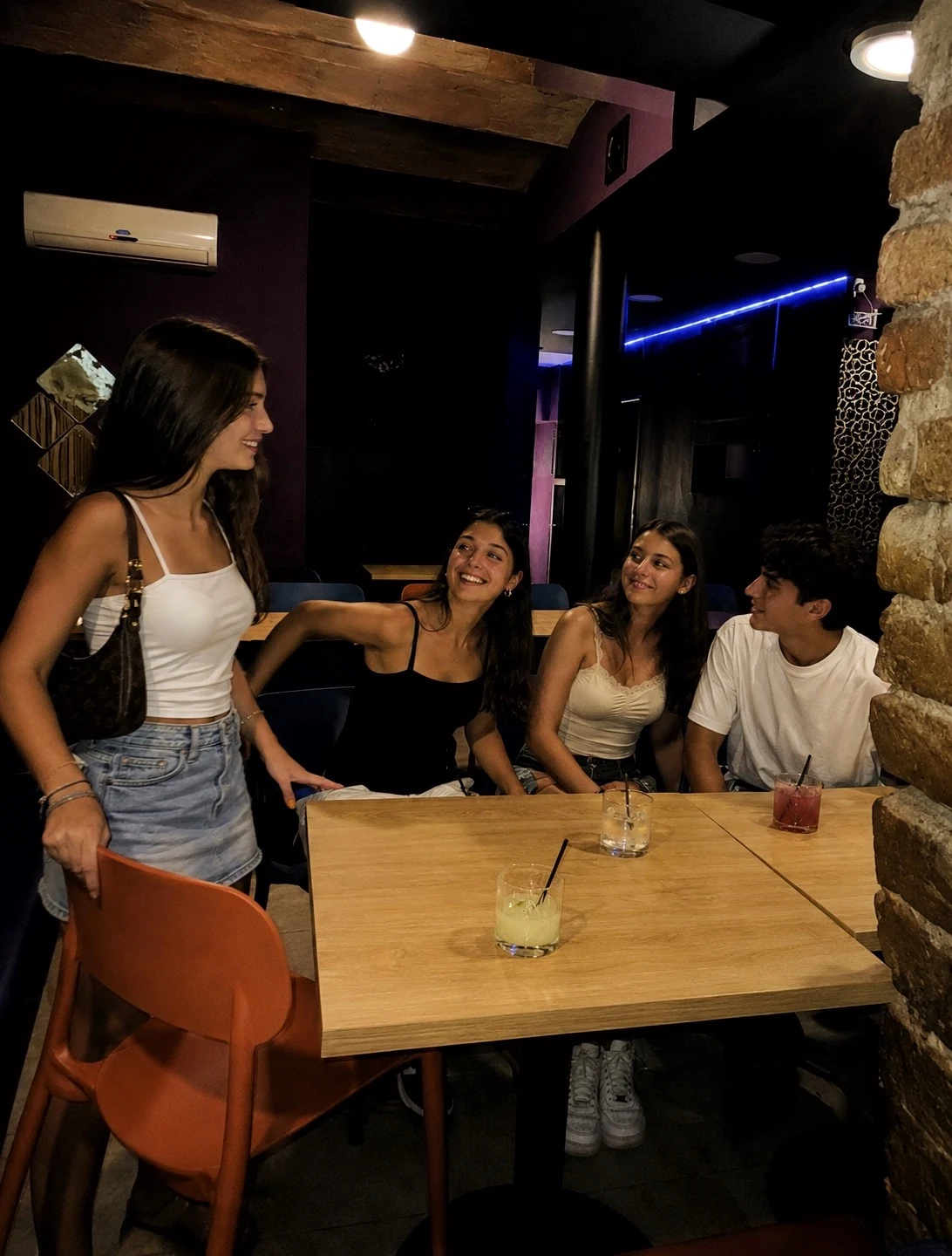
Cocktail Lab open from 6 PM, indoor room for groups. Message us on WhatsApp with date, time and number of people.